
The Price of Reputation
Strange Case of Dr Jekyll and Mr HydeThe theme of how Jekyll's fear of disgrace drives his secrecy and ultimately his downfall.
increasing Bearing strength in each event
 decreasing
Bearing strength in each eventdecreasingThe Fear of Public Shame
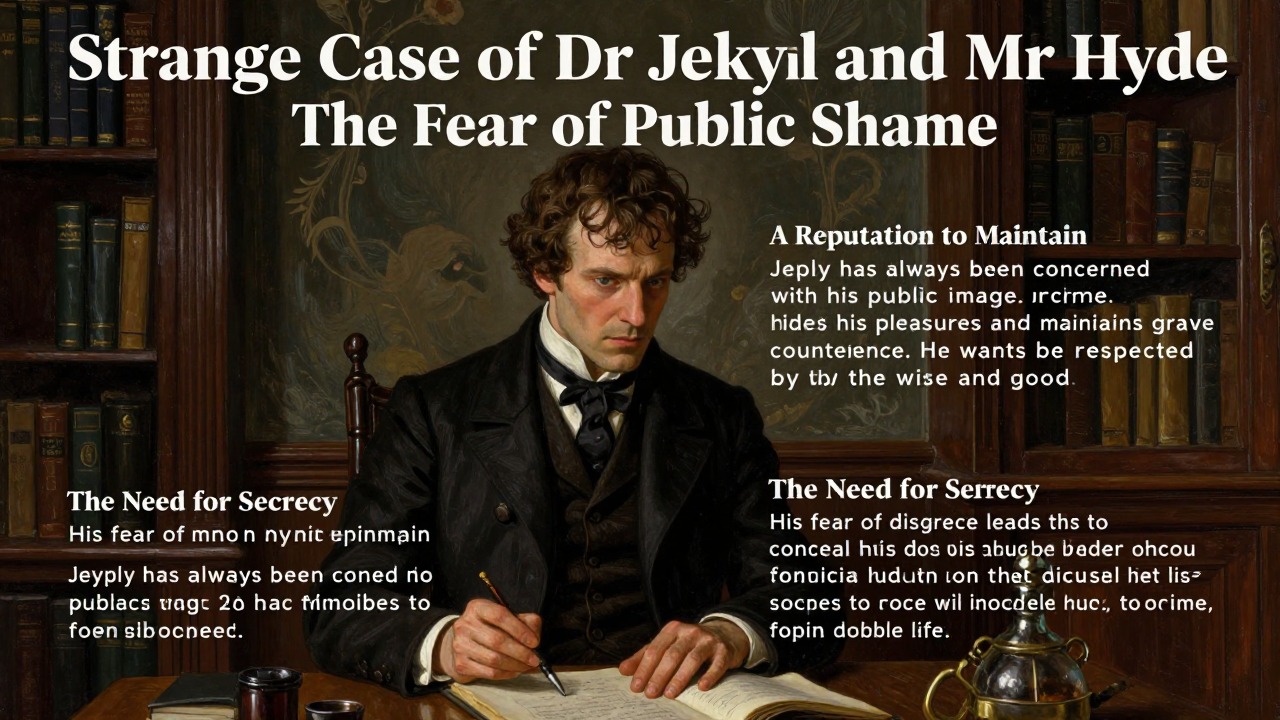
The Fear of Public Shame
A Reputation to Maintain
Jekyll has always been concerned with his public image. He hides his pleasures and maintains a grave countenance. He wants to be respected by the wise and good.
The Need for Secrecy
His fear of disgrace leads him to conceal his double life. He uses the transformation to indulge his pleasures without consequences. The reputation is a cage.
The First Cost
When Enfield's story threatens to expose him, he pays hush money. He is willing to sacrifice money to protect his name. The price of reputation is high.
The Growing Burden
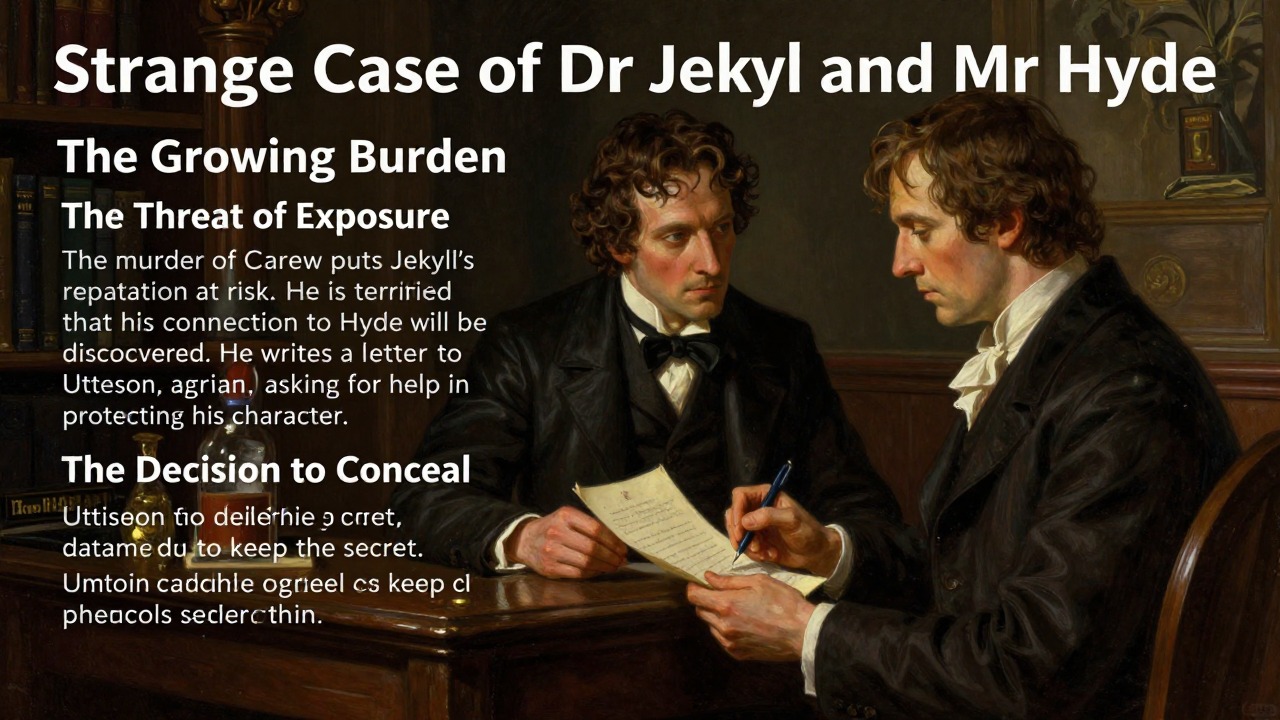
The Growing Burden
The Threat of Exposure
The murder of Carew puts Jekyll's reputation at risk. He is terrified that his connection to Hyde will be discovered. He writes a letter to Utterson, asking for help in protecting his character.
The Decision to Conceal
Utterson agrees to keep the secret. Jekyll's reputation is preserved, but at the cost of truth. The price of reputation is now the lives of others.
The Ultimate Sacrifice
Jekyll eventually loses his reputation anyway. His seclusion is a sign of disgrace. The price of reputation is his own destruction.
The Final Irony
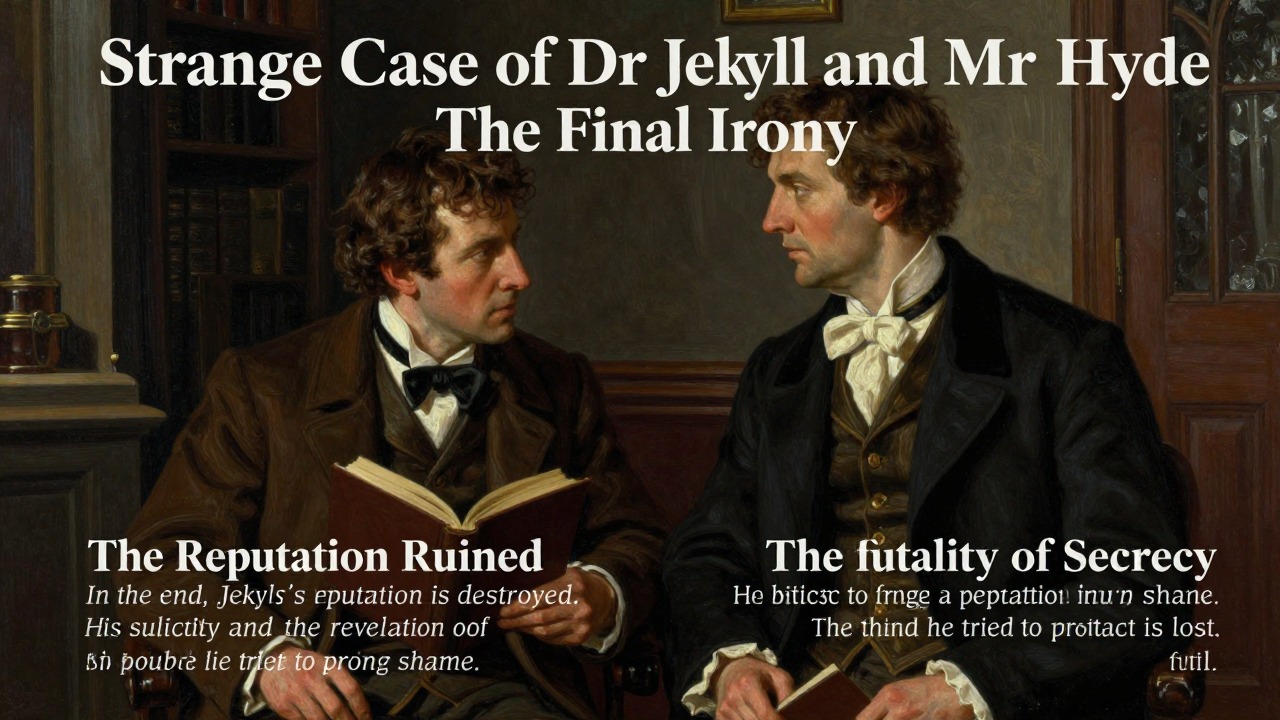
The Final Irony
The Reputation Ruined
In the end, Jekyll's reputation is destroyed. His suicide and the revelation of his double life bring shame. The thing he tried to protect is lost.
The Futility of Secrecy
The novel suggests that the attempt to maintain a perfect reputation is futile. The truth will come out. The price of reputation is not worth the cost.
The Moral Lesson
Jekyll's tragedy is a warning against the hypocrisy of Victorian society. The fear of disgrace leads to greater disgrace. The theme is that honesty is better than a false reputation.
early in Jekyll's life
after the murder of Carew
the end of the novel
