Hyde's house in Soho
Hyde's house in Soho stands as the most tangible symbol of the secret, degraded existence that Henry Jekyll carved out for his alter ego, Edward Hyde. Located in a dismal quarter of London, the dwelling is a world away from the handsome, comfortable square where Dr. Jekyll lives. It is here that Hyde indulges his monstrous appetites, and it is from this address that he flees after the murder of Sir Danvers Carew, leaving behind a trail of evidence that confirms his villainy. The house is not merely a residence but a physical embodiment of the moral squalor and hidden depravity at the heart of Jekyll's experiment.
Location and Appearance
The house is situated in a dingy street in Soho, a neighborhood that Mr. Utterson, upon his first visit, perceives as "like a district of some city in a nightmare." The street itself is described as containing a gin palace, a low French eating house, a shop for penny numbers and twopenny salads, with ragged children huddled in doorways and women of many nationalities passing out for a morning glass. The fog that perpetually hangs over the area is as brown as umber, cutting off the viewer from the "blackguardly surroundings." This is the home of Henry Jekyll's favourite, a man who is heir to a quarter of a million sterling, making the squalor of his chosen environment a shocking contrast to his wealth. The house is kept by an ivory-faced and silvery-haired old woman with an evil face smoothed by hypocrisy, whose manners are excellent but whose character is clearly corrupt.
Interior and Evidence of Crime
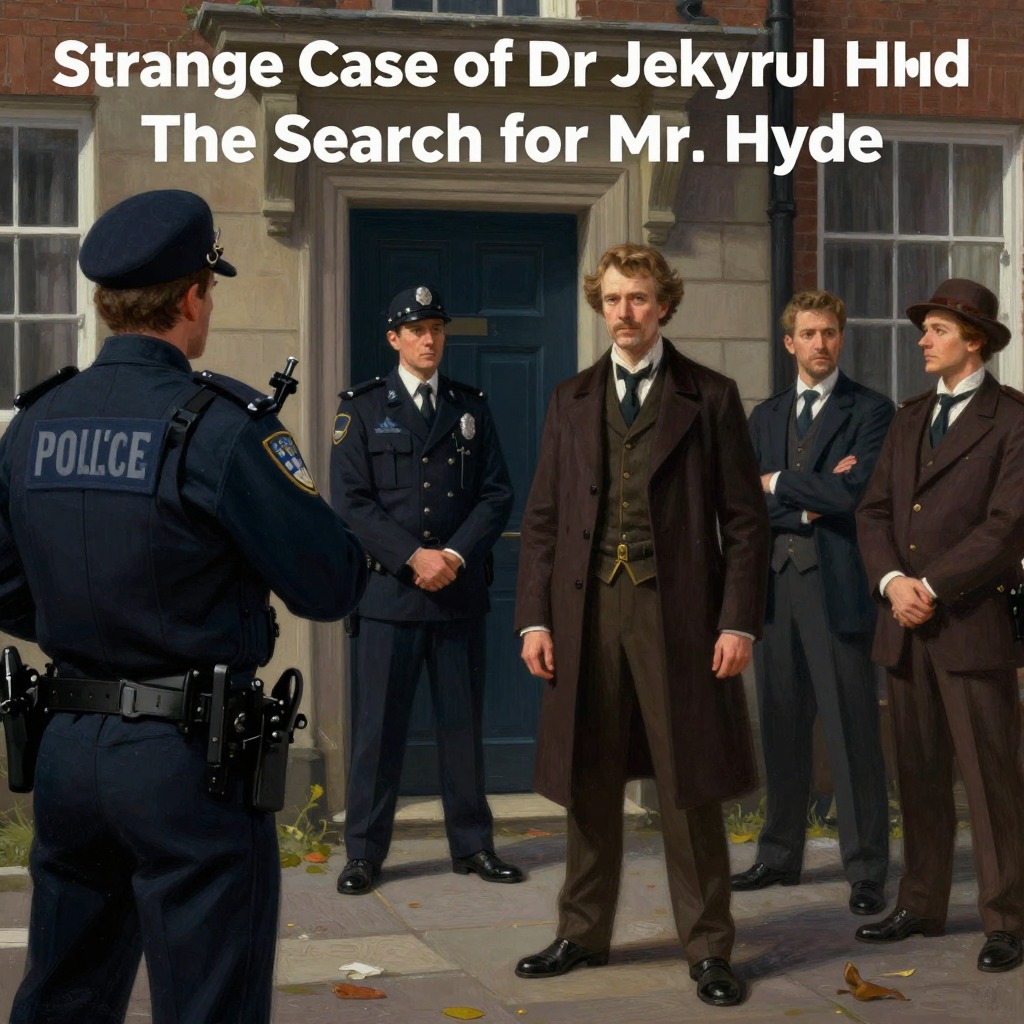
Inside, Hyde has furnished only a couple of rooms, but these are done with luxury and good taste. The rooms contain a closet filled with wine, silver plate, elegant napery, a good picture on the wall (a gift from Jekyll), and carpets of many plies. However, when Utterson and Inspector Newcomen search the premises after the Carew murder, the rooms bear every mark of having been recently and hurriedly ransacked. Clothes lie about the floor with pockets inside out, lock-fast drawers stand open, and on the hearth lies a pile of grey ashes, as though many papers have been burned. From these embers, the inspector disinters the butt end of a green cheque book, which had resisted the fire. The other half of the murder weapon, the heavy cane, is found behind the door. A subsequent visit to the bank reveals several thousand pounds lying to the murderer's credit, completing the inspector's gratification and clinching his suspicions.
Narrative Significance
Hyde's house in Soho functions as the physical repository of Jekyll's secret life. It is the place where Hyde can exist without the constraints of Jekyll's respectable identity, a space where his undignified and monstrous pleasures can be pursued. The house's location in a disreputable quarter of London mirrors the moral degradation of its occupant. The evidence found there—the burnt cheque book, the broken cane, the hastily abandoned rooms—provides the police with the material proof needed to confirm Hyde's guilt. Furthermore, the house represents the ultimate failure of Jekyll's experiment: the attempt to separate his good and evil natures into distinct physical spaces, with the Soho house as the designated home for the evil, ultimately proves unsustainable, as the boundaries between the two identities begin to collapse. The house is not just a hideout; it is a monument to the depravity that Jekyll could not contain.