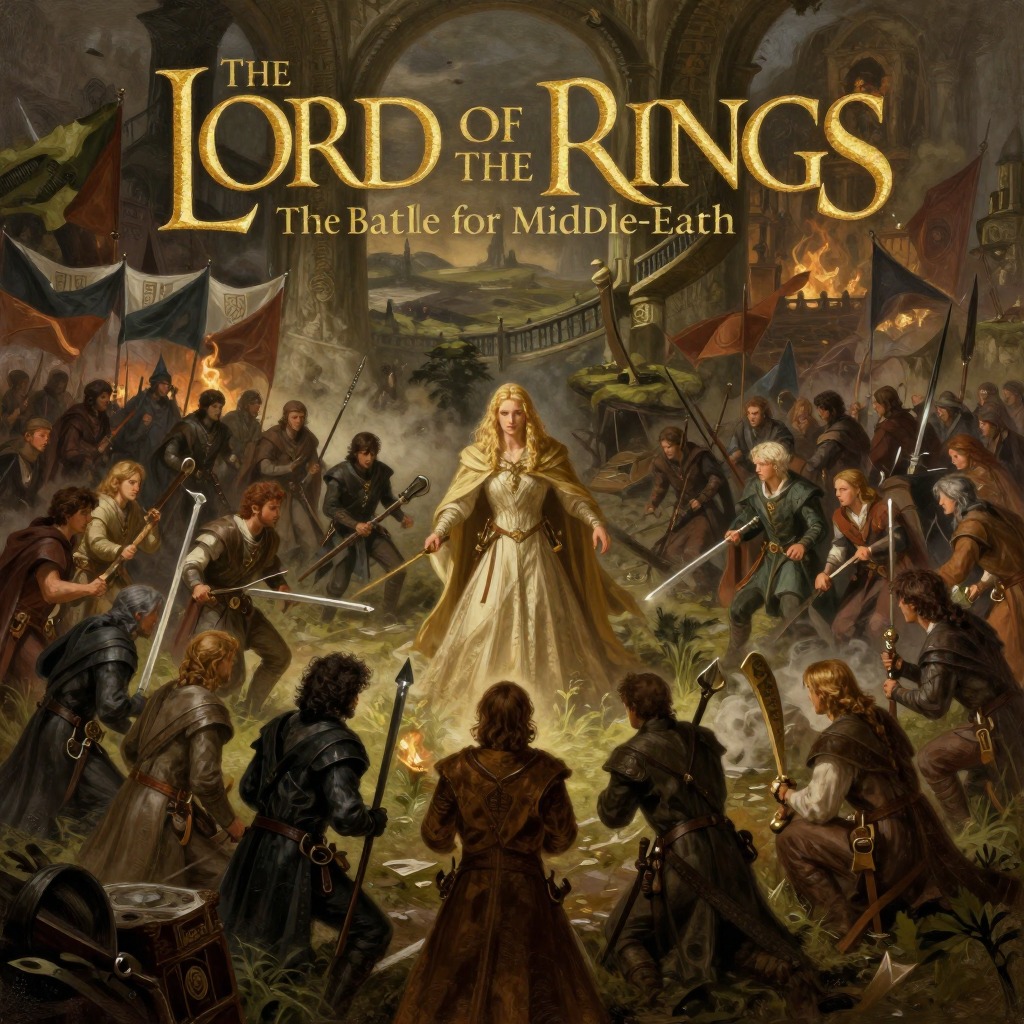
Dol Guldur
Dol Guldur, the Hill of Sorcery, stands as one of the most ominous locations in Middle-earth, a fortress of shadow and dark magic hidden within the southern reaches of Mirkwood. Throughout the Third Age, it served as the lair of Sauron during his long concealment, a place from which his will radiated outward, corrupting the forest and threatening the neighboring realms. Its very name evokes dread, and its presence in the narrative of The Lord of the Rings marks the tangible advance of the Shadow that the heroes must resist. Though the story of the War of the Ring unfolds across many lands, Dol Guldur is the dark wellspring from which much of the peril flows, a constant reminder that the enemy's power is not confined to Mordor alone.
Origins and Role in the Third Age
Dol Guldur's history is intertwined with Sauron's return after his defeat in the Second Age. Following the fall of Númenor and the Last Alliance, Sauron's spirit endured, and he gradually reasserted his influence. In the Third Age, he established a stronghold in the south of Mirkwood, a place that would become known as Dol Guldur, the Hill of Sorcery. This fortress was not merely a military outpost but a center of dark arts, where Sauron gathered his forces and spread his malevolent influence. The forest itself began to sicken under his presence, becoming a place of shadow and fear, its once-bright glades turning to gloom. The Wise, including Gandalf, suspected that the Necromancer who dwelt there was none other than Sauron himself, and this suspicion drove much of the strategic maneuvering of the White Council. The fortress served as a staging ground for Sauron's plans, a place from which he could strike at the free peoples of the North and distract them from his true designs in Mordor.
The Shadow Spreads: Dol Guldur's Influence on the Quest
The influence of Dol Guldur extends far beyond its physical location, reaching into the very heart of the Shire and the journey of the Ring-bearer. In the early chapters of The Fellowship of the Ring, the hobbits of Hobbiton speak of the strangeness of the world, and the shadow that seems to be growing. The narrator notes that 'trouble will come of it,' a foreboding that is directly linked to the dark forces stirring in the East. The presence of Dol Guldur is felt in the increasing danger of the roads, the appearance of Black Riders, and the general unease that pervades the land. When Frodo and his companions flee the Shire, they are not merely escaping the pursuit of the Ringwraiths; they are fleeing the long arm of a power that has its roots in Dol Guldur. The fortress is a symbol of the pervasive evil that the quest must confront, a reminder that the enemy is not a distant threat but an active, malevolent force that reaches into every corner of Middle-earth.
The Fortress as a Center of Dark Power
Dol Guldur is more than a geographical location; it is a nexus of dark power that shapes the course of events. The fortress is described as a place of sorcery, where Sauron's will is made manifest. It is from here that he directs his servants, including the Nazgûl, and it is here that he gathers his forces for the final assault on the free peoples. The very name, 'Hill of Sorcery,' suggests a place where the natural order is perverted, where dark arts hold sway. The fortress's location in Mirkwood, a forest already tainted by shadow, makes it a natural stronghold for the enemy. It is a place of fear and dread, a physical manifestation of the Shadow that threatens to engulf the world. The narrative repeatedly emphasizes the oppressive nature of the place, its dark towers and gloomy halls serving as a stark contrast to the light and beauty of places like Rivendell and Lothlórien.
The Fall of Dol Guldur and the End of the Shadow
The fate of Dol Guldur is tied to the ultimate defeat of Sauron. As the War of the Ring reaches its climax, the power of the fortress wanes. When the One Ring is destroyed and Sauron is finally vanquished, his strongholds crumble, and Dol Guldur is no exception. The fall of the fortress is a direct consequence of the Ring's destruction, a sign that the Shadow has been lifted from Middle-earth. In the aftermath of the war, the forest of Mirkwood begins to heal, and the dark influence of Dol Guldur fades. The fortress, once a symbol of Sauron's power, becomes a ruin, a reminder of the evil that was overcome. The destruction of Dol Guldur is not merely a military victory but a spiritual one, a sign that the long defeat of the free peoples has finally been reversed. The fall of the fortress marks the end of an era, the beginning of a new age in which the shadow of Sauron no longer looms over the world.
Narrative Significance: The Symbol of the Spreading Shadow
In the broader narrative of The Lord of the Rings, Dol Guldur serves as a powerful symbol of the spreading shadow that threatens to consume Middle-earth. It is a place that embodies the enemy's reach, a constant reminder that the forces of darkness are not confined to Mordor but are active throughout the world. The fortress's presence in the story underscores the theme of the long defeat, the sense that the free peoples are fighting a losing battle against an overwhelming evil. Yet, its eventual fall also represents the possibility of hope, the idea that even the darkest of places can be redeemed. Dol Guldur is a testament to the power of the Ring and the lengths to which Sauron will go to reclaim it, and its fate is a measure of the victory that is ultimately achieved. The fortress is not just a location; it is a character in its own right, a force that shapes the destiny of all who come into contact with it.