Rivendell
Rivendell, known in the Elvish tongue as Imladris, is the Last Homely House east of the Sea, a hidden refuge carved into a narrow valley where the river Bruinen runs. It is the dwelling of Elrond, the Half-elven lord who has guarded it through the long ages of the Third Age, and it functions as the great sanctuary of the Free Peoples against the rising power of Sauron. In the structure of The Lord of the Rings, Rivendell is the hinge of the entire narrative: it is where the hobbits arrive after their harrowing flight from the Shire, where the fate of the One Ring is debated and decided, and where the Fellowship is formally constituted before setting out into the wild. More than a place on a map, Rivendell is the last outpost of an older, wiser world, a pocket of peace and memory that stands against the encroaching Shadow, and its loss of permanence is one of the quiet sorrows of the tale.
A Sanctuary of Healing and Recovery
Rivendell first appears in the story as a place of restoration. When Frodo Baggins wakes there, he finds himself lying in a bed beneath a ceiling that is flat and richly carved with dark beams, and he hears the sound of a waterfall. He has no memory of how he came to be there, only the lingering sense of a long, unpleasant dream hovering at the edge of his mind. A voice tells him that he is in the house of Elrond, and that it is ten o'clock in the morning of October the twenty-fourth. The detail is precise and grounding: after the terror of the flight from Weathertop, where the Witch-king wounded him with a Morgul-blade, Rivendell is the place where Frodo's body and spirit are slowly drawn back from the brink. The carved beams and the sound of water are the first signs of a world that is ordered, beautiful, and safe, in stark contrast to the wild darkness through which the hobbits have passed. The healing that takes place here is not merely physical; it is the first true rest the hobbits have known since leaving the Shire, and it prepares Frodo for the far greater burdens that lie ahead.
The sanctuary is also a place of memory and continuity. Rivendell is not a fortress built against the present, but a house that holds the long history of the Elves, a living archive of the Elder Days. It is here that the past is not lost but kept, and it is here that the great decisions of the present are made with full knowledge of what has come before. The waterfall that Frodo hears is the sound of a place that has endured, that has seen ages pass and still stands, and that quiet endurance is itself a form of hope.
The Council of Elrond and the Decision of the Ring
The most significant event to take place in Rivendell is the Council of Elrond, the great gathering of representatives from all the Free Peoples who come to decide what is to be done with the One Ring. Elrond convenes the council in his house, and it is here that the full history of the Ring is laid out: its forging by Sauron, its loss, its rediscovery by Bilbo Baggins, and its inheritance by Frodo. The council is the moment when the scattered threads of the story are drawn together, and when the decision is made that the Ring must be destroyed in the fires of Mount Doom. It is also the moment when Frodo, who has carried the Ring to Rivendell, volunteers to take it on the quest, saying that he will take the Ring though he does not know the way. The council transforms Rivendell from a place of refuge into a place of departure; it is the threshold from which the great journey begins.
The council also reveals the deep divisions and alliances of the age. Elrond speaks with the authority of one who has seen the long defeat of the Elves, and his counsel carries the weight of ages. The decision made in Rivendell is not a simple one, and it is made with full knowledge of the cost. The house of Elrond is thus not only a sanctuary but a place of judgment, where the fate of the world is weighed and where the Fellowship of the Ring is born.
The Departure of the Fellowship
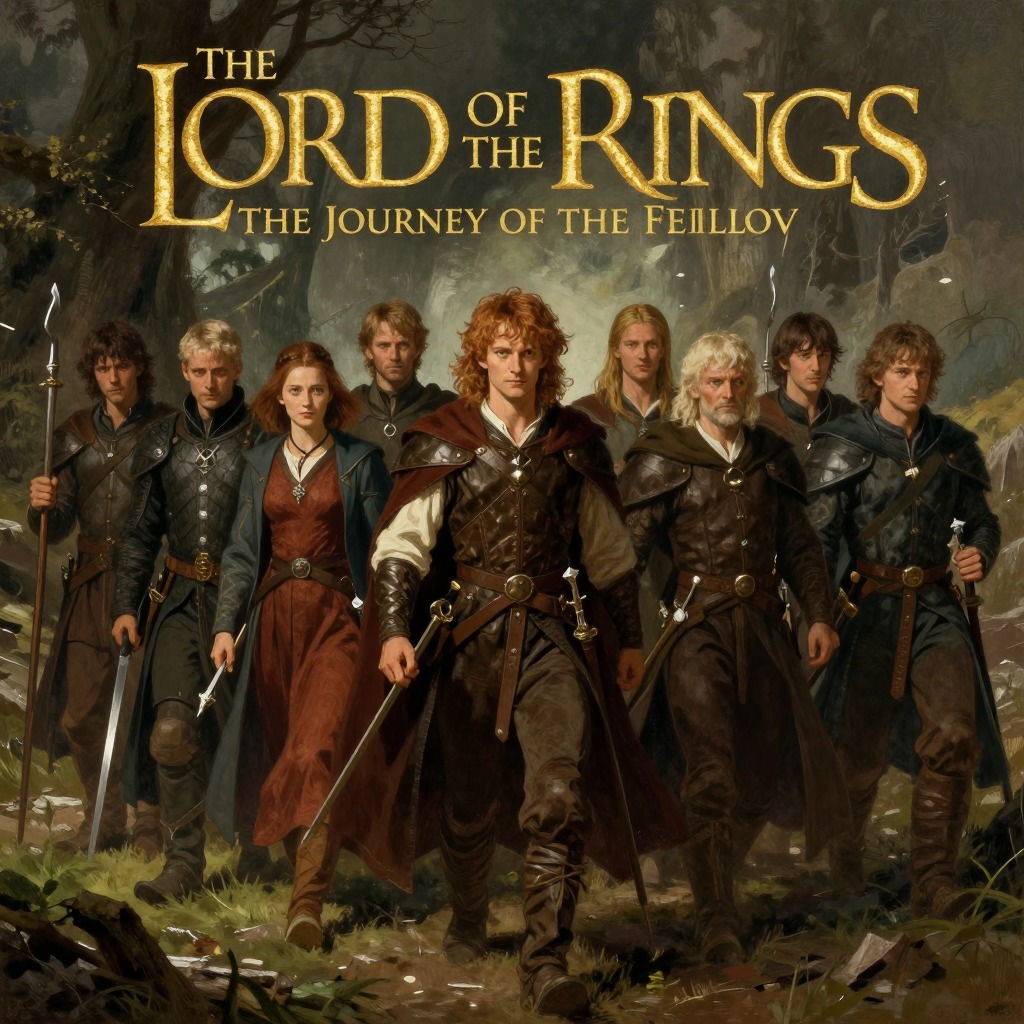
Rivendell is the starting point of the Fellowship's journey. After the council, the nine companions are chosen to represent the Free Peoples: four hobbits, Gandalf the wizard, Aragorn the Ranger, Legolas the Elf, Gimli the Dwarf, and Boromir of Gondor. They depart from Rivendell with the full blessing of Elrond, who has given them counsel and provision for the road ahead. The departure marks the end of the hobbits' time of safety and the beginning of their trial in the wild. Rivendell is thus the last place of comfort they will know for a long time, and the memory of its peace stays with them as they face the dangers of the Misty Mountains, Moria, and beyond.
The journey from Rivendell is itself a descent from the high sanctuary into the perilous world. The Fellowship leaves the valley of the Bruinen and heads toward the Redhorn Gate, where they are turned back by the snows of Caradhras. The failure at the Redhorn Gate forces them to take the dark road through Moria, and it is from this point that the quest begins to unravel. Rivendell, in retrospect, is the last place where the quest was whole and undamaged, before the loss of Gandalf in the depths of Moria and the breaking of the Fellowship at Amon Hen. Its peace is the baseline against which the growing darkness of the journey is measured.
The Enduring Significance of the Last Homely House
Rivendell's significance extends beyond the events that take place there. It is the home of Elrond, who is one of the great powers of the age, and it is the place where the history of the Elder Days is preserved. It is also the place where Aragorn's lineage is acknowledged and where his claim to the throne of Gondor is rooted, for it is in Rivendell that he was fostered and where he came to love Arwen, Elrond's daughter. The house is thus tied to the deepest threads of the story: the fate of the Ring, the restoration of the kingship, and the love between Elf and Man.
At the end of the tale, Rivendell's time is passing. With the destruction of the Ring and the beginning of the Fourth Age, the power of the Elves fades, and Elrond departs from Middle-earth for the Grey Havens, taking ship into the West. Rivendell, the Last Homely House, is left behind, a place of memory that will no longer be a refuge for the peoples of the new age. Its loss is part of the long defeat that the Elves have always known, and its passing marks the end of an era. Yet in the story itself, Rivendell remains the enduring symbol of what is worth fighting for: a place of healing, of wisdom, and of hope, standing against the dark until the very end.