Lothlórien
Lothlórien, known also as Lórien and the Golden Wood, is the hidden Elven realm east of the Misty Mountains, a land of golden-leaved mallorn trees and the last great sanctuary of the Elves in Middle-earth before the coming of the Fourth Age. It is the domain of Celeborn and Galadriel, the Lady of the Golden Wood, and it is here that the Fellowship of the Ring, having fled the horrors of Moria and the fall of Gandalf, finds a brief and bittersweet respite. The realm stands as a living emblem of the Elder Days, a place where time itself seems to slow, yet it is also a place of profound testing, where the power of the One Ring is weighed against the will of its bearers. Its importance in the larger story is twofold: it is a refuge that heals and equips the heroes for the trials ahead, and it is a symbol of the fading glory of the Elves, a beauty that cannot endure the coming age of Men.
A Realm of Ancient Beauty and Enchantment
Lothlórien is defined by its extraordinary natural beauty, most notably its mallorn trees, which are described as having large, pale leaves of golden hue. These trees are not merely decorative; they are the very essence of the realm, their golden canopy casting a light that seems otherworldly. The land is a place of profound stillness and enchantment, where the air is filled with a sense of ancient memory and the passage of time is felt differently than in the mortal lands to the west. It is a realm of the Galadhrim, the Tree-people, who live in harmony with the forest, building their homes high in the branches of the mallorns. The very name of the land evokes its character: a place of light and beauty that stands in stark contrast to the dark, corrupted lands of Mordor and the desolation of Isengard. This is a land that has remained untouched by the ravages of the wider war, a pocket of the Elder Days persisting into the Third Age, and its presence in the narrative serves as a poignant reminder of what is at stake in the struggle against Sauron.
The Fellowship's Refuge After Moria
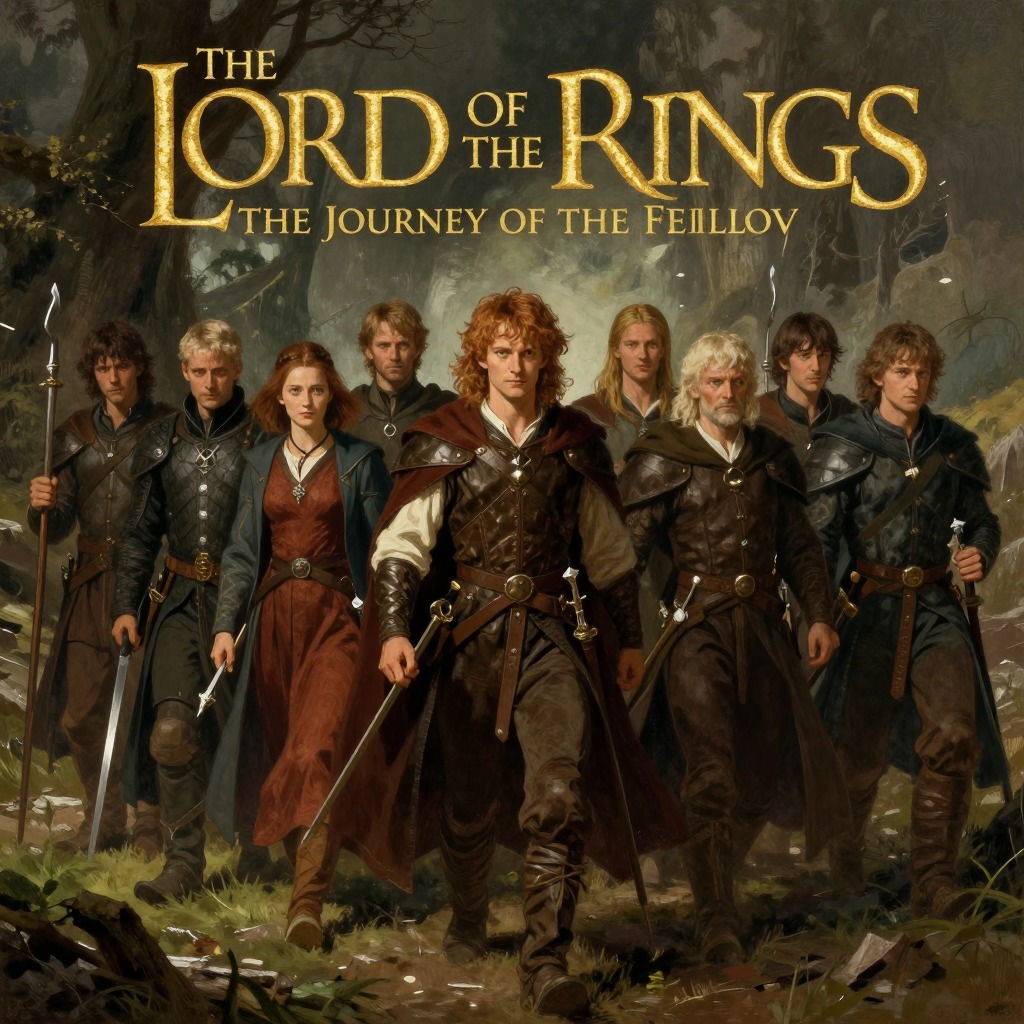
The Fellowship arrives in Lothlórien in a state of profound grief and exhaustion, having just witnessed the fall of Gandalf in the depths of Moria. The chapter that follows their escape, titled "Lothlórien," opens with Aragorn's lament for the lost wizard, his words capturing the despair that grips the Company: "Farewell, Gandalf!... Did I not say to you: if you pass the doors of Moria, beware? Alas that I spoke true! What hope have we without you?" This moment of despair is the immediate context for their entry into the Golden Wood. The realm offers them not only physical rest but also a spiritual balm, a place where they can begin to process their loss. The contrast between the dark, claustrophobic mines of Moria and the open, golden light of Lothlórien is stark, marking a transition from the underworld of the Dwarves to the high realm of the Elves. It is here, in this place of healing, that the Company is given the strength to continue, even as they must do so without their guide and leader.
The Gifts of the Galadhrim and the Path Forward
The stay in Lothlórien is not merely a period of rest; it is a time of preparation. The Elves of the realm, under the direction of Galadriel, equip the Fellowship for the trials that lie ahead. The most significant of these provisions are the Elven cloaks, which are not simple garments but are imbued with a subtle magic that helps the wearers blend into the natural world, and the Elven rope, a seemingly simple cord that proves to be of extraordinary strength and utility. These gifts are more than practical aids; they are tokens of the Elves' goodwill and their investment in the quest. The mallorn-leaf, a symbol of Lothlórien, becomes a crucial piece of evidence later in the story. When Aragorn, Gimli, and Legolas search for the captured Merry and Pippin, it is a mallorn-leaf from Lórien, found with crumbs of waybread and cut cord, that reveals the hobbits had been there and had escaped their bonds. This small, golden leaf, carried from the heart of the Golden Wood, becomes a sign of hope in the midst of despair, a tangible link between the sanctuary of the Elves and the desperate struggle in the wild. The gifts of Lothlórien, therefore, extend far beyond the moment of their giving, weaving the realm's influence into the very fabric of the quest's later events.
A Symbol of the Fading Elven Age
Lothlórien's beauty is inseparable from its fragility. The realm is a relic of a bygone era, a place where the power of the Elven rings still holds sway, but its time is passing. The narrative makes clear that the world is changing, and the dominion of the Elves is coming to an end. The Golden Wood, for all its timelessness, is a place of memory and loss, its very perfection a reminder of what will soon be gone. This is underscored by the fact that the realm's power is tied to the One Ring; the destruction of the Ring, which is the ultimate goal of the quest, will also mean the fading of Lothlórien and the departure of its Elven lords. The realm thus stands as a poignant symbol of the long defeat, a beautiful thing that cannot endure. Its significance is not just as a waypoint on a journey, but as a living embodiment of the theme of loss that runs throughout the entire work. The peace and beauty of Lothlórien are a gift, but they are also a farewell, a final glimpse of a world that is passing away forever.