Fiction

Fiction(100)

Cover of "Silence (Library Edition)": a portrait of Sebastian Rodrigues, a single strong focal subject in a painterly scene, a rich muted palette with dramatic warm light…
Silence (Library Edition)by Shūsaku Endō
206 Entities

Silence (original Japanese title: 沈黙, Chinmoku) is a historical novel by Japanese author Shūsaku Endō, first published in 1966. It won the prestigious Tanizaki Prize the following year and is widely regarded as a masterpiece of 20th-century Japanese literature. The novel is set in the 17th century, during the Edo period, when the Tokugawa shogunate was brutally persecuting Christians and driving the religion underground. The story follows two Portuguese Jesuit priests, Sebastião Rodrigues and Francisco Garrpe, who travel to Japan to investigate reports that their mentor, Cristóvão Ferreira, has apostatized under torture. Upon arriving, they minister to the hidden Christian communities in the Nagasaki region while searching for Ferreira. Eventually, they are captured by the authorities and subjected to relentless psychological and physical pressure to renounce their faith. Rodrigues witnesses the torture of Japanese believers, including the agonizing "pit torture" (ana-tsurushi), where victims are hung upside down over a pit. He himself is forced to face the fumie, a metal image of Christ that he must trample on to prove his apostasy. Throughout his ordeal, Rodrigues prays to God but receives only silence. The climax of the novel occurs when he finally steps on the fumie, but not as a defeat—rather, he hears a voice telling him that Christ was born to be trampled upon, and that his action is an act of compassion to save others. The novel ends with Rodrigues living out his life in Japan as a formal apostate, yet inwardly clinging to his faith. The central themes of Silence include the silence of God in the face of human suffering, the nature of faith and doubt, the clash between Eastern and Western cultures, and the meaning of apostasy. Endō challenges the traditional Christian notion of a triumphant, omnipotent God, proposing instead a compassionate Christ who shares in human weakness. The novel also explores the concept of "hidden Christians" (kakure kirishitan) and how faith can survive underground. Endō's own experience as a Japanese Catholic deeply informed the novel; he grappled with the feeling of being an outsider in both his native culture and the global Church. Silence has had a profound and lasting influence. It is often cited as one of the most important works of Japanese literature, and it has been translated into many languages. The novel inspired Martin Scorsese's 2016 film adaptation, which brought the story to a wider international audience. Critics and readers continue to debate its theological implications, and it remains a touchstone for discussions on faith, colonialism, and cultural identity. Endō's nuanced portrayal of apostasy as a possible form of martyrdom has sparked considerable controversy and reflection. The book's status as a classic ensures its place in the canon of world literature, and its exploration of universal human questions keeps it relevant decades after publication.

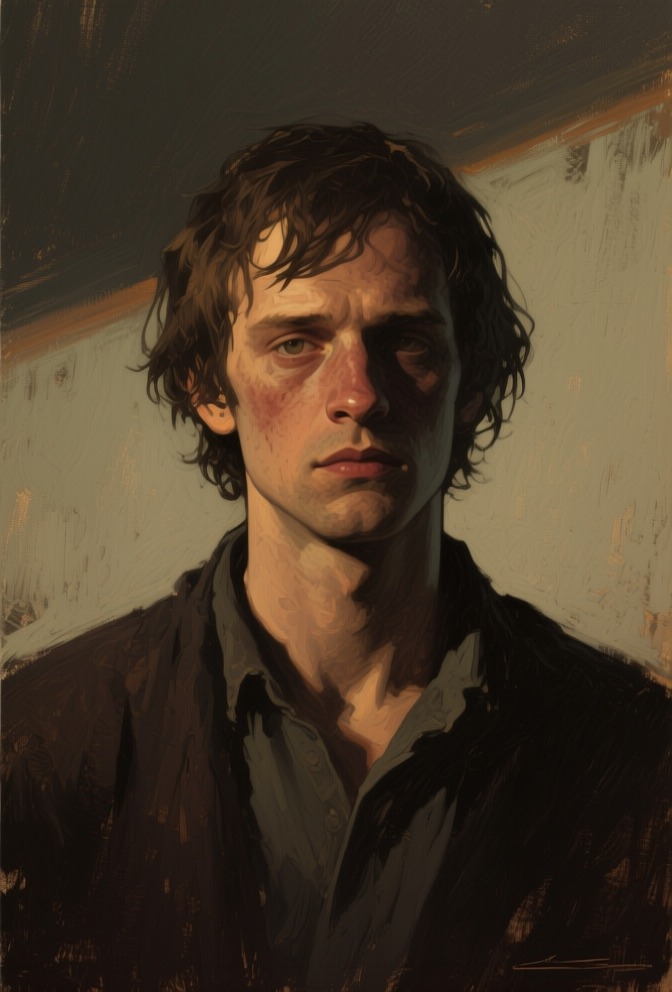
Cover of "Insomnia": a portrait of Ralph Roberts, a single strong focal subject in a painterly scene, a rich muted palette with dramatic warm light against deep…
Insomniaby Stephen King
130 Entities

Insomnia is a 1994 novel by American author Stephen King, blending horror, fantasy, and supernatural fiction. Published by Viking on October 10, 1994, the book is set in the fictional town of Derry, Maine—a recurring location in King's oeuvre, most famously featured in It. The novel is deeply connected to King's Dark Tower series, serving as a spiritual prequel and introducing key elements of that multiverse. The story follows Ralph Roberts, a retired widower who develops severe insomnia after his wife's death from cancer. As his sleep deprivation worsens, Ralph begins to perceive auras radiating from people, revealing their emotional states and health. He also sees three bald, diminutive doctors—Clotho, Lachesis, and Atropos—who are supernatural beings responsible for managing the threads of life and death. Along with his neighbor Lois, Ralph discovers that a deranged man named Ed, manipulated by the Crimson King, plans to massacre thousands at a local abortion rights rally. The narrative weaves Ralph's deteriorating physical condition with his growing awareness of a hidden reality, culminating in a sacrifice that saves the life of Ed's daughter and prevents the catastrophe. Central themes of Insomnia include the nature of mortality, free will versus predestination, the psychological toll of aging, and the concept of time as a nonlinear force. King explores how ordinary people can become agents of change when confronted with cosmic-scale events. The novel also tackles real-world issues such as abortion politics and the violence of ideological extremism, grounding its supernatural elements in social commentary. King wrote Insomnia during a period of personal recovery from addiction, and the book reflects a more contemplative, slower-paced style compared to his earlier works. This departure from pure horror led to mixed reviews upon release, with some critics praising its depth and others criticizing its length. However, over the decades, Insomnia has gained a cult following, particularly among Dark Tower fans. It is now recognized as a crucial entry in King's canon, offering a mature meditation on life, death, and the choices that define us. The novel's influence extends to its role in expanding the Dark Tower mythology, and its depiction of the Crimson King has become iconic. Insomnia remains a testament to King's ability to fuse genre fiction with profound existential inquiry, and it continues to be studied and debated by readers and scholars alike.

Cover of "Harry Potter and the Half-Blood Prince": a portrait of Harry Potter, a single strong focal subject in a painterly scene, a rich muted palette with dramatic warm light against deep…
Harry Potter and the Half-Blood Princeby USS
319 Entities

Harry Potter and the Half-Blood Prince is the sixth novel in the Harry Potter series by British author J. K. Rowling. Published by Bloomsbury in the United Kingdom on 16 July 2005, the book runs 607 pages in its first edition and features cover art by Jason Cockcroft. It belongs to the fantasy genre and continues the story of the young wizard Harry Potter as he enters his sixth year at Hogwarts School of Witchcraft and Wizardry, bridging the events of The Order of the Phoenix and the series finale, The Deathly Hallows. The plot opens with the wizarding world in turmoil: Lord Voldemort has returned openly, and the Ministry of Magic, now led by Rufus Scrimgeour, struggles to contain the rising violence. At Hogwarts, Harry gains an old Potions textbook inscribed with the name "Half-Blood Prince"; the book is filled with handwritten annotations and spells that give him extraordinary success in class. Meanwhile, Headmaster Albus Dumbledore begins showing Harry memories of Voldemort's past through a Pensieve, revealing the Dark Lord's childhood, his family, and his creation of Horcruxes—objects containing fragments of his soul. Dumbledore believes that to defeat Voldemort, all Horcruxes must be destroyed. After obtaining a crucial memory from Professor Horace Slughorn, Harry and Dumbledore travel to a seaside cave to retrieve Salazar Slytherin's locket, a likely Horcrux. Dumbledore is severely weakened by the protective potion. Upon returning to Hogwarts, they find the Dark Mark floating above the Astronomy Tower—Death Eaters have infiltrated the school. On the tower, Draco Malfoy disarms Dumbledore, but hesitates to kill him. Severus Snape then arrives and casts the Killing Curse, murdering Dumbledore before fleeing with the Death Eaters. In the aftermath, Harry learns that Snape was the Half-Blood Prince—the son of a Muggle father and a witch mother, and a former friend of Harry's mother, Lily. The novel ends with Harry, devastated by Dumbledore's death, deciding not to return to Hogwarts but to hunt down the remaining Horcruxes. Core themes include love and sacrifice, the power of choice, mortality, and the transition from adolescence to adulthood. The death of Dumbledore underscores that heroes must often face their greatest trials alone. The book also explores romantic relationships: Harry's growing feelings for Ginny Weasley, and the tension between Ron Weasley and Hermione Granger. Writing background: Rowling had long planned the series' ending, and this instalment deliberately deepened character development and foreshadowing, setting the stage for the final volume. The novel's tone is notably darker and more mature, reflecting the escalating war. Harry Potter and the Half-Blood Prince was a commercial and critical triumph. It sold nearly seven million copies in its first 24 hours, setting a world record at the time. It won the 2006 British Book of the Year award and was praised for its emotional depth, tight plotting, and rich characterisation. Critics have called it one of the most powerful entries in the series. Its influence endures: the 2009 film adaptation grossed over $1 billion worldwide, and the book's revelations about Snape, the Horcruxes, and Dumbledore's death continue to be analysed by fans and scholars alike. It remains a cornerstone of modern fantasy literature, demonstrating how a children's series can evolve into a complex exploration of loss, loyalty, and moral ambiguity.

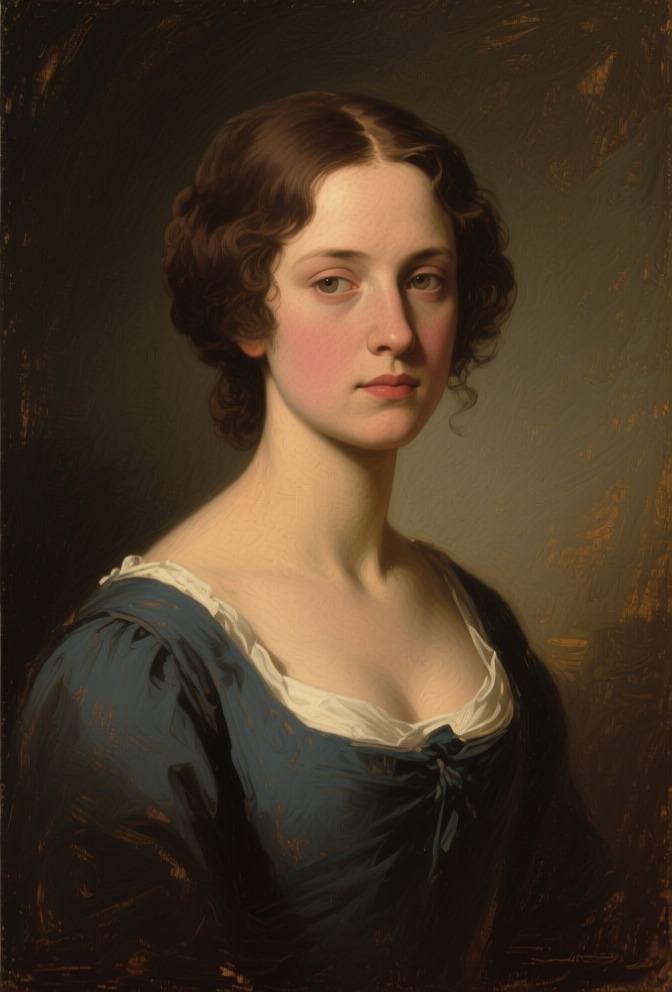
Cover of "The Scarlet Letter": a portrait of Hester Prynne, a single strong focal subject in a painterly scene, a rich muted palette with dramatic warm light against deep…
The Scarlet Letterby Hawthorne, Nathaniel
90 Entities

Introduction *The Scarlet Letter* (full title *The Scarlet Letter: A Romance*) is a historical novel by American author Nathaniel Hawthorne, published on March 16, 1850, by Ticknor, Reed & Fields in Boston. The book belongs to the Romantic and Historical genres. Set in the Puritan Massachusetts Bay Colony during the years 1642 to 1649, it is widely regarded as one of the most influential works of American literature and a pioneering example of psychological fiction. Plot Summary The story opens with Hester Prynne being led from the town prison to a public scaffold, holding her infant daughter Pearl. She has been convicted of adultery and is condemned to wear a scarlet letter “A” on her breast as a permanent mark of shame. Despite intense pressure, Hester refuses to name the father of her child. Her long-absent husband, an elderly scholar, arrives in the colony under the assumed name Roger Chillingworth and begins to secretly investigate the identity of the man who wronged him. The revered young minister Arthur Dimmesdale, who is in fact Pearl’s father, suffers agonizing guilt and self-loathing, which Chillingworth exploits through psychological torment. Over the next seven years, Hester’s quiet dignity and charitable acts gradually transform the scarlet letter’s meaning from “adulteress” to “able” in the eyes of some townspeople. Dimmesdale, unable to bear the secret any longer, confesses his sin publicly on the scaffold and dies. Chillingworth, his purpose gone, also withers away. Hester, after a period abroad, returns to the colony and continues to wear the scarlet letter of her own accord until her death. Core Themes The novel explores sin, guilt, shame, redemption, and the hypocrisy of Puritan society. The scarlet letter itself is a multi-layered symbol: it begins as a mark of punishment, evolves into a sign of Hester’s strength and individuality, and ultimately becomes an emblem of grace. Hawthorne also examines the corrosive effects of hidden sin—Dimmesdale’s secret destroys him from within, while Chillingworth’s obsessive revenge dehumanizes him. The character of Pearl, the living embodiment of the scarlet letter, represents both the natural, untamed spirit and the possibility of a new beginning. The novel criticizes the cruelty of religious fundamentalism, the double standards applied to women, and the failure of communal justice. Writing Background Hawthorne’s personal history deeply influenced the novel. His ancestor John Hathorne was a judge in the Salem witch trials of 1692, a legacy that haunted him and made him acutely aware of the dangers of moral absolutism. In 1848, Hawthorne lost his position as Surveyor of the Port at the Salem Custom House due to political changes, and he devoted himself to writing. He completed *The Scarlet Letter* in 1850. The book was an immediate bestseller and one of the first mass-produced novels in the United States. Influence and Legacy *The Scarlet Letter* has never been out of print and remains a staple of high school and college curricula. It has influenced countless writers, including Henry James, William Faulkner, John Updike, Philip Roth, and Toni Morrison. The novel has been adapted into numerous films, stage plays, operas, and television series. Its profound meditation on sin, identity, and social judgment continues to resonate with readers worldwide, securing its place as a cornerstone of American literature.


Cover of "Harry Potter and the Chamber of Secrets": a portrait of Harry Potter, a single strong focal subject in a painterly scene, a rich muted palette with dramatic warm light against deep…
Harry Potter and the Chamber of Secretsby Harry Potter
230 Entities

Harry Potter and the Chamber of Secrets is a fantasy novel by British author J. K. Rowling, the second book in the Harry Potter series. It was first published in the United Kingdom on 2 July 1998 by Bloomsbury, with cover art by Cliff Wright. The novel continues the story of Harry Potter, a young wizard, during his second year at Hogwarts School of Witchcraft and Wizardry. The plot begins during the summer holidays, when Harry is stuck at the Dursleys' house. A house-elf named Dobby appears and warns him not to return to Hogwarts, claiming that great danger awaits. Ignoring the warning, Harry is rescued by his friend Ron Weasley and his twin brothers, Fred and George, using a flying car. However, the car crashes into the Whomping Willow, resulting in a near-expulsion. Back at Hogwarts, strange events unfold: students are found petrified, a mysterious voice echoes in the corridors, and a message appears on the wall warning that the Chamber of Secrets has been opened. According to legend, Salazar Slytherin, one of the founders of Hogwarts, built a secret chamber containing a monster that would purge the school of Muggle-born students. Only his true heir can open it. Harry discovers that he can speak Parseltongue, the language of snakes, which makes him a prime suspect as the heir. With the help of his friends Hermione Granger and Ron, Harry uncovers the truth: the monster is a basilisk, a giant serpent whose gaze can kill, and the one who opened the Chamber is Tom Riddle—a memory of the young Voldemort preserved in a magical diary. Riddle has been possessing Ginny Weasley, Ron's younger sister, to carry out the attacks. In the climax, Harry enters the Chamber with the help of Fawkes the phoenix and the Sorting Hat, defeats the basilisk with the sword of Gryffindor, and destroys the diary, saving Ginny and thwarting Voldemort's plan to return to power. Key themes include choice and identity: Harry, like Voldemort, is a Parselmouth, but he uses his abilities for good, reinforcing the idea that one's choices define them more than their innate traits. Prejudice and discrimination are also central, as the novel explores pure-blood supremacy and the oppression of house-elves. Friendship, bravery, and loyalty are celebrated through the trio's unwavering support for one another. The novel also introduces the concept of Horcruxes, though not by name, setting the stage for later books. The writing background of The Chamber of Secrets is rooted in Rowling's early career. After the success of Philosopher's Stone in 1997, she wrote the sequel while still struggling as a single mother. The book was published only a year later, demonstrating her rapid creative output. The story incorporates elements of mystery and horror, with a stronger focus on foreshadowing and character development compared to the first book. Upon release, the novel was a worldwide bestseller, winning the Nestlé Smarties Book Prize and the British Book Award for Children's Book of the Year. It was adapted into a critically acclaimed film in 2002, directed by Chris Columbus. The book's lasting influence lies in its deepening of the magical world and its exploration of moral complexity, making it a beloved entry in the series that continues to resonate with readers of all ages.

Cover of "The Secret Garden": a portrait of Colin Craven, a single strong focal subject in a painterly scene, a rich muted palette with dramatic warm light against deep…
The Secret Gardenby Frances Hodgson Burnett
130 Entities

Basic Facts *The Secret Garden* is a classic children's novel by British-American author Frances Hodgson Burnett. It was first serialized in *The American Magazine* from November 1910 to August 1911 and published in book form on August 25, 1911. Set in Yorkshire, England, the novel has become a beloved staple of English children's literature, renowned for its timeless themes of healing and renewal. Plot Summary The story follows Mary Lennox, a spoiled and neglected ten-year-old girl born to wealthy British parents in India. After a cholera epidemic kills her parents, Mary is sent to live with her reclusive uncle, Archibald Craven, at Misselthwaite Manor in Yorkshire. Initially disagreeable and selfish, Mary gradually softens as she befriends the maid Martha, Martha's brother Dickon (a boy who can talk to animals), and her sickly cousin Colin, who has been hidden away in the manor believing he is dying. Mary discovers a long-locked secret garden that was her late aunt's favorite, now overgrown and abandoned. With Dickon's help, she begins to restore the garden, and the trio's shared labor and joy bring new life to the garden and to themselves. Colin gains strength and confidence, Mary becomes cheerful and caring, and the grieving Mr. Craven is finally drawn back to the garden by the memory of his wife, reuniting with his son. Core Themes At its heart, *The Secret Garden* is a story about the transformative power of nature and human connection. The garden serves as a powerful symbol of inner growth, healing, and the possibility of renewal after loss. Burnett weaves themes of friendship, independence, and the rejection of rigid social hierarchies. Mary's journey from a tyrannical child to a nurturing friend mirrors the garden's revival, while Colin's recovery challenges the Edwardian era's expectations of masculinity and illness. The novel also subtly critiques male-dominated society, advocating for a harmonious relationship between humans and the natural world. Writing Background Burnett drew heavily on her own life. After the death of her son Lionel from tuberculosis in 1890, she became deeply interested in themes of illness and recovery. From 1898 to 1907, she rented Great Maytham Hall in Kent, where she restored a walled garden that directly inspired the novel's secret garden. This hands-on experience with gardening as emotional therapy infused the book with authentic detail and emotional depth. Burnett wrote the novel with her own children and gardens in mind, and it remains one of her most personal works. Influence and Legacy *The Secret Garden* has never been out of print and has been translated into over 50 languages. It has been adapted into numerous films, television series, stage plays, and musicals, including a highly acclaimed 1993 film. The novel is considered a classic of both children's literature and literary fiction, appearing in scholarly studies and school curricula worldwide. It influenced writers such as T.S. Eliot and D.H. Lawrence, and its themes of psychological healing through nature continue to resonate with modern readers. The book's enduring appeal lies in its ability to speak to the child in every reader, offering a message of hope and transformation.

Cover of "A Clockwork Orange": an evocative symbolic scene capturing the central mood of this novel, with a single strong focal point, a rich muted palette with dramatic…
A Clockwork Orangeby Anthony Burgess
130 Entities

A Clockwork Orange is a dystopian novel by English author Anthony Burgess, first published on 17 March 1962. Set in a near-future England, the novel follows the story of Alex, a fifteen-year-old sociopath who leads a gang of "droogs" on nightly rampages of "ultra-violence." The novel is divided into three parts. In Part One, Alex and his gang commit robbery, assault, and rape, culminating in a murder that leads to Alex's betrayal by his friends and his arrest. He is sentenced to fourteen years in prison. Part Two depicts Alex's imprisonment and his participation in the Ludovico Technique, an experimental aversion therapy designed to condition criminals against violence. Through a series of injections and forced viewing of violent films, Alex becomes physically ill at the thought of violence, losing his ability to choose evil. He is released as a "cured" man. Part Three follows Alex's return to society, where he is rejected by his family, attacked by former victims, and manipulated by politicians. The novel ends with Alex growing up and voluntarily abandoning his violent ways, though the American edition omitted the final chapter, leaving the ending more cynical. The novel's central theme is the conflict between free will and state control. Burgess uses the metaphor of a "clockwork orange"—a living organism that is mechanically controlled—to critique any system that removes the individual's capacity for moral choice. The book explores the nature of evil, the possibility of redemption, and the dangers of behavioral conditioning. The writing is notable for its invented slang, Nadsat, a blend of Russian, English, and Cockney rhyming slang, which creates a linguistic barrier that mirrors the alienated youth subculture. Burgess wrote the novel while under the impression that he had a brain tumor and only a year to live, which infused the work with a sense of urgency and philosophical reflection on life and choice. A Clockwork Orange has had a profound impact on literature and popular culture. It was adapted into a controversial 1971 film by Stanley Kubrick, which Burgess himself disliked for its glorification of violence and omission of the redemptive final chapter. The novel has been praised for its linguistic innovation and moral complexity, and it is frequently listed among the greatest English-language novels, including Time magazine's "100 Best English-language Novels" and the Modern Library's "100 Best Novels." It remains a touchstone for discussions of free will, censorship, and the ethics of punishment. Despite its notoriety, the novel is a serious work of philosophical fiction that continues to challenge readers.

Cover of "The Wreck of the Titan, or Futility": a portrait of John Rowland, a single strong focal subject in a painterly scene, a rich muted palette with dramatic warm light against deep…
The Wreck of the Titan, or Futilityby The Wreck of the Titan, or Futility
94 Entities

The Wreck of the Titan, or Futility is a novella written by American author Morgan Robertson, first published in 1898. The story centers on the fictional ocean liner Titan, at the time the largest and most technologically advanced vessel ever built, widely regarded as 'unsinkable.' On a voyage across the North Atlantic, the Titan strikes an iceberg on a night in April and sinks, resulting in catastrophic loss of life due to insufficient lifeboats. The protagonist, John Rowland, is a disgraced former U.S. Navy officer reduced to alcoholism and working as a lowly deckhand on the Titan. After the collision, he rescues Myra, the young daughter of his former lover, and both survive by clinging to an iceberg. They are eventually picked up by a passing ship, but Rowland faces legal trouble when the mother accuses him of kidnapping. A sympathetic judge dismisses the charge, and Rowland subsequently disappears from high society, eventually becoming a fisherman and later a government clerk. The novel is famous for its eerie parallels to the RMS Titanic disaster of 1912: both ships were roughly the same size, carried a similar number of passengers and lifeboats, had three propellers, steamed at comparable speeds, and sank after hitting an iceberg in the North Atlantic in April. The Titan, like the Titanic, was considered unsinkable and was on a record-breaking attempt. After the real disaster, Robertson revised the novella, altering the ship's tonnage to more closely match the Titanic, and the book was reissued. Thematically, the title 'Futility' underscores the vanity of human ambition and technological hubris in the face of nature's power. It also explores a personal redemption arc: Rowland's transformation from a broken man into a reluctant hero, then his quiet retreat into obscurity. The work has been cited as a remarkable example of literary precognition, sparking debates about coincidence, fate, and the subconscious fears of the era. It remains a staple of maritime literature and a cultural touchstone whenever the Titanic story is discussed, and it continues to fascinate readers with its blend of adventure, morality, and prophecy.

Cover of "The Phantom of the Opera": a portrait of Christine Daae, a single strong focal subject in a painterly scene, a rich muted palette with dramatic warm light against…
The Phantom of the Operaby Gaston Leroux
145 Entities

Basic Facts and Publication History *The Phantom of the Opera* (French: *Le Fantôme de l'Opéra*) is a Gothic romance and mystery novel by French author Gaston Leroux. It was first serialized in the French newspaper *Le Gaulois* from 23 September 1909 to 8 January 1910, and published in book form by Pierre Lafitte in March 1910. The novel is set in the Paris Opera House during the 1880s and blends elements of romance, horror, detective fiction, and melodrama. The first English translation by Alexander Teixeira de Mattos appeared in 1911, introducing the story to a global audience. Plot Summary The novel is presented as a journalistic investigation into a series of bizarre events at the Paris Opera. The narrator, who claims to have gathered testimony from witnesses and documents, reconstructs the mystery of the so-called Opera Ghost. On the night of a farewell party for the retiring managers, chief stagehand Joseph Buquet is found hanged beneath the stage. The new managers, Moncharmin and Richard, receive extortion letters demanding 40,000 francs from the phantom; the money vanishes without explanation. During a performance of *Faust*, the renowned soprano Carlotta croaks like a toad, and the grand chandelier crashes into the audience, killing a woman. Meanwhile, the young Swedish singer Christine Daaé, who has been secretly trained by a mysterious “Angel of Music,” gives a transcendent performance but disappears during the final act. Her childhood friend and lover, Viscount Raoul de Chagny, traces her to the opera’s underground labyrinth, where he discovers the truth: the phantom is a hideously deformed man named Erik, who lives in a secret lair on the shore of a subterranean lake. Erik, abandoned by his mother and shunned by society, has used his genius for engineering and ventriloquism to terrorize the opera house. He kidnaps Christine, demanding her love. In the climactic scene, Christine’s pity and a kiss melt Erik’s rage; he releases her and dies of a broken heart. Core Themes Leroux explores the duality of love and obsession, beauty and monstrosity. Erik’s tragedy is that his physical deformity has made him an outcast, yet he yearns for normal human affection. The novel critiques society’s cruelty toward the different, while also examining the redemptive power of compassion. Other themes include the illusion of art, the clash between the natural and the supernatural, and the limits of justice. The story refuses a simple moral: Erik is both villain and victim, and his fate is heartbreaking. Writing Background Leroux drew inspiration from the real history of the Paris Opera House, which was built over an underground lake. The tale of a skeleton used as a prop during a production of Weber’s *Der Freischütz* in 1841 also contributed to the eerie atmosphere. As a former investigative journalist, Leroux employed a frame narrative that mimics factual reporting, adding verisimilitude to the fantastic elements. Influence and Legacy *The Phantom of the Opera* has been adapted into numerous films, stage plays, and television series. The 1925 silent film starring Lon Chaney made the character iconic, and Andrew Lloyd Webber’s 1986 musical became the longest-running show in Broadway history. The novel’s blend of horror, romance, and mystery has influenced countless works in popular culture, cementing its status as a classic of Gothic literature.

Cover of "Jaws": a portrait of The Shark, a single strong focal subject in a painterly scene, a rich muted palette with dramatic warm light against deep…
Jawsby Peter Benchley
123 Entities

Jaws is a thriller novel by American author Peter Benchley, first published in February 1974 by Doubleday. Set in the fictional Long Island resort town of Amity, the story begins when a young woman is killed by a massive great white shark while swimming at night. As the summer season begins, more attacks occur, and the local police chief Martin Brody attempts to close the beaches to protect the public. However, town officials and business owners—fearing the economic impact on tourism—pressure him to keep the beaches open. The situation escalates when a young boy is killed in broad daylight, forcing Brody to take action. Along with marine biologist Matt Hooper and the grizzled shark hunter Quint, Brody embarks on a perilous voyage to hunt and kill the shark. The novel alternates between the men’s tense interactions aboard Quint’s boat, the Orca, and the shark’s relentless predatory behavior. It also delves into several subplots: Brody’s strained marriage, Hooper’s affair with Brody’s wife, and a secret connection to organized crime (later omitted from the film). The central themes of Jaws include the conflict between human greed and public safety, the hubris of humanity in the face of nature, the fragility of societal order under crisis, and the primal fear of the unknown beneath the ocean’s surface. Benchley was inspired by real events: the 1916 Jersey Shore shark attacks, which killed four people and fueled the public’s fear of sharks, and a 1964 fishing expedition by Frank Mundus, who caught a 4,500-pound great white off Montauk, New York. Benchley, who had worked as a journalist and speechwriter, spent two years crafting the novel, drawing on his own experiences with the ocean and his fascination with sharks. Upon release, Jaws became an instant bestseller, spending 44 weeks on the New York Times bestseller list and selling millions of copies worldwide. Critics praised its taut pacing and suspenseful narrative, though some found the subplots melodramatic. The novel’s cultural impact skyrocketed when Steven Spielberg’s film adaptation premiered in 1975, becoming a landmark in cinema history. The film streamlined the story, cut many subplots, and transformed the shark into a near-mythical force, earning massive box office success and spawning three sequels. However, the novel and film also triggered widespread fear of sharks, leading to a surge in trophy hunting and culling that devastated shark populations worldwide. Benchley later expressed deep regret for his role in demonizing sharks, dedicating his later years to marine conservation and education. Despite this controversy, Jaws remains a seminal work of popular fiction, studied for its narrative techniques and its reflection of 1970s anxieties about environmental degradation and institutional failure. Its legacy endures in countless references in literature, film, and television, cementing its place as a cornerstone of the thriller genre.

Cover of "The Outsiders": a portrait of Ponyboy Curtis, a single strong focal subject in a painterly scene, a rich muted palette with dramatic warm light against…
The Outsidersby S. E. Hinton
92 Entities

The Outsiders is a young adult novel by S. E. Hinton, first published in 1967 by Viking Press. It is widely regarded as the foundational work of the young adult (YA) genre, marking a shift toward realistic, gritty depictions of teenage life. Hinton began writing the novel at age 15, completed most of it during her junior year of high school, and saw it published at age 18. The story is set in Tulsa, Oklahoma, during the 1960s, though the location is never explicitly named in the text. It is told from the first-person perspective of Ponyboy Curtis, a 14-year-old member of the 'greasers,' a gang of working-class boys, who are locked in a bitter rivalry with the 'Socs' (short for Socials), a group of affluent, upper-middle-class teenagers. The novel opens with Ponyboy being jumped by a group of Socs, setting off a chain of violent events that culminate in tragedy. After Ponyboy and his friend Johnny Cade are attacked again, Johnny kills a Soc in self-defense. The two flee to a deserted church, where they hide out and form a deeper bond. When a fire breaks out at the church, they rescue a group of trapped children, becoming heroes, but Johnny suffers severe burns and dies from his injuries. His death sparks a final confrontation between the greasers and the Socs, during which another greaser, Dallas Winston, is killed by police. Ponyboy, now grappling with loss and disillusionment, begins to write his story as a way to make sense of the world. The novel's central themes include class conflict, the search for identity, the importance of friendship and loyalty, and the painful transition from innocence to experience. The recurring motif of 'staying gold'—a reference to a Robert Frost poem—represents the preservation of youthful idealism amid a harsh reality. Hinton drew directly from her own observations at Will Rogers High School in Tulsa, where she witnessed the social divides between students from different economic backgrounds. She was frustrated by the lack of authentic, relatable voices in contemporary teen fiction and set out to write a book that captured the raw emotions and struggles of her peers. The Outsiders was an immediate success, selling millions of copies and sparking a new genre of literature aimed at adolescents. It has been translated into dozens of languages and remains a staple of middle and high school curricula across the United States. In 1983, director Francis Ford Coppola adapted the novel into a film, which helped cement its cultural status. The novel's influence extends to countless contemporary YA authors, and it continues to be celebrated for its unflinching honesty, emotional depth, and timeless relevance. The American Library Association has recognized it as one of the most frequently challenged and banned books, as well as one of the most beloved, underscoring its power to provoke thought and discussion. More than five decades after its publication, The Outsiders remains a touchstone for readers navigating the complexities of adolescence, social division, and the search for belonging.

Cover of "Perfume": a portrait of Jean-Baptiste Grenouille, a single strong focal subject in a painterly scene, a rich muted palette with dramatic warm light…
Perfumeby Patrick Süskind
172 Entities

Perfume: The Story of a Murderer (German: Das Parfum – Die Geschichte eines Mörders) is a 1985 novel by German author Patrick Süskind, blending magical realism, Gothic horror, and psychological thriller. Set in 18th-century France, the story follows Jean-Baptiste Grenouille, a man born in a Parisian fish market without a personal scent but endowed with an extraordinary sense of smell. Abandoned at birth, he survives a series of harsh caretakers before becoming an apprentice to the perfumer Baldini. Obsessed with capturing the scent of a young red-haired girl, he murders her and later travels to Grasse, the perfume capital, where he learns the technique of enfleurage. He proceeds to kill 25 young women to extract their essences, creating a perfume so powerful that it can compel anyone to love him. At his execution, he releases the fragrance, and the crowd falls into ecstatic worship, but he realizes he himself cannot be loved. In the end, he returns to Paris and is devoured by a mob. The novel explores themes of identity, love, evil, and the power of scent, using vivid sensory descriptions to evoke the fetid streets of Paris and the delicate blossoms of Grasse. Süskind's narrative combines a detective-like plot with philosophical musings, often drawing parallels to the works of Edgar Allan Poe and Franz Kafka. The character of Grenouille is both repulsive and fascinating, a genius alienated from humanity. The book's climax, where the perfume turns a mob into a loving throng, is a powerful commentary on the superficiality of love and the manipulation of desire. Since its release, Perfume has become an international bestseller, translated into over 40 languages, and won the World Fantasy Award for Best Novel in 1987. It was adapted into a film directed by Tom Tykwer in 2006. The novel is considered a modern classic of German literature, studied in courses worldwide and influencing countless authors, filmmakers, and even the perfume industry. Its unique olfactory narrative and dark themes ensure its lasting place in the literary canon.

Cover of "Twenty Thousand Leagues Under the Sea": a portrait of Captain Nemo, a single strong focal subject in a painterly scene, a rich muted palette with dramatic warm light against deep…
Twenty Thousand Leagues Under the Seaby Jules Verne
251 Entities

Twenty Thousand Leagues Under the Seas (French: Vingt mille lieues sous les mers), often translated as 'Twenty Thousand Leagues Under the Sea,' is a classic science fiction-adventure novel by the French writer Jules Verne. It was first serialized from March 1869 to June 1870 in the periodical 'Magasin d'Éducation et de Récréation' published by Pierre-Jules Hetzel, and then published in book form in 1870. The novel is part of Verne's 'Voyages Extraordinaires' series and is considered one of his masterpieces, as well as a foundational work of modern science fiction. The plot begins in 1866, when rumors of a sea monster spread panic among coastal communities. Renowned French naturalist Professor Pierre Aronnax, his servant Conseil, and the Canadian harpooner Ned Land join the American frigate Abraham Lincoln to hunt the creature. After a violent encounter, they are thrown overboard and discover that the 'monster' is actually a highly advanced submarine, the Nautilus, commanded by the enigmatic Captain Nemo. Forced to become prisoners on board, the three companions embark on a nearly 20,000-league journey around the world beneath the seas. They travel through the Pacific, Indian, Red, Mediterranean, and Atlantic Oceans, even reaching the Antarctic. Along the way, they witness breathtaking underwater landscapes, forests, coral reefs, sunken civilizations like Atlantis, and encounter diverse marine life. The Nautilus also engages in secret missions, revealing Captain Nemo's deep-seated anger against imperialist oppression. The story concludes with the Nautilus disappearing into the Maelstrom off the coast of Norway, and the three captives escaping. Core themes include the exploration of the unknown, the marvels of technology, humanity's relationship with nature, and the struggle for freedom versus tyranny. Captain Nemo is a complex character—a scientific genius, a freedom fighter, and a tragic figure driven by vengeance. Verne presents a vision of oceanic utopia while also critiquing colonialism and exploitation. The writing style blends scientific exposition with vivid adventure, creating a 'hard science fiction' approach that has influenced countless authors. The novel's writing background reflects Verne's immense interest in geography, marine biology, and engineering. He was inspired by the emerging submarine technology of his time and extrapolated it into the futuristic Nautilus. The novel was an immediate success, with its first edition selling out within a week. Despite poor early English translations that altered its tone and scientific accuracy, the book's enduring appeal has captivated readers for generations. Its influence is profound: it shaped the science fiction genre, inspiring authors like Isaac Asimov, Ray Bradbury, and Arthur C. Clarke. It also contributed to the development of steampunk and influenced real-world oceanographic exploration, such as Robert Ballard's discovery of the Titanic. In China, renowned sci-fi writer Liu Cixin credited the novel with expanding his imagination. Today, Twenty Thousand Leagues Under the Seas remains a beloved classic, extensively translated and adapted into numerous films, TV series, and other media.

Cover of "Harry Potter and the Prisoner of Azkaban": a portrait of Harry Potter, a single strong focal subject in a painterly scene, a rich muted palette with dramatic warm light against deep…
Harry Potter and the Prisoner of Azkabanby Harry Potter
209 Entities

Harry Potter and the Prisoner of Azkaban is the third novel in the Harry Potter series by British author J.K. Rowling. First published in the United Kingdom by Bloomsbury on 8 July 1999, and in the United States by Scholastic on 8 September 1999, it marks a significant tonal shift in the series, moving from lighthearted school adventures toward darker, more mature themes. The story follows Harry Potter during his third year at Hogwarts School of Witchcraft and Wizardry. At the outset, Harry learns that a notorious mass murderer, Sirius Black, has escaped from the wizarding prison Azkaban. Black is believed to be a loyal follower of Lord Voldemort, the Dark Lord who murdered Harry's parents, and is rumored to be hunting Harry to complete his master's unfinished work. As the year unfolds, Harry faces multiple threats: the soul-sucking Dementors, who guard Azkaban and are stationed at Hogwarts; a new Defence Against the Dark Arts teacher, Remus Lupin, who is secretly a werewolf; and the foreboding prophecies of Professor Trelawney. Through a series of revelations, Harry discovers that Black is innocent—he was framed by Peter Pettigrew, the true betrayer of Harry's parents, who has been hiding for twelve years as Ron's pet rat Scabbers. With the help of Hermione's Time-Turner, Harry and Hermione travel back in time to save Black and the hippogriff Buckbeak, though Pettigrew escapes. The novel explores deep themes of forgiveness, truth, and the nature of fear. Harry learns to produce a Patronus, a protective charm powered by happy memories, to repel the Dementors. The story also emphasizes the importance of choice and the power of love, as Harry's mother's sacrifice continues to protect him. Rowling wrote the book amid growing fame and publicity demands, yet she managed to craft a tightly plotted narrative that introduces time travel and deepens the series' lore. Upon release, the book was a commercial phenomenon: British publishers scheduled the launch for 3:30 PM to prevent students from skipping school, and it sold over 270,000 copies in the first two weeks, going through ten print runs. It won the Smarties Book Prize, making Rowling the first author to win the award three times. The film adaptation, directed by Alfonso Cuarón and released in 2004, earned $789 million worldwide and received critical acclaim. The Prisoner of Azkaban is widely regarded as a turning point in the series, where the magical world becomes more complex and morally ambiguous, setting the stage for the darker conflicts to come. Its themes of redemption, identity, and the unreliability of first impressions resonate strongly with readers of all ages, cementing its status as a beloved classic of modern fantasy literature.

Cover of "Fahrenheit 451": a portrait of Guy Montag, a single strong focal subject in a painterly scene, a rich muted palette with dramatic warm light against deep…
Fahrenheit 451by Ray Bradbury
152 Entities

Fahrenheit 451 is a dystopian novel by American writer Ray Bradbury, first published on October 19, 1953. The title refers to the temperature at which book paper catches fire and burns. Set in a future American society where books are prohibited and firemen are tasked with burning any that are found, the story follows Guy Montag, a fireman who begins to question his role after a series of encounters. The plot begins with Montag meeting his new neighbor, Clarisse McClellan, a seventeen-year-old girl who embodies curiosity and free thought. She asks him if he is happy, a question that unsettles him. Upon returning home, he finds his wife Mildred unconscious from a sleeping pill overdose, yet she remembers nothing the next day and remains absorbed in her interactive television “parlor” walls. Montag’s growing discontent leads him to secretly collect books, seeking meaning in their forbidden pages. He seeks guidance from a former English professor named Faber, who helps him understand the value of literature. Meanwhile, Captain Beatty, Montag’s well-read and cynical superior, suspects his rebellion and forces him to burn his own house. Montag turns his flamethrower on Beatty and becomes a fugitive. He eventually discovers a group of exiled intellectuals who have memorized entire books to preserve knowledge for future generations. The novel’s core themes include censorship, the suppression of dissenting ideas, the dangers of mindless entertainment, and the importance of critical thought. Bradbury wrote the novel partly as a response to the book burnings of Nazi Germany, the McCarthy-era red scare, and the rise of television as a passive medium. He later emphasized that the true danger was not state censorship but people’s voluntary abandonment of reading. The book has become a staple of dystopian literature, often compared to Orwell’s Nineteen Eighty-Four and Huxley’s Brave New World. Its influence extends to film, theatre, and popular culture, with notable adaptations by François Truffaut (1966) and HBO (2018). Fahrenheit 451 remains a powerful warning against the erosion of intellectual freedom and the allure of superficial entertainment.

Cover of "Pet Sematary": a portrait of Louis Creed, a single strong focal subject in a painterly scene, a rich muted palette with dramatic warm light against deep…
Pet Semataryby Stephen King
268 Entities

Pet Sematary is a horror novel by American author Stephen King, first published on November 14, 1983, by Doubleday. It is widely regarded as one of King's darkest and most unsettling works, and King himself initially considered it too frightening to release, locking the manuscript in a drawer for years. He only submitted it as a contractual obligation and refused to do any publicity or interviews for it, yet the book became his first mega-blockbuster, with an initial print run of 500,000 copies. The novel was nominated for the World Fantasy Award for Best Novel in 1984. The title originates from a real misspelled sign near King's home in Maine, where local children had written 'Pet Sematary' instead of 'Pet Cemetery,' a detail that captures the blend of childlike innocence and creeping dread that permeates the story. The plot follows Dr. Louis Creed, who moves with his wife Rachel, five-year-old daughter Ellie, toddler son Gage, and their cat Church from Chicago to the small town of Ludlow, Maine. Their house sits next to a busy highway where large trucks frequently speed past. The friendly elderly neighbor, Jud Crandall, introduces the family to a pet cemetery hidden in the woods, where generations of local children have buried their beloved animals. Beyond this cemetery lies an ancient Micmac burial ground that possesses the power to resurrect the dead—but the returned beings are twisted, malevolent versions of their former selves. After Church is killed by a truck, Louis buries him in the Micmac ground, and the cat returns as a vicious, reeking creature. Tragedy strikes again when Gage is also run over and killed. Overwhelmed by grief and ignoring the ghostly warnings of a dead student named Victor Pascow, Louis repeats the ritual, digging up and burying his son in the cursed ground. Gage comes back as a murderous entity, killing Jud and then Rachel, and Louis is forced to destroy his own child. In the novel's devastating final scene, Louis, now completely unhinged, prepares to resurrect Rachel as well, leaving the reader with a sense of inescapable doom. Core themes include the irrationality of grief, the refusal to accept death, and the catastrophic consequences of tampering with natural laws. King explores how love and loss can drive a person to commit unspeakable acts, and how the boundary between sanity and madness collapses under the weight of despair. The novel also examines family dynamics, the fear of losing a child, and the eerie isolation of rural life. King's writing is grounded in realistic detail—the daily routines of the Creed family, the mundane horror of the highway—making the supernatural elements feel chillingly plausible. The book's lasting influence is evident in its two film adaptations (1989 and 2019), its numerous references in popular culture, and its status as a touchstone of modern horror literature. Pet Sematary remains a powerful meditation on the darkest corners of the human heart, where even love can become a curse.

Cover of "Hunger": a portrait of Ylajali, a single strong focal subject in a painterly scene, a rich muted palette with dramatic warm light against deep shadow
Hungerby Knut Hamsun
101 Entities

Book Introduction _Hunger_ (Norwegian: _Sult_) is a novel by Norwegian author Knut Hamsun, first published in 1890. It is widely regarded as the first modern psychological novel and a landmark of twentieth-century literature. The story is semi-autobiographical, drawing heavily on Hamsun’s own years of poverty and struggle as a young writer. Set in the city of Christiania (now Oslo), the novel follows an unnamed young writer who is desperately poor and often on the verge of starvation. The plot is minimal: the protagonist wanders the streets, pawns his belongings, tries to sell articles to newspapers, and endures the physical and mental ravages of hunger. The real action takes place inside his mind, rendered through an intense stream of consciousness and interior monologue. Plot Summary The narrator, a proud and ambitious literary aspirant, has exhausted all his resources. He spends his days wandering the streets of Christiania, avoiding acquaintances and concocting elaborate lies to hide his destitution. He occasionally manages to sell a sketch or a story to a newspaper editor, but the money is never enough to lift him out of poverty. He sleeps in parks, on park benches, or in the most miserable lodgings imaginable. The hunger gnaws at him constantly, producing hallucinations and bizarre obsessions: he imagines tiny animals gnawing inside his chest, hears phantom sounds, and becomes fixated on trivial details. His behavior oscillates between grandiose self-regard and abject humiliation. He gives away his last coins to a beggar, refuses a free meal out of misplaced pride, and invents fantastic stories about his own life. The novel follows a cyclical pattern of brief respite and renewed crisis, culminating in a decision to leave Christiania by ship, but the ending remains open and ambiguous. Themes and Style _Hunger_ is a profound exploration of the interplay between physical deprivation and psychological disintegration. Hamsun focuses not on the objective facts of poverty but on how hunger warps perception, memory, and reason. The protagonist’s mental state is characterized by a feverish alternation between elation and despair. A central theme is the conflict between pride and shame: the narrator clings fiercely to his dignity even as he grovels for survival. This tension speaks to the modern experience of alienation and the struggle to maintain a coherent self in the face of social and economic marginalization. The novel also examines the relationship between art and survival, as the protagonist insists on his identity as a writer despite the overwhelming pressure to abandon his craft. Stylistically, Hamsun broke decisively with the conventions of nineteenth-century realism. He employed an innovative stream-of-consciousness technique that immerses the reader in the protagonist’s chaotic, fragmented thoughts. The narrative is full of digressions, repetitions, and sudden shifts in tone, from lyrical beauty to stark brutality. Hamsun’s prose is both poetic and raw, reflecting the tension between the narrator’s literary aspirations and his brutal reality. This approach paved the way for later modernists such as James Joyce, Franz Kafka, Henry Miller, and Ernest Hemingway, all of whom acknowledged Hamsun’s influence. Background and Legacy Hamsun wrote _Hunger_ after returning from a failed sojourn in America, where he had worked as a farm laborer and tram conductor. Those experiences of hunger and degradation gave the novel its authentic edge. When it was published in 1890, it was hailed as a revolutionary work, liberating Norwegian literature from the grip of rural realism and inaugurating a new era of psychological introspection. The novel faced partial censorship for its raw depiction of mental suffering, but it quickly established Hamsun’s reputation as a major European writer. _Hunger_ remains a cornerstone of modern literature. Its influence can be seen in the works of countless writers who sought to explore the inner landscape of the human mind. Despite the controversy surrounding Hamsun’s later pro-Nazi sympathies, the novel itself has never lost its critical standing. It is frequently cited as one of the finest novels ever written on the subject of poverty, madness, and the creative impulse. The book’s enduring power lies in its ability to make the reader feel the physical and psychological weight of starvation, while also offering a darkly humorous and deeply human portrait of a man at the edge of existence.

Cover of "The Green Mile": a portrait of John Coffey, a single strong focal subject in a painterly scene, a rich muted palette with dramatic warm light against deep…
The Green Mileby Stephen King
165 Entities

The Green Mile is a serial novel by American author Stephen King, originally published in six paperback volumes from March to August 1996, and later collected into a single hardcover edition in 1997. The story blends horror, fantasy, and poignant drama, set on death row at Cold Mountain Penitentiary during the Great Depression. The narrative is framed by Paul Edgecombe, an elderly man in a nursing home, who recalls his time as the block supervisor of E Block—nicknamed “the Green Mile” because of the lime-green linoleum that runs the length of the corridor leading to the electric chair, “Old Sparky.” In 1932, a huge, gentle black man named John Coffey arrives on the Mile, convicted of the brutal rape and murder of two young white girls. Despite his terrifying appearance, Coffey proves to be a quiet, simple soul who weeps for the world’s cruelty. More astonishingly, he possesses a supernatural gift: he can heal others by absorbing their pain and illness into his own body. Paul and his fellow guards—Brutal, Harry, and Dean—witness Coffey cure Paul’s severe urinary infection, revive a crushed mouse (Mr. Jingles, the pet of another inmate), and even restore the warden’s wife from a fatal brain tumor. Yet Coffey’s power cannot save himself; he is doomed by a flawed justice system and racial prejudice. The story’s climax is a heartbreaking execution, with Coffey’s final words—“I’m tired, boss”—echoing the agony of innocence sacrificed. King drew inspiration from the real-life case of George Stinney Jr., a 14-year-old African American boy wrongfully executed in 1944. The author chose to release the novel in serialized form, a deliberate homage to Charles Dickens, allowing readers to experience the narrative in real time, each installment ending on a cliffhanger. The book was immediately acclaimed for its emotional depth, moral complexity, and departure from King’s typical horror. It won the Bram Stoker Award for Best Novel and was adapted into a 1999 film directed by Frank Darabont, starring Tom Hanks and Michael Clarke Duncan, which earned four Academy Award nominations. At its core, The Green Mile is a meditation on justice, compassion, and the supernatural. It asks whether mercy can exist within a system designed to kill, and whether true goodness can survive in a world of corruption. The character of John Coffey—a Christ-like figure whose initials J.C. are no accident—embodies undeserved suffering and redemptive grace. The novel’s lasting influence lies in its ability to make readers confront the horror of capital punishment not through gore, but through profound empathy. Even among King’s vast bibliography, The Green Mile stands out as a work of rare tenderness, a story that haunts the reader long after the last page.

Cover of "A Christmas Carol": a portrait of Ebenezer Scrooge, a single strong focal subject in a painterly scene, a rich muted palette with dramatic warm light against…
A Christmas Carolby Charles Dickens
111 Entities

A Christmas Carol, full title A Christmas Carol. In Prose. Being a Ghost Story of Christmas, is a novella by Charles Dickens, first published in London by Chapman & Hall on 19 December 1843, with illustrations by John Leech. The book belongs to the genre of fictional prose with strong allegorical and supernatural elements, often categorized as a Victorian morality tale. The story is set in mid-19th-century London and follows Ebenezer Scrooge, a miserly, cold-hearted old man who despises Christmas and all forms of generosity. On Christmas Eve, Scrooge is visited by the ghost of his deceased business partner, Jacob Marley, who warns him that he must change his ways or suffer an eternity of torment. Marley announces that three spirits will visit him. The Ghost of Christmas Past takes Scrooge back to his lonely childhood, his apprenticeship with the kind Fezziwig, and his lost love, Belle. The Ghost of Christmas Present shows him the humble yet joyful Christmas celebration of his clerk Bob Cratchit and his crippled son Tiny Tim, as well as the festive party at his nephew Fred's house. The Ghost of Christmas Yet to Come reveals a future where Scrooge dies unmourned, his belongings stolen, and Tiny Tim dies from lack of medical care. Horrified, Scrooge vows to change. On Christmas morning, he becomes a transformed man: he sends a huge turkey to the Cratchits, raises Bob's salary, donates to charity, and joins his nephew's family, embracing the spirit of Christmas with love and kindness. Core themes include redemption, the true meaning of Christmas, the importance of family and community, the dangers of greed and selfishness, and the moral obligation to help the poor. Dickens wrote the novella as a response to the social conditions of the Victorian era, particularly child labor, poverty, and the neglect of the underprivileged. He was deeply moved by the plight of impoverished children and the working poor, and he used his platform to advocate for social reform. The book was an instant success, selling out its first edition by Christmas Eve and going through multiple reprints; it has never been out of print since. Its impact on Western culture is immense: it virtually reinvented the Christmas holiday by emphasizing family gatherings, feasting, charitable giving, and goodwill. Phrases and characters from the story have entered the language—"Scrooge" means a miser, "Bah! Humbug!" is a catchphrase for cynicism, and "Tiny Tim" symbolizes innocence and fragility. The story has been adapted into countless films, stage productions, radio dramas, and television specials, from the 1951 film starring Alastair Sim to the 1984 version with George C. Scott and the 2009 animated motion capture film. It remains one of the most beloved and enduring works of English literature, studied in schools and cherished by readers of all ages as a powerful tale of redemption and the human capacity for change.

Cover of "Persuasion": a portrait of Anne Elliot, a single strong focal subject in a painterly scene, a rich muted palette with dramatic warm light against deep…
Persuasionby Jane Austen
159 Entities

Persuasion is the last novel completed by English author Jane Austen, published posthumously on 20 December 1817 (though the title page is dated 1818). It belongs to the genre of romantic realism, focusing on the intricacies of love, class, and personal growth among the English landed gentry during the Regency era. The novel centers on Anne Elliot, a gentle and intelligent woman of twenty-seven, who eight years earlier was persuaded by her family and her close friend Lady Russell to break off her engagement to Frederick Wentworth, a promising but penniless naval officer. Now, her family's financial troubles force them to rent out their estate, Kellynch Hall, to Admiral Croft and his wife, who happens to be Wentworth's sister. Captain Wentworth returns from the Napoleonic Wars a wealthy and successful man, throwing Anne into a painful reacquaintance with her former love. The story traces Anne's quiet resilience as she navigates social circles in Bath and the coastal town of Lyme Regis, witnessing Wentworth’s apparent indifference and his flirtations with other young women. Through a series of misunderstandings, chance encounters, and a dramatic accident at Lyme, Wentworth gradually realizes that Anne's character has matured and remained constant. The novel climaxes with Wentworth's passionate letter to Anne, declaring his undying love, and the couple is happily reunited. Its core themes include second chances, the consequences of yielding to persuasion, the tension between personal desire and social duty, and the value of constancy and self-awareness. Austen explores these themes with a melancholy yet hopeful tone, offering a profound meditation on regret and renewal. The writing background reflects Austen's own declining health; she began the novel in 1815 and completed it in 1816, knowing she was seriously ill. The work was published six months after her death, alongside Northanger Abbey. Persuasion is often regarded as Austen's most mature and emotionally resonant novel, noted for its autumnal atmosphere, subtle psychological depth, and the directness of the hero's love declaration. Its lasting influence is evident in countless adaptations, critical studies, and its enduring popularity among readers. The novel has been praised for its feminist undercurrents, as Anne Elliot stands as a quietly heroic figure who defies patriarchal expectations. It remains a cornerstone of English literature, admired for its elegance, realism, and timeless exploration of love and loss.