centuries before 1600
Japan’s Divided Realm
For centuries, [Japan](entity:location-recall-location-japan-2b426de89e42)’s emperors retained sacred authority while military rulers held practical power. Civil wars repeatedly shifted the balance among powerful houses, leaving the country’s political order dependent on force, lineage, and control of the capital.
The divisions help explain why the later struggle over the child heir matters so much: whoever commands the regency and secures the Emperor’s mandate can claim to govern in the realm’s name.
1542–1549
Portuguese Arrival and Trade
Portuguese traders reached [Japan](entity:location-recall-location-japan-2b426de89e42) in 1542, opening a route for European goods and, soon after, Catholic missionaries. Because direct trade between Japan and [China](entity:location-recall-location-china-4ba4b9655a5d) was forbidden, Portuguese merchants and Jesuit interpreters became crucial middlemen in the exchange of Japanese silver for Chinese silk.
The trade enriched the Portuguese and tied Japanese political interests to the church’s influence. It also created the fragile dependence that later leaders try to exploit or escape.
before 1584
Goroda’s Rise and Assassination
[Goroda](entity:character-recall-character-goroda-615f862fbc4a) rose from a minor lord to a conqueror who subdued much of [Japan](entity:location-recall-location-japan-2b426de89e42). His rule drew powerful generals into his orbit, including [Toranaga](entity:character-recall-character-toranaga-00b3f93e53e1) and [Nakamura](entity:character-recall-character-nakamura-cd7fae5e4d20), while foreign missionaries and their political influence became part of the dangerous contest around his court.
A trusted general eventually assassinated Goroda. His death reopened the struggle for control and helped set Nakamura on the path to unifying the realm.
after Goroda’s death
Nakamura’s Unification
[Nakamura](entity:character-recall-character-nakamura-cd7fae5e4d20), a peasant-born general, outmaneuvered rivals and gathered the power that [Goroda](entity:character-recall-character-goroda-615f862fbc4a) had held. [Toranaga](entity:character-recall-character-toranaga-00b3f93e53e1) helped him defeat the remaining opposition, including the [Beppu clan](entity:organization-recall-organization-beppu-clan-676c28a84e58), while other commanders and daimyos submitted to the rising ruler.
Nakamura could not claim the hereditary title of [Shōgun](entity:concept-recall-concept-cd28742992ed), but he ruled as Kwampaku and later took the title Taikō. His achievement brought an unprecedented period of peace, though the settlement rested on his personal authority.
roughly the decade before 1598
The Taikō’s Peace
Under the Taikō, [Japan](entity:location-recall-location-japan-2b426de89e42) enjoyed years of relative peace after generations of civil war. He reorganized territories, restricted the movement and weapons of commoners, and bound the great lords to a regency arrangement meant to preserve his young heir’s succession.
The peace concealed deep rivalries. The regents feared one another, and the Christian daimyos, the foreign trade system, and the question of who would rule after the Taikō all remained unresolved.
1592–1598
The Korean Campaign
[The Taikō](entity:character-recall-character-the-taik-d6b6259daa69)’s invasions of [Korea](entity:location-recall-location-korea-9147647abb66) consumed men and resources without securing a lasting victory. The campaign exposed the limits of [Japan](entity:location-recall-location-japan-2b426de89e42)’s military power and left many samurai resentful of the waste and suffering.
[Buntaro](entity:character-recall-character-buntaro-4505af0e5d44) fought in the war, while the later return of the armies became a source of shame and blame. The campaign also left deep political wounds among commanders who would soon face one another at home.
before 1598
The Jesuit Trade Monopoly
The [Jesuits](entity:organization-recall-organization-a8f6db369b03) became indispensable interpreters and brokers in the Portuguese trade with [Japan](entity:location-recall-location-japan-2b426de89e42) and [China](entity:location-recall-location-china-4ba4b9655a5d). Their influence extended beyond religion: they dealt with daimyos, advised on commerce, and sometimes acted within the political struggles of the realm.
Their position made them both useful and suspect. [Toranaga](entity:character-recall-character-toranaga-00b3f93e53e1) would later seek their cooperation while weighing whether their trade network and Christian allies might also become threats.
around 1577
Blackthorne’s Apprenticeship
As a boy, [John Blackthorne](entity:character-recall-character-john-blackthorne-09d5e7db942a) begged his master, [Alban Caradoc](entity:character-recall-character-alban-caradoc-92ebfd9951d1), to let him sail with [Francis Drake](entity:character-recall-character-6bd6acd0a6f6). Caradoc refused, insisting that Blackthorne finish his apprenticeship and learn patience, navigation, shipbuilding, and the discipline required of a pilot.
Caradoc taught him the value of rutters: carefully recorded routes, currents, hazards, and sailing instructions. That training would later make Blackthorne’s knowledge valuable to Japanese leaders who had little experience with ocean-going ships.
around 1580
Drake Returns from His Voyage
[Francis Drake](entity:character-recall-character-6bd6acd0a6f6) returned to [England](entity:location-recall-location-england-b153c1f368ea) after circumnavigating the globe, carrying an extraordinary haul of plunder. Four of the five ships had been lost, and most of the crews had died, but Drake’s success transformed him into a national hero.
Blackthorne watched others win the glory he longed for, strengthening his resolve to become a pilot capable of crossing the world and returning home.
1588
Blackthorne’s First Command
During the Armada campaign, Blackthorne commanded a small English vessel under fire. When [Alban Caradoc](entity:character-recall-character-alban-caradoc-92ebfd9951d1) urged him to steer north, Blackthorne chose a different course through the enemy fleet, saving the ship from immediate destruction but exposing it to another devastating broadside.
Caradoc was mortally wounded. Blackthorne ended his suffering with a belaying pin, an act that left him carrying a private burden of guilt and shaped his understanding of command, duty, and death.
1588–1597
Blackthorne’s Seafaring Career
Blackthorne worked as a pilot and shipmaster on dangerous voyages around the [Mediterranean](entity:location-recall-location-faab9330cc7a), the [Barbary Coast](entity:location-recall-location-b7621bfa07dc), the West Indies, and the northern seas. He lost a ship to a Turkish galley, survived an explosion, and returned home after an Arctic expedition ended in disaster.
Each voyage sharpened his practical knowledge and his instinct for survival. He also learned to trust a pilot’s judgment when a ship faced danger, even when others feared the decision.
1598
The Taikō’s Death
[The Taikō](entity:character-recall-character-the-taik-d6b6259daa69) died after entrusting the realm and his young heir to a [Council of Regents](entity:organization-recall-organization-council-of-regen-7762621d48e7). His death ended the personal authority that had held the daimyos in check and left [Ishido](entity:character-recall-character-ishido-fe5cb27f173d) and [Toranaga](entity:character-recall-character-toranaga-00b3f93e53e1) as the most powerful contenders within a divided council.
The promised succession to [Yaemon](entity:character-recall-character-yaemon-e50f4bb6b798) became the center of a political struggle. The question was not simply whether the child would inherit, but who would control the realm until he came of age.
after the Taikō’s death
Toranaga’s Isolation
[Ishido](entity:character-recall-character-ishido-fe5cb27f173d) sought to isolate [Toranaga](entity:character-recall-character-toranaga-00b3f93e53e1) through the [Council of Regents](entity:organization-recall-organization-council-of-regen-7762621d48e7), while Christian daimyos and other lords weighed their own interests. Toranaga’s marriages and family ties were challenged as threats to the Taikō’s succession, even as both factions prepared for a possible war.
Toranaga remained outwardly committed to the Taikō’s testament, but privately he considered how to survive a political trap in which a single vote could leave him condemned and alone.
1597
The Dutch Expedition Begins
The [Dutch East India Company](entity:organization-recall-organization-63a50485fb58) hired Blackthorne as senior pilot for an expedition intended to attack Spanish and Portuguese interests, establish trade, and discover bases in the Pacific. The fleet carried weapons and valuable cargo, including a secret Portuguese rutter that opened the way through the [Strait of Magellan](entity:location-recall-location-56782da71fc6).
Blackthorne accepted the position for profit and the chance to circumnavigate the globe. He also swore to bring the fleet home, a promise that would outlast the expedition’s collapse.
during the voyage, before April 1600
The Fleet Breaks Apart
The expedition suffered storms, starvation, disease, and disastrous delays after the Captain-General chose to search for treasure instead of pressing through the [Strait of Magellan](entity:location-recall-location-56782da71fc6). The fleet scattered, leaving the [Erasmus](entity:object-recall-object-erasmus-f8d817d3deed) as the only surviving ship from the original five.
Blackthorne’s crew dwindled to a handful of men. Scurvy and hunger weakened them, and the secret rutter ended at [Chile](entity:location-recall-location-chile-b6c57325ec42), leaving the survivors to navigate across an unknown ocean.
April 21, 1600
The Erasmus Survives the Reef
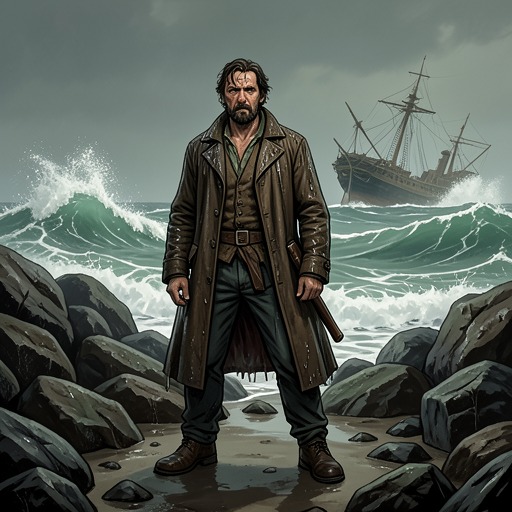
Running before a gale, Blackthorne spotted a reef ahead and swung the [Erasmus](entity:object-recall-object-erasmus-f8d817d3deed) toward a dangerous passage. He fought the wheel through breaking seas, lost men and rigging, and scraped the keel over submerged rocks before the ship burst into the safety of a bay.
His seamanship saved the remaining crew, though the vessel was badly damaged. After the survivors anchored, Blackthorne collapsed from exhaustion and illness.
after the landfall, April 1600
Blackthorne Wakes in Anjiro
Blackthorne awoke in a clean Japanese house, fed and clothed by people whose language he did not understand. He mistook the word for “woman” as the housekeeper’s name and struggled to interpret the unfamiliar customs around him.
The care he received contrasted sharply with the deprivation aboard the [Erasmus](entity:object-recall-object-erasmus-f8d817d3deed). When he reached the harbor, he saw his ship anchored offshore and realized his crew had been separated from him.
early days at Anjiro, April 1600
The First Encounter with Omi
[Father Sebastio](entity:character-recall-character-father-sebastio-3dafd5da59f5) accused Blackthorne of piracy and heresy. A village samurai, [Kasigi Omi](entity:character-recall-character-kasigi-omi-36573a6718f2), interrupted the confrontation, questioned the stranger, and allowed him to walk freely while confining the rest of the crew.
[Omi](entity:character-recall-character-omi-90b110273c3f)’s authority became clear when he killed a villager who failed to bow. Blackthorne began to understand that status, etiquette, and sudden violence governed life in [Japan](entity:location-recall-location-japan-2b426de89e42).
three days after landing
The Crew Reunites
Blackthorne found the surviving crew in a guarded house. Fresh vegetables began to restore them, but they remained frightened of the [Jesuits](entity:organization-recall-organization-a8f6db369b03), the samurai, and the possibility that their weapons and ship would be taken.
The crew debated whether to fight or wait. Blackthorne insisted that they recover first, knowing they were too sick and weak to challenge their captors.
early in Blackthorne’s captivity
Yabu’s Arrival and Trial
[Kasigi Yabu](entity:character-recall-character-kasigi-yabu-d25b00060b3e) arrived from [Yedo](entity:location-recall-location-yedo-a1675e121f2c) and questioned Blackthorne through [Father Sebastio](entity:character-recall-character-father-sebastio-3dafd5da59f5). Blackthorne insulted the priest, claimed a larger European fleet was coming, and tried to turn [Yabu](entity:character-recall-character-yabu-02638e9453bc) against the Jesuit interpreter.
Yabu learned that the ship was non-Portuguese and carried an unusual cargo. He initially ordered the pirates’ deaths but reconsidered when [Omi](entity:character-recall-character-omi-90b110273c3f) suggested their hostility toward Christians might be useful.
immediately after the trial
Yabu Seizes the Cargo
[Yabu](entity:character-recall-character-yabu-02638e9453bc) inspected the [Erasmus](entity:object-recall-object-erasmus-f8d817d3deed) and discovered muskets, cannon, powder, and Spanish silver. He ordered the weapons and valuables secretly unloaded, seeing an opportunity to transform warfare and strengthen his own position.
He imagined training a disciplined musket force and using the new weapons to decide the coming conflict. Before he could carry out the plan, [Toranaga](entity:character-recall-character-toranaga-00b3f93e53e1)’s authority intervened and claimed the ship and cargo.
the first night in captivity
The Cellar Lottery
The crew was shut in a filthy cellar and told that one man would die. They drew lots, and [Johann Vinck](entity:character-recall-character-johann-vinck-a417d7265f93) appeared to have drawn the fatal straw. Blackthorne refused to accept the decision as final and blocked the ladder when the samurai came to take [Vinck](entity:character-recall-character-vinck-86bf340be5c1).
The crew fought the guards in the cramped pit, but Blackthorne was knocked unconscious. The resistance failed, leaving the captives more desperate and the Japanese in control.
the following night
Pieterzoon’s Torture
A captured sailor was tortured in a cauldron until his screams stopped. Blackthorne and the remaining crew endured the ordeal from the cellar, trapped with filth, flies, and almost no water.
The cruelty shattered the men’s sense of safety and confronted Blackthorne with the powerlessness of command when his crew’s lives were in other hands.
the next day
Blackthorne Saves Croocq
[Omi](entity:character-recall-character-omi-90b110273c3f) threatened to boil [Croocq](entity:character-recall-character-croocq-b78d57e21aca) unless Blackthorne promised to behave. Blackthorne agreed to obey in order to save the boy, then endured Omi’s humiliating demonstration of control.
The bargain saved Croocq but left Blackthorne furious and aware that [Yabu](entity:character-recall-character-yabu-02638e9453bc) and Omi could use his men to control him. He was renamed Anjin because the Japanese could not pronounce his name.
a few days after the landfall
Toranaga Takes the Galley
[Toda Hiro-matsu](entity:character-recall-character-toda-hiro-matsu-ccf046f72e94) arrived under [Toranaga](entity:character-recall-character-toranaga-00b3f93e53e1)’s banner and took control of the ship and its cargo. [Yabu](entity:character-recall-character-yabu-02638e9453bc) had to surrender the treasure and arms, then accompany [Hiro-matsu](entity:character-recall-character-hiro-matsu-737c0f7fb40d) toward [Osaka](entity:location-recall-location-osaka-3cd18d190503) under a polite fiction of generosity.
Blackthorne was carried aboard the galley, where his ocean-going skill made him essential. Yabu, meanwhile, began to see how a pilot and foreign ship might help him gain power.
during the voyage to Osaka
Rodrigues Meets Blackthorne
[Vasco Rodrigues](entity:character-recall-character-vasco-rodrigues-9d1a4528774b), the Portuguese pilot of the galley, recognized Blackthorne’s skill and took him back aboard the [Erasmus](entity:object-recall-object-erasmus-f8d817d3deed) to search for his rutters. The ship had been stripped, and Blackthorne discovered that his charts and secret Portuguese sailing directions were missing.
[Rodrigues](entity:character-recall-character-rodrigues-36618d35d1d1) promised to share his own route knowledge but remained cautious, aware that Blackthorne was an enemy pilot and that the stolen rutter could alter the balance of power.
during the voyage to Osaka
The Storm at Sea
A sudden storm threatened the overloaded galley. [Rodrigues](entity:character-recall-character-rodrigues-36618d35d1d1) and Blackthorne disagreed over how to reach shelter, but Blackthorne took command when the vessel neared the rocks and led the exhausted rowers through the danger.
Rodrigues was swept overboard. Blackthorne later helped rescue him, while [Yabu](entity:character-recall-character-yabu-02638e9453bc) risked his own life to retrieve the Portuguese pilot from a cliffside rock as the tide rose.
after reaching Osaka
Blackthorne’s First Audience
[Toranaga](entity:character-recall-character-toranaga-00b3f93e53e1) questioned Blackthorne about his country, religion, fleet, and motives, with [Father Alvito](entity:character-recall-character-father-alvito-52a47d0c5f0a) interpreting. Blackthorne admitted that [England](entity:location-recall-location-england-b153c1f368ea) and the [Netherlands](entity:location-recall-location-netherlands-7cbacd5ddd58) were at war with [Spain](entity:location-recall-location-0fe76f866976) and [Portugal](entity:location-recall-location-portugal-c1898be9735e) and explained that his expedition carried weapons and letters of marque.
The interview revealed how little [Japan](entity:location-recall-location-japan-2b426de89e42) knew about the wider world—and how much Blackthorne’s knowledge might matter to Toranaga. It also left Blackthorne vulnerable to being judged a pirate.
during Blackthorne’s first days in Osaka
The Council Crisis
[Ishido](entity:character-recall-character-ishido-fe5cb27f173d) pressed [Toranaga](entity:character-recall-character-toranaga-00b3f93e53e1) over the regency, marriages, and the security of the Taikō’s heir. A Toranaga samurai, [Usagi](entity:character-recall-character-usagi-176b44b342cc), nearly struck Ishido, but Toranaga stopped him and sentenced him to public execution for breaking discipline.
Toranaga’s position grew more precarious as the Christian regents aligned with Ishido. He secretly sent coded instructions to his son while weighing whether to begin a war or keep searching for a way out.
soon after Blackthorne’s first audience
The Prison and Friar Domingo
[Ishido](entity:character-recall-character-ishido-fe5cb27f173d) transferred Blackthorne to a crowded prison, where he fought for food and a place to sleep. There he met [Friar Domingo](entity:character-recall-character-friar-domingo-bbb95c65bb5f), a sick Spanish Franciscan who revealed the extent of Portuguese trade, the [Black Ship](entity:object-recall-object-black-ship-9ed37fcc821b)’s wealth, and the divisions between religious orders.
Blackthorne questioned the friar and gathered information about [Japan](entity:location-recall-location-japan-2b426de89e42), the Catholic daimyos, and the political role of the [Jesuits](entity:organization-recall-organization-a8f6db369b03). The knowledge gave him a clearer sense of the forces surrounding [Toranaga](entity:character-recall-character-toranaga-00b3f93e53e1).
several days after imprisonment
The Prisoner’s Release
After four days, Blackthorne was summoned out of prison. He expected execution but was instead escorted toward the castle, learning that [Toranaga](entity:character-recall-character-toranaga-00b3f93e53e1) still had plans for him.
A disguised group of Toranaga’s men ambushed his Gray escort, and [Yabu](entity:character-recall-character-yabu-02638e9453bc) arrived in time to reclaim him. Blackthorne realized that factions inside [Osaka](entity:location-recall-location-osaka-3cd18d190503) were fighting to control his fate.
after Blackthorne’s release
The World Map in the Sand
[Toranaga](entity:character-recall-character-toranaga-00b3f93e53e1) questioned Blackthorne again, this time through [Toda Mariko](entity:character-recall-character-toda-mariko-50a5a069be28). Blackthorne drew a rough world map and described European exploration, the [Strait of Magellan](entity:location-recall-location-56782da71fc6), Portuguese bases, and papal divisions of overseas territory.
His account suggested that the Portuguese empire and the Church’s trade network were more vulnerable than [Japan](entity:location-recall-location-japan-2b426de89e42) had been led to believe. [Mariko](entity:character-recall-character-mariko-6e26b24a9b6f)’s own reaction showed that the information challenged her religious and political loyalties.
shortly after the map lesson
The Taikō’s Widow Advises Toranaga
[Yodoko](entity:character-recall-character-yodoko-0d9ec39ca009) visited [Toranaga](entity:character-recall-character-toranaga-00b3f93e53e1) and urged him to seize power, marry [Ochiba](entity:character-recall-character-ochiba-9f9ba839f944), and secure [Yaemon](entity:character-recall-character-yaemon-e50f4bb6b798)’s succession. Toranaga rejected the proposal, insisting that he did not seek the Shōgunate.
Their private conversation revealed how deeply the succession crisis had become entangled with personal alliances, the Taikō’s legacy, and the fear of renewed civil war.
that night
The Assassin in the Castle
An Amida assassin penetrated the castle and attacked Blackthorne’s sleeping quarters. [Kiri](entity:character-recall-character-kiri-0019afedc7e5) raised the alarm, and [Naga](entity:character-recall-character-naga-1c79e591db83) killed the intruder before he could reach his target.
[Toranaga](entity:character-recall-character-toranaga-00b3f93e53e1) concluded that the attack was probably aimed at Blackthorne rather than himself. He strengthened the pilot’s guard and began questioning who might fear the knowledge he carried.
the following morning
Toranaga’s Bargain with Yabu
[Toranaga](entity:character-recall-character-toranaga-00b3f93e53e1) met [Yabu](entity:character-recall-character-yabu-02638e9453bc) privately and offered him the chance to gain [Suruga](entity:location-recall-location-suruga-fcd40df1733c) and [Totomi](entity:location-recall-location-totomi-4189bfcb1774) in return for allegiance. Yabu refused full vassalage but agreed to support Toranaga as an ally, disclosing his plan to train a musket regiment.
The two men sealed their bargain with a ritual gesture, even as each suspected the other might later betray him. Toranaga assigned Blackthorne to help train Yabu’s forces.
after the bargain with Yabu
Toranaga Plans His Escape
With [Ishido](entity:character-recall-character-ishido-fe5cb27f173d) preparing to isolate him, [Toranaga](entity:character-recall-character-toranaga-00b3f93e53e1) arranged a secret escape from [Osaka](entity:location-recall-location-osaka-3cd18d190503). He disguised himself as [Kiri](entity:character-recall-character-kiri-0019afedc7e5) and placed her in a litter, while [Mariko](entity:character-recall-character-mariko-6e26b24a9b6f) and the others helped sustain the deception.
Blackthorne noticed the substitution and later used a performance of madness to distract Ishido when the deception was threatened. His intervention helped Toranaga get out of the castle without exposing the plan at the gate.
during the escape from Osaka
The Street Ambush
As the party moved through the city, an escort of Gray samurai ambushed them. [Toranaga](entity:character-recall-character-toranaga-00b3f93e53e1)’s hidden troops and [Yabu](entity:character-recall-character-yabu-02638e9453bc)’s men fought back, and Blackthorne helped protect [Mariko](entity:character-recall-character-mariko-6e26b24a9b6f) amid arrows and sword attacks.
The fighting left many dead and made the escape more dangerous. Toranaga’s party split up, with some of the group sent toward the galley while a smaller force tried to reach the harbor unseen.
the same night
The Harbor Escape
[Toranaga](entity:character-recall-character-toranaga-00b3f93e53e1)’s party reached the galley, but Gray forces and hostile fishing boats threatened to trap them in the harbor. Blackthorne persuaded [Rodrigues](entity:character-recall-character-rodrigues-36618d35d1d1) and the Portuguese frigate to provide cover, while Toranaga negotiated with the [Jesuits](entity:organization-recall-organization-a8f6db369b03) for help.
Blackthorne conned the galley through the narrow channel beside the frigate. Fire arrows struck the Portuguese sails, and the two vessels escaped the harbor together, carrying Toranaga and his followers to safety.
during the harbor escape
Toranaga and the Jesuits Negotiate
[Toranaga](entity:character-recall-character-toranaga-00b3f93e53e1) persuaded the [Jesuits](entity:organization-recall-organization-a8f6db369b03) to support his immediate escape by promising commercial and religious concessions. The Portuguese Captain-General [Ferriera](entity:character-recall-character-ferriera-05dddb559e60) demanded further terms, including a share of the [Black Ship](entity:object-recall-object-black-ship-9ed37fcc821b)’s profits and the transfer of Blackthorne.
[Rodrigues](entity:character-recall-character-rodrigues-36618d35d1d1) quietly helped Blackthorne return to the galley, despite Ferriera’s opposition. The exchange showed that the Portuguese and Jesuits were divided by competing political and commercial interests.
after leaving Osaka
Blackthorne’s Food Ordeal
Aboard the Portuguese frigate, Blackthorne was offered rich food after days of deprivation. He ate too quickly and became violently ill, while [Mariko](entity:character-recall-character-mariko-6e26b24a9b6f) and a samurai tried to care for him amid the filth and hostility of the ship.
The episode deepened Blackthorne’s cultural disorientation and exposed how even simple acts—eating, bathing, or speaking—could become contests over custom and control.
during the voyage toward Anjiro
Yabu’s New Strategic Ambition
[Yabu](entity:character-recall-character-yabu-02638e9453bc) studied the pilots during the storm and imagined a new kind of Japanese naval power: ships commanded and crewed by samurai, with Blackthorne as a teacher. He saw control of the sea lanes as a way to balance the power of [Toranaga](entity:character-recall-character-toranaga-00b3f93e53e1) and [Ishido](entity:character-recall-character-ishido-fe5cb27f173d).
His ambition remained entangled with self-interest. He wanted to use Blackthorne’s skill and the captured weapons to advance the [Kasigi clan](entity:organization-recall-organization-kasigi-clan-fd8a26f7269c), not simply to serve a larger political cause.
after the escape from Osaka
Blackthorne’s Battle Proposal
[Toranaga’s galley](entity:object-recall-object-96a1a1ad0bcf) remained trapped near [Osaka](entity:location-recall-location-osaka-3cd18d190503) by hostile fishing boats and a Portuguese frigate. Blackthorne argued that the only way out was to obtain cannon, while [Toranaga](entity:character-recall-character-toranaga-00b3f93e53e1) and [Yabu](entity:character-recall-character-yabu-02638e9453bc) considered how to seize the weapons without openly provoking [Portugal](entity:location-recall-location-portugal-c1898be9735e).
Toranaga entered negotiations with the [Jesuits](entity:organization-recall-organization-a8f6db369b03), who sought to preserve trade and protect their position. The negotiations were shaped by the possibility of war and the [Black Ship](entity:object-recall-object-black-ship-9ed37fcc821b)’s approaching voyage.
during the harbor standoff
Toranaga’s Deal with the Church
[Toranaga](entity:character-recall-character-toranaga-00b3f93e53e1) promised the [Jesuits](entity:organization-recall-organization-a8f6db369b03) a temple in [Yedo](entity:location-recall-location-yedo-a1675e121f2c) and a place in the coming trade settlement if they helped him. He sought to win the Christian daimyos without letting [Ishido](entity:character-recall-character-ishido-fe5cb27f173d) know how much leverage they had.
[Ferriera](entity:character-recall-character-ferriera-05dddb559e60) negotiated for his own profit and the Captain-Generalship of the next [Black Ship](entity:object-recall-object-black-ship-9ed37fcc821b). The priests agreed to help Toranaga, while each side concealed its deeper aims.
the following night
The Galley Breaks the Blockade
The galley and [Santa Theresa](entity:object-recall-object-144ce9a78e03) raced toward the harbor mouth, with Blackthorne steering close under the frigate’s protection. Fire arrows and musket shots struck the ships, and the galley’s rowers fought to maintain their pace.
Blackthorne avoided the rocks and kept the vessel alongside [Rodrigues](entity:character-recall-character-rodrigues-36618d35d1d1)’s ship. Rodrigues refused to ram the galley and instead allowed it to escape, paying back the life debt he owed Blackthorne.
the day after the harbor escape
The Anjiro Arrival
The galley reached [Anjiro](entity:location-recall-location-anjiro-410b1244cc6c) after Blackthorne slept through a long stretch of the voyage. [Toranaga](entity:character-recall-character-toranaga-00b3f93e53e1) stopped there to rest the rowers, inspect his forces, and begin shaping the next stage of his plans.
Blackthorne was delighted to return to land but soon learned that he would remain behind while Toranaga continued toward [Yedo](entity:location-recall-location-yedo-a1675e121f2c). His separation from the galley and the crew once again left him uncertain of his own future.
Toranaga’s arrival at Anjiro
Yabu’s Army Gathers
[Anjiro](entity:location-recall-location-anjiro-410b1244cc6c) was transformed into a military staging ground as thousands of [Yabu](entity:character-recall-character-yabu-02638e9453bc)’s samurai assembled. The villagers prepared the harbor and houses, while [Omi](entity:character-recall-character-omi-90b110273c3f) and [Igurashi](entity:character-recall-character-4042a2cfa820) coordinated the arrival and worried over the expense and risks.
[Toranaga](entity:character-recall-character-toranaga-00b3f93e53e1) inspected the troops and publicly praised Yabu, using the ceremony to reinforce his own authority and keep Yabu from acting independently.
the day Toranaga reaches Anjiro
Blackthorne Is Made a Hatamoto
[Toranaga](entity:character-recall-character-toranaga-00b3f93e53e1)’s orders made Blackthorne a hatamoto, granted him a salary, a house, and the right to wear samurai swords. [Mariko](entity:character-recall-character-mariko-6e26b24a9b6f) explained that the village would be responsible for teaching him Japanese, under threat of collective punishment if he failed.
Blackthorne was horrified by the threat against the villagers. His new rank gave him status and protection, but also bound him to duties and customs he still struggled to understand.
the first evening in his Anjiro house
Fujiko Becomes Blackthorne’s Consort
[Toranaga](entity:character-recall-character-toranaga-00b3f93e53e1) ordered [Fujiko](entity:character-recall-character-fujiko-b43a322c5cb4) to serve as Blackthorne’s consort and household manager. Blackthorne objected, thinking her unattractive and refusing the arrangement, but [Mariko](entity:character-recall-character-mariko-6e26b24a9b6f) explained that rejecting her would leave Fujiko disgraced and without a home.
After learning what had happened to Fujiko’s husband and infant son, Blackthorne accepted her presence, though not as a lover. The arrangement became a test of his ability to live within Japanese customs.
the first night in the house
The Pistols and the Swords
[Omi](entity:character-recall-character-omi-90b110273c3f) came to take [Blackthorne’s pistols](entity:object-recall-object-blackthorne-d41890cb69e0), citing Japanese custom. Blackthorne refused, then handed them to [Fujiko](entity:character-recall-character-fujiko-b43a322c5cb4) and ordered her to protect them; she leveled a pistol at Omi when his men tried to seize it.
Fujiko then gave Blackthorne her father’s swords, arguing that a hatamoto should carry them. Blackthorne accepted the weapons and began to recognize the responsibilities—and privileges—of his new status.
the first night after the weapons dispute
Blackthorne Threatens Seppuku
[Yabu](entity:character-recall-character-yabu-02638e9453bc) demanded that Blackthorne begin training his troops and teach them how Europeans fought. When Yabu refused to lift the threat against the village, Blackthorne declared that he would kill himself rather than live with the village’s threatened destruction.
Yabu believed the threat might be a bluff, but [Omi](entity:character-recall-character-omi-90b110273c3f) argued that Blackthorne could be serious and urged a compromise. Blackthorne’s near-seppuku forced Yabu to promise that any learning achieved within five months would satisfy the village’s obligation.
the following days
The Musket Regiment Takes Shape
Blackthorne trained [Yabu](entity:character-recall-character-yabu-02638e9453bc)’s men to fire in disciplined volleys, explaining European tactics and the importance of coordinated movement. [Omi](entity:character-recall-character-omi-90b110273c3f), [Naga](entity:character-recall-character-naga-1c79e591db83), and other officers helped turn the lessons into a written war manual.
The regiment represented a break with samurai tradition. Its firearms promised a tactical advantage but threatened the honor code that centered individual combat and personal valor.
twelve days after the Anjiro arrival
Nebara Jozen Arrives
[Nebara Jozen](entity:character-recall-character-nebara-jozen-de6f235edd27) arrived with a summons from [Ishido](entity:character-recall-character-ishido-fe5cb27f173d) and questions about [Yabu](entity:character-recall-character-yabu-02638e9453bc)’s training program. He demanded to know why [Toranaga](entity:character-recall-character-toranaga-00b3f93e53e1)’s soldiers were drilling with so many guns and why Blackthorne appeared to be in charge.
Yabu tried to conceal the purpose of the regiment, but the visit made clear that security had been compromised. [Omi](entity:character-recall-character-omi-90b110273c3f) urged Yabu to inform Toranaga and resist Ishido’s pressure.
the following day
The Regiment’s Demonstration
[Yabu](entity:character-recall-character-yabu-02638e9453bc) staged a mock battle to show [Jozen](entity:character-recall-character-673c8b6c1d4a) the regiment’s volley fire. At first the formation appeared to break under a traditional samurai charge, then regrouped and fired again, demonstrating how concentrated gunfire could devastate an enemy.
Jozen recognized the danger and sent a report toward [Ishido](entity:character-recall-character-ishido-fe5cb27f173d). The demonstration made the regiment’s secret a threat to every faction that feared [Toranaga](entity:character-recall-character-toranaga-00b3f93e53e1)’s growing strength.
immediately after the demonstration
Naga Executes Jozen
[Naga](entity:character-recall-character-naga-1c79e591db83), angered by [Jozen](entity:character-recall-character-673c8b6c1d4a)’s insults and convinced the messenger would betray the regiment’s secrets, ordered him and his men killed. Jozen claimed the Regents’ protection, but Naga treated him as an enemy and staged a violent execution.
[Yabu](entity:character-recall-character-yabu-02638e9453bc) and [Omi](entity:character-recall-character-omi-90b110273c3f) had to manage the consequences, knowing that the killing would provoke [Ishido](entity:character-recall-character-ishido-fe5cb27f173d). The attack also made Naga’s personal loyalty and impulsiveness impossible to ignore.
after Jozen’s death
Omi Plots Against Yabu
[Omi](entity:character-recall-character-omi-90b110273c3f) began plotting to remove [Yabu](entity:character-recall-character-yabu-02638e9453bc), believing his uncle had insulted Omi’s mother and wife and endangered the family’s future. He consulted his mother and [Midori](entity:character-recall-character-midori-56b44e3d547f) and considered which side—[Toranaga](entity:character-recall-character-toranaga-00b3f93e53e1) or [Ishido](entity:character-recall-character-ishido-fe5cb27f173d)—would best preserve the [Kasigi clan](entity:organization-recall-organization-kasigi-clan-fd8a26f7269c).
Omi’s outward loyalty concealed a growing willingness to kill his liege lord. His ambition added another dangerous layer to Yabu’s already precarious alliances.
during Blackthorne’s first weeks in Anjiro
Mariko and Blackthorne’s Secret Affair
[Mariko](entity:character-recall-character-mariko-6e26b24a9b6f) and Blackthorne grew close through their conversations, shared danger, and mutual respect. Their feelings deepened even as Mariko remained married to [Buntaro](entity:character-recall-character-buntaro-4505af0e5d44) and both understood that their intimacy would be forbidden and dangerous.
They began a secret relationship during the journey, keeping their feelings hidden behind language, duty, and the careful rules of the [Eightfold Fence](entity:expression-recall-expression-eightfold-fence-6199ab32d069).
after Jozen’s arrival
Toranaga’s Resignation Ruse
[Toranaga](entity:character-recall-character-toranaga-00b3f93e53e1) resigned from the [Council of Regents](entity:organization-recall-organization-council-of-regen-7762621d48e7), apparently leaving himself isolated. The resignation created a legal vacancy that required the remaining regents to agree on a replacement before exercising the Council’s power.
Toranaga used the maneuver to delay impeachment and keep [Ishido](entity:character-recall-character-ishido-fe5cb27f173d) from acting with a unified legal mandate. He then planned to escape [Osaka](entity:location-recall-location-osaka-3cd18d190503) under the cover of a staged departure.
during Toranaga’s journey from Osaka
Buntaro’s Reconciliation Attempt
[Buntaro](entity:character-recall-character-buntaro-4505af0e5d44) and [Mariko](entity:character-recall-character-mariko-6e26b24a9b6f) took part in a formal tea ceremony after he returned from the escape. Their attempt at peace remained strained, with both bound by duty and the history of his mistreatment of her.
Buntaro’s feelings for Mariko remained intense and conflicted. Their marriage would continue to shape her choices, especially as [Toranaga](entity:character-recall-character-toranaga-00b3f93e53e1) began to use her in his political plans.
shortly after Toranaga’s return to Anjiro
The First Anjiro Earthquake
An earthquake shook the coast as [Toranaga](entity:character-recall-character-toranaga-00b3f93e53e1), [Mariko](entity:character-recall-character-mariko-6e26b24a9b6f), and Blackthorne traveled by galley. The tremor triggered an avalanche and split the ground beneath them, nearly swallowing Toranaga and Mariko.
Blackthorne pulled Toranaga from the fissure and then helped rescue Mariko as the earth shifted again. The ordeal deepened Toranaga’s reliance on Blackthorne and gave the foreign pilot a new sense of his own place in [Japan](entity:location-recall-location-japan-2b426de89e42).
after the earthquake
The Musket Regiment’s First Review
[Toranaga](entity:character-recall-character-toranaga-00b3f93e53e1) reviewed the first five hundred musketeers and saw the potential of Blackthorne’s training. Blackthorne outlined how disciplined gunfire could break a traditional charge, while [Yabu](entity:character-recall-character-yabu-02638e9453bc) argued that the weaponry could decide a single decisive battle.
Toranaga announced the possibility of an assault regiment, though he continued to conceal his own plans and the true scale of the coming conflict.
during the first night after the earthquake
Blackthorne’s Near-Seppuku
[Yabu](entity:character-recall-character-yabu-02638e9453bc) refused to revoke his threat against [Anjiro](entity:location-recall-location-anjiro-410b1244cc6c), and Blackthorne offered to die rather than remain responsible for the village’s destruction. He placed a short sword against his heart, prepared to follow the samurai custom he had chosen to accept.
[Omi](entity:character-recall-character-omi-90b110273c3f) and [Igurashi](entity:character-recall-character-4042a2cfa820) stopped the thrust at the last moment. Yabu relented, agreeing that Blackthorne’s progress within five months would satisfy him and demanding that Blackthorne swear to learn and serve.
twelve days after Jozen’s arrival
Jozen’s Attack Report Reaches Ishido
[Jozen](entity:character-recall-character-673c8b6c1d4a)’s report and the new Council appointment gave [Ishido](entity:character-recall-character-ishido-fe5cb27f173d) a way to restore the regency’s legal authority. He summoned the daimyos to [Osaka](entity:location-recall-location-osaka-3cd18d190503), including [Yabu](entity:character-recall-character-yabu-02638e9453bc), and announced that the Council would convene in twenty days.
[Omi](entity:character-recall-character-omi-90b110273c3f) urged Yabu to resist Ishido, warning that the [Kasigi clan](entity:organization-recall-organization-kasigi-clan-fd8a26f7269c)’s lands would be taken if Ishido prevailed. Yabu wavered between the summons and his alliance with [Toranaga](entity:character-recall-character-toranaga-00b3f93e53e1).
the night after his report
Jozen’s Secret Pigeon
[Jozen](entity:character-recall-character-673c8b6c1d4a) secretly prepared a carrier pigeon with details of the [Musket Regiment](entity:organization-recall-organization-musket-regiment-7511050b9c8d) and its tactics. [Naga](entity:character-recall-character-naga-1c79e591db83) and [Omi](entity:character-recall-character-omi-90b110273c3f) discovered the attempt and intercepted the bird before the message could reach [Ishido](entity:character-recall-character-ishido-fe5cb27f173d).
Naga then moved against Jozen, determined to prevent the regiment’s secrets from spreading. The episode revealed how vulnerable the conspirators were to spies and how much the future depended on controlling information.
the next day
Jozen and His Escort Are Killed
[Naga](entity:character-recall-character-naga-1c79e591db83) staged a demonstration for [Jozen](entity:character-recall-character-673c8b6c1d4a) and his men, then turned the exercise into a real execution. Jozen and his escorts were killed, and their deaths gave [Ishido](entity:character-recall-character-ishido-fe5cb27f173d) grounds to accuse [Yabu](entity:character-recall-character-yabu-02638e9453bc) and [Toranaga](entity:character-recall-character-toranaga-00b3f93e53e1) of murder.
The attack pushed Yabu closer to Toranaga while [Omi](entity:character-recall-character-omi-90b110273c3f)’s influence grew. It also removed witnesses to the regiment’s full capabilities, though the violence could not remain secret for long.
after the Jozen affair
Toranaga Reaches Anjiro
[Toranaga](entity:character-recall-character-toranaga-00b3f93e53e1) arrived at [Anjiro](entity:location-recall-location-anjiro-410b1244cc6c) with a large escort and found the village prepared for a military reception. He inspected [Yabu](entity:character-recall-character-yabu-02638e9453bc)’s troops, praised the daimyo publicly, and used the ceremony to draw attention to their alliance.
The display reassured Yabu but also left him uncertain about Toranaga’s intentions. Toranaga continued to control the pace of events, refusing to reveal whether he planned to fight or submit.
during Toranaga’s stay in Anjiro
Yabu’s Vassalage and the Murasama Sword
[Yabu](entity:character-recall-character-yabu-02638e9453bc) publicly pledged himself to [Toranaga](entity:character-recall-character-toranaga-00b3f93e53e1) and presented him with the [Murasama blade](entity:object-recall-object-064d4a3aba28) that had been associated with the death of Toranaga’s grandfather. Toranaga accepted the sword and treated the gesture as a renewed bond of vassalage.
Yabu’s allegiance was still self-interested, but the public ceremony placed him under Toranaga’s authority and made a later betrayal more consequential.
during the final weeks before the Osaka meeting
The Council’s Summons
[Ishido](entity:character-recall-character-ishido-fe5cb27f173d)’s emissary brought [Yabu](entity:character-recall-character-yabu-02638e9453bc) an invitation to [Osaka](entity:location-recall-location-osaka-3cd18d190503) and announced that [Ito Teruzumi](entity:character-recall-character-ito-teruzumi-e24167b50939) had been appointed to the [Council of Regents](entity:organization-recall-organization-council-of-regen-7762621d48e7). The new Council would meet under the Emperor’s authority, making [Toranaga](entity:character-recall-character-toranaga-00b3f93e53e1)’s resignation less effective than he had hoped.
Yabu’s position became more dangerous: attendance could trap him, while refusal could be treated as treason. [Omi](entity:character-recall-character-omi-90b110273c3f) urged him to inform Toranaga and delay taking a side.
during Jozen’s visit
The Attack Rehearsal
[Yabu](entity:character-recall-character-yabu-02638e9453bc) staged a mock attack to show [Jozen](entity:character-recall-character-673c8b6c1d4a) the regiment’s firepower. The musketeers initially appeared to retreat, then regrouped in ranks and fired repeated volleys that would have broken a traditional charge.
The demonstration impressed Jozen and frightened him, while [Naga](entity:character-recall-character-naga-1c79e591db83) denounced guns as a threat to samurai honor. Jozen’s eventual report helped trigger the crisis that followed.
after the Osaka escape
Toranaga’s Apparent Surrender
[Toranaga](entity:character-recall-character-toranaga-00b3f93e53e1) accepted the Council’s summons and agreed to go to [Osaka](entity:location-recall-location-osaka-3cd18d190503), appearing to surrender to the regents. He used the appearance of capitulation to buy time and mislead [Ishido](entity:character-recall-character-ishido-fe5cb27f173d), while arranging to keep his options open.
His apparent submission frustrated his supporters, who believed he was abandoning them. It also gave Ishido confidence that he could force Toranaga into a final public reckoning.
after Toranaga’s return to Anjiro
Blackthorne’s New Assignment
Blackthorne was told to remain in [Anjiro](entity:location-recall-location-anjiro-410b1244cc6c) and train [Yabu](entity:character-recall-character-yabu-02638e9453bc)’s men, while [Mariko](entity:character-recall-character-mariko-6e26b24a9b6f) interpreted and [Fujiko](entity:character-recall-character-fujiko-b43a322c5cb4) managed his household. He continued learning Japanese, using the dictionary Alvito had delivered, and began to express himself with increasing confidence.
He proposed building a Japanese navy and supplying ships from [England](entity:location-recall-location-england-b153c1f368ea). [Toranaga](entity:character-recall-character-toranaga-00b3f93e53e1) listened but withheld a final answer, leaving Blackthorne unsure whether his own future lay in [Japan](entity:location-recall-location-japan-2b426de89e42) or at sea.
during the rainy season
The Anjiro Storm
A fierce storm struck [Anjiro](entity:location-recall-location-anjiro-410b1244cc6c) and tore apart many wooden and paper houses. Blackthorne saw how villagers prepared for such disasters, fought the damage, and rebuilt their homes with practiced speed.
The storm made clear how exposed Japanese buildings were to earthquakes, fires, and typhoons. It also changed Blackthorne’s view of the people he had dismissed as alien and fragile.
during Blackthorne’s stay in Anjiro
The Village’s Hidden Weapons
[Mura](entity:character-recall-character-77c0c59faa41) and the village elders secretly gathered rice, weapons, and supplies in anticipation of war. They hoped that the old freedom to fight might return, despite the Taikō’s laws disarming commoners.
The villagers feared [Yabu](entity:character-recall-character-yabu-02638e9453bc)’s taxes and [Toranaga](entity:character-recall-character-toranaga-00b3f93e53e1)’s soldiers, yet they believed their fishing village would endure because everyone, from peasant to daimyo, still needed food.
at Ochiba’s birthday reception
Mariko Challenges Ishido
[Mariko](entity:character-recall-character-mariko-6e26b24a9b6f) publicly declared that she intended to leave [Osaka](entity:location-recall-location-osaka-3cd18d190503) to meet her liege lord. [Ishido](entity:character-recall-character-ishido-fe5cb27f173d) insisted that the Regents could hold her, but she demanded to know whether she was legally a prisoner and refused to accept confinement without an order.
Her challenge exposed a contradiction: Ishido’s power depended on the Council’s authority, yet he could not openly claim that the women were hostages. Mariko’s resistance gave other trapped families a reason to hope.
after the birthday reception
Mariko Warns Kiyama
[Mariko](entity:character-recall-character-mariko-6e26b24a9b6f) privately told [Kiyama](entity:character-recall-character-kiyama-67c70f71c8e2) that [Onoshi](entity:character-recall-character-onoshi-ce74e79d2c0b) might be plotting against him with [Ishido](entity:character-recall-character-ishido-fe5cb27f173d) and that the Christian regents could be betrayed once they had served their purpose. Kiyama did not accept the warning but listened to her account of the threat.
Her information made the political division inside the Christian coalition more dangerous. Kiyama remained uncertain whether to trust [Toranaga](entity:character-recall-character-toranaga-00b3f93e53e1), Ishido, or the Church.
the following day
Mariko Defies Confinement
[Mariko](entity:character-recall-character-mariko-6e26b24a9b6f) again refused to obey [Ishido](entity:character-recall-character-ishido-fe5cb27f173d)’s demand that she wait for the Council’s ruling. She argued that a samurai’s duty to her liege lord took precedence and that the Emperor’s invitation did not confine her before his arrival.
Her stand forced Ishido to choose between letting her go and openly declaring himself her jailer. The other women watched, aware that her decision could change their own prospects of leaving [Osaka](entity:location-recall-location-osaka-3cd18d190503).
the following night
The Ninja Attack
Ninja infiltrated [Toranaga](entity:character-recall-character-toranaga-00b3f93e53e1)’s quarters and attacked the group protecting [Mariko](entity:character-recall-character-mariko-6e26b24a9b6f) and the hostages. Blackthorne fought to defend her, while the women and samurai tried to reach safety through the hidden passage.
The attackers breached the refuge with an explosion. Mariko was mortally wounded, and Blackthorne was badly injured. Her death transformed the struggle over the hostages and left Toranaga without one of his most trusted interpreters.
the same night
Mariko’s Death and Witnesses
[Mariko](entity:character-recall-character-mariko-6e26b24a9b6f) died after the ninja attack, having resisted capture and preserved her honor. Lady Etsu publicly testified that Mariko had chosen death rather than dishonor, while [Kiyama Achiko](entity:character-recall-character-kiyama-achiko-354ac0b62191) also died defending the women.
The testimony made it difficult for [Ishido](entity:character-recall-character-ishido-fe5cb27f173d) to dismiss the attack as an ordinary disturbance. The deaths became a public indictment of his methods and helped turn the hostage crisis against him.
the morning after Mariko’s death
The Regents Vote for War
The Regents met and voted for war against [Toranaga](entity:character-recall-character-toranaga-00b3f93e53e1). [Ishido](entity:character-recall-character-ishido-fe5cb27f173d) argued that Toranaga would never come to [Osaka](entity:location-recall-location-osaka-3cd18d190503), while [Kiyama](entity:character-recall-character-kiyama-67c70f71c8e2) and others concluded that the attack and [Mariko](entity:character-recall-character-mariko-6e26b24a9b6f)’s death had made conflict unavoidable.
The decision exposed the fragility of the Council’s unity. The battle for the realm was now likely to begin, even as Toranaga remained outside the capital and continued to delay.
after the Council’s declaration of war
Mariko’s State Funeral
[Mariko](entity:character-recall-character-mariko-6e26b24a9b6f) was cremated in a formal ceremony attended by the highest nobles and samurai. Blackthorne watched her funeral and felt the irreversibility of her death, while the court and the Church disputed how to honor her.
Her sacrifice gave [Toranaga](entity:character-recall-character-toranaga-00b3f93e53e1)’s cause moral and political force, but it also left Blackthorne grieving and uncertain how he could survive without her.
after Mariko’s funeral
Blackthorne Is Released
[Ferriera](entity:character-recall-character-ferriera-05dddb559e60) and the [Jesuits](entity:organization-recall-organization-a8f6db369b03) allowed Blackthorne to leave the Portuguese ship, but the exchange left him without the [Erasmus](entity:object-recall-object-erasmus-f8d817d3deed) and dependent on [Toranaga](entity:character-recall-character-toranaga-00b3f93e53e1)’s protection. Blackthorne returned to the galley and resumed planning how he might reach [Nagasaki](entity:location-recall-location-nagasaki-bae08bcdbb12) and take the [Black Ship](entity:object-recall-object-black-ship-9ed37fcc821b).
He had lost his ship but not his ambition. He still intended to use the sea, his pilot’s knowledge, and Toranaga’s political needs to obtain a crew and return home.
during the storm season
The Erasmus Burns
A tidal wave and fire destroyed the [Erasmus](entity:object-recall-object-erasmus-f8d817d3deed) while she lay at anchor. Blackthorne returned to find only the charred wreckage of the vessel that had carried him across the world.
The loss seemed to erase his route home and his future as a sailor. He blamed himself for leaving the ship in Japanese hands and feared that he would never escape [Japan](entity:location-recall-location-japan-2b426de89e42).
after the Erasmus is destroyed
Blackthorne Chooses a New Ship
Blackthorne refused to accept that the loss of the [Erasmus](entity:object-recall-object-erasmus-f8d817d3deed) ended his life at sea. He decided to build a smaller, faster vessel, using salvaged material and Japanese craftsmen, and to train the samurai in naval warfare.
His plan gave [Toranaga](entity:character-recall-character-toranaga-00b3f93e53e1) a possible route toward a navy and gave Blackthorne a new hope of returning home. The ship would be named [The Lady](entity:object-recall-object-the-lady-d455008df7eb) in memory of [Mariko](entity:character-recall-character-mariko-6e26b24a9b6f).
after the Erasmus burns
Yabu’s Secret Treason
[Toranaga](entity:character-recall-character-toranaga-00b3f93e53e1) discovered that [Yabu](entity:character-recall-character-yabu-02638e9453bc) had secretly opened a route into [Osaka Castle](entity:location-recall-location-osaka-castle-a1018555e4ca) for the ninja attack and had hoped to use the crisis for his own advantage. Yabu’s support for Toranaga was exposed as conditional and his actions threatened the lives of the hostages.
[Omi](entity:character-recall-character-omi-90b110273c3f) helped reveal the conspiracy, but Toranaga did not immediately remove Yabu. He needed the daimyo’s military strength and the [Musket Regiment](entity:organization-recall-organization-musket-regiment-7511050b9c8d) for the coming war.
after the betrayal is exposed
Yabu Commits Seppuku
[Toranaga](entity:character-recall-character-toranaga-00b3f93e53e1) ordered [Yabu](entity:character-recall-character-yabu-02638e9453bc) to commit seppuku after his treachery was proven. Yabu accepted the sentence and asked [Omi](entity:character-recall-character-omi-90b110273c3f) to succeed him as head of the [Kasigi clan](entity:organization-recall-organization-kasigi-clan-fd8a26f7269c), while also giving Blackthorne the [Yoshitomo sword](entity:object-recall-object-yoshitomo-363756a72f7e).
Yabu’s death closed one dangerous political chapter and left Omi with a new fief and command. His final instructions also warned Omi to keep close to Blackthorne and pursue control of the sea.
after Yabu’s death
Toranaga Restores Sudara
[Toranaga](entity:character-recall-character-toranaga-00b3f93e53e1) restored [Sudara](entity:character-recall-character-sudara-f2f39fb14048) as his heir, formalizing the succession and reinforcing the appearance that he would submit to the Council. Sudara received renewed authority but remained bound by political obligations and hostage arrangements.
Toranaga continued to play several sides against one another, using apparent concessions to conceal his real intentions.
after Blackthorne arrives in Yedo
Blackthorne and Kiku’s Night
[Toranaga](entity:character-recall-character-toranaga-00b3f93e53e1) arranged for Kiku to entertain Blackthorne, and [Mariko](entity:character-recall-character-mariko-6e26b24a9b6f) accompanied him to the Tea House. Kiku used music, humor, and intimate conversation to put Blackthorne at ease, while Mariko remained nearby as interpreter and companion.
Blackthorne’s encounter with Kiku was affectionate and pleasurable, but his deepest attachment remained with Mariko. Kiku’s future would soon be tied to Toranaga’s political plans and the survival of the clan.
during the crisis over succession
Toranaga’s Death-Test for His Family
[Toranaga](entity:character-recall-character-toranaga-00b3f93e53e1) tested [Sudara](entity:character-recall-character-sudara-f2f39fb14048) and [Genjiko](entity:character-recall-character-a95256ead33d) by ordering them to accept the possibility that their children would die. They obeyed, proving their loyalty, while Toranaga restored Sudara’s position as heir.
The test revealed the brutal logic of the samurai household: loyalty to a lord could outweigh even the lives of one’s children. Toranaga used that loyalty to measure who could be trusted in the coming war.
after his return to the fortress
Toranaga Exposes Yabu’s Plot
[Toranaga](entity:character-recall-character-toranaga-00b3f93e53e1) confronted [Yabu](entity:character-recall-character-yabu-02638e9453bc) with evidence that he had collaborated with the ninja who attacked the castle. Yabu denied the charge, but the testimony of a surviving guard and other witnesses left him vulnerable.
Rather than punish him immediately, Toranaga waited until Yabu’s usefulness could be separated from his treachery. The delay let Toranaga secure the [Musket Regiment](entity:organization-recall-organization-musket-regiment-7511050b9c8d) and expose the limits of Yabu’s loyalty.
after the political crisis deepens
Toranaga Seizes the Initiative
[Toranaga](entity:character-recall-character-toranaga-00b3f93e53e1) ordered the [Musket Regiment](entity:organization-recall-organization-musket-regiment-7511050b9c8d) mobilized and considered a decisive attack through the northern passes. His advisers were divided: [Yabu](entity:character-recall-character-yabu-02638e9453bc) favored a bold assault, while [Omi](entity:character-recall-character-omi-90b110273c3f) warned that a long defensive strategy might offer a better chance.
Toranaga chose war on his own terms, preparing to exploit surprise and the divisions among [Ishido](entity:character-recall-character-ishido-fe5cb27f173d)’s allies rather than accept a passive defeat.
before the Osaka ceremony
Ishido’s Invitation to the Emperor
[Ishido](entity:character-recall-character-ishido-fe5cb27f173d) secured an Imperial invitation that required the daimyos to attend an elaborate ceremony in [Osaka](entity:location-recall-location-osaka-3cd18d190503). The Emperor’s presence would lend legal force to the proceedings and increase pressure on [Toranaga](entity:character-recall-character-toranaga-00b3f93e53e1) to appear.
The invitation complicated Toranaga’s plans. Refusing it risked open rebellion, while accepting it could place him directly in Ishido’s power.
the days before the scheduled ceremony
The Imperial Ceremony Trap
[Toranaga](entity:character-recall-character-toranaga-00b3f93e53e1)’s allies and hostages remained confined in [Osaka](entity:location-recall-location-osaka-3cd18d190503) as [Ishido](entity:character-recall-character-ishido-fe5cb27f173d) prepared for the Emperor’s arrival. [Mariko](entity:character-recall-character-mariko-6e26b24a9b6f)’s earlier challenge had been contained, and Ishido believed Toranaga’s surrender was still inevitable.
Toranaga’s public posture of submission concealed a final strategy. He waited for a chance to turn Ishido’s confidence and the court’s expectations against him.
before dawn on the day of the ceremony
The Second Ninja Attack
Ninja infiltrated the castle again, this time targeting [Mariko](entity:character-recall-character-mariko-6e26b24a9b6f) and the hostages. Blackthorne fought the attackers with a pistol and sword, while Mariko and the others escaped toward a hidden refuge.
The attackers breached the refuge with explosives. Mariko was killed, and Blackthorne survived the blast but suffered severe pain and temporary hearing loss.
the same night as the second attack
Mariko Dies in Osaka
[Mariko](entity:character-recall-character-mariko-6e26b24a9b6f) died after the explosion, having chosen to resist capture and preserve the freedom of the women under her care. Blackthorne tried to save her but could not prevent her death.
Her sacrifice forced [Ishido](entity:character-recall-character-ishido-fe5cb27f173d) to confront the political cost of holding the hostages. Her last actions also helped the women and [Toranaga](entity:character-recall-character-toranaga-00b3f93e53e1)’s followers escape the castle’s control.
the following morning
The Regents Vote for War
The Regents voted to make war on [Toranaga](entity:character-recall-character-toranaga-00b3f93e53e1) after [Mariko](entity:character-recall-character-mariko-6e26b24a9b6f)’s death and the failure of the ninja attack. The conflict was now openly political, even though [Ishido](entity:character-recall-character-ishido-fe5cb27f173d) continued to present his actions as defense of the Heir.
[Kiyama](entity:character-recall-character-kiyama-67c70f71c8e2), [Onoshi](entity:character-recall-character-onoshi-ce74e79d2c0b), and the other leaders weighed their own interests, while Toranaga prepared to respond with the forces he had gathered.
after the Council’s war decision
Mariko’s State Funeral
[Mariko](entity:character-recall-character-mariko-6e26b24a9b6f) was honored with a state funeral, her body cremated in a ceremony attended by the highest-ranking samurai and nobles. Blackthorne watched as her son and friends saw her off, unable to reconcile the ritual with the absence of the woman he loved.
Her death became both a personal loss and a political event. The public honors strengthened the case that she had acted with courage and duty rather than as a criminal or traitor.
after Mariko’s funeral
The Portuguese Standoff
Blackthorne returned to the Portuguese ship and was offered food, but he ate too fast after long deprivation and became violently ill. [Rodrigues](entity:character-recall-character-rodrigues-36618d35d1d1) and the [Jesuits](entity:organization-recall-organization-a8f6db369b03) argued over what to do with him, while [Ferriera](entity:character-recall-character-ferriera-05dddb559e60) wanted him removed as a threat.
[Toranaga](entity:character-recall-character-toranaga-00b3f93e53e1)’s political position and the Church’s need to preserve trade prevented the Portuguese from openly killing him. Rodrigues helped Blackthorne return to the galley, despite the risk to himself.
after the Osaka escape
Toranaga’s Feigned Submission
[Toranaga](entity:character-recall-character-toranaga-00b3f93e53e1) accepted the Council’s summons, appearing to agree to travel to [Osaka](entity:location-recall-location-osaka-3cd18d190503) and submit. He continued to claim that he would obey the law, while secretly maneuvering to gain time and divide his enemies.
The apparent surrender left his allies uncertain. [Yabu](entity:character-recall-character-yabu-02638e9453bc) and [Omi](entity:character-recall-character-omi-90b110273c3f) tried to understand whether Toranaga was genuinely defeated or preparing another hidden move.
during Toranaga’s return toward Anjiro
The Earthquake at Anjiro
A major earthquake split the ground near [Anjiro](entity:location-recall-location-anjiro-410b1244cc6c), triggering an avalanche and opening a fissure beneath [Toranaga](entity:character-recall-character-toranaga-00b3f93e53e1) and [Mariko](entity:character-recall-character-mariko-6e26b24a9b6f). Blackthorne pulled Toranaga free and then rescued Mariko from the collapsing earth.
The earthquake nearly killed all three but also changed how Toranaga assessed Blackthorne. The pilot had risked himself for both a lord and a woman, regardless of the political value of either.
after the earthquake
The Navy Proposal
Blackthorne proposed building a Japanese navy, using European ship designs and training Japanese sailors. He argued that control of the sea would protect the country from foreign invasion and give [Toranaga](entity:character-recall-character-toranaga-00b3f93e53e1) a decisive advantage over [Ishido](entity:character-recall-character-ishido-fe5cb27f173d).
Toranaga showed interest but made no promise. Blackthorne continued to believe that he could use his maritime knowledge to win freedom, wealth, and a return to [England](entity:location-recall-location-england-b153c1f368ea).
after the earthquake and training review
Toranaga’s Public Crimson Sky Plan
[Toranaga](entity:character-recall-character-toranaga-00b3f93e53e1) announced that he would launch [Crimson Sky](entity:expression-recall-expression-crimson-sky-651cd0950845), a full-scale attack on his enemies, and mobilize the armies of the East. The officers welcomed the prospect of battle, while the plan’s risks remained immense.
Toranaga’s declaration also served as a signal to allies and enemies. Whether he meant to carry out the attack exactly as stated remained uncertain.
before the final journey to Yedo
Toranaga Orders Mariko to Osaka
[Toranaga](entity:character-recall-character-toranaga-00b3f93e53e1) ordered [Mariko](entity:character-recall-character-mariko-6e26b24a9b6f) to accompany a group of women and to interpret for him. She was to help preserve his political position and remain available to act on his behalf.
Mariko understood that the assignment placed her in danger, but accepted it as her duty. Her obedience would soon make her the key figure in Toranaga’s escape from [Osaka](entity:location-recall-location-osaka-3cd18d190503).
the night Toranaga leaves Osaka
The Disguised Escape from Osaka
[Toranaga](entity:character-recall-character-toranaga-00b3f93e53e1) disguised himself as [Kiri](entity:character-recall-character-kiri-0019afedc7e5) and hid in her litter, while she and [Sazuko](entity:character-recall-character-f5d7b9d89ea0) acted as decoys. Blackthorne discovered the substitution and, at a crucial checkpoint, created a distraction that helped Toranaga evade [Ishido](entity:character-recall-character-ishido-fe5cb27f173d).
[Mariko](entity:character-recall-character-mariko-6e26b24a9b6f) later helped Blackthorne maintain the deception by claiming he had become temporarily mad. The group passed through the gates and out of the castle, but the escape soon drew an armed response.
the same night
The Osaka Street Battle
As [Toranaga](entity:character-recall-character-toranaga-00b3f93e53e1)’s party moved toward the harbor, arrows struck the litters and the escort. [Buntaro](entity:character-recall-character-buntaro-4505af0e5d44) and the Browns fought off the attackers, while [Mariko](entity:character-recall-character-mariko-6e26b24a9b6f) took up a sword and Blackthorne fought with a flare and a blade.
The combat left many dead, but Toranaga’s group broke through. Blackthorne’s bravery helped preserve the escape, even as he condemned the needless deaths of those who had fought.
later that night
The Harbor Breakout
[Toranaga](entity:character-recall-character-toranaga-00b3f93e53e1)’s party reached the harbor, where a Gray force guarded the galley and fishing boats blocked the channel. Toranaga’s men staged a diversion, and Blackthorne helped the galley break through the blockade beside the Portuguese frigate.
The escape succeeded, but [Buntaro](entity:character-recall-character-buntaro-4505af0e5d44) was left behind at the jetty and prepared to commit seppuku. Toranaga ordered him to flee, and a horse arrived just in time to carry him away from the battle.
during the harbor breakout
The Portuguese Help Toranaga Escape
[Toranaga](entity:character-recall-character-toranaga-00b3f93e53e1) negotiated with the Portuguese to secure protection from the fishing boats surrounding the harbor. The [Jesuits](entity:organization-recall-organization-a8f6db369b03) feared that an open attack would endanger trade and their standing in [Japan](entity:location-recall-location-japan-2b426de89e42), while [Ferriera](entity:character-recall-character-ferriera-05dddb559e60) saw possible profit in choosing sides.
[Rodrigues](entity:character-recall-character-rodrigues-36618d35d1d1) used the [Santa Theresa](entity:object-recall-object-144ce9a78e03)’s speed and position to shield the galley through the channel. Blackthorne coordinated the galley’s movements, and both vessels escaped into open water.
after the escape from Osaka
Blackthorne Loses the Erasmus
A storm and tidal wave struck the anchored [Erasmus](entity:object-recall-object-erasmus-f8d817d3deed), and fire consumed the ship. Blackthorne returned to find the vessel destroyed, its crew scattered and his hopes of immediate passage home gone.
He was devastated by the loss but refused to abandon his plans. He began considering a replacement ship and how to use [Toranaga](entity:character-recall-character-toranaga-00b3f93e53e1)’s resources to build it.
after the Erasmus is destroyed
Blackthorne’s New Ship Plan
Blackthorne resolved to build a smaller fighting ship, using salvaged cannon and the skills of Japanese craftsmen. He hoped to recruit sailors at [Nagasaki](entity:location-recall-location-nagasaki-bae08bcdbb12) and capture the [Black Ship](entity:object-recall-object-black-ship-9ed37fcc821b), turning the prize into the wealth and leverage needed to return home.
[Toranaga](entity:character-recall-character-toranaga-00b3f93e53e1) considered the plan useful but dangerous. Blackthorne’s proposal would make him valuable to the daimyo while also exposing him to the [Jesuits](entity:organization-recall-organization-a8f6db369b03) and Portuguese.
after Blackthorne’s release
Mariko’s Secret Message
[Mariko](entity:character-recall-character-mariko-6e26b24a9b6f) told [Father Alvito](entity:character-recall-character-father-alvito-52a47d0c5f0a) that [Toranaga](entity:character-recall-character-toranaga-00b3f93e53e1)’s surrender was a ruse and that the Japanese leader was still preparing for war. She also shared information about the rivalries between Christian daimyos and the possibility of [Onoshi](entity:character-recall-character-onoshi-ce74e79d2c0b)’s treachery.
Her revelations created a chance for the Church to reconsider its position, but they also placed Mariko at risk of betraying either her lord, her faith, or both.
before the Osaka ceremony
The Emperor’s Summons
The Emperor summoned the daimyos to [Osaka](entity:location-recall-location-osaka-3cd18d190503) for a formal ceremony, strengthening [Ishido](entity:character-recall-character-ishido-fe5cb27f173d)’s position and making it harder for [Toranaga](entity:character-recall-character-toranaga-00b3f93e53e1) to avoid the capital. The invitation carried legal and symbolic authority that no lord could casually reject.
Toranaga continued to claim he would comply, but he quietly prepared for the possibility that the ceremony would become a trap.
at Ochiba’s birthday reception
Mariko’s Public Defiance
[Mariko](entity:character-recall-character-mariko-6e26b24a9b6f) announced that she intended to leave [Osaka](entity:location-recall-location-osaka-3cd18d190503) to meet [Toranaga](entity:character-recall-character-toranaga-00b3f93e53e1). [Ishido](entity:character-recall-character-ishido-fe5cb27f173d) tried to keep her in the castle, but Mariko argued that her duty to her liege lord superseded the Regents’ demands.
Her stand forced Ishido to confront the limits of his authority and inspired other women and lords to reconsider whether they were truly prisoners. Her action made a peaceful resolution more difficult but also exposed the coercion beneath Ishido’s rule.
before dawn on the day of Mariko’s planned departure
The Ninja Assault
Ninja infiltrated [Osaka Castle](entity:location-recall-location-osaka-castle-a1018555e4ca) and attacked the quarters where [Mariko](entity:character-recall-character-mariko-6e26b24a9b6f) and the women were gathered. Blackthorne fought to protect Mariko, while the defenders tried to reach a hidden refuge behind the walls.
An explosion breached the refuge. Mariko was mortally wounded, and [Kiyama Achiko](entity:character-recall-character-kiyama-achiko-354ac0b62191) was killed. The assault turned Mariko’s protest into a public sacrifice and reshaped the political crisis.
the morning after the assault
Mariko’s State Funeral
[Mariko](entity:character-recall-character-mariko-6e26b24a9b6f)’s funeral was held with high ceremony, her body cremated before the assembled court and samurai. The pyre and the proceedings made her death a public event rather than a private tragedy.
Blackthorne watched her funeral, grief-stricken, while [Toranaga](entity:character-recall-character-toranaga-00b3f93e53e1)’s supporters treated her sacrifice as an act of loyalty that had helped free the hostages and challenge [Ishido](entity:character-recall-character-ishido-fe5cb27f173d)’s authority.
after Mariko’s death
The Council Declares War
The Regents voted to make war on [Toranaga](entity:character-recall-character-toranaga-00b3f93e53e1), believing that he would not come to [Osaka](entity:location-recall-location-osaka-3cd18d190503) and that they could now move against him. [Kiyama](entity:character-recall-character-kiyama-67c70f71c8e2) and [Onoshi](entity:character-recall-character-onoshi-ce74e79d2c0b) remained aligned with [Ishido](entity:character-recall-character-ishido-fe5cb27f173d), while other lords chose sides or waited for an advantage.
The vote made the conflict imminent. Toranaga would have to decide whether to fight, negotiate, or continue his feigned surrender.
after the funeral
Blackthorne’s Release and Betrayal
The Portuguese allowed Blackthorne to return to the galley, where he met [Rodrigues](entity:character-recall-character-rodrigues-36618d35d1d1) again. [Ferriera](entity:character-recall-character-ferriera-05dddb559e60) sought to keep him aboard and ultimately wanted him dead, while Rodrigues tried to protect him from the Captain-General’s plan.
Blackthorne was thrown overboard to sober him and escape Ferriera’s control. Rodrigues arranged for a longboat to return him to the galley, then helped him escape the harbor.
the same night
The Galley Escapes Osaka
Blackthorne took command of the galley as the Portuguese frigate and the fishing boats tried to block its path. He maneuvered beside the frigate and used its bulk as cover while both ships ran the gauntlet of the harbor.
[Rodrigues](entity:character-recall-character-rodrigues-36618d35d1d1) let the galley escape rather than destroy it, accepting the risk of [Ferriera](entity:character-recall-character-ferriera-05dddb559e60)’s anger. [Toranaga](entity:character-recall-character-toranaga-00b3f93e53e1) reached open water, while Blackthorne’s own ship was still awaiting him elsewhere.
after the escape
Toranaga’s Arrival at Anjiro
[Toranaga](entity:character-recall-character-toranaga-00b3f93e53e1) arrived at [Anjiro](entity:location-recall-location-anjiro-410b1244cc6c) with a large military escort and was welcomed by the assembled village and samurai. He inspected the troops and made clear that the alliance with [Yabu](entity:character-recall-character-yabu-02638e9453bc) remained in force.
Blackthorne expected to continue on to [Yedo](entity:location-recall-location-yedo-a1675e121f2c) but learned that he was to remain in Anjiro, where he would train the army and study the language. Toranaga’s decision left him separated from his crew and ship again.
the day of Toranaga’s arrival
Blackthorne’s Hatamoto Appointment
[Toranaga](entity:character-recall-character-toranaga-00b3f93e53e1)’s scroll made Blackthorne a hatamoto and granted him a salary, fief, and the right to wear swords. Blackthorne was expected to live according to samurai custom and help prepare [Yabu](entity:character-recall-character-yabu-02638e9453bc)’s men for modern warfare.
The appointment gave him status but also made him responsible for the household and village around him. His foreign ideas now had consequences for the people under his protection.
the evening of Blackthorne’s appointment
Fujiko’s Appointment
[Fujiko](entity:character-recall-character-fujiko-b43a322c5cb4) was assigned to Blackthorne as consort and housekeeper. He objected to the arrangement and to her appearance, but [Mariko](entity:character-recall-character-mariko-6e26b24a9b6f) explained that rejecting her would disgrace her and leave her with nowhere to go.
Blackthorne accepted the duty but tried to keep the relationship formal. Fujiko’s loyalty and pride would become important when she defended his pistols against [Omi](entity:character-recall-character-omi-90b110273c3f).
the first night at Blackthorne’s new house
Omi Demands the Pistols
[Omi](entity:character-recall-character-omi-90b110273c3f) came to take [Blackthorne’s pistols](entity:object-recall-object-blackthorne-d41890cb69e0), citing the rule that only samurai could bear weapons. Blackthorne refused and placed the pistols in [Fujiko](entity:character-recall-character-fujiko-b43a322c5cb4)’s hands, ordering her to guard them.
Fujiko threatened Omi when he tried to take the weapons, revealing that she was prepared to fight for her new master. She then presented Blackthorne with samurai swords, completing his transformation into a figure who could claim samurai privileges.
the same night
Blackthorne Threatens Suicide
[Yabu](entity:character-recall-character-yabu-02638e9453bc) refused to revoke his threat to crucify the village if Blackthorne failed to learn Japanese. Blackthorne announced that he would commit seppuku rather than bear the responsibility for the villagers’ deaths.
[Omi](entity:character-recall-character-omi-90b110273c3f) argued that Blackthorne might truly carry out the threat, and Yabu relented. He promised that progress within five months would count as success, and Blackthorne swore to apply himself to learning and service.
the following days
The Gun Regiment Trains
Blackthorne trained [Yabu](entity:character-recall-character-yabu-02638e9453bc)’s men to load and fire muskets in coordinated ranks. He explained European battles and showed how a disciplined formation could break a traditional charge.
The officers began assembling a war manual from his lessons. [Naga](entity:character-recall-character-naga-1c79e591db83) disliked the new method, while [Omi](entity:character-recall-character-omi-90b110273c3f) and Yabu saw its potential for a decisive battle.
twelve days after Toranaga’s arrival
Jozen Investigates the Regiment
[Nebara Jozen](entity:character-recall-character-nebara-jozen-de6f235edd27) arrived under [Ishido](entity:character-recall-character-ishido-fe5cb27f173d)’s authority to investigate [Yabu](entity:character-recall-character-yabu-02638e9453bc)’s training and the presence of [Toranaga](entity:character-recall-character-toranaga-00b3f93e53e1)’s men. He demanded explanations about the guns and the foreign instructor.
[Omi](entity:character-recall-character-omi-90b110273c3f) realized [Jozen](entity:character-recall-character-673c8b6c1d4a) could report the regiment’s secrets to Ishido. Yabu faced a choice between revealing his plans and risking an accusation of treason.
the day after Jozen’s arrival
Naga Kills Jozen
[Jozen](entity:character-recall-character-673c8b6c1d4a) watched a mock battle that demonstrated the regiment’s volley fire. [Naga](entity:character-recall-character-naga-1c79e591db83), angered by Jozen’s insults and convinced that he would betray the secret, then ordered Jozen and his escort killed.
The executions further inflamed the political crisis and left [Yabu](entity:character-recall-character-yabu-02638e9453bc) liable for the deaths. The incident also hardened Naga’s opposition to the firearm tactics he had helped demonstrate.
after Jozen’s death
Omi Plots Against Yabu
[Omi](entity:character-recall-character-omi-90b110273c3f)’s resentment toward [Yabu](entity:character-recall-character-yabu-02638e9453bc) grew after Yabu publicly insulted his mother and wife and threatened his father. Omi discussed the family’s future with his mother and [Midori](entity:character-recall-character-midori-56b44e3d547f), weighing whether to move against his uncle.
Although he continued to offer Yabu useful advice, Omi began preparing to take control of the [Kasigi clan](entity:organization-recall-organization-kasigi-clan-fd8a26f7269c) and its lands.
after the Jozen affair
Toranaga Reviews the Army
[Toranaga](entity:character-recall-character-toranaga-00b3f93e53e1) arrived in [Anjiro](entity:location-recall-location-anjiro-410b1244cc6c) and reviewed [Yabu](entity:character-recall-character-yabu-02638e9453bc)’s assembled forces. He praised Yabu before the troops and reinforced the impression that the two were loyal allies.
Privately, Toranaga remained wary of Yabu’s ambitions. He needed the daimyo’s army and firearms but did not trust that Yabu would remain loyal if his own interests changed.
during the Anjiro review
Yabu Gives Toranaga the Murasama
[Yabu](entity:character-recall-character-yabu-02638e9453bc) presented [Toranaga](entity:character-recall-character-toranaga-00b3f93e53e1) with an ancestral sword associated with the death of Toranaga’s grandfather. The gift publicly acknowledged Toranaga’s seniority and renewed Yabu’s pledge of vassalage.
The sword’s history made the gesture more than ceremonial. It joined Yabu’s ambition to Toranaga’s family legacy and gave both men a symbol of their uneasy alliance.
during the final days before the Osaka meeting
The Regent Summons Yabu
[Ishido](entity:character-recall-character-ishido-fe5cb27f173d)’s courier announced that [Ito Teruzumi](entity:character-recall-character-ito-teruzumi-e24167b50939) had been appointed to the Council and summoned [Yabu](entity:character-recall-character-yabu-02638e9453bc) to [Osaka](entity:location-recall-location-osaka-3cd18d190503). Yabu now faced renewed pressure to declare for Ishido or stand with [Toranaga](entity:character-recall-character-toranaga-00b3f93e53e1).
[Omi](entity:character-recall-character-omi-90b110273c3f) argued that Ishido would eventually strip Yabu of his hereditary lands, while Toranaga might reward him. Yabu remained torn between his ambitions and the danger of choosing incorrectly.
during preparations for the Osaka ceremony
Toranaga Feigns Submission
[Toranaga](entity:character-recall-character-toranaga-00b3f93e53e1) publicly agreed to attend the [Osaka](entity:location-recall-location-osaka-3cd18d190503) ceremony and appear before the Emperor. His supporters believed he had accepted defeat, while [Ishido](entity:character-recall-character-ishido-fe5cb27f173d) treated the decision as proof that Toranaga could be contained.
The submission was a calculated delay. Toranaga continued to conceal his real intentions from both allies and enemies, even as he prepared for a possible war.
during the journey to Yedo
Blackthorne’s Secret Affair
Blackthorne and [Mariko](entity:character-recall-character-mariko-6e26b24a9b6f) continued their secret love affair, keeping it hidden from their escorts and from [Buntaro](entity:character-recall-character-buntaro-4505af0e5d44). Their nights together were a refuge from the dangers and political pressures surrounding them.
Mariko believed that their intimacy could not be acknowledged publicly. Blackthorne struggled to reconcile his love for her with the conventions and obligations that governed Japanese life.
after Blackthorne reaches Yedo
The Erasmic Crew in Edo
Blackthorne reunited with the surviving [Erasmus](entity:object-recall-object-erasmus-f8d817d3deed) crew, who were living under guard in an eta quarter. He discovered that the men had become dependent on one another and hostile to Japanese customs.
Their presence renewed his hope of recovering the ship and sailing home, but also reminded him how difficult it would be to control them alongside his Japanese retainers.
during the political crisis in Yedo
Toranaga Tests Sudara
[Toranaga](entity:character-recall-character-toranaga-00b3f93e53e1) tested [Sudara](entity:character-recall-character-sudara-f2f39fb14048) and [Genjiko](entity:character-recall-character-a95256ead33d) by ordering them to accept the possible deaths of their children. They submitted to his authority, demonstrating the depth of their loyalty.
The test restored Sudara as heir but left him and his family vulnerable to [Zataki](entity:character-recall-character-zataki-a9f9b083a03f), who controlled their safety in [Takato](entity:location-recall-location-takato-7eed751d3e29). Toranaga continued to balance the succession against his need to prepare for war.
during the days before the Osaka ceremony
The No-Swords Meeting
[Toranaga](entity:character-recall-character-toranaga-00b3f93e53e1) convened his senior retainers without weapons and demanded that they express their views openly. [Hiro-matsu](entity:character-recall-character-hiro-matsu-737c0f7fb40d) and other loyalists urged war, while Toranaga insisted he would obey the Taikō’s legal settlement.
He publicly rejected the claim that he sought the Shōgunate, even as the threat of impeachment and assassination closed around him. The meeting revealed how much trust remained between Toranaga and his oldest supporters.
after the Erasmus burns
Blackthorne’s New Ship Is Planned
Blackthorne drew up plans for a compact fighting ship, named [The Lady](entity:object-recall-object-the-lady-d455008df7eb), and prepared to use the [Erasmus](entity:object-recall-object-erasmus-f8d817d3deed) wreck for whatever material could be salvaged. [Toranaga](entity:character-recall-character-toranaga-00b3f93e53e1) promised skilled craftsmen and funds to build the vessel.
The plan gave Blackthorne a new purpose after the loss of his original ship. It also gave Toranaga a route toward maritime power and a possible strike against the [Portuguese Black Ship](entity:object-recall-object-c3cc98f3612a).
after the attack in Osaka
Toranaga Sends Blackthorne to Yedo
[Toranaga](entity:character-recall-character-toranaga-00b3f93e53e1) restored Blackthorne’s freedom and promised him two hundred retainers, a fief, and authority over a future fleet. Blackthorne was permitted to travel to [Yedo](entity:location-recall-location-yedo-a1675e121f2c) and begin preparing for the new ship.
The appointment made him a samurai commander, but Toranaga still kept his plans secret. Blackthorne continued to believe that a return home remained possible if he could obtain a crew and reach [Nagasaki](entity:location-recall-location-nagasaki-bae08bcdbb12).
after his arrival in Yedo
Blackthorne Meets His Crew
Blackthorne found the surviving [Erasmus](entity:object-recall-object-erasmus-f8d817d3deed) men living in poor conditions near the harbor. The reunion was joyful but quickly exposed the strain between his crew and the Japanese authorities who controlled their movements.
He announced plans to sail again, but the men were suspicious of the samurai, their food, and the restrictions imposed on them. His hope of leading them home depended on keeping both sides from turning against each other.
after the Osaka crisis
Toranaga Restores Sudara
[Toranaga](entity:character-recall-character-toranaga-00b3f93e53e1) restored [Sudara](entity:character-recall-character-sudara-f2f39fb14048) as heir and demanded renewed obedience from his family. He then tested Sudara’s loyalty by ordering his children’s lives placed at risk.
Sudara and [Genjiko](entity:character-recall-character-a95256ead33d) accepted the test, but Toranaga still judged their political usefulness carefully. He was preparing the clan for war while protecting the appearance of lawful succession.
during the journey toward Anjiro
Buntaro Asks for Blackthorne’s Death
[Buntaro](entity:character-recall-character-buntaro-4505af0e5d44) asked [Toranaga](entity:character-recall-character-toranaga-00b3f93e53e1) for permission to kill Blackthorne, claiming that the pilot’s attention to [Mariko](entity:character-recall-character-mariko-6e26b24a9b6f) insulted him. Toranaga refused, saying Blackthorne remained too valuable.
Buntaro’s suspicion revealed how precarious Mariko and Blackthorne’s relationship had become. Toranaga kept the truth of their intimacy secret, protecting his interpreter and preserving Blackthorne’s usefulness.
after the journey from Yedo
Blackthorne Returns to Anjiro
Blackthorne returned to [Anjiro](entity:location-recall-location-anjiro-410b1244cc6c) and resumed training the [Musket Regiment](entity:organization-recall-organization-musket-regiment-7511050b9c8d). He continued to learn Japanese and to study the political and military situation, while [Mariko](entity:character-recall-character-mariko-6e26b24a9b6f) interpreted for him and [Fujiko](entity:character-recall-character-fujiko-b43a322c5cb4) managed his household.
He still planned to build a ship and capture the [Black Ship](entity:object-recall-object-black-ship-9ed37fcc821b), but [Toranaga](entity:character-recall-character-toranaga-00b3f93e53e1)’s changing orders kept the plan uncertain. Blackthorne also began to think of Anjiro as a home rather than merely a place of captivity.
during the later Anjiro stay
The Earthquake at Anjiro
A powerful earthquake struck [Anjiro](entity:location-recall-location-anjiro-410b1244cc6c) and opened a deep fissure beneath [Toranaga](entity:character-recall-character-toranaga-00b3f93e53e1) and [Mariko](entity:character-recall-character-mariko-6e26b24a9b6f). Blackthorne pulled Toranaga from the opening and then helped rescue Mariko as the ground shifted again.
The event strengthened Toranaga’s trust in Blackthorne and reinforced Mariko’s belief that the pilot was bound to them by karma. The village suffered fires, collapsed houses, and deaths, but its people began rebuilding at once.
after the earthquake
Toranaga’s Crimson Sky Decision
[Toranaga](entity:character-recall-character-toranaga-00b3f93e53e1) announced to his officers that he intended to launch [Crimson Sky](entity:expression-recall-expression-crimson-sky-651cd0950845), a sudden attack on [Kyoto](entity:location-recall-location-kyoto-483fd9024cea). [Yabu](entity:character-recall-character-yabu-02638e9453bc) and the others believed that the [Musket Regiment](entity:organization-recall-organization-musket-regiment-7511050b9c8d) could open a path through the mountains and overturn the balance of power.
Toranaga remained cautious, knowing that the attack could fail and that the Emperor’s presence would complicate any assault. The declaration nevertheless committed his followers to prepare for a final struggle.
before the ceremony
Mariko Is Ordered to Osaka
[Toranaga](entity:character-recall-character-toranaga-00b3f93e53e1) ordered [Mariko](entity:character-recall-character-mariko-6e26b24a9b6f) to travel to [Osaka](entity:location-recall-location-osaka-3cd18d190503) and help secure the release of the women held there. She accepted the assignment despite the danger and prepared to meet [Ishido](entity:character-recall-character-ishido-fe5cb27f173d) face to face.
Her duty to Toranaga outweighed her fear, but the mission placed her under constant surveillance. Blackthorne worried that her courage would bring her into direct conflict with Ishido and the Christian regents.
the night before the Osaka ceremony
The Hostage Escape
[Toranaga](entity:character-recall-character-toranaga-00b3f93e53e1) escaped [Osaka](entity:location-recall-location-osaka-3cd18d190503) in disguise while [Kiri](entity:character-recall-character-kiri-0019afedc7e5) and [Sazuko](entity:character-recall-character-f5d7b9d89ea0) served as decoys. Blackthorne recognized the disguise and used a feigned fit of madness to distract [Ishido](entity:character-recall-character-ishido-fe5cb27f173d) at a crucial checkpoint.
The party reached the outer gates, but the escape triggered a series of armed attacks. [Mariko](entity:character-recall-character-mariko-6e26b24a9b6f) and the samurai fought to keep Toranaga moving toward the harbor.
the same night
The Battle at Osaka Harbor
The galley tried to break through a harbor blockade of fishing boats and samurai. [Rodrigues](entity:character-recall-character-rodrigues-36618d35d1d1)’s frigate maneuvered beside it, and Blackthorne guided the galley through the narrow channel under cover of the larger vessel.
[Buntaro](entity:character-recall-character-buntaro-4505af0e5d44) was left on the wharf and prepared to commit seppuku, but [Toranaga](entity:character-recall-character-toranaga-00b3f93e53e1) ordered him to flee. A horse arrived, and Buntaro escaped through the darkness as the battle continued.
after the harbor battle
The Escape Across the Harbor
[Toranaga](entity:character-recall-character-toranaga-00b3f93e53e1) and his surviving followers reached open water with the help of the Portuguese. Blackthorne’s coordination and [Rodrigues](entity:character-recall-character-rodrigues-36618d35d1d1)’s seamanship kept the galley from colliding with the frigate or running onto the rocks.
The escape bought Toranaga time, but it also confirmed that his enemies would pursue him beyond the castle. The fragile cooperation with the Portuguese was a temporary necessity, not a lasting alliance.
after the Osaka escape
The Erasmus Is Lost
A tidal wave and fire destroyed the [Erasmus](entity:object-recall-object-erasmus-f8d817d3deed) at anchor. Blackthorne returned to the wreck and found the ship reduced to a charred skeleton, ending his immediate hope of sailing home.
He mourned the ship as both a home and a promise to his dead companions. The loss also forced him to rely on [Toranaga](entity:character-recall-character-toranaga-00b3f93e53e1)’s resources if he was to build another vessel.
after the Erasmus is destroyed
Blackthorne Builds a New Plan
Blackthorne decided to build a new, smaller warship from Japanese timber and salvage. He intended to recruit sailors at [Nagasaki](entity:location-recall-location-nagasaki-bae08bcdbb12), arm the vessel, and seize the [Black Ship](entity:object-recall-object-black-ship-9ed37fcc821b) at sea.
[Toranaga](entity:character-recall-character-toranaga-00b3f93e53e1)’s interests and Blackthorne’s ambitions aligned for the moment: the daimyo wanted a navy, while the pilot wanted a ship, a crew, and a way back to [England](entity:location-recall-location-england-b153c1f368ea).
during the Osaka crisis
Mariko’s Sacrifice
[Mariko](entity:character-recall-character-mariko-6e26b24a9b6f) defied [Ishido](entity:character-recall-character-ishido-fe5cb27f173d)’s attempt to keep her captive and insisted that her samurai duty required her to meet [Toranaga](entity:character-recall-character-toranaga-00b3f93e53e1). When ninja attacked the castle, she resisted capture and died after the refuge was breached.
Her death freed the other women and gave Toranaga a powerful moral argument against Ishido. Blackthorne’s attempt to save her failed, leaving him with grief and a new conviction that her sacrifice had altered the war.
the day after Mariko’s death
The Regents Declare War
The Council voted to make war on [Toranaga](entity:character-recall-character-toranaga-00b3f93e53e1). [Ishido](entity:character-recall-character-ishido-fe5cb27f173d) claimed that the conflict was necessary to defend the Heir, while the Christian regents weighed their own interests and feared Toranaga’s future power.
Toranaga continued to present himself as an obedient servant of the [Taikō’s will](entity:object-recall-object-e2d925e790f4), while preparing for battle. His real strategy remained concealed from nearly everyone around him.
after the declaration of war
Mariko’s Funeral
[Mariko](entity:character-recall-character-mariko-6e26b24a9b6f) was cremated with full honors in a public ceremony. Blackthorne watched as her remains were consumed by the fire, unable to change the death she had chosen.
The funeral turned her life and death into a symbol of loyalty and sacrifice. Her actions had helped break the hostage crisis, but they could not end the political struggle.
after Mariko’s funeral
Blackthorne Returns to the Galley
Blackthorne returned to the galley after the Portuguese allowed him to leave. He was physically weakened by hunger and illness, and his attempt to eat the rich food aboard the frigate ended in violent sickness.
[Rodrigues](entity:character-recall-character-rodrigues-36618d35d1d1) defended him against [Ferriera](entity:character-recall-character-ferriera-05dddb559e60)’s plan to keep him aboard. The two pilots’ uneasy respect mattered more than their national loyalties as Blackthorne returned to [Toranaga](entity:character-recall-character-toranaga-00b3f93e53e1)’s service.
during the escape from Osaka
The Portuguese Escort
[Toranaga](entity:character-recall-character-toranaga-00b3f93e53e1) negotiated for help from the Portuguese, who weighed the value of his support against the danger of angering [Ishido](entity:character-recall-character-ishido-fe5cb27f173d). [Ferriera](entity:character-recall-character-ferriera-05dddb559e60) was reluctant, but the [Jesuits](entity:organization-recall-organization-a8f6db369b03) argued that preserving trade required keeping Toranaga alive.
The Portuguese frigate escorted the galley out of the harbor, while Blackthorne used his skill to keep the vessels close through the passage between hostile fishing boats.
shortly after the harbor escape
Toranaga’s Return to Anjiro
[Toranaga](entity:character-recall-character-toranaga-00b3f93e53e1) returned to [Anjiro](entity:location-recall-location-anjiro-410b1244cc6c) with [Yabu](entity:character-recall-character-yabu-02638e9453bc) and a large force, planning to gather his strength and assess the next move. He praised Yabu and publicly reinforced the alliance between their houses.
Blackthorne hoped to continue to [Yedo](entity:location-recall-location-yedo-a1675e121f2c) but was told to remain in the village and train the troops. Toranaga’s decision kept him close to the new military project and away from the sea.
after Toranaga’s return
The Hatamoto’s Household
[Toranaga](entity:character-recall-character-toranaga-00b3f93e53e1) confirmed Blackthorne’s status as a hatamoto and gave him a house, salary, and household. [Fujiko](entity:character-recall-character-fujiko-b43a322c5cb4) became his consort, while [Mariko](entity:character-recall-character-mariko-6e26b24a9b6f) continued as interpreter and guide.
Blackthorne struggled with his new privileges and duties. He could carry swords and command retainers, yet he remained dependent on Japanese allies to understand the law, language, and political danger around him.
during the first week of training
Omi’s Friendship Offer
[Omi](entity:character-recall-character-omi-90b110273c3f) offered Blackthorne friendship and promised to help him learn Japanese. Blackthorne remained wary, remembering Omi’s violence and his role in the crew’s captivity, but recognized that Omi’s knowledge could be valuable.
Their relationship shifted from captor and prisoner toward an uneasy alliance. Omi continued to serve [Yabu](entity:character-recall-character-yabu-02638e9453bc) while privately considering the future of the Kasigi family.
during Blackthorne’s training period
The New Musket Strategy
Blackthorne taught the samurai how to fire muskets in coordinated ranks and how European commanders used retreat, regrouping, and repeated volleys. [Yabu](entity:character-recall-character-yabu-02638e9453bc)’s officers translated these lessons into a war manual.
The strategy promised a decisive advantage but challenged the ideals of individual combat and honor. [Naga](entity:character-recall-character-naga-1c79e591db83) feared that guns would make samurai vulnerable to peasants and other social groups.
during the Anjiro training
Yabu’s Secret Plan
[Yabu](entity:character-recall-character-yabu-02638e9453bc) secretly arranged to use the [Musket Regiment](entity:organization-recall-organization-musket-regiment-7511050b9c8d) to improve his position in the war and in the [Kasigi clan](entity:organization-recall-organization-kasigi-clan-fd8a26f7269c). He planned to keep the weapons and Blackthorne’s knowledge under his control, while making contingencies for [Toranaga](entity:character-recall-character-toranaga-00b3f93e53e1)’s betrayal.
[Omi](entity:character-recall-character-omi-90b110273c3f) understood that Yabu’s ambitions might destroy the family if he chose the wrong side. He continued to advise his uncle while quietly preparing for a possible change in leadership.
during the final preparations for war
The Imperiled Regency
[Ishido](entity:character-recall-character-ishido-fe5cb27f173d)’s appointment of [Ito](entity:location-recall-location-ito-963aea601d49) and the Council’s renewed summons threatened to undo [Toranaga](entity:character-recall-character-toranaga-00b3f93e53e1)’s resignation maneuver. The regents were preparing to meet under Imperial authority and could again issue orders against Toranaga.
[Yabu](entity:character-recall-character-yabu-02638e9453bc) worried that Toranaga’s position was lost, while [Omi](entity:character-recall-character-omi-90b110273c3f) urged him to resist Ishido and use the guns before the enemy could copy their tactics.
during the journey to Yedo
Mariko and Blackthorne’s Bond
[Mariko](entity:character-recall-character-mariko-6e26b24a9b6f) and Blackthorne continued their secret intimacy, sharing nights together while keeping their relationship hidden from their escorts. Their love gave them a private refuge from the political crisis, but both understood that discovery could mean death.
Mariko remained bound to [Buntaro](entity:character-recall-character-buntaro-4505af0e5d44) by duty and law. Blackthorne struggled to distinguish their private world from the public obligations that governed both of them.
after Jozen’s arrival
The Pigeon Plot
[Jozen](entity:character-recall-character-673c8b6c1d4a) secretly sent a message by carrier pigeon about the [Musket Regiment](entity:organization-recall-organization-musket-regiment-7511050b9c8d). [Naga](entity:character-recall-character-naga-1c79e591db83) discovered the attempt and acted to keep the regiment’s tactics from reaching [Ishido](entity:character-recall-character-ishido-fe5cb27f173d).
The incident showed how information and timing could be as valuable as force. [Toranaga](entity:character-recall-character-toranaga-00b3f93e53e1)’s network of messengers, spies, and coded messages became central to the contest.
shortly after the pigeon attempt
Naga’s Execution of Jozen
[Naga](entity:character-recall-character-naga-1c79e591db83) ordered [Jozen](entity:character-recall-character-673c8b6c1d4a) and his escorts killed after the demonstration of the regiment’s firepower. Jozen claimed the protection of the Council, but Naga considered him a threat who could expose the secret force.
The killings gave [Ishido](entity:character-recall-character-ishido-fe5cb27f173d) an excuse to accuse [Yabu](entity:character-recall-character-yabu-02638e9453bc) and [Toranaga](entity:character-recall-character-toranaga-00b3f93e53e1) of murder. They also made it harder for the Council to avoid a final decision about Toranaga’s status.
after the Jozen killings
Yabu’s Public Loyalty
[Yabu](entity:character-recall-character-yabu-02638e9453bc) publicly pledged himself to [Toranaga](entity:character-recall-character-toranaga-00b3f93e53e1) and presented the Murasama sword as a sign of loyalty. Toranaga accepted the gift and praised Yabu before his men.
The gesture concealed the mutual suspicion between them. Yabu continued to pursue his own interests, while Toranaga used the display to keep him tied to the eastern alliance.
before the scheduled ceremony
The Emperor’s Osaka Ceremony
The Emperor agreed to attend a ceremony in [Osaka](entity:location-recall-location-osaka-3cd18d190503), where the daimyos would pay homage and the Regents’ authority would be displayed. The event increased pressure on [Toranaga](entity:character-recall-character-toranaga-00b3f93e53e1), who could not easily refuse an Imperial summons.
[Ishido](entity:character-recall-character-ishido-fe5cb27f173d) expected the ceremony to finalize Toranaga’s political defeat. Toranaga continued to conceal his intentions while the factions prepared for the meeting.
the day before the ceremony
Mariko’s Final Defiance
[Mariko](entity:character-recall-character-mariko-6e26b24a9b6f) refused [Ishido](entity:character-recall-character-ishido-fe5cb27f173d)’s demand that she remain confined and insisted on leaving to meet [Toranaga](entity:character-recall-character-toranaga-00b3f93e53e1). Her defiance was grounded in samurai duty, not personal ambition, and she knew that the confrontation might cost her life.
The dispute brought the hostage crisis into public view. Ishido could let her go and weaken his position, or hold her and risk appearing to defy the Emperor’s authority.
before dawn
The Ninja Raid on Osaka Castle
Ninja attacked the castle to seize [Mariko](entity:character-recall-character-mariko-6e26b24a9b6f) and the women under her protection. Blackthorne fought to defend her, but the attackers blasted through a hidden refuge and reached her.
Mariko died in the attack, while Blackthorne was wounded and stunned. Her death turned [Ishido](entity:character-recall-character-ishido-fe5cb27f173d)’s effort to control the women into a public catastrophe.
the day after the raid
Mariko’s Funeral and Ishido’s Crisis
[Mariko](entity:character-recall-character-mariko-6e26b24a9b6f) was cremated with state honors, and witnesses testified that she had chosen an honorable death rather than submit to capture. [Ishido](entity:character-recall-character-ishido-fe5cb27f173d)’s position suffered as nobles and daimyos judged the attack and its aftermath.
The Regents voted for war against [Toranaga](entity:character-recall-character-toranaga-00b3f93e53e1), but their coalition remained unstable. Their decision brought the realm closer to open conflict.
after the funeral
Blackthorne Is Returned to the Galley
The Portuguese released Blackthorne to return to [Toranaga’s galley](entity:object-recall-object-96a1a1ad0bcf). He was exhausted and sick from overeating, but [Rodrigues](entity:character-recall-character-rodrigues-36618d35d1d1) helped him escape [Ferriera](entity:character-recall-character-ferriera-05dddb559e60)’s control.
Rodrigues and Blackthorne remained enemies by national allegiance, yet their debt of mutual rescue made their relationship more personal and complicated.
during the storm season
The Loss of Erasmus
The [Erasmus](entity:object-recall-object-erasmus-f8d817d3deed) was destroyed by a tidal wave and fire while moored at [Yokohama](entity:location-recall-location-yokohama-e486cd8a834e). Blackthorne saw the wreck and learned that his crew had been moved ashore.
The destruction appeared to end his hopes of returning to [England](entity:location-recall-location-england-b153c1f368ea), but he began planning to salvage what he could and build a new ship for [Toranaga](entity:character-recall-character-toranaga-00b3f93e53e1) and himself.
after the Regents’ vote
The War Against Ishido
[Toranaga](entity:character-recall-character-toranaga-00b3f93e53e1) and his advisers prepared for war, with [Yabu](entity:character-recall-character-yabu-02638e9453bc)’s [Musket Regiment](entity:organization-recall-organization-musket-regiment-7511050b9c8d) as a possible decisive force. [Omi](entity:character-recall-character-omi-90b110273c3f), [Naga](entity:character-recall-character-naga-1c79e591db83), and [Hiro-matsu](entity:character-recall-character-hiro-matsu-737c0f7fb40d) disagreed about the value of firearms and the wisdom of an immediate attack.
Toranaga continued to hide the real plan, using public threats and private orders to shape how each faction understood the coming conflict.
after the Osaka funeral
Mariko’s Death Changes the Balance
[Mariko](entity:character-recall-character-mariko-6e26b24a9b6f)’s death changed the political balance and left [Toranaga](entity:character-recall-character-toranaga-00b3f93e53e1) without his most trusted interpreter. Her courage, however, had weakened [Ishido](entity:character-recall-character-ishido-fe5cb27f173d)’s claim that the hostages were being treated honorably.
Blackthorne remained in Toranaga’s service but grieved privately for Mariko. His plans to build a ship now carried the added purpose of preserving the life she had given him.
after Toranaga’s escape
Blackthorne Returns to Yedo
Blackthorne returned to [Yedo](entity:location-recall-location-yedo-a1675e121f2c) with [Toranaga](entity:character-recall-character-toranaga-00b3f93e53e1)’s party and found the [Erasmus](entity:object-recall-object-erasmus-f8d817d3deed) repaired and ready at the dock. The sight renewed his hope of sailing home, but he remained under the control of Toranaga and the political crisis.
He planned to recruit a crew, prepare the ship, and use his freedom to pursue the [Black Ship](entity:object-recall-object-black-ship-9ed37fcc821b). Toranaga had not yet told him what he would permit.
during the days after returning to Yedo
The War Manual and the Musket Regiments
Blackthorne’s explanations were compiled into a war manual and used to expand the [Musket Regiment](entity:organization-recall-organization-musket-regiment-7511050b9c8d). [Toranaga](entity:character-recall-character-toranaga-00b3f93e53e1) ordered additional weapons and trained troops to prepare for an attack.
The new tactics promised a major advantage but also forced samurai to question whether modern warfare could coexist with their traditional code. Blackthorne’s knowledge had become essential to Toranaga’s strategy.
during the Council crisis
Toranaga’s Second Deception
[Toranaga](entity:character-recall-character-toranaga-00b3f93e53e1) appeared to accept the Council’s summons to [Osaka](entity:location-recall-location-osaka-3cd18d190503) while privately maneuvering to delay his departure. He planned to use [Ishido](entity:character-recall-character-ishido-fe5cb27f173d)’s confidence against him and preserve time to gather allies.
His supporters believed the surrender was genuine, creating danger inside his own camp. Toranaga relied on secrecy and carefully managed appearances to protect the plan.
during the Musket Regiment’s preparation
Naga’s Views on Guns
[Naga](entity:character-recall-character-naga-1c79e591db83) argued that guns threatened the status of the samurai and could allow peasants to kill warriors from a distance. He favored restricting firearms and excluding foreigners from [Japan](entity:location-recall-location-japan-2b426de89e42).
His position exposed a deep conflict between military modernization and social hierarchy. [Omi](entity:character-recall-character-omi-90b110273c3f) and [Yabu](entity:character-recall-character-yabu-02638e9453bc), by contrast, saw the guns as a means to win the coming battle.
during the journey toward Yedo
The Blackthorne–Mariko Affair
Blackthorne and [Mariko](entity:character-recall-character-mariko-6e26b24a9b6f) remained privately in love despite the danger of discovery. Their shared language allowed them to communicate more freely than either could in public, but they agreed to conceal their relationship.
Mariko tried to preserve her duty to [Buntaro](entity:character-recall-character-buntaro-4505af0e5d44) and [Toranaga](entity:character-recall-character-toranaga-00b3f93e53e1), while Blackthorne found it increasingly difficult to accept that their love could never be openly acknowledged.
before the attack on Osaka
Toranaga’s Final War Council
[Toranaga](entity:character-recall-character-toranaga-00b3f93e53e1) consulted his senior retainers about whether to launch [Crimson Sky](entity:expression-recall-expression-crimson-sky-651cd0950845). [Yabu](entity:character-recall-character-yabu-02638e9453bc) argued for a decisive attack, while [Omi](entity:character-recall-character-omi-90b110273c3f) and others favored holding the mountain passes and waiting for [Ishido](entity:character-recall-character-ishido-fe5cb27f173d)’s coalition to weaken.
Toranaga ultimately announced an immediate attack, using the declaration to convince his followers and enemies that he intended to act. His actual strategy remained concealed.
during the final preparations
Blackthorne’s Sea Plan
Blackthorne continued to propose capturing the [Black Ship](entity:object-recall-object-black-ship-9ed37fcc821b) and using its cargo to fund a new fleet. He believed the Portuguese monopoly could be broken if [Toranaga](entity:character-recall-character-toranaga-00b3f93e53e1) gave him a ship, a crew, and the right to operate at sea.
Toranaga listened but did not openly agree. The plan depended on the political crisis creating an opportunity to attack the Portuguese without exposing Toranaga to immediate retaliation.
before Mariko’s return to Osaka
Mariko’s Secret Bargain with Alvito
[Mariko](entity:character-recall-character-mariko-6e26b24a9b6f) met [Father Alvito](entity:character-recall-character-father-alvito-52a47d0c5f0a) and shared intelligence about [Toranaga](entity:character-recall-character-toranaga-00b3f93e53e1)’s plans, the divisions among the Christian daimyos, and a possible conspiracy involving [Onoshi](entity:character-recall-character-onoshi-ce74e79d2c0b). She asked Alvito to help protect Blackthorne, even though he was her faith’s enemy.
Alvito agreed to carry her information to the Father-Visitor. Mariko’s choice placed her between her religious conscience and her loyalty to Toranaga and Blackthorne.
after the mission to Osaka
Blackthorne’s Betrayal at the Wharf
The Portuguese authorities kept Blackthorne under watch and refused to let him leave freely. [Ferriera](entity:character-recall-character-ferriera-05dddb559e60) wanted him captured or killed, while [Rodrigues](entity:character-recall-character-rodrigues-36618d35d1d1) warned him that he was in danger.
A failed attack struck the [Erasmus](entity:object-recall-object-erasmus-f8d817d3deed) and killed Uraga. Blackthorne’s attempt to sail away became impossible, leaving him once again dependent on [Toranaga](entity:character-recall-character-toranaga-00b3f93e53e1)’s protection.
before her final departure
Mariko’s Final Message
[Mariko](entity:character-recall-character-mariko-6e26b24a9b6f) sent [Toranaga](entity:character-recall-character-toranaga-00b3f93e53e1) intelligence about the Council, the Christian daimyos, and the danger of the hostages. She also arranged for Blackthorne to receive a private letter if she did not survive.
Her message urged him to build another ship and make a new life, choosing his survival over the vessel. She had understood that the [Erasmus](entity:object-recall-object-erasmus-f8d817d3deed) was likely to be destroyed and that his future depended on what he did afterward.
after the political crisis in Osaka
Toranaga’s Surrender Deception
[Toranaga](entity:character-recall-character-toranaga-00b3f93e53e1) accepted the Council’s summons and allowed his enemies to believe he would submit. He used the apparent surrender to buy time, conceal his real plans, and keep [Ishido](entity:character-recall-character-ishido-fe5cb27f173d) from acting too soon.
The deception frustrated his own supporters, who believed the realm was about to be lost. Toranaga accepted their anger as part of the cost of keeping his intentions secret.
during the later Anjiro stay
The Great Earthquake
A major earthquake struck near [Anjiro](entity:location-recall-location-anjiro-410b1244cc6c), splitting the earth and threatening to swallow [Toranaga](entity:character-recall-character-toranaga-00b3f93e53e1) and [Mariko](entity:character-recall-character-mariko-6e26b24a9b6f). Blackthorne pulled Toranaga to safety and then rescued Mariko from another collapsing fissure.
The quake destroyed houses, killed villagers and samurai, and left the village struggling to rebuild. Blackthorne’s courage during the disaster deepened Toranaga’s dependence on him.
after the earthquake
Toranaga Announces Crimson Sky
[Toranaga](entity:character-recall-character-toranaga-00b3f93e53e1) told his officers he would launch [Crimson Sky](entity:expression-recall-expression-crimson-sky-651cd0950845), a major attack against [Ishido](entity:character-recall-character-ishido-fe5cb27f173d)’s forces. He described a plan to seize [Kyoto](entity:location-recall-location-kyoto-483fd9024cea) and use the Emperor’s authority to restore order.
The announcement gave the army a clear purpose, but Toranaga continued to hide the details and the possibility that he might choose a different strategy.
during the second ninja attack
Mariko’s Death in Osaka
Ninja attacked the castle while [Mariko](entity:character-recall-character-mariko-6e26b24a9b6f) and the other women were trying to leave. Blackthorne fought to protect her, but the refuge was breached and Mariko was mortally wounded.
Her death was a public sacrifice that forced [Ishido](entity:character-recall-character-ishido-fe5cb27f173d) to face the consequences of his actions. Blackthorne survived the explosion but lost the woman he loved.
the day after the attack
The Imperial Funeral
[Mariko](entity:character-recall-character-mariko-6e26b24a9b6f) received a state funeral and was cremated before a large assembly of samurai and officials. Blackthorne watched the ceremony in grief, while her family and [Toranaga](entity:character-recall-character-toranaga-00b3f93e53e1)’s supporters honored her courage.
The funeral transformed her private sacrifice into a political event, further weakening [Ishido](entity:character-recall-character-ishido-fe5cb27f173d)’s claim to act on behalf of the realm.
during the storm season
The Erasmus Is Destroyed
The [Erasmus](entity:object-recall-object-erasmus-f8d817d3deed) was destroyed by a tidal wave and fire in [Yokohama](entity:location-recall-location-yokohama-e486cd8a834e) harbor. Blackthorne found the wreck and realized that the ship he had promised to bring home was gone.
He blamed himself for leaving it behind and feared he would never return to [England](entity:location-recall-location-england-b153c1f368ea). The loss forced him to imagine building a new vessel from the wreckage.
after the Erasmus wreck
Blackthorne’s New Ship
Blackthorne planned a smaller, faster ship that could be built in [Japan](entity:location-recall-location-japan-2b426de89e42) using local materials and salvaged cannon. [Toranaga](entity:character-recall-character-toranaga-00b3f93e53e1) promised craftsmen, money, and labor if the project could support his naval ambitions.
Blackthorne named the ship [The Lady](entity:object-recall-object-the-lady-d455008df7eb), dedicating it to [Mariko](entity:character-recall-character-mariko-6e26b24a9b6f). Its construction became his route toward freedom and a way for Toranaga to challenge the Portuguese at sea.
after the attack on Osaka
Toranaga’s Council of War
[Toranaga](entity:character-recall-character-toranaga-00b3f93e53e1) gathered his senior officers to discuss whether to begin [Crimson Sky](entity:expression-recall-expression-crimson-sky-651cd0950845). [Yabu](entity:character-recall-character-yabu-02638e9453bc) favored an immediate assault, while [Omi](entity:character-recall-character-omi-90b110273c3f) proposed a defensive strategy that would preserve the army and wait for [Ishido](entity:character-recall-character-ishido-fe5cb27f173d)’s coalition to fracture.
Toranaga weighed the advice while hiding his own plan. He continued to use public declarations, secret messages, and selective disclosure to control what each ally believed.
at Ochiba’s birthday reception
Mariko Challenges Ishido at the Banquet
[Mariko](entity:character-recall-character-mariko-6e26b24a9b6f) publicly challenged [Ishido](entity:character-recall-character-ishido-fe5cb27f173d)’s authority to keep her confined in [Osaka](entity:location-recall-location-osaka-3cd18d190503) and declared that she would obey [Toranaga](entity:character-recall-character-toranaga-00b3f93e53e1). Her defiance forced the Regents to confront whether they were holding women as hostages without a clear legal basis.
Ishido did not allow her to leave, but her protest made the crisis visible to the other daimyos and their families. The confrontation set the stage for the attack that followed.
before dawn after the banquet
The Ninja Attack and Mariko’s Death
Ninja infiltrated the castle and attacked the women’s quarters. Blackthorne fought them and helped [Mariko](entity:character-recall-character-mariko-6e26b24a9b6f) reach a hidden refuge, but the attackers blasted through the door and mortally wounded her.
Mariko died after resisting capture. Her death turned the hostage crisis into a public disgrace for [Ishido](entity:character-recall-character-ishido-fe5cb27f173d) and left Blackthorne devastated.
after Mariko’s death
The Regents Declare War
The [Council of Regents](entity:organization-recall-organization-council-of-regen-7762621d48e7) voted to wage war on [Toranaga](entity:character-recall-character-toranaga-00b3f93e53e1). [Ishido](entity:character-recall-character-ishido-fe5cb27f173d) argued that the conflict was necessary to protect the Heir, while the other regents assessed the political consequences of [Mariko](entity:character-recall-character-mariko-6e26b24a9b6f)’s death and the failed escape.
The vote made open conflict likely, but no side yet knew how the armies would be deployed or whether Toranaga would follow through with [Crimson Sky](entity:expression-recall-expression-crimson-sky-651cd0950845).
the following day
Mariko’s Funeral
[Mariko](entity:character-recall-character-mariko-6e26b24a9b6f)’s body was cremated in a formal state funeral. Blackthorne watched the ceremony and remained overwhelmed by the loss, while the assembled samurai honored her self-sacrifice.
Her funeral gave [Toranaga](entity:character-recall-character-toranaga-00b3f93e53e1)’s cause a powerful symbol of loyalty and courage, while further isolating [Ishido](entity:character-recall-character-ishido-fe5cb27f173d) politically.
after the funeral
Blackthorne’s Release from the Portuguese
Blackthorne was released from the Portuguese frigate and returned to the galley. He remained sick from food and drink, but [Rodrigues](entity:character-recall-character-rodrigues-36618d35d1d1) helped him avoid [Ferriera](entity:character-recall-character-ferriera-05dddb559e60)’s attempt to keep him aboard.
The pilot’s return was a temporary victory. Without the [Erasmus](entity:object-recall-object-erasmus-f8d817d3deed), Blackthorne was still dependent on [Toranaga](entity:character-recall-character-toranaga-00b3f93e53e1) and had to find a new way to reach [Nagasaki](entity:location-recall-location-nagasaki-bae08bcdbb12) and eventually return home.
the same night
The Harbor Escape
Blackthorne took command of the galley and guided it out of [Osaka](entity:location-recall-location-osaka-3cd18d190503) harbor beside the [Santa Theresa](entity:object-recall-object-144ce9a78e03). [Rodrigues](entity:character-recall-character-rodrigues-36618d35d1d1)’s ship provided cover from the fishing boats, while the galley’s rowers drove through the narrow channel.
The escape succeeded, but the alliance between the pilots remained uneasy. Rodrigues had protected Blackthorne, yet each man still served a nation and a cause at war with the other.
after leaving Osaka
Toranaga Returns to Anjiro
[Toranaga](entity:character-recall-character-toranaga-00b3f93e53e1) arrived in [Anjiro](entity:location-recall-location-anjiro-410b1244cc6c) with [Yabu](entity:character-recall-character-yabu-02638e9453bc) and a large army. The village had prepared for the arrival, and its people welcomed the daimyo with formal displays of respect.
Toranaga reviewed the troops and continued using Yabu’s ambition for his own ends. Blackthorne was ordered to remain and train the army rather than travel directly to [Yedo](entity:location-recall-location-yedo-a1675e121f2c).
the first day after Toranaga’s return
Blackthorne’s Hatamoto Status
[Toranaga](entity:character-recall-character-toranaga-00b3f93e53e1) made Blackthorne a hatamoto, granting him a fief, salary, retainers, and the right to wear two swords. The appointment made him a member of the samurai world while leaving him responsible for learning its language and customs.
Blackthorne struggled with the obligations of his new status, especially the threatened punishment of [Anjiro](entity:location-recall-location-anjiro-410b1244cc6c) if he failed to learn Japanese. He began to realize that every action he took could affect the village and its people.
the first night in Blackthorne’s house
Fujiko Guards the Pistols
[Omi](entity:character-recall-character-omi-90b110273c3f) demanded [Blackthorne’s pistols](entity:object-recall-object-blackthorne-d41890cb69e0), insisting that only samurai could carry weapons. Blackthorne handed them to [Fujiko](entity:character-recall-character-fujiko-b43a322c5cb4) and ordered her to protect them, and she threatened Omi when his men tried to take them.
Fujiko’s defense of the weapons established her as a samurai and a loyal member of Blackthorne’s household. It also forced Omi to acknowledge that Blackthorne had been granted unusual privileges by [Toranaga](entity:character-recall-character-toranaga-00b3f93e53e1).
the night after his arrival
Blackthorne Threatens Seppuku
When [Yabu](entity:character-recall-character-yabu-02638e9453bc) refused to lift the threat against the village, Blackthorne placed a blade against himself and declared that he could not live with the shame of [Anjiro](entity:location-recall-location-anjiro-410b1244cc6c)’s threatened destruction. He was willing to die according to the customs he had been asked to adopt.
[Omi](entity:character-recall-character-omi-90b110273c3f) and [Igurashi](entity:character-recall-character-4042a2cfa820) stopped him at the last moment. Yabu accepted a compromise: Blackthorne’s progress in Japanese within five months would satisfy the village’s obligation.
the following weeks
Training the Musket Regiment
Blackthorne trained [Yabu](entity:character-recall-character-yabu-02638e9453bc)’s soldiers in volley fire, coordinated movement, and European battle tactics. [Omi](entity:character-recall-character-omi-90b110273c3f) and [Naga](entity:character-recall-character-naga-1c79e591db83) helped organize the force, while scribes recorded Blackthorne’s lessons in a war manual.
The regiment challenged samurai traditions by emphasizing discipline and collective firepower. Its potential made it a secret weapon that could change the outcome of a single battle.
during the training period
Jozen Investigates Yabu
[Nebara Jozen](entity:character-recall-character-nebara-jozen-de6f235edd27) arrived in [Anjiro](entity:location-recall-location-anjiro-410b1244cc6c) with questions from [Ishido](entity:character-recall-character-ishido-fe5cb27f173d) about [Yabu](entity:character-recall-character-yabu-02638e9453bc)’s training program. He wanted to know why [Toranaga](entity:character-recall-character-toranaga-00b3f93e53e1)’s soldiers were being trained to use firearms and why Blackthorne was directing them.
Yabu and [Omi](entity:character-recall-character-omi-90b110273c3f) tried to conceal the true scale of the regiment, but the interrogation confirmed that information was leaking out. Omi urged Yabu to choose his side before Ishido forced the issue.
after the interrogation
Naga Kills Jozen
[Jozen](entity:character-recall-character-673c8b6c1d4a) watched a mock battle demonstrating the regiment’s volleys. [Naga](entity:character-recall-character-naga-1c79e591db83) then killed him and his escort, fearing that they would reveal the tactics to [Ishido](entity:character-recall-character-ishido-fe5cb27f173d).
The murders damaged [Yabu](entity:character-recall-character-yabu-02638e9453bc)’s position and gave Ishido grounds to accuse [Toranaga](entity:character-recall-character-toranaga-00b3f93e53e1)’s followers of treason. The violence also made clear that Naga was willing to act independently when he believed his father’s interests were threatened.
after Jozen’s death
Omi Considers a Coup
[Omi](entity:character-recall-character-omi-90b110273c3f) began planning to remove [Yabu](entity:character-recall-character-yabu-02638e9453bc) after the daimyo insulted Omi’s mother and wife and threatened his father. His family urged him to accept the humiliation, but Omi believed Yabu’s behavior had made the situation intolerable.
Omi’s personal revenge became entangled with the future of [Izu](entity:location-recall-location-izu-22cdb5199d0a) and the [Kasigi clan](entity:organization-recall-organization-kasigi-clan-fd8a26f7269c). He considered whether [Toranaga](entity:character-recall-character-toranaga-00b3f93e53e1) or [Ishido](entity:character-recall-character-ishido-fe5cb27f173d) would be the more useful patron if Yabu were gone.
after the troops assemble
Toranaga and Yabu’s Alliance
[Yabu](entity:character-recall-character-yabu-02638e9453bc) formally pledged his allegiance to [Toranaga](entity:character-recall-character-toranaga-00b3f93e53e1) and gave him the sword associated with Toranaga’s grandfather. Toranaga accepted it, praising Yabu’s service before the assembled troops.
The public submission strengthened Toranaga’s authority but did not erase Yabu’s independent ambitions. Both men understood that loyalty and self-interest remained inseparable.
before the Osaka ceremony
The New Council and the Summons
[Ishido](entity:character-recall-character-ishido-fe5cb27f173d)’s messenger announced [Ito Teruzumi](entity:character-recall-character-ito-teruzumi-e24167b50939)’s appointment to the [Council of Regents](entity:organization-recall-organization-council-of-regen-7762621d48e7) and summoned [Yabu](entity:character-recall-character-yabu-02638e9453bc) to [Osaka](entity:location-recall-location-osaka-3cd18d190503). The new Council’s authority threatened to make [Toranaga](entity:character-recall-character-toranaga-00b3f93e53e1)’s resignation useless.
[Omi](entity:character-recall-character-omi-90b110273c3f) argued that Yabu should remain loyal to Toranaga, but Yabu hesitated, afraid of losing his lands if Ishido gained control. The new summons left him and his clan caught between rival lords.
during their journey to Yedo
Mariko and Blackthorne’s Secret Nights
[Mariko](entity:character-recall-character-mariko-6e26b24a9b6f) and Blackthorne continued their private relationship while traveling under close guard. They met at night and spoke in Latin, maintaining a boundary between their private feelings and their public duties.
Their intimacy created a growing danger because Mariko was still [Buntaro](entity:character-recall-character-buntaro-4505af0e5d44)’s wife. Blackthorne had to learn to keep his feelings hidden, even as he increasingly relied on her as a lover and interpreter.
after reaching Yedo
Blackthorne’s Crew in Yedo
Blackthorne was reunited with the surviving crew, who had been settled under guard in an eta quarter. They were alive and cared for, but they remained bitter about their captivity and the Japanese people around them.
Blackthorne hoped the crew would join him at sea, but their hostility and poor discipline threatened to undermine any plan to recruit them. He had to decide whether to trust them or rely on Japanese retainers.
during the days before the Council meeting
Toranaga’s Loyalty Test
[Toranaga](entity:character-recall-character-toranaga-00b3f93e53e1) tested [Sudara](entity:character-recall-character-sudara-f2f39fb14048) and [Genjiko](entity:character-recall-character-a95256ead33d) by ordering them to accept the death of their children if duty required it. They obeyed, demonstrating their loyalty and willingness to sacrifice family for their lord.
Toranaga restored Sudara as heir, but the test left the family exposed to [Zataki](entity:character-recall-character-zataki-a9f9b083a03f)’s control of the hostages in [Takato](entity:location-recall-location-takato-7eed751d3e29). The succession remained central to Toranaga’s plan.
after the earthquake
The Castle Meeting
[Toranaga](entity:character-recall-character-toranaga-00b3f93e53e1) convened his senior retainers to discuss the approaching war. [Hiro-matsu](entity:character-recall-character-hiro-matsu-737c0f7fb40d) argued for immediate action, while others supported a defensive strategy or a delay that might divide [Ishido](entity:character-recall-character-ishido-fe5cb27f173d)’s coalition.
Toranaga listened without revealing his full plan. His willingness to let his own followers believe different things became part of the way he managed the crisis.
before the scheduled ceremony
The Emperor’s Summons to Osaka
The Emperor summoned the daimyos to [Osaka](entity:location-recall-location-osaka-3cd18d190503) for a ceremony and an act of obeisance. [Ishido](entity:character-recall-character-ishido-fe5cb27f173d) used the event to strengthen his legitimacy and pressure [Toranaga](entity:character-recall-character-toranaga-00b3f93e53e1) to appear.
Toranaga’s refusal would look like rebellion, while accepting could place him within Ishido’s reach. The ceremony became a key part of the political trap.
at Ochiba’s birthday reception
Mariko’s Challenge at the Reception
[Mariko](entity:character-recall-character-mariko-6e26b24a9b6f) announced that she intended to leave [Osaka](entity:location-recall-location-osaka-3cd18d190503) to meet [Toranaga](entity:character-recall-character-toranaga-00b3f93e53e1). [Ishido](entity:character-recall-character-ishido-fe5cb27f173d) insisted that she remain, but she argued that her duty to her liege lord took precedence over the Regents’ wishes.
Her public challenge exposed the hostage system and forced the court to consider whether Ishido could legally confine her. The exchange made her departure a test of the Regents’ authority.
before dawn after the reception
The Second Ninja Attack
Ninja attacked the castle, seeking [Mariko](entity:character-recall-character-mariko-6e26b24a9b6f) and the women held in the inner quarters. Blackthorne fought to protect them, but the refuge was breached by an explosive charge.
Mariko was mortally wounded and died, while Blackthorne was badly injured. The attack turned the political crisis into a public tragedy that [Ishido](entity:character-recall-character-ishido-fe5cb27f173d) could not easily conceal.
the morning after the attack
The Regents Vote for War
The Council voted to make war on [Toranaga](entity:character-recall-character-toranaga-00b3f93e53e1). The Christian regents remained aligned with [Ishido](entity:character-recall-character-ishido-fe5cb27f173d), despite [Mariko](entity:character-recall-character-mariko-6e26b24a9b6f)’s death and the questions it raised about his conduct.
The decision committed the great lords to conflict but did not settle how or when the armies would meet. Toranaga continued to seek a way to preserve his house and the realm.
after the Regents’ vote
Mariko’s Funeral
[Mariko](entity:character-recall-character-mariko-6e26b24a9b6f) was cremated in an elaborate state ceremony. Blackthorne attended in silence, watching her body consumed by the fire and knowing that her sacrifice could not be undone.
The funeral reinforced her status as a loyal samurai and gave [Toranaga](entity:character-recall-character-toranaga-00b3f93e53e1)’s cause a powerful symbol. Blackthorne’s grief deepened his determination to build a new ship and escape the country.
during the typhoon season
The Erasmus Burns
The [Erasmus](entity:object-recall-object-erasmus-f8d817d3deed) was destroyed by a tidal wave and fire at [Yokohama](entity:location-recall-location-yokohama-e486cd8a834e). Blackthorne saw the wreck and understood that his ship, his crew’s old home, and his most direct path home had been lost.
He blamed himself for leaving the vessel in Japanese hands. Yet he began to plan a new ship and to use the wreck’s remaining materials and cannon.
after the Erasmus is lost
A New Ship and a New Life
Blackthorne decided to build a smaller vessel, [The Lady](entity:object-recall-object-the-lady-d455008df7eb), and use it to reach [Nagasaki](entity:location-recall-location-nagasaki-bae08bcdbb12) and attack the [Black Ship](entity:object-recall-object-black-ship-9ed37fcc821b). [Toranaga](entity:character-recall-character-toranaga-00b3f93e53e1) agreed to provide craftsmen and materials, though the project would take time.
The ship became Blackthorne’s hope of returning to [England](entity:location-recall-location-england-b153c1f368ea) and Toranaga’s chance to build a navy. [Mariko](entity:character-recall-character-mariko-6e26b24a9b6f)’s final letter urged him to survive and build another life, even if the [Erasmus](entity:object-recall-object-erasmus-f8d817d3deed) was gone.
after the ship’s destruction
Toranaga’s War Plans
[Toranaga](entity:character-recall-character-toranaga-00b3f93e53e1) began preparing for the coming war, using the [Musket Regiment](entity:organization-recall-organization-musket-regiment-7511050b9c8d) and the information he had gathered from Blackthorne. He considered whether to attack immediately or wait for the enemy coalition to weaken.
His public declarations and private decisions often differed. The apparent surrender at [Osaka](entity:location-recall-location-osaka-3cd18d190503) and his later talk of [Crimson Sky](entity:expression-recall-expression-crimson-sky-651cd0950845) were part of a pattern of hiding his true intentions.
before Mariko’s final Osaka mission
Mariko and Alvito Exchange Intelligence
[Mariko](entity:character-recall-character-mariko-6e26b24a9b6f) told [Father Alvito](entity:character-recall-character-father-alvito-52a47d0c5f0a) about [Toranaga](entity:character-recall-character-toranaga-00b3f93e53e1)’s situation and the possible treachery of [Onoshi](entity:character-recall-character-onoshi-ce74e79d2c0b) and other Christian lords. She asked him to help protect Blackthorne, even though she knew he might use the information against Toranaga.
The conversation deepened the conflict between her faith and her duty. Mariko continued to believe that Toranaga was the best hope for peace, even as the Church’s interests remained uncertain.
before dawn on the escape day
The Assault on Osaka Castle
Ninja entered the castle and attacked the quarters where [Mariko](entity:character-recall-character-mariko-6e26b24a9b6f) and the other women were held. Blackthorne fought them off long enough for some of the women to reach a hidden refuge.
The refuge was breached by an explosion. Mariko died, and Blackthorne was left injured and unable to prevent the destruction.
after the ninja assault
Mariko’s Death and the Hostage Crisis
[Mariko](entity:character-recall-character-mariko-6e26b24a9b6f) died after refusing to be captured. Her choice was witnessed by the women and samurai around her, and Lady Etsu publicly testified that she had preserved her honor.
The death undermined [Ishido](entity:character-recall-character-ishido-fe5cb27f173d)’s authority and gave [Toranaga](entity:character-recall-character-toranaga-00b3f93e53e1)’s allies a moral case against the Council. The hostages’ situation became a national political crisis.
the morning after Mariko’s death
The Council Votes for War
The Regents voted to declare war on [Toranaga](entity:character-recall-character-toranaga-00b3f93e53e1), giving [Ishido](entity:character-recall-character-ishido-fe5cb27f173d) the appearance of legal authority. The Christian lords remained divided internally, but their support for Ishido made Toranaga’s position dangerous.
Toranaga’s response would determine whether the conflict became a single decisive battle or a prolonged civil war.
after the Osaka battle
Blackthorne’s Release from the Portuguese
[Ferriera](entity:character-recall-character-ferriera-05dddb559e60) and the [Jesuits](entity:organization-recall-organization-a8f6db369b03) debated whether to keep Blackthorne aboard the Portuguese ship. [Rodrigues](entity:character-recall-character-rodrigues-36618d35d1d1) helped return him to the galley, even though Ferriera wanted him removed as a threat.
Blackthorne came back under [Toranaga](entity:character-recall-character-toranaga-00b3f93e53e1)’s protection, but the loss of the [Erasmus](entity:object-recall-object-erasmus-f8d817d3deed) remained an unresolved wound. The Portuguese continued to regard him as an enemy who could disrupt their trade.
after the Osaka escape
Yabu’s Return to Anjiro
[Toranaga](entity:character-recall-character-toranaga-00b3f93e53e1) returned to [Anjiro](entity:location-recall-location-anjiro-410b1244cc6c) with [Yabu](entity:character-recall-character-yabu-02638e9453bc), Blackthorne, and a large army. The village had prepared a military encampment and a temporary fortress for the arriving troops.
Yabu tried to secure his place beside Toranaga, while [Omi](entity:character-recall-character-omi-90b110273c3f) continued to serve his uncle and prepare for the possibility that the [Kasigi clan](entity:organization-recall-organization-kasigi-clan-fd8a26f7269c) would need a new leader.
during the Anjiro encampment
Blackthorne’s Household and Training
Blackthorne trained the troops and continued learning Japanese under [Mariko](entity:character-recall-character-mariko-6e26b24a9b6f)’s guidance. [Fujiko](entity:character-recall-character-fujiko-b43a322c5cb4) managed his household and protected his weapons, while the villagers and servants adjusted to the demands of their new master.
Blackthorne’s status as a hatamoto gave him authority but also made him responsible for the people around him. He increasingly found himself judging Japanese conduct by Japanese standards rather than his own.
during the months before the Osaka ceremony
Toranaga’s Hidden Strategy
[Toranaga](entity:character-recall-character-toranaga-00b3f93e53e1) told his supporters that he would submit to the Council and travel to [Osaka](entity:location-recall-location-osaka-3cd18d190503). In private, he continued to assess his allies, prepare his forces, and look for opportunities to divide [Ishido](entity:character-recall-character-ishido-fe5cb27f173d)’s coalition.
The people around him struggled to distinguish the performance from the truth. Toranaga relied on that uncertainty to preserve his freedom of action.
during the Musket Regiment’s secret preparations
The Arrival of Jozen
[Nebara Jozen](entity:character-recall-character-nebara-jozen-de6f235edd27) arrived in [Anjiro](entity:location-recall-location-anjiro-410b1244cc6c) carrying [Ishido](entity:character-recall-character-ishido-fe5cb27f173d)’s questions about the muskets and the regiment. [Yabu](entity:character-recall-character-yabu-02638e9453bc) tried to keep the training secret, while [Omi](entity:character-recall-character-omi-90b110273c3f) urged him to report the danger to [Toranaga](entity:character-recall-character-toranaga-00b3f93e53e1).
[Jozen](entity:character-recall-character-673c8b6c1d4a)’s presence threatened the regiment’s secrecy and increased the pressure on Yabu to choose between Ishido and Toranaga.
the day after Jozen’s arrival
The Mock Battle
[Yabu](entity:character-recall-character-yabu-02638e9453bc) staged a mock battle to display the regiment’s new tactics. The musketeers fired in repeated volleys, then regrouped after appearing to retreat, demonstrating how they could break a traditional charge.
[Jozen](entity:character-recall-character-673c8b6c1d4a) realized the danger and prepared to report the secret to [Ishido](entity:character-recall-character-ishido-fe5cb27f173d). [Naga](entity:character-recall-character-naga-1c79e591db83)’s anger and Yabu’s ambition turned the demonstration into the immediate prelude to violence.
immediately after the mock battle
Naga Kills Jozen
[Naga](entity:character-recall-character-naga-1c79e591db83) ordered [Jozen](entity:character-recall-character-673c8b6c1d4a) and his escort killed, claiming that their report would betray the regiment. The men were executed in a public display that shocked the villagers and exposed the danger of the new military plan.
[Yabu](entity:character-recall-character-yabu-02638e9453bc) and [Omi](entity:character-recall-character-omi-90b110273c3f) understood that [Ishido](entity:character-recall-character-ishido-fe5cb27f173d) would use the deaths as grounds for action. The killings deepened the divide between the leaders and brought war closer.
the days after Jozen’s death
The Regents’ Invitation
[Ishido](entity:character-recall-character-ishido-fe5cb27f173d) appointed [Ito Teruzumi](entity:character-recall-character-ito-teruzumi-e24167b50939) to the Council and summoned the daimyos to [Osaka](entity:location-recall-location-osaka-3cd18d190503) for an Imperial ceremony. The formal invitation made refusal difficult, even for [Toranaga](entity:character-recall-character-toranaga-00b3f93e53e1), whose resignation had been intended to paralyze the Council.
[Yabu](entity:character-recall-character-yabu-02638e9453bc) and [Omi](entity:character-recall-character-omi-90b110273c3f) recognized that the legal and political situation had changed. Toranaga’s next move would decide whether he could keep his allies or be isolated.
the night before the Imperial ceremony
The Final Escape from Osaka
[Toranaga](entity:character-recall-character-toranaga-00b3f93e53e1) escaped [Osaka](entity:location-recall-location-osaka-3cd18d190503) disguised as [Kiri](entity:character-recall-character-kiri-0019afedc7e5) while his supporters used decoys and carefully staged movements to mislead [Ishido](entity:character-recall-character-ishido-fe5cb27f173d). Blackthorne recognized the disguise and improvised a distraction when Ishido inspected the litter.
The party escaped the castle but encountered an ambush in the city. Blackthorne and [Mariko](entity:character-recall-character-mariko-6e26b24a9b6f) fought to protect Toranaga as the escape turned into a desperate battle.
the same night
The Harbor Battle and Escape
[Toranaga](entity:character-recall-character-toranaga-00b3f93e53e1)’s party reached the harbor and fought through Gray guards to the galley. Blackthorne coordinated the escape with [Rodrigues](entity:character-recall-character-rodrigues-36618d35d1d1) and the [Santa Theresa](entity:object-recall-object-144ce9a78e03), while [Yabu](entity:character-recall-character-yabu-02638e9453bc) and [Buntaro](entity:character-recall-character-buntaro-4505af0e5d44) defended the jetty.
The galley broke through the fishing boats under the frigate’s cover. Toranaga reached the open sea, and Buntaro escaped by horse after being ordered to live rather than die on the wharf.
after the harbor escape
The Erasmus Wreck
A tidal wave and fire destroyed the [Erasmus](entity:object-recall-object-erasmus-f8d817d3deed) while it was anchored at [Yokohama](entity:location-recall-location-yokohama-e486cd8a834e). Blackthorne returned to find his ship burned to the keel and his hopes of immediate escape gone.
He mourned the vessel but soon began planning a replacement. The loss forced him to depend on [Toranaga](entity:character-recall-character-toranaga-00b3f93e53e1) for a new ship, a crew, and any chance of reaching [England](entity:location-recall-location-england-b153c1f368ea).
after the Erasmus is destroyed
The Shipyard Plan
Blackthorne drew up plans for [The Lady](entity:object-recall-object-the-lady-d455008df7eb), a smaller warship built to use Japanese timber and salvaged cannon. [Toranaga](entity:character-recall-character-toranaga-00b3f93e53e1) promised materials, craftsmen, and financial support, while Blackthorne expected to train sailors and gunners.
The project offered both men a path forward: Blackthorne could return to sea, and Toranaga could establish a navy capable of resisting foreign power.
before dawn after the Regents’ war vote
The Castle’s Hidden Attack
Ninja infiltrated [Osaka Castle](entity:location-recall-location-osaka-castle-a1018555e4ca) and attacked the quarters where [Mariko](entity:character-recall-character-mariko-6e26b24a9b6f) and the hostages were staying. Blackthorne fought to protect them, but explosives opened the refuge and Mariko was mortally wounded.
Her death and the attack’s public consequences made it difficult for [Ishido](entity:character-recall-character-ishido-fe5cb27f173d) to hold the hostages without losing political legitimacy. The violence brought the Council closer to open war.
the next day
Mariko’s Funeral and the War Vote
[Mariko](entity:character-recall-character-mariko-6e26b24a9b6f) was cremated in a formal state funeral, and the Regents voted to make war on [Toranaga](entity:character-recall-character-toranaga-00b3f93e53e1). [Ishido](entity:character-recall-character-ishido-fe5cb27f173d)’s attempt to preserve the Council’s authority had instead turned the hostages into evidence of his coercion.
Blackthorne grieved at the funeral while Toranaga prepared to respond. The war was now an immediate threat rather than a distant possibility.
after the funeral
The Portuguese Attack Fails
[Ferriera](entity:character-recall-character-ferriera-05dddb559e60) wanted to destroy the galley and Blackthorne, but [Father Alvito](entity:character-recall-character-father-alvito-52a47d0c5f0a) stopped him to protect the Church’s interests. [Rodrigues](entity:character-recall-character-rodrigues-36618d35d1d1) chose not to attack and helped Blackthorne return to the galley.
The Portuguese ships and [Jesuits](entity:organization-recall-organization-a8f6db369b03) disagreed over their priorities. [Toranaga](entity:character-recall-character-toranaga-00b3f93e53e1)’s survival mattered to the Church because his death could plunge [Japan](entity:location-recall-location-japan-2b426de89e42) into a war that would threaten trade and missionary influence.
the same night
The Galley’s Escape
Blackthorne steered the galley through the harbor mouth beside the [Santa Theresa](entity:object-recall-object-144ce9a78e03). The Portuguese frigate used its sails and cannons to shield the smaller galley, while the rowers fought to keep pace.
The escape succeeded because Blackthorne and [Rodrigues](entity:character-recall-character-rodrigues-36618d35d1d1) trusted one another’s seamanship despite their national enmity. [Toranaga](entity:character-recall-character-toranaga-00b3f93e53e1)’s party reached the open sea and avoided capture.
after returning to Anjiro
Toranaga’s New Strategy
[Toranaga](entity:character-recall-character-toranaga-00b3f93e53e1) reviewed the army and considered how to use the [Musket Regiment](entity:organization-recall-organization-musket-regiment-7511050b9c8d) against [Ishido](entity:character-recall-character-ishido-fe5cb27f173d). He appeared ready to launch [Crimson Sky](entity:expression-recall-expression-crimson-sky-651cd0950845), while his private actions suggested he was still searching for a more favorable route.
His declarations kept his supporters ready for war and his enemies uncertain. Blackthorne’s knowledge remained essential, but Toranaga did not reveal how far he intended to use it.
after the Osaka attack
Yabu’s Treachery Is Exposed
[Toranaga](entity:character-recall-character-toranaga-00b3f93e53e1) learned that [Yabu](entity:character-recall-character-yabu-02638e9453bc) had helped the ninja gain access to the castle. Yabu denied the charge, but Toranaga had testimony from witnesses and evidence of the secret route.
Yabu’s betrayal did not immediately end his usefulness. Toranaga still needed his forces and the weapons he commanded, so the two men continued their wary alliance.
after the treachery is confirmed
Yabu’s Seppuku
[Toranaga](entity:character-recall-character-toranaga-00b3f93e53e1) ordered [Yabu](entity:character-recall-character-yabu-02638e9453bc) to commit seppuku. Yabu accepted the sentence and named [Omi](entity:character-recall-character-omi-90b110273c3f) as his successor, leaving the future of the [Kasigi clan](entity:organization-recall-organization-kasigi-clan-fd8a26f7269c) in the hands of the nephew who had plotted against him.
Yabu died with the [Yoshitomo sword](entity:object-recall-object-yoshitomo-363756a72f7e)’s memory and his ambitions unresolved. His last instructions urged Omi to cultivate Blackthorne and seek command of the sea.
after Yabu’s death
The Musket Regiment Expands
[Toranaga](entity:character-recall-character-toranaga-00b3f93e53e1) expanded the [Musket Regiment](entity:organization-recall-organization-musket-regiment-7511050b9c8d) and brought in additional men and firearms. [Buntaro](entity:character-recall-character-buntaro-4505af0e5d44) and [Omi](entity:character-recall-character-omi-90b110273c3f) received command roles, while [Naga](entity:character-recall-character-naga-1c79e591db83) was assigned to learn more from Blackthorne.
The regiment now had the potential to decide the war, but its use remained dangerous and politically divisive. Toranaga’s officers understood that the new tactics could change the structure of Japanese warfare itself.
before her final departure to Osaka
Mariko’s Secret Farewell
[Mariko](entity:character-recall-character-mariko-6e26b24a9b6f) gave Blackthorne a letter that urged him to survive, build a new ship, and create a life after the [Erasmus](entity:object-recall-object-erasmus-f8d817d3deed). She understood that she might not return from [Osaka](entity:location-recall-location-osaka-3cd18d190503) and wanted to give him a future beyond her death.
Blackthorne did not yet know what her mission would cost. He kept the letter and continued to believe that they might meet again.
before the Imperial ceremony
The Final Mission to Osaka
[Mariko](entity:character-recall-character-mariko-6e26b24a9b6f) traveled to [Osaka](entity:location-recall-location-osaka-3cd18d190503) with [Kiritsubo](entity:character-recall-character-kiritsubo-4400be689682) and [Sazuko](entity:character-recall-character-f5d7b9d89ea0) under the protection of a mixed escort. [Toranaga](entity:character-recall-character-toranaga-00b3f93e53e1)’s plan depended on her ability to interpret and to remain composed among the rival factions.
Blackthorne watched the party leave, uncertain whether Toranaga’s escape strategy would succeed. Mariko’s presence made her both a valuable envoy and a potential hostage.
at the Osaka reception
Mariko Confronts Ishido
[Mariko](entity:character-recall-character-mariko-6e26b24a9b6f) publicly challenged [Ishido](entity:character-recall-character-ishido-fe5cb27f173d)’s right to keep her confined and insisted that she would obey [Toranaga](entity:character-recall-character-toranaga-00b3f93e53e1)’s order to leave. Ishido tried to dismiss her claim, but she pressed him before the other leaders and witnesses.
Her defiance placed Ishido in a political trap. To let her leave would weaken his control; to hold her would expose his disregard for the legal and moral limits of the Council.
before dawn on the day of departure
The Ninja Attack on Mariko
Ninja broke into the castle and attacked [Mariko](entity:character-recall-character-mariko-6e26b24a9b6f)’s quarters. Blackthorne fought through the intruders, but the refuge was blown open and Mariko was mortally wounded.
Mariko died rather than be captured, and Blackthorne was left badly injured. Her sacrifice forced [Ishido](entity:character-recall-character-ishido-fe5cb27f173d) to confront the political consequences of his treatment of the hostages.
the day after the attack
The Funeral of Mariko
[Mariko](entity:character-recall-character-mariko-6e26b24a9b6f) was cremated in a state funeral attended by samurai and nobles. Blackthorne watched the ceremony, feeling that her death had severed the only personal bond that made life in [Japan](entity:location-recall-location-japan-2b426de89e42) bearable.
Her public funeral honored her courage and helped turn her death into a political challenge to [Ishido](entity:character-recall-character-ishido-fe5cb27f173d)’s authority.
after Mariko’s funeral
The Council’s War Declaration
The Regents declared war on [Toranaga](entity:character-recall-character-toranaga-00b3f93e53e1), placing the realm on the brink of renewed civil conflict. [Ishido](entity:character-recall-character-ishido-fe5cb27f173d) had the Emperor’s invitation and the support of Christian lords, while Toranaga’s strength lay in his armies and his allies.
Toranaga faced a difficult choice between an immediate attack and a defensive strategy. The outcome would determine whether the realm remained unified or fractured into another generation of war.
after the funeral
Blackthorne’s Farewell to Erasmus
Blackthorne returned to the Portuguese ship and learned that the [Erasmus](entity:object-recall-object-erasmus-f8d817d3deed) had been destroyed. The ship’s loss devastated him and made his planned voyage home impossible.
He decided to build another vessel, [The Lady](entity:object-recall-object-the-lady-d455008df7eb), and use his remaining knowledge and influence to regain a path to the sea. The plan depended on [Toranaga](entity:character-recall-character-toranaga-00b3f93e53e1)’s support and the cooperation of Japanese craftsmen.
after Toranaga’s return to Yedo
Blackthorne’s Crew Arrives in Yedo
Blackthorne found his remaining crew living under guard in an eta district. The men had survived, but their anger and contempt for Japanese customs made them difficult to manage.
He planned to reunite them with the ship and recruit additional sailors, while [Toranaga](entity:character-recall-character-toranaga-00b3f93e53e1)’s officials monitored their movements. The crew’s survival offered hope, but also created a new source of danger.
after Blackthorne reaches Yedo
The Treaty and the Black Ship
Blackthorne proposed that [Toranaga](entity:character-recall-character-toranaga-00b3f93e53e1) use a new navy to challenge Portuguese trade and protect [Japan](entity:location-recall-location-japan-2b426de89e42) from foreign control. He suggested capturing the [Black Ship](entity:object-recall-object-black-ship-9ed37fcc821b) and using its wealth to finance future vessels.
Toranaga listened but refused to commit to an attack on the Portuguese. The possibility of war with the Christian daimyos remained more important than Blackthorne’s desire for a prize.
during the final days in Yedo
Toranaga’s Secret Plans
[Toranaga](entity:character-recall-character-toranaga-00b3f93e53e1) continued to conceal his intentions from his sons and officers. He restored [Sudara](entity:character-recall-character-sudara-f2f39fb14048) as his heir, tested the loyalty of his family, and kept the threat of [Crimson Sky](entity:expression-recall-expression-crimson-sky-651cd0950845) alive.
The apparent surrender to the Council was only one part of a wider strategy. Toranaga believed that time and carefully managed uncertainty could create an opening against [Ishido](entity:character-recall-character-ishido-fe5cb27f173d).
during the final days before the ceremony
Mariko’s Osaka Mission
[Toranaga](entity:character-recall-character-toranaga-00b3f93e53e1) ordered [Mariko](entity:character-recall-character-mariko-6e26b24a9b6f) to travel to [Osaka](entity:location-recall-location-osaka-3cd18d190503) and escort the women held there back to [Yedo](entity:location-recall-location-yedo-a1675e121f2c). Mariko accepted the mission, understanding that she might have to confront [Ishido](entity:character-recall-character-ishido-fe5cb27f173d) directly.
Blackthorne feared for her safety but could not prevent her departure. Her duty to Toranaga and the hostages took precedence over her personal feelings.
the night before the ceremony
The Escape from Osaka
[Toranaga](entity:character-recall-character-toranaga-00b3f93e53e1) escaped [Osaka](entity:location-recall-location-osaka-3cd18d190503) disguised as [Kiri](entity:character-recall-character-kiri-0019afedc7e5), while other women acted as decoys. Blackthorne realized what was happening and staged a fit of madness at the gate to distract [Ishido](entity:character-recall-character-ishido-fe5cb27f173d).
The party made it out of the castle, but arrows and attacks followed them through the city. [Mariko](entity:character-recall-character-mariko-6e26b24a9b6f) and Blackthorne fought to protect Toranaga as the escort struggled toward the harbor.
later that night
The Harbor Breakout
[Toranaga’s galley](entity:object-recall-object-96a1a1ad0bcf) was trapped by fishing boats and Gray guards. Blackthorne used the [Santa Theresa](entity:object-recall-object-144ce9a78e03)’s position to shield the galley while [Rodrigues](entity:character-recall-character-rodrigues-36618d35d1d1) maneuvered the frigate toward the open sea.
The ships made their escape under fire, and Blackthorne’s seamanship again saved [Toranaga](entity:character-recall-character-toranaga-00b3f93e53e1)’s life. The event left the Portuguese pilots and Japanese leaders bound by a temporary, uneasy cooperation.
during the following storm season
The Erasmus Burns
A tidal wave and fire destroyed the [Erasmus](entity:object-recall-object-erasmus-f8d817d3deed) while it was anchored at [Yokohama](entity:location-recall-location-yokohama-e486cd8a834e). Blackthorne returned to find his ship burned and his plans for an immediate voyage home gone.
He blamed himself for leaving the vessel behind, but began planning a replacement. The loss forced him to rely on [Toranaga](entity:character-recall-character-toranaga-00b3f93e53e1)’s resources and his own ability to build a new ship.
after the Erasmus burns
The New Ship Is Planned
Blackthorne planned a smaller warship, [The Lady](entity:object-recall-object-the-lady-d455008df7eb), and asked [Toranaga](entity:character-recall-character-toranaga-00b3f93e53e1) for craftsmen, materials, and the freedom to recruit a crew. Toranaga agreed to help build a navy, though he continued to conceal what he intended to do with it.
Blackthorne believed that the ship could capture the [Black Ship](entity:object-recall-object-black-ship-9ed37fcc821b) and carry him home. Toranaga saw the project as a way to gain maritime power and pressure the Portuguese.
after Toranaga’s return to Yedo
The Secret Fire at Yokohama
The [Erasmus](entity:object-recall-object-erasmus-f8d817d3deed) was secretly sabotaged and burned after a storm and tidal wave struck the harbor. [Toranaga](entity:character-recall-character-toranaga-00b3f93e53e1) had arranged the destruction, believing that the ship’s loss would protect Blackthorne from Portuguese retaliation while keeping him in [Japan](entity:location-recall-location-japan-2b426de89e42).
Blackthorne did not know the truth. He believed the loss was an accident and began planning to build another ship, unaware that Toranaga had chosen his life over his vessel.
after the earthquake
The Plot Against Kiyama
[Mariko](entity:character-recall-character-mariko-6e26b24a9b6f) learned that [Onoshi](entity:character-recall-character-onoshi-ce74e79d2c0b) might be planning to poison [Kiyama](entity:character-recall-character-kiyama-67c70f71c8e2) and shared the information with [Father Alvito](entity:character-recall-character-father-alvito-52a47d0c5f0a). Kiyama’s position among the Christian daimyos remained uncertain, and his alliance with [Ishido](entity:character-recall-character-ishido-fe5cb27f173d) could shift if he believed he was being betrayed.
The warning gave [Toranaga](entity:character-recall-character-toranaga-00b3f93e53e1) a possible way to fracture his enemies, but it was based on secret testimony and no clear proof. Mariko continued to balance her duties to Toranaga and the Church.
after the succession crisis
Toranaga’s Council Votes for War
The Regents voted to make war on [Toranaga](entity:character-recall-character-toranaga-00b3f93e53e1), while [Ishido](entity:character-recall-character-ishido-fe5cb27f173d) prepared to gather a force far larger than Toranaga’s. Toranaga’s advisers argued about whether to attack, retreat, or wait behind the mountain passes.
Toranaga announced [Crimson Sky](entity:expression-recall-expression-crimson-sky-651cd0950845) but continued to consider other options. He knew that any direct battle could destroy his armies and his family.
after the storm season
The Fate of the Erasmus
Blackthorne discovered that the [Erasmus](entity:object-recall-object-erasmus-f8d817d3deed) had been destroyed and the crew’s prospects for escape had collapsed. The ship had been set ablaze after the storm, though he was not told who had caused the fire.
He decided that he would build a new vessel and continue his plans. [Toranaga](entity:character-recall-character-toranaga-00b3f93e53e1)’s promise to support the work became the only practical path toward a future at sea.
the days before the scheduled ceremony
The Emperor’s Presence in Osaka
The Emperor’s invitation made the [Osaka](entity:location-recall-location-osaka-3cd18d190503) ceremony more than a meeting of the Regents. His presence would lend divine authority to the Council’s decisions and make resistance appear treasonous.
[Toranaga](entity:character-recall-character-toranaga-00b3f93e53e1)’s supporters feared that the ceremony would be used to condemn him. Toranaga continued to rely on delay and performance, hoping to create an opportunity before the Council acted.
the day before the ceremony
Mariko’s Final Confrontation
[Mariko](entity:character-recall-character-mariko-6e26b24a9b6f) confronted [Ishido](entity:character-recall-character-ishido-fe5cb27f173d) before the court and refused to accept confinement without a clear lawful order. She declared that she had to obey her liege lord and would leave to meet [Toranaga](entity:character-recall-character-toranaga-00b3f93e53e1).
Her public defiance forced Ishido to choose between releasing her and openly holding her as a hostage. The other women watched closely, aware that their own freedom depended on the outcome.
before dawn
The Ninja Attack
Ninja penetrated the castle and attacked [Mariko](entity:character-recall-character-mariko-6e26b24a9b6f)’s quarters. Blackthorne fought to hold the attackers back, while Mariko and the other women escaped toward a hidden refuge.
An explosive charge breached the refuge and mortally wounded Mariko. Blackthorne was injured, but he survived and tried to reach her as she died.
the morning after the attack
Mariko’s Funeral and the War Decision
[Mariko](entity:character-recall-character-mariko-6e26b24a9b6f) received a state funeral, and the Regents voted for war against [Toranaga](entity:character-recall-character-toranaga-00b3f93e53e1). The attack and its aftermath made it difficult for [Ishido](entity:character-recall-character-ishido-fe5cb27f173d) to claim that his control of the hostages was lawful and honorable.
Blackthorne attended the cremation and struggled with his grief. Toranaga used the political fallout to prepare for the next phase of the war.
during the storm season
Blackthorne Loses His Ship
The [Erasmus](entity:object-recall-object-erasmus-f8d817d3deed) was destroyed by fire after a wave and storm struck the harbor. Blackthorne returned to find the ship burned and half-submerged, and he feared that he would never leave [Japan](entity:location-recall-location-japan-2b426de89e42).
He began to plan a new vessel, but the loss of the Erasmus was more than a financial setback: it was the destruction of the ship that had carried him through the first half of his life.
during the months after the escape
Toranaga’s Double Game
[Toranaga](entity:character-recall-character-toranaga-00b3f93e53e1) continued to appear defeated while secretly arranging alliances, gathering forces, and preparing for a campaign. He concealed his plans from [Yabu](entity:character-recall-character-yabu-02638e9453bc) and even from some of his most trusted retainers.
His strategy depended on misleading enemies and allies alike. The apparent surrender bought time, but every delay increased the chance that someone would discover the truth.
after Blackthorne’s return to Yedo
The Crew’s Life in Yedo
Blackthorne reunited with his crew, who had been placed in an eta village and given limited freedom. They had adapted to the local setting but remained suspicious of the Japanese and their authority.
Blackthorne wanted them to help crew a new ship, but their drinking, quarrels, and resentment made them unreliable. He knew that he would need more disciplined sailors for any attempt to take the [Black Ship](entity:object-recall-object-black-ship-9ed37fcc821b).
before her return to Osaka
Mariko’s Secret Negotiation
[Mariko](entity:character-recall-character-mariko-6e26b24a9b6f) spoke with [Father Alvito](entity:character-recall-character-father-alvito-52a47d0c5f0a) about the growing danger to [Toranaga](entity:character-recall-character-toranaga-00b3f93e53e1) and the possibility that the Christian daimyos might be acting against one another. She asked the Jesuit to protect Blackthorne, even though he remained a Protestant enemy of the Church.
Her intelligence and her request placed Alvito in a difficult position. He had to decide whether to follow the Church’s political interests or help preserve the woman who had been one of its most promising converts.
after Toranaga reaches Anjiro
The Secret Message from Kiri
[Kiri](entity:character-recall-character-kiri-0019afedc7e5) sent [Toranaga](entity:character-recall-character-toranaga-00b3f93e53e1) a coded message reporting that [Sugiyama](entity:character-recall-character-sugiyama-0614ca39c6c2) had been killed and that [Ishido](entity:character-recall-character-ishido-fe5cb27f173d)’s coalition had expanded. The letter also described the hostages’ confinement and urged Toranaga to act before his enemies moved against him.
Toranaga understood that the Council could be restored and that he might soon be surrounded. The message pushed him toward a final decision about war.
after receiving Kiri’s final message
Toranaga’s Crimson Sky Decision
[Toranaga](entity:character-recall-character-toranaga-00b3f93e53e1) summoned his officers and ordered them to prepare for [Crimson Sky](entity:expression-recall-expression-crimson-sky-651cd0950845), an immediate attack on [Kyoto](entity:location-recall-location-kyoto-483fd9024cea). He revealed enough of the plan to command his troops but concealed the details that could expose his intentions.
His followers welcomed the chance to fight, while Toranaga knew that the plan remained extremely dangerous. The success of the attack would depend on surprise, mobility, and the ability to divide the enemy.
before the Osaka ceremony
Toranaga’s Feigned Defeat
[Toranaga](entity:character-recall-character-toranaga-00b3f93e53e1) announced that he would attend the Imperial ceremony and submit to the Council, even though he had no intention of accepting defeat. His public behavior convinced many of his followers that he had surrendered.
The deception allowed him to keep [Ishido](entity:character-recall-character-ishido-fe5cb27f173d) off balance, but also exposed him to the risk that his own supporters might lose faith. He relied on secrecy and patience to hold the plan together.
at Ochiba’s birthday ceremony
Mariko’s Defiance at Osaka
[Mariko](entity:character-recall-character-mariko-6e26b24a9b6f) told [Ishido](entity:character-recall-character-ishido-fe5cb27f173d) that she would leave [Osaka](entity:location-recall-location-osaka-3cd18d190503) to meet [Toranaga](entity:character-recall-character-toranaga-00b3f93e53e1), refusing to accept the claim that she was held as a hostage. She argued that her duty to her liege lord outranked the demands of the Council.
Her challenge made the other women consider leaving as well. Ishido’s response would determine whether the hostages remained under his control or became a public symbol of his failure.
before dawn the following day
Mariko Dies in the Attack
Ninja broke into the castle and attacked the women’s quarters. Blackthorne defended [Mariko](entity:character-recall-character-mariko-6e26b24a9b6f) and helped the group reach a hidden refuge, but the door was breached by an explosion.
Mariko died of her injuries after choosing to resist capture. Her death forced the political crisis into the open and left Blackthorne devastated.
the next day
The Public Funeral
[Mariko](entity:character-recall-character-mariko-6e26b24a9b6f) was cremated in a state funeral attended by nobles, samurai, and witnesses from across the court. Blackthorne watched as her body was consumed by the pyre.
Her public funeral honored her courage and transformed her death into a challenge to [Ishido](entity:character-recall-character-ishido-fe5cb27f173d)’s authority. The ceremony became one of the defining events leading to open war.
after the funeral
The Portuguese Release Blackthorne
[Ferriera](entity:character-recall-character-ferriera-05dddb559e60) and the [Jesuits](entity:organization-recall-organization-a8f6db369b03) argued over Blackthorne’s fate. The Captain-General wanted him killed, but the Church’s leaders feared that doing so would provoke [Toranaga](entity:character-recall-character-toranaga-00b3f93e53e1) and threaten trade.
[Rodrigues](entity:character-recall-character-rodrigues-36618d35d1d1) returned Blackthorne to the galley, repaying the life debt between them. Blackthorne remained without the [Erasmus](entity:object-recall-object-erasmus-f8d817d3deed), but once again under Toranaga’s protection.
the night after the funeral
The Galley’s Escape from Osaka
Blackthorne guided the galley through [Osaka](entity:location-recall-location-osaka-3cd18d190503) harbor, keeping close to the Portuguese frigate as arrows and fishing boats threatened to block the passage. [Rodrigues](entity:character-recall-character-rodrigues-36618d35d1d1) used the frigate’s speed and bulk to protect the smaller vessel.
Both ships reached open water, and [Toranaga](entity:character-recall-character-toranaga-00b3f93e53e1) escaped. Blackthorne’s seamanship again proved essential, even though his own ship remained far away and in danger.
during the later storm season
The Destruction of the Erasmus
A tidal wave and fire destroyed the [Erasmus](entity:object-recall-object-erasmus-f8d817d3deed) at [Yokohama](entity:location-recall-location-yokohama-e486cd8a834e). Blackthorne found the wreck and realized that his ship and his most immediate way home were gone.
He accepted that he would have to build another vessel, using the wreckage and Japanese labor. His new plan would take time and would tie his future even more closely to [Toranaga](entity:character-recall-character-toranaga-00b3f93e53e1).
after the Erasmus is destroyed
The New Ship Takes Shape
Blackthorne planned a smaller ship, [The Lady](entity:object-recall-object-the-lady-d455008df7eb), and began identifying the timber, iron, and craftsmen required to build it. [Toranaga](entity:character-recall-character-toranaga-00b3f93e53e1) promised to provide the resources, while Blackthorne expected to train sailors and gunners.
The ship represented a possible path to freedom and a means for Toranaga to challenge the Portuguese at sea. The plan remained dependent on the political situation and the coming war.
the weeks before the Osaka ceremony
The Unfinished Regency
[Ishido](entity:character-recall-character-ishido-fe5cb27f173d) restored the Council’s legal form by appointing [Ito](entity:location-recall-location-ito-963aea601d49), while [Toranaga](entity:character-recall-character-toranaga-00b3f93e53e1)’s resignation had left the balance of power unstable. The daimyos were summoned to [Osaka](entity:location-recall-location-osaka-3cd18d190503) and pressured to swear loyalty to the Heir.
Toranaga’s plans remained uncertain even to his closest allies. He appeared willing to submit, but his political maneuvers suggested that he was still searching for a decisive advantage.
the night before the ceremony
The Hostages’ Escape Attempt
[Toranaga](entity:character-recall-character-toranaga-00b3f93e53e1) escaped [Osaka](entity:location-recall-location-osaka-3cd18d190503) disguised as [Kiri](entity:character-recall-character-kiri-0019afedc7e5), with [Sazuko](entity:character-recall-character-f5d7b9d89ea0) serving as a decoy. Blackthorne recognized the disguise and created a distraction when [Ishido](entity:character-recall-character-ishido-fe5cb27f173d) approached the litter.
The escape succeeded only after [Mariko](entity:character-recall-character-mariko-6e26b24a9b6f) and the samurai protected the group through the city. The attempt showed how far Toranaga was willing to go to escape Ishido’s control.
later that night
The Harbor Battle
[Toranaga](entity:character-recall-character-toranaga-00b3f93e53e1)’s followers reached the harbor and fought to reach the galley. Blackthorne coordinated with [Rodrigues](entity:character-recall-character-rodrigues-36618d35d1d1) and the [Santa Theresa](entity:object-recall-object-144ce9a78e03), using the frigate as cover while the galley rowed through the blockade.
The escape was successful, but many samurai died. [Buntaro](entity:character-recall-character-buntaro-4505af0e5d44) was left behind and prepared to commit seppuku until Toranaga ordered him to flee.
later in the Anjiro period
The Earthquake Saves and Destroys
An earthquake tore open the ground near [Anjiro](entity:location-recall-location-anjiro-410b1244cc6c) and nearly swallowed [Toranaga](entity:character-recall-character-toranaga-00b3f93e53e1) and [Mariko](entity:character-recall-character-mariko-6e26b24a9b6f). Blackthorne pulled both from the fissures as the earth shifted beneath them.
The quake destroyed buildings and killed villagers and samurai, but it also created a moment of shared survival. Toranaga increasingly treated Blackthorne as a valuable ally rather than merely a foreign captive.
after the later earthquake
Toranaga’s Decision to Fight
[Toranaga](entity:character-recall-character-toranaga-00b3f93e53e1) declared that he would launch [Crimson Sky](entity:expression-recall-expression-crimson-sky-651cd0950845) and gathered his senior officers to discuss how to attack [Ishido](entity:character-recall-character-ishido-fe5cb27f173d). [Yabu](entity:character-recall-character-yabu-02638e9453bc) argued that the [Musket Regiment](entity:organization-recall-organization-musket-regiment-7511050b9c8d) could break the enemy’s mountain defenses, while other advisers questioned the cost.
Toranaga’s declaration was both a command and a test. He continued to hide the full plan, keeping even his allies uncertain about what he intended to do.
in the days before the ceremony
The Last Battle Before Osaka
[Toranaga](entity:character-recall-character-toranaga-00b3f93e53e1) and his followers prepared for a final confrontation in [Osaka](entity:location-recall-location-osaka-3cd18d190503). [Mariko](entity:character-recall-character-mariko-6e26b24a9b6f) was ordered to accompany the hostages and interpret for Toranaga, while Blackthorne remained in [Japan](entity:location-recall-location-japan-2b426de89e42) to train the troops.
The factions were now aligned for conflict, but the political and military plans remained secret. Every character faced a choice between personal loyalty, family duty, and survival.
during the Osaka crisis
Mariko’s Final Stand
[Mariko](entity:character-recall-character-mariko-6e26b24a9b6f) defied [Ishido](entity:character-recall-character-ishido-fe5cb27f173d)’s attempt to confine her and asserted her right to leave as [Toranaga](entity:character-recall-character-toranaga-00b3f93e53e1)’s vassal. Her refusal made her a symbol of resistance, and the other women watched as she challenged the powerful Regent in public.
The resulting conflict ended in the ninja attack and Mariko’s death. Her sacrifice broke the hostage situation but left Blackthorne and Toranaga facing the aftermath alone.
the morning after Mariko’s death
The Funeral Pyre
[Mariko](entity:character-recall-character-mariko-6e26b24a9b6f)’s body was cremated under the watch of the highest nobles and samurai. Blackthorne stood among the witnesses and watched the fire consume the woman who had taught him how to live in [Japan](entity:location-recall-location-japan-2b426de89e42).
Her death became a political weapon as well as a personal loss. [Toranaga](entity:character-recall-character-toranaga-00b3f93e53e1)’s supporters used the ceremony to challenge [Ishido](entity:character-recall-character-ishido-fe5cb27f173d)’s claim to lawful authority.
after the funeral
The Portuguese Ship Is Lost to Blackthorne
Blackthorne was returned to the galley after [Rodrigues](entity:character-recall-character-rodrigues-36618d35d1d1) intervened against [Ferriera](entity:character-recall-character-ferriera-05dddb559e60)’s attempt to capture him. He was still sick, but his return to [Toranaga](entity:character-recall-character-toranaga-00b3f93e53e1)’s side made it possible for him to continue his plans.
Rodrigues’s decision was motivated by his debt to Blackthorne and his respect for pilots. He remained a Portuguese officer, however, and warned that they would still meet as enemies at sea.
during the storm season
The Erasmus Is Burned
A tidal wave and fire destroyed the [Erasmus](entity:object-recall-object-erasmus-f8d817d3deed), leaving Blackthorne with no ship and no clear route home. He returned to the wreck and found its hull beyond repair.
The loss broke his confidence and convinced him that he was trapped in [Japan](entity:location-recall-location-japan-2b426de89e42). He later chose to build a new ship rather than surrender to the belief that he could never leave.
after the wreck
The New Ship’s Design
Blackthorne designed a small, fast fighting ship called [The Lady](entity:object-recall-object-the-lady-d455008df7eb). He asked [Toranaga](entity:character-recall-character-toranaga-00b3f93e53e1) for craftsmen, materials, and money, believing that a swift vessel could capture the [Black Ship](entity:object-recall-object-black-ship-9ed37fcc821b) and carry him home.
The project became a shared ambition. Toranaga wanted maritime power; Blackthorne wanted freedom and wealth; both hoped the ship could alter the coming conflict.
throughout the months before the war
Toranaga’s Private Strategy
[Toranaga](entity:character-recall-character-toranaga-00b3f93e53e1) continued to maintain the appearance of surrender while preparing an attack. He used coded messages, spies, and carefully placed allies to preserve his chances against [Ishido](entity:character-recall-character-ishido-fe5cb27f173d).
His apparent indecision was part of a larger plan to make enemies reveal themselves and buy time. Those around him often mistook his patience for weakness.
before her final trip to Osaka
Mariko’s Secret Death Plan
[Toranaga](entity:character-recall-character-toranaga-00b3f93e53e1) and [Mariko](entity:character-recall-character-mariko-6e26b24a9b6f) understood that her journey to [Osaka](entity:location-recall-location-osaka-3cd18d190503) might end in death. She accepted the mission because it could free the hostages and expose [Ishido](entity:character-recall-character-ishido-fe5cb27f173d)’s coercion.
Mariko’s courage was shaped by her family’s disgrace, her faith, and her sense of duty. Her final actions would become a decisive political act.
after the final battle
The Public Execution of Ishido
[Toranaga](entity:character-recall-character-toranaga-00b3f93e53e1)’s forces defeated [Ishido](entity:character-recall-character-ishido-fe5cb27f173d)’s coalition and captured the general alive. Toranaga ordered that Ishido be displayed publicly and executed by bamboo saw, fulfilling the prophecy that he would die as the most famous man of his age.
The battle secured Toranaga’s control of the realm. The old political order collapsed, and the victors began reshaping the country under Toranaga’s authority.
October 21, 1600
Toranaga Wins at Sekigahara
[Toranaga](entity:character-recall-character-toranaga-00b3f93e53e1) fought the decisive battle near Sekigahara and defeated [Ishido](entity:character-recall-character-ishido-fe5cb27f173d)’s forces. The battle ended the immediate contest for power and established Toranaga as the dominant ruler of [Japan](entity:location-recall-location-japan-2b426de89e42).
The victory fulfilled the strategic purpose of the long political struggle. The defeated lords were captured or killed, and Toranaga’s path to the Shōgunate opened.
three days after the battle
The Final Fate of Ishido
[Ishido](entity:character-recall-character-ishido-fe5cb27f173d) was captured alive and brought to [Osaka](entity:location-recall-location-osaka-3cd18d190503). [Toranaga](entity:character-recall-character-toranaga-00b3f93e53e1) ordered him buried up to his neck and left to be cut with a bamboo saw by passersby.
Ishido endured three days before dying, fulfilling the soothsayer’s prediction that he would become the most famous man of his age and die with his feet fixed in the earth.