Arsincevo facility
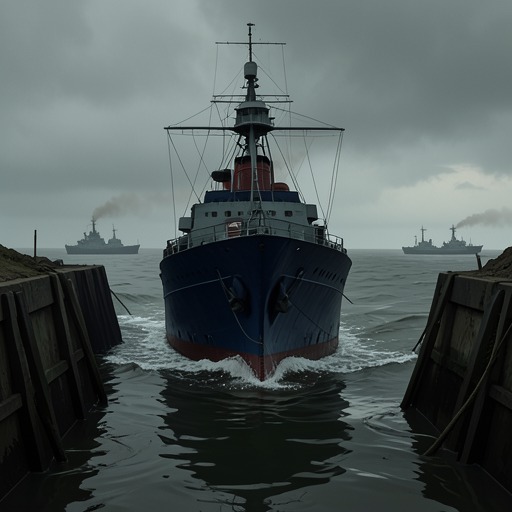
AfterburnThe Arsincevo facility is a pivotal logistical objective in the Black Sea campaign. Its importance rests not simply on holding ground but on the fuel needed to keep carrier aircraft flying: without access to the complex, the fleet’s combat power risks becoming unusable even if its ships remain afloat.
Strategic Role
A nuclear-powered carrier does not need fuel for its own propulsion, but its aircraft consume aviation fuel at a rate that makes sustained operations dependent on replenishment. The carrier’s aircraft fuel would last no more than ten days, and less under a heavy flight schedule, a major strike, or an extended battle. Meanwhile, the carrier required at-sea replenishment of other expendable supplies every two to three weeks. Its only sources of resupply were the tankers accompanying the battle group, leaving the force vulnerable if those supply lines were interrupted.
The danger was sharpened by the prospect of the Bosporus Strait closing. With round-the-clock maneuvering and flight operations, the carrier’s fuel margin could shrink to two to four days; after that, the carrier and its escorts risked being trapped in the Black Sea as little more than expensive, ineffective ships. Arsincevo therefore represented a way to address a logistical vulnerability that naval endurance alone could not solve.
The Objective and Its Risks
During preparations to take the Arsincevo complex, Tombstone stressed that securing it was essential: otherwise, the operation would leave aircraft grounded and ships helpless. He also warned that the force would face a substantial Russian contingent, making the contest Russians against Russians rather than a straightforward fight between opposing national forces.
Tombstone asked whether General Boychenko could trust his troops. Boychenko replied at length through a translator, saying that he understood the risks and believed Arsincevo could be taken. The 4th Spetsnaz Fleet Brigade was specifically named in the discussion of his forces, tying the facility’s capture to the reliability and commitment of units fighting under Boychenko.
Fuel and Operational Consequences
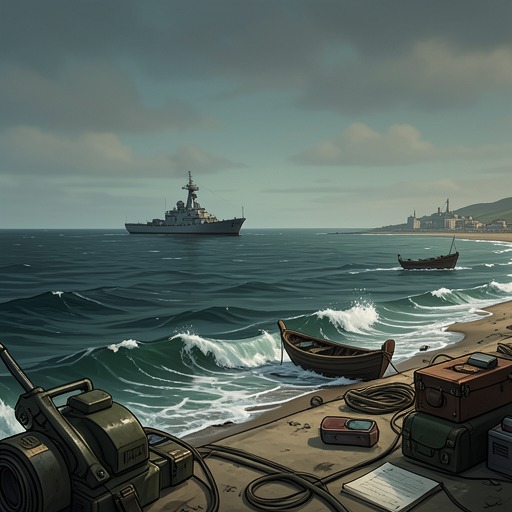
The facility’s value became concrete in the planned transfer of aviation fuel to the carrier. The fuel was assessed as meeting the carrier’s demanding standards, but the task ahead remained immense: nearly three million gallons, approximately nine thousand tons, had to be pumped aboard. Flight-deck operations were suspended during the loading, illustrating the practical cost of replenishment even when suitable fuel was available.
Arsincevo thus linked control of a land facility to the fleet’s ability to continue operating at sea. Capturing it could relieve the immediate aviation-fuel constraint; loading its fuel required the carrier to pause flight operations while handling a highly flammable cargo. The complex’s significance lies in that conversion of a local objective into operational endurance: without the fuel, the fleet’s aircraft could not sustain the missions on which the ships’ usefulness depended.