ZSU-23-4 Shilka
AfterburnThe ZSU-23-4 Shilka is a Soviet-designed, tracked air-defense vehicle armed with four AZP-23 cannons. In the novel, it appears not as distant hardware but as a concealed threat along a mountain road: a squat vehicle that is recognized first by sight and then by its radar signature. Its presence makes the aircraft crew’s choice of altitude and route immediately consequential.
Identification and Capabilities
The vehicle is initially spotted parked beside the road in a valley leading toward Chaisi. The crew calls it a Zoo, slang for the ZSU-23-4, and the narration emphasizes that it is among the most dangerous weapons in the former Soviet arsenal. Its four cannons are mounted on a self-propelled tracked vehicle, a compact arrangement that gives the roadside silhouette its significance: what looks like a squat vehicle is also a serious threat to aircraft.
The name Shilka is identified as the Russian designation for the quad-mounted ZSU-23-4. This distinction links the visual recognition of the Zoo to its formal identification as a Shilka, while the later radar contact confirms that the danger is not merely an object noticed on the ground. The system is actively tracking the aircraft.
Encounter in the Canyon
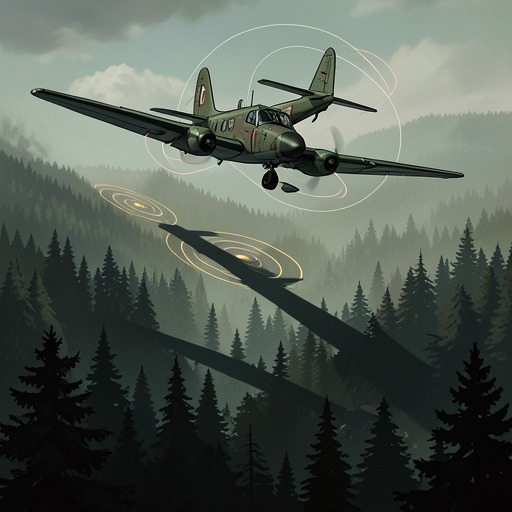
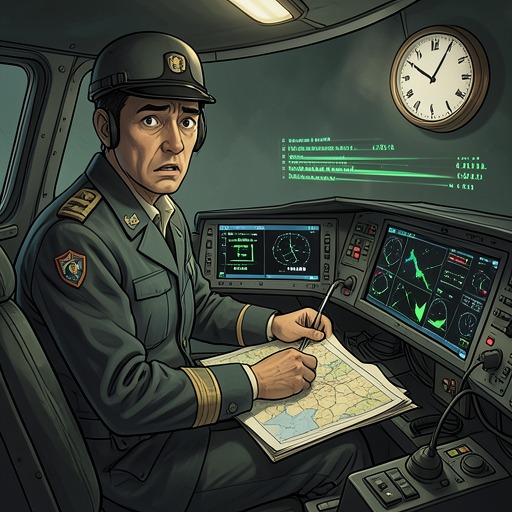
As the aircraft proceeds through the canyon, Cat reports a radar contact and says they are being painted. Asked whether the return is the helicopter, she rules that out and reports a Gun Dish contact. Dixie immediately recognizes the implication and identifies a Shilka. The exchange turns an uncertain radar warning into a specific threat: the vehicle seen earlier is now associated with a radar lock on the aircraft.
The crew has already considered the danger of trying to climb. Pulling up at that moment would leave them exposed before they could gain enough altitude to evade the weapons. When the radar warning arrives, Dixie’s first instinct is to haul back on the control stick and gain height, but he resists it. He holds the aircraft’s altitude steady and eases into the canyon’s dogleg instead. The encounter therefore makes the terrain and the aircraft’s movement part of the immediate tactical problem; the evidence establishes the Shilka’s threat and the crew’s maneuver, but does not describe the vehicle firing.
Narrative Function
The Shilka is introduced through a compact sequence of recognition: roadside silhouette, slang name, radar contact, and explicit identification. Each step narrows the gap between seeing a vehicle and understanding what it can do. The sequence also gives the weapon a role beyond its technical description: its concealed position turns a flight through the valley into a test of judgment, where an instinctive climb may be more dangerous than maintaining course through the canyon.