Falcon Patriot tanker
AfterburnThe Falcon Patriot tanker is an American underway-replenishment vessel whose attack in the Bosporus turned a supply ship into a strategic pressure point. As a source of fuel and other necessities for the Thomas Jefferson carrier group, it represented the fragile link between the carrier’s striking power and the resources needed to keep that power in operation. Its vulnerability made the group’s confinement in the Black Sea a logistical crisis as well as a military one.
Identity and Role
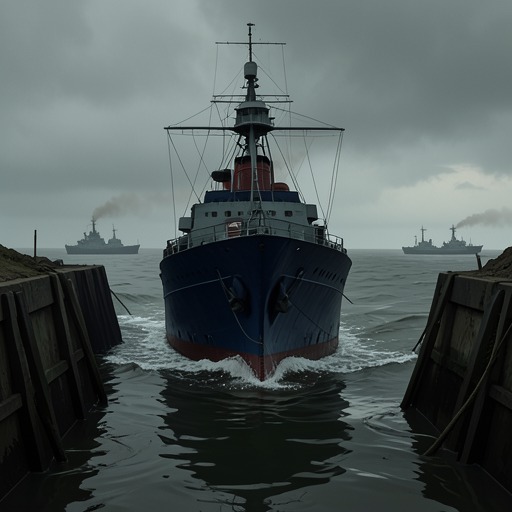
The Falcon Patriot appears on radar among the vessels emerging from the Bosporus Strait. Although most of the ships were expected to be Turkish, its identification tag marked it as an American UNREP fuel tanker. The distinction mattered: the carrier group depended on replenishment ships, and a tanker moving through the straits offered a potential target outside the immediate protection of the carrier itself.
The tanker’s strategic value came from the demands of sustained carrier operations. A modern nuclear-powered carrier such as Jefferson did not need fuel for its own propulsion, but its aircraft consumed fuel rapidly. The carrier required replenishment of expendable supplies every two to three weeks, and its aviation fuel could last no more than ten days under ordinary assumptions—and less during a heavy flight schedule, a major strike, or an extended battle. UNREP tankers followed the battle group across the sea, making them essential to its ability to remain operational.
Attack in the Bosporus
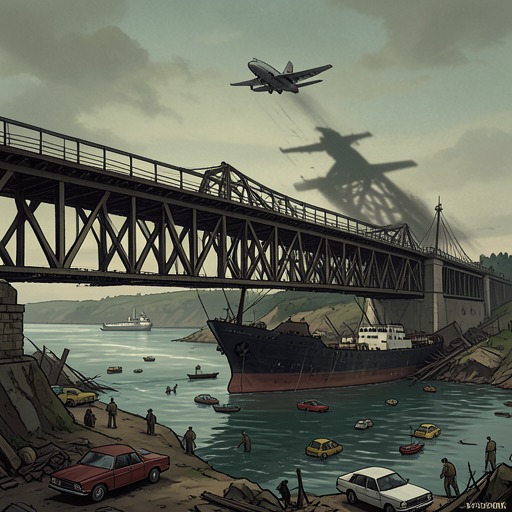
The Falcon Patriot was identified as a possible target when officers considered what ships might be sought in the straits. At 1007 hours Zulu plus three, aboard the tanker in the Bosporus, Captain Richard Calvin stepped onto the port-side flying bridge and leaned over the railing to look aft. The nearby combat sequence had reached a target lock and a missile launch; the tanker was under attack in the narrow passage.
The attack did not leave the ship instantly helpless. The Falcon Patriot remained afloat and responsive to the helm for a few more moments, a brief interval in which its crew still had a vessel they could maneuver. At 1008, Air Ops aboard Jefferson received confirmation of the developing emergency. The tanker ultimately sank, making the threatened supply link a direct loss rather than merely a danger on the radar screen.
Consequences for the Carrier Group
The Falcon Patriot’s loss sharpened a vulnerability already built into the group’s position. With the Bosporus closed, Jefferson and its escorts risked being trapped in the Black Sea without the replenishment ships that normally sustained them. Under a heavy operational tempo, the carrier’s stated ten-day margin could contract to only two to four days; after that, the ships would be left with aircraft and combat systems they could no longer use effectively.
The scale of the fuel requirement underscored how difficult recovery would be. A later effort to supply Jefferson involved pumping nearly three million gallons—about nine thousand tons—of highly flammable aviation fuel aboard, with flight-deck operations suspended during the transfer. The figure conveys the gulf between a tanker’s loss and the needs of a carrier force: replenishment was not a minor convenience but a vast, continuing logistical operation. The Falcon Patriot’s fate therefore marks the point where control of a narrow sea passage, the safety of support vessels, and the combat endurance of the carrier group became inseparable.