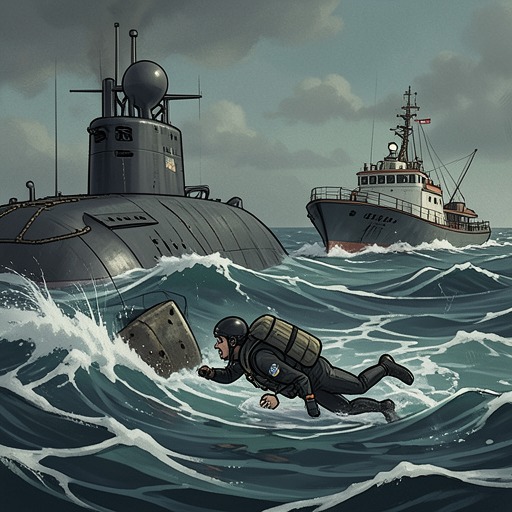
Kukla decoy torpedo
AfterburnKukla is a torpedo-shaped electronic decoy whose use turns a weapon launch into a deception tactic. Fired from the Russian submarine Kislovodsk, it was meant to draw American antisubmarine forces into tracking a false target, giving the submarine time to alter course and slip away. Its name, the Russian word for puppet, captures the device’s role: it presents something for the enemy to follow while the submarine attempts to escape notice.
Construction and Purpose
Kukla was a standard 533mm torpedo modified by removing its warhead and fitting a sophisticated packet of microelectronics in its place. The alteration made it a decoy rather than a conventional warhead-equipped torpedo; its stated purpose was to mislead the forces searching for Kislovodsk.
That deception depended on the pursuers initially treating the signal as a real torpedo. The narrative identifies a brief interval before they realized they were tracking an electronic decoy. During those critical moments, Kislovodsk could take a new heading and try to slip out from beneath the American antisubmarine forces. Kukla’s value therefore lay not in striking a target but in buying time for the submarine’s evasion.
Preparation and Launch
Aboard Kislovodsk, the crew prepared the decoy on Aleksei Aleksandrovich Vyatkin’s orders. After the torpedo room reported Kukla loaded, Vyatkin ordered the outer torpedo doors opened and the crew to prepare to fire. He then gave the launch order. The torpedo slid clear of its tube on a blast of compressed air, making the electronic deception a concrete part of the submarine’s escape maneuver.
The exchange presents the launch as an ordered sequence: loading, opening the outer doors, and firing. Kukla was not simply available equipment; it was the means Vyatkin selected for the immediate problem of evading the American search. The launch initiated the distraction, while the submarine’s change of heading was to exploit the time that distraction created.
Vyatkin’s Experience and the Decoy’s Role
Vyatkin had used the same general tactic successfully more than once on submarines he served aboard as a junior officer during the Cold War. That prior experience gives the launch a practical precedent within the story: he was not improvising an unfamiliar ruse, but returning to a method he had used before. In the present encounter, he directs the crew through the preparation and firing of Kukla while relying on the short delay before the Americans identify it as a decoy.
The episode makes the distinction between apparent threat and actual purpose central to the object. Kukla resembles a torpedo closely enough to occupy the enemy’s attention, yet its removed warhead and microelectronics serve an evasive design. Its decisive effect is measured in the moments it gives Kislovodsk to change course—not in damage inflicted.