Identification Friend or Foe system
AfterburnThe Identification Friend or Foe system is the means by which aircraft are recognized as friendly, but in the Georgia operation its usefulness depends on codes that some forces do not possess. When Army helicopters enter the United Nations no-fly zone without those codes reaching the carrier group, the system’s failure to identify them becomes more than a technical gap: it leaves armed crews without the information needed to distinguish friendly aircraft from an unknown target, and exposes the wider breakdown in coordination governing the mission.
Function and Operational Dependence
In the account of the system, identification is tied to computer recognition codes and to the carrier group’s radar picture. Naval personnel later explain that the codes would have allowed their radars to recognize the Army helicopters as friendly. The system therefore does not operate in isolation: its practical value depends on the codes being available to the personnel and equipment making an engagement decision. The evidence does not describe the system’s technical design or signal method; it emphasizes the operational fact that recognition failed because the relevant information was not shared.
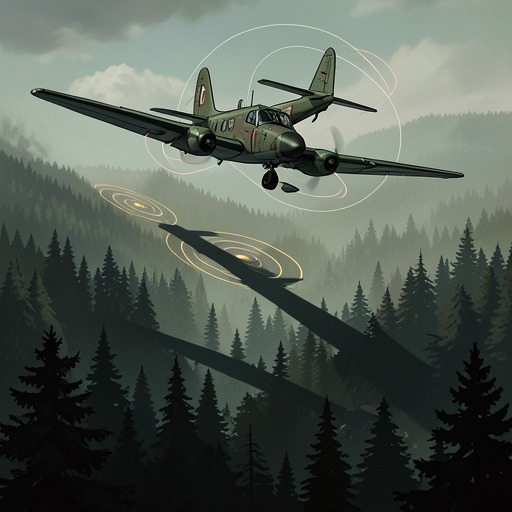
That dependence becomes visible during a close encounter. Dixie is assigned to observe visually, while the shooter reports that Watch Dog is not picking up IFF on the target; at close range, the crew still receives no identification. The account that follows refers to a helicopter being brought down after one of its blades was struck. The sequence sets visual observation against electronic recognition, but neither can supply the missing confirmation that the target is friendly. The system’s silence does not establish that an aircraft is hostile; it leaves the crew acting without a reliable friendly identification.
The Georgia Friendly-Fire Crisis
The immediate explanation is not that the Army helicopters were deliberately concealed from the carrier force. The personnel discussing the encounter say they had not been told that Army helicopters had been sent into Georgia to work with the United Nations team. They also raise the possibility that the carrier group had not received the full set of IFF computer recognition codes. The two omissions meet at the point of decision: the aircraft are present in the no-fly zone, but the naval operators lack both notice of their presence and the codes needed to classify them as friendly.
A subsequent account describes the incident as a warning about interservice operations. Communication had broken down up and down the command chain; carrier-group naval personnel had not been notified that Army helicopters were operating in the no-fly zone and had not received the codes that would make those helicopters recognizable to their radars. The IFF failure is thus one part of a larger institutional failure, not a self-contained malfunction. The missing recognition data matters because separate services are acting in the same airspace without a shared operational picture.
Command, Information, and Responsibility
The danger sits within a mission already shaped by competing authorities and restrictions. The National Command Authority had directed that U.S. forces not involve themselves in fighting between the Russian factions, while the United Nations had sought American forces for the operation. The carrier group’s entry near Poti was described as bringing its air wing to strengthen the United Nations’ position, amid a long-running debate over whether American forces should be placed under United Nations commanders. These limits make accurate identification consequential: forces must act within a tightly defined mission even as they operate alongside units whose presence may not have been communicated to them.
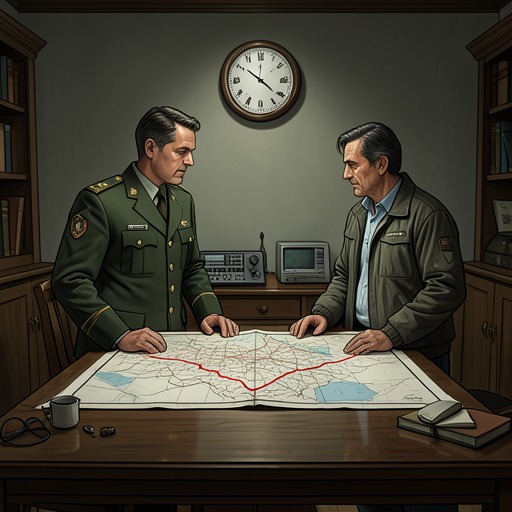
The command arrangement later becomes explicit when Washington grants the United Nations operational authority over U.S. forces in the Crimean Peacekeeping Operational Zone. The commander tells his officers they will operate under United Nations command until the President says otherwise. This does not itself explain the earlier IFF failure, and the evidence does not claim that the change repaired it. It does, however, sharpen the institutional problem the incident has already exposed: authority can be assigned across a multinational mission, but an order cannot substitute for timely notice, shared codes, or communication between services.
Narrative and Thematic Significance
The system’s importance in the story lies in the gap between a category and the information that makes the category usable. Friendly or hostile is an urgent distinction for the crew, yet the radar cannot supply it when the codes are absent. The operators’ uncertainty is not resolved by the system; it is produced in part by the way the mission has been organized. In that sense, IFF becomes a concrete measure of coordination: its failure makes invisible the administrative decisions that determine what a crew can know in the air.
The later question about what is happening to the chain of command, followed by news that Captain Brandt has received a brevet promotion to admiral, belongs to a wider atmosphere of changing authority. It is not presented as a direct consequence of the IFF episode. Read alongside the Georgia incident, however, it reinforces the story’s recurring distinction between formal command and effective communication. The system can identify a friendly aircraft only when information has reached the people relying on it; the mission’s layered authorities cannot prevent a dangerous misrecognition when that basic condition is missing.