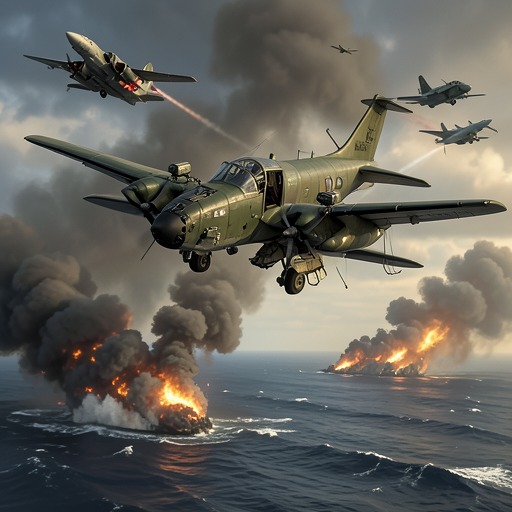
F·A-18 Hornet
AfterburnThe F/A-18 Hornet serves as the strike aircraft in the night operation over Yalta, tasked with helping General Boychenko’s troops escape Dmitriev’s naval infantry. Its role is distinct from the Tomcats’ defensive cover: the Hornets carry the attack to the ground while other aircraft guard the ships and rescue helicopters.
Role in the Operation
The F/A-18 Hornets of VFA-161 and VFA-173 are assigned the air-to-ground strike needed to break the pressure of Dmitriev’s naval infantry on General Boychenko’s troops. A-6 Intruders from VA-84 and VA-89 join them in delivering that strike. The mission’s stated purpose is to open a way for the troops to break free; the passage does not establish the ground operation’s eventual result.
The Night Strike
The Hornets pass over Yalta and the White Palace in pairs, then disappear into the darkness above the mountains to the north. Seconds later, the sound of their bombs and air-to-surface missiles carries from beyond sight. The sequence makes the aircraft’s work audible before its effects are shown: the strike has begun, but its outcome remains unresolved in this moment.
Air Cover and Significance
Jefferson’s two Tomcat squadrons serve as FORCECAP, protecting both the American ships and the rescue helicopters from enemy attack. This division of labor places the Hornets at the center of the offensive action while the Tomcats guard the operation’s vulnerable assets. Their paired passage and the delayed thunder of weapons mark the approaching transition from preparation to action.