First C.I.D. Man
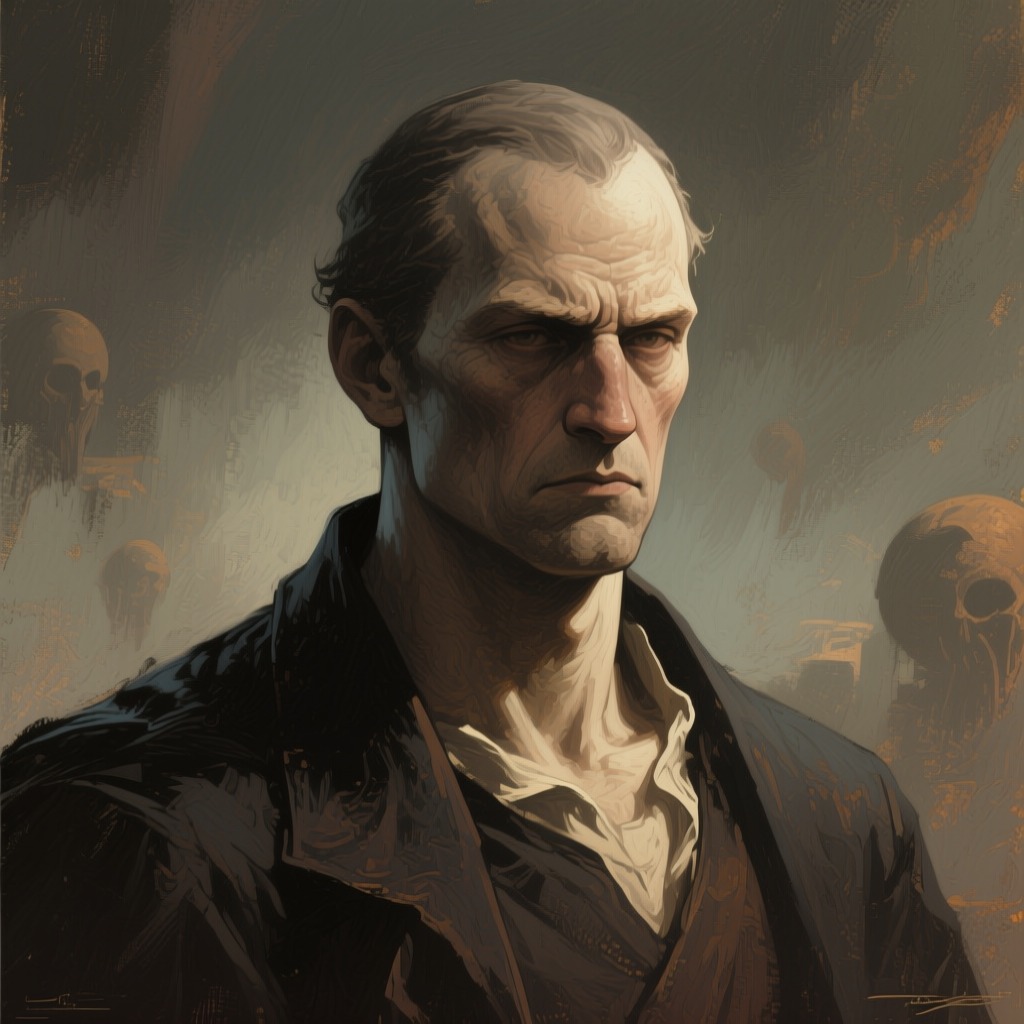
The First C.I.D. Man is a minor but structurally significant figure in Joseph Heller's Catch-22, an investigator who enters the hospital ward posing as a patient to track down the officer who has been signing 'Washington Irving' on censored letters. His presence triggers a chain of bureaucratic absurdity that draws in Major Major, the chaplain, and a second C.I.D. man, and his own physical deterioration—from a cold caught from a fighter pilot to pneumonia—mirrors the novel's theme that institutional logic is indifferent to individual survival.
Identity and Introduction
The First C.I.D. Man is introduced into the hospital ward as a patient, but his cover is immediately transparent to the other men. They all know he is a C.I.D. man because he keeps inquiring about an officer named Irving or Washington and because after his first day there he refuses to censor letters, finding them too monotonous. His presence is a direct consequence of Yossarian's earlier censorship games: Yossarian had been writing 'Washington Irving' on the letters he did read, and 'Irving Washington' when that grew monotonous, and the resulting 'ripple of anxiety on some ethereal military echelon' floated the First C.I.D. Man into the ward.
Investigation and Interactions
The First C.I.D. Man's investigation leads him to Major Major's office, where he jumps in through the window to interrogate the squadron commander. By this time he is wearing a faded maroon corduroy bathrobe with open seams under both arms, linty flannel pajamas, and worn house slippers with one flapping sole—regulation hospital dress. He has added about twenty pounds and seems bursting with good health, though he whines that he is 'really a very sick man' who caught cold in the hospital from a fighter pilot and came down with a very serious case of pneumonia. He warns Major Major that Washington Irving seems to have shifted his base of operations from the hospital to the squadron, and asks if anyone has been talking about Washington Irving. When Major Major tells him that the man who was just in his office—the Second C.I.D. Man—was talking about Washington Irving, the First C.I.D. Man cries with delight that this might be just what they needed to crack the case wide open. He instructs Major Major to keep the Second C.I.D. Man under surveillance twenty-four hours a day while he rushes back to the hospital to write his superiors for further instructions, then jumps out of Major Major's office through the window and is gone.
Physical Decline and Thematic Significance
The First C.I.D. Man's physical trajectory mirrors the novel's larger pattern of institutional absurdity overriding individual well-being. He entered the hospital healthy and was discharged sick, having caught a cold from a fighter pilot that developed into pneumonia. His gums are painted purple by Gus and Wes, his toes painted with gentian-violet solution, and he breaks his nose falling into a slit trench. Despite his official authority as an investigator, he is as powerless against the medical system's arbitrary procedures as any other patient. His role in the narrative is ultimately comic and futile: the case of Washington Irving is never solved through his efforts, and the bureaucratic machinery he represents only multiplies confusion rather than resolving it. His presence, along with that of the Second C.I.D. Man, demonstrates that the systems designed to enforce order in the military are themselves subject to the same Catch-22 logic that governs everything else.