Clevinger
Clevinger is a brilliant, principled, and ultimately doomed Harvard-educated intellectual in Yossarian's squadron whose passionate idealism and faith in institutional justice make him a central foil to Yossarian's pragmatic survivalism. His disappearance into a cloud during a routine mission—leaving no trace—becomes one of the novel's most haunting symbols of arbitrary, meaningless death, and his earlier debates with Yossarian crystallize the book's central conflict between individual self-preservation and abstract duty.
Identity and Background
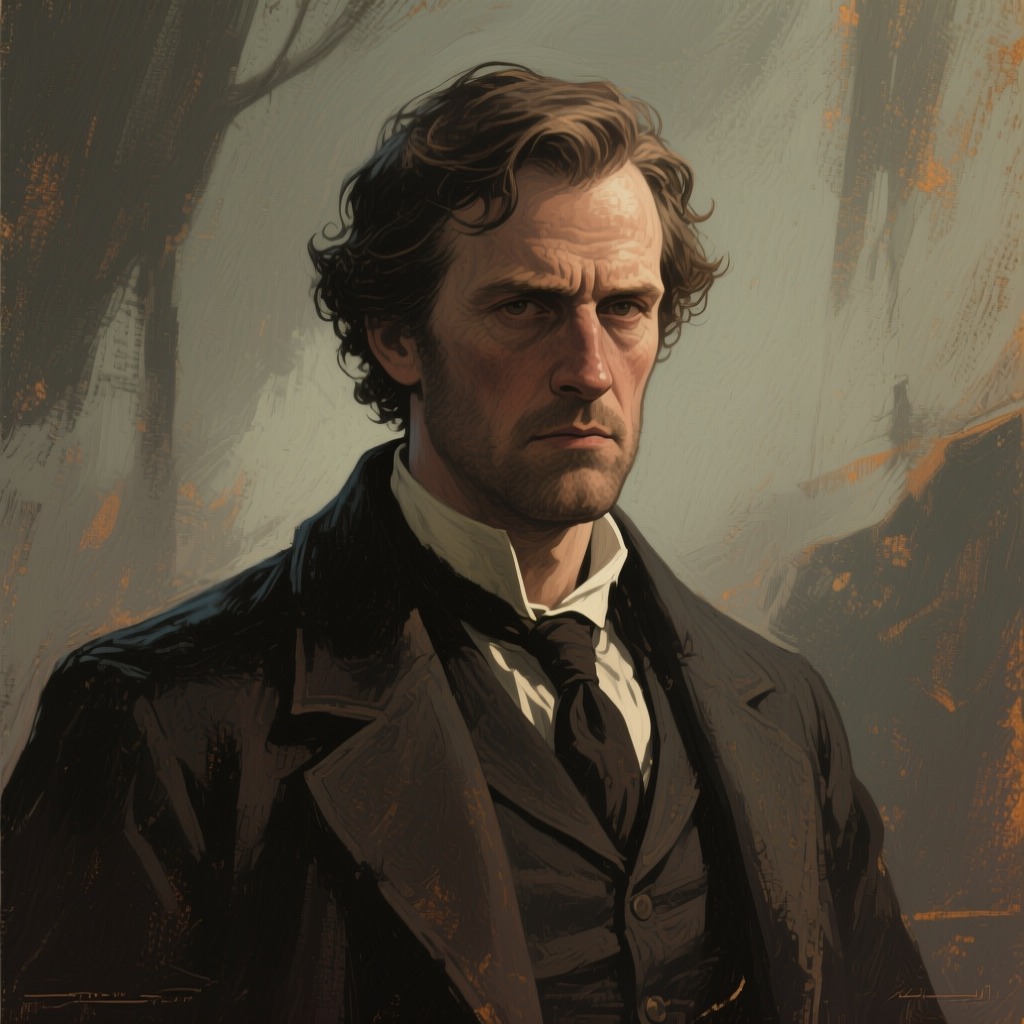
Clevinger is a gangling, gawky, feverish, famish-eyed brain who won prizes in scholarship for just about everything at Harvard. He is described as having lots of intelligence and no brains—a dope who knows everything about literature except how to enjoy it. Politically, he is a humanitarian trapped between his Communist friends and his right-wing enemies, detested by both groups. He is a militant idealist who crusades against racial bigotry by growing faint in its presence. He conducts educational sessions twice a week in Captain Black's intelligence tent, where he and a subversive corporal (who wears eyeglasses and uses words like "panacea" and "utopia") try to explain the war to a handful of interested men.
Arc Through the Plot
Clevinger's trajectory moves from confident intellectual engagement to bewildered victimhood. At cadet school in Santa Ana, California, he naively believes Lieutenant Scheisskopf's plea for honest feedback and is brought before the Action Board, where he is charged with "breaking ranks while in formation, felonious assault, indiscriminate behavior, mopery, high treason, provoking, being a smart guy, listening to classical music and so on." The board—composed of the bloated colonel with a big fat mustache, Lieutenant Scheisskopf, and Major Metcalf—conducts a Kafkaesque interrogation in which Clevinger is found guilty because he has been accused, and sentenced to walk fifty-seven punishment tours. Yossarian warns him beforehand, "They hate Jews," and when Clevinger protests he is not Jewish, Yossarian replies, "It will make no difference. They're after everybody." Clevinger recoils from their hatred as though from a blinding light, understanding that nowhere in the world, not even among the German enemy, are there men who hate him more. Later, during the Great Big Siege of Bologna, Clevinger argues passionately with Yossarian about the morality of moving the bomb line, insisting that the men on the mainland are entitled to air support and that it is not for individuals to determine what targets must be destroyed. Yossarian retorts, "The enemy is anybody who's going to get you killed, no matter which side he's on, and that includes Colonel Cathcart." Clevinger forgets this lesson, and he is dead.
Disappearance and Aftermath
Clevinger's end is as abrupt as it is inexplicable. Eighteen planes let down through a beaming white cloud off the coast of Elba one afternoon on the way back from the weekly milk run to Parma; seventeen come out. No trace is ever found of the other—not in the air or on the smooth surface of the jade waters below. There is no debris. Helicopters circle the white cloud till sunset. During the night the cloud blows away, and in the morning there is no more Clevinger. The disappearance is described as "astounding, as astounding, certainly, as the Grand Conspiracy of Lowery Field, when all sixty-four men in a single barrack vanished one payday and were never heard of again." Yossarian later reflects that even Clevinger might be alive somewhere inside that cloud, hiding until it is safe to come out. The chaplain, in his moment of greatest despair, looks toward the sky and automatically searches for the fluffy, white, turnip-shaped cloud in which Clevinger vanished.
Relationships and Conflict
Clevinger's relationship with Yossarian is the novel's central intellectual debate. Clevinger believes in principles, justice, and the system; Yossarian believes in staying alive. Their arguments are passionate and circular. When Yossarian tells Clevinger that strangers shoot at him with cannons every time he flies, Clevinger insists, "They're shooting at everyone. They're trying to kill everyone." Yossarian replies, "And what difference does that make?" Clevinger ends up gasping furiously for air and blinking back bitter tears of conviction. He calls Yossarian crazy, diagnosing him with a "Jehovah complex." Yossarian, in turn, thinks Clevinger is a dope. Yet there is affection between them: Yossarian tries to help him, and Clevinger's death leaves a void that Yossarian feels keenly.
Thematic Significance
Clevinger embodies the tragic failure of rational idealism in an irrational system. His faith that justice will prevail is shattered by the Action Board's hatred; his belief that the war effort justifies individual sacrifice is rendered meaningless by his own absurd, invisible death. He is the character who most clearly articulates the arguments for duty and collective good that Yossarian rejects, and his disappearance proves Yossarian's point more powerfully than any argument could. The question Yossarian poses during Clevinger's educational sessions—"Where are the Snowdens of yesteryear?"—finds its echo in Clevinger's own vanishing, and the novel's final image of him as a potential survivor hiding inside a cloud suggests that even the most certain deaths in this world remain ambiguous, that hope and despair are equally unfounded.