Dobbs
Dobbs is the worst pilot in the world and knows it, a shattered wreck of a virile young man whose terror of flying combat missions is matched only by his inability to stop flying them. He is a walking embodiment of the Catch-22 paradox: too frightened to fly safely, yet sane enough to be required to keep flying. His desperate attempts to escape combat—first by begging to be grounded, then by plotting murder, and finally by flying anyway—trace a tragic arc through the novel, culminating in a mid-air collision that kills him and Nately. More than any other character except Yossarian, Dobbs demonstrates how the military system traps men in a cycle of fear from which there is no honorable exit.
Identity and Background
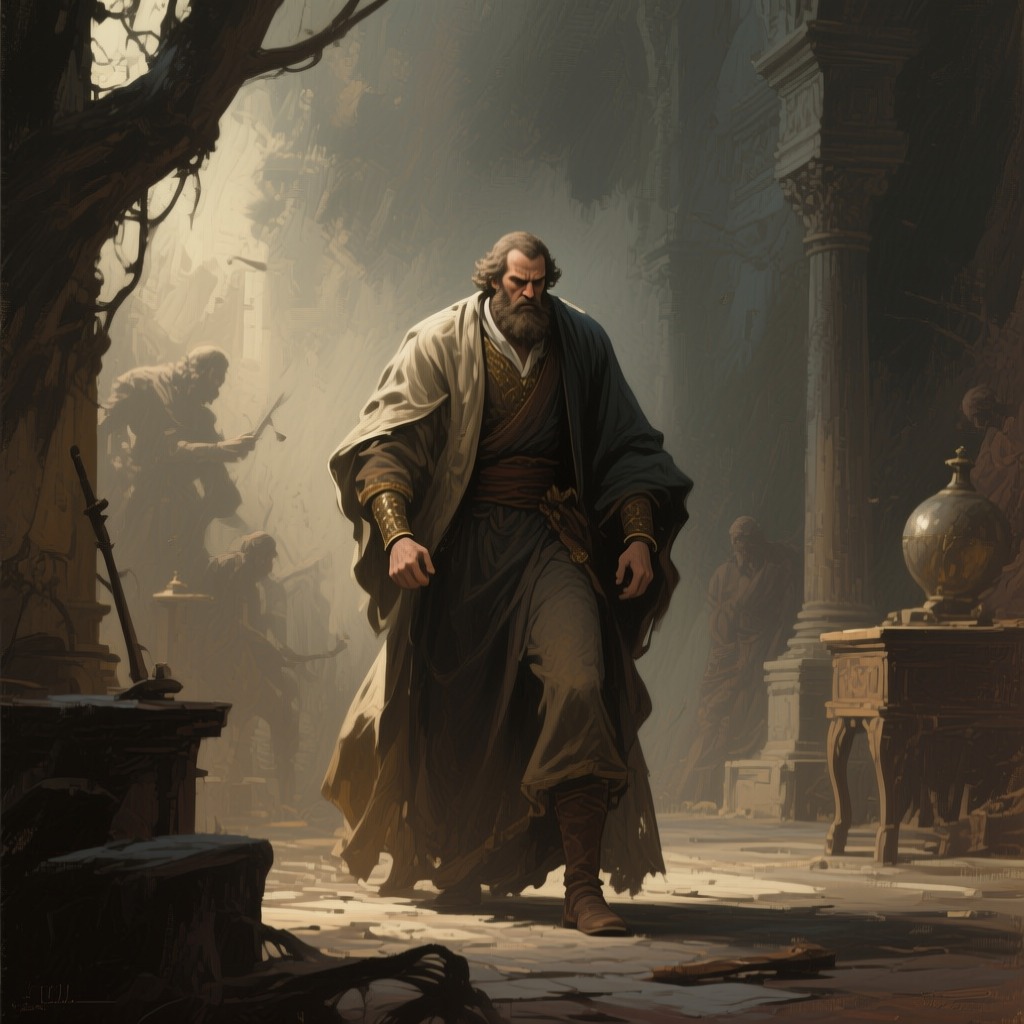
Dobbs is introduced as a pilot so erratic that Yossarian specifically requests not to be assigned to his plane. He is "the worst pilot in the world" and knows it, a man who "continually striv[es] to convince his superiors that he is no longer fit to pilot a plane"—a plea none of them will accept. His physical state mirrors his psychological disintegration: he suffers from violent sneezing fits, his hands shake uncontrollably, and he speaks in a "rough, quavering, overwrought voice." He is described as having a "bronze, rocklike jaw" that bunches into "quivering knots" when he is agitated, suggesting a man whose outward hardness conceals inner collapse. Unlike Hungry Joe, who at least can function when actually flying, Dobbs is incapacitated by fear even at the controls.
The Plot to Murder Colonel Cathcart
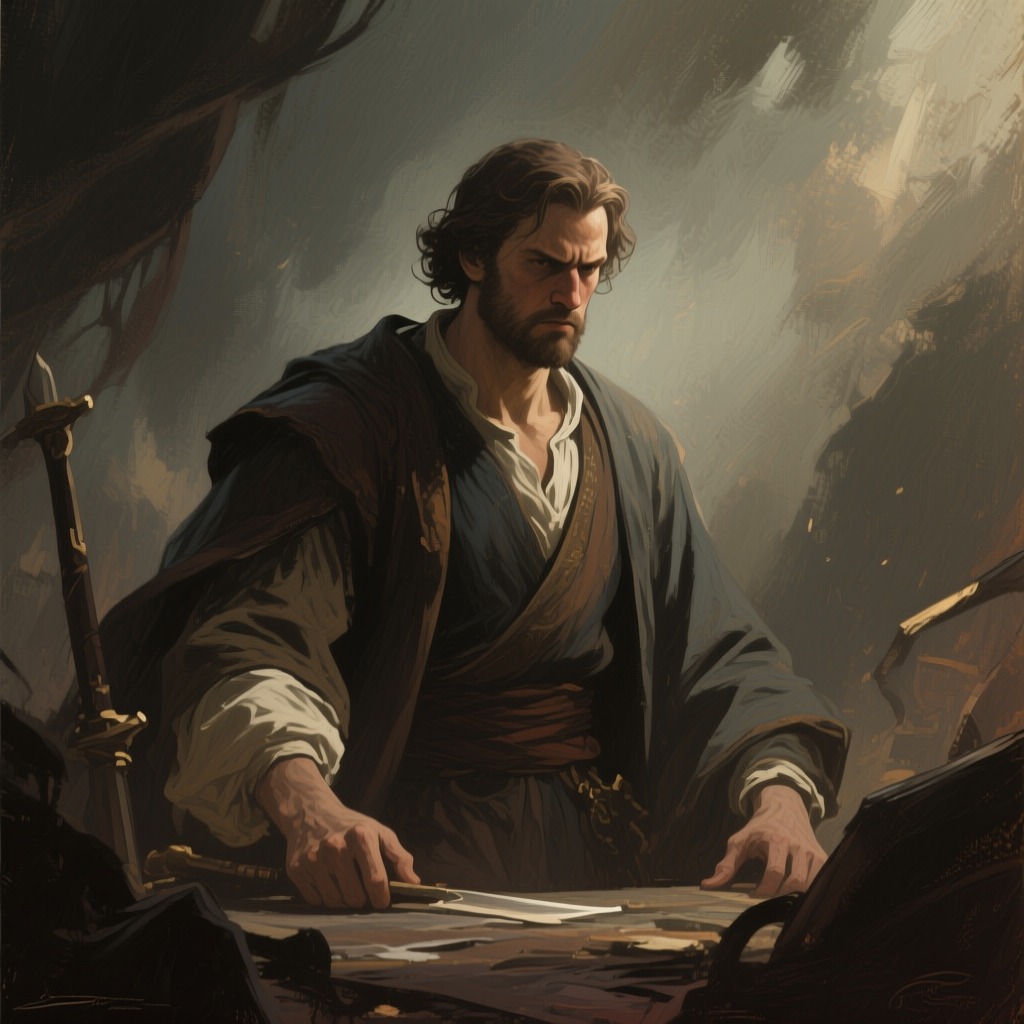
After Colonel Cathcart raises the number of required missions to sixty, Dobbs steals into Yossarian's tent with a Luger pistol he brought back from Sicily and unveils a detailed plan to ambush and kill the colonel. He has worked out every step: he will hide in bushes at a hairpin turn in the road where Cathcart must slow his jeep, shove a log into the path to stop him, then step out and "shoot him in the head until he's dead." He will bury the gun and return to the squadron as though nothing happened. Yet despite this elaborate scheme, Dobbs cannot act alone. He needs Yossarian's authorization: "I couldn't do it without you. I need you to tell me to go ahead." When Yossarian refuses, Dobbs immediately begins bargaining, asking only that Yossarian call it "a good idea." Yossarian still refuses, and Dobbs leaves in frustration, knocking over the washstand and tripping over Orr's stove fuel line. The episode reveals Dobbs's fundamental paralysis: he can conceive of violent action but cannot execute it without external validation.
Mid-Air Panic and Snowden's Death
Dobbs's most catastrophic moment occurs on the mission to Avignon, when he is flying as co-pilot with the fifteen-year-old Huple at the controls. After the bombs are dropped, Dobbs "wrest[s] the controls away without warning" and hurls the plane into a terrifying dive that tears Yossarian's headset loose and pins him helplessly to the ceiling. Huple manages to seize the controls back and level the plane out, but the damage is done: the plane is now back inside the heavy flak from which they had almost escaped. Almost immediately, Snowden is hit. When Yossarian plugs his headset back in, he hears Dobbs sobbing over the intercom: "Help him, help him. Help him, help him." Dobbs is crying for the bombardier—who is Yossarian himself—and then for the radio-gunner, Snowden. This moment of Dobbs's panic is the direct cause of Snowden's death, for it is during the chaos of the dive and the renewed flak that Snowden receives his mortal wound. Yossarian later reflects that "it was impossible to be positive that Dobbs had killed him," but the sequence of events makes the connection inescapable.
The Failed Alliance and Final Mission
When Yossarian finally decides to join the murder plot after being threatened with another mission to Bologna, Dobbs has already completed his sixty missions and is packed to go home. He now refuses to participate, telling Yossarian, "I'd have to be crazy to get mixed up in something like this now that I'm out of combat." He advises Yossarian to "fly your sixty missions like the rest of us and then see what happens." This reversal—from desperate conspirator to cautious survivor—shows that Dobbs's revolutionary fervor was entirely a product of his own fear, not of any principled opposition to Cathcart's policies. On the mission to La Spezia, Dobbs is at the controls of his formation when he "zigged when he should have zagged, skidding his plane into the plane alongside, and chewed off its tail." His wing breaks off at the base, and his plane drops like a rock, striking the water with no survivors. There are no parachutes. Nately, flying in the other plane, is killed too. Dobbs's final act is one of fatal incompetence, killing himself and his friend in a moment of panicked misjudgment.
Narrative Role and Thematic Significance
Dobbs functions as a dark mirror to Yossarian: both are terrified of dying, both recognize the absurdity of the mission system, and both contemplate murder as a solution. But where Yossarian ultimately refuses to kill and seeks escape through desertion, Dobbs is trapped by his own cowardice—too afraid to fly, too afraid to kill, and too afraid to refuse. His sneezing fits, his shaking hands, his inability to whisper when he tries to be secretive—all mark him as a man whose body betrays his intentions at every turn. He is a figure of pure, unmediated fear, stripped of any pretense of heroism or even competence. His death, caused by his own error, is the logical endpoint of a life lived in terror: he is killed not by the enemy but by his own inability to control his panic. In a novel full of characters who cope with fear through denial, madness, or corruption, Dobbs represents the raw, unprocessed terror that the system produces and then consumes.