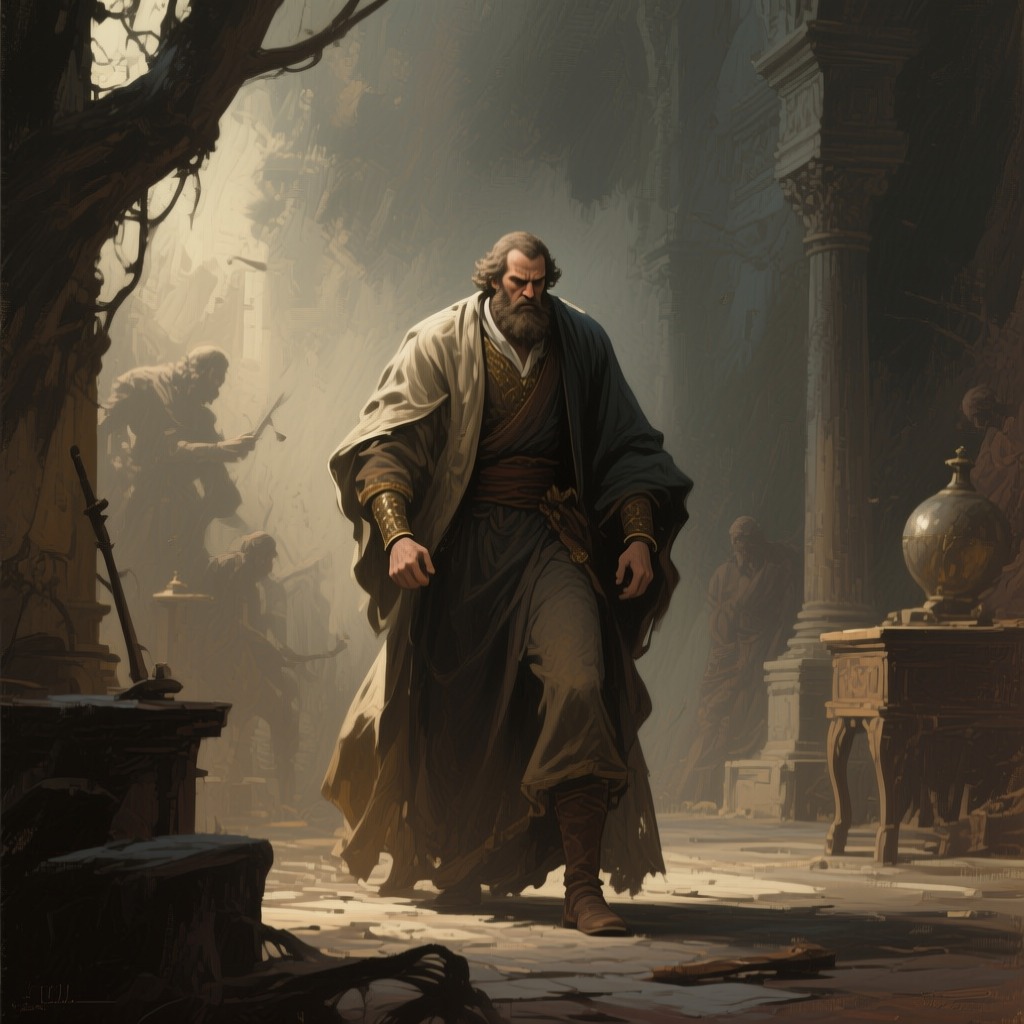
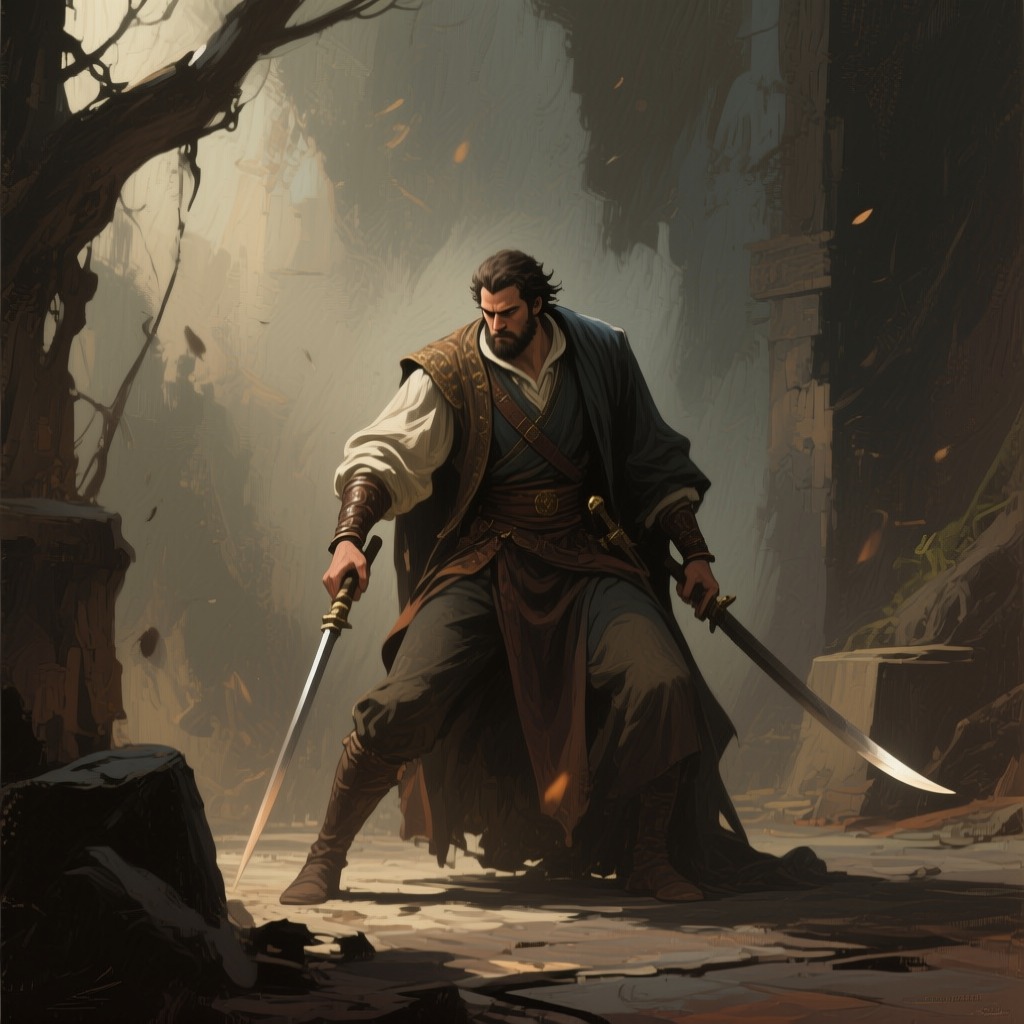
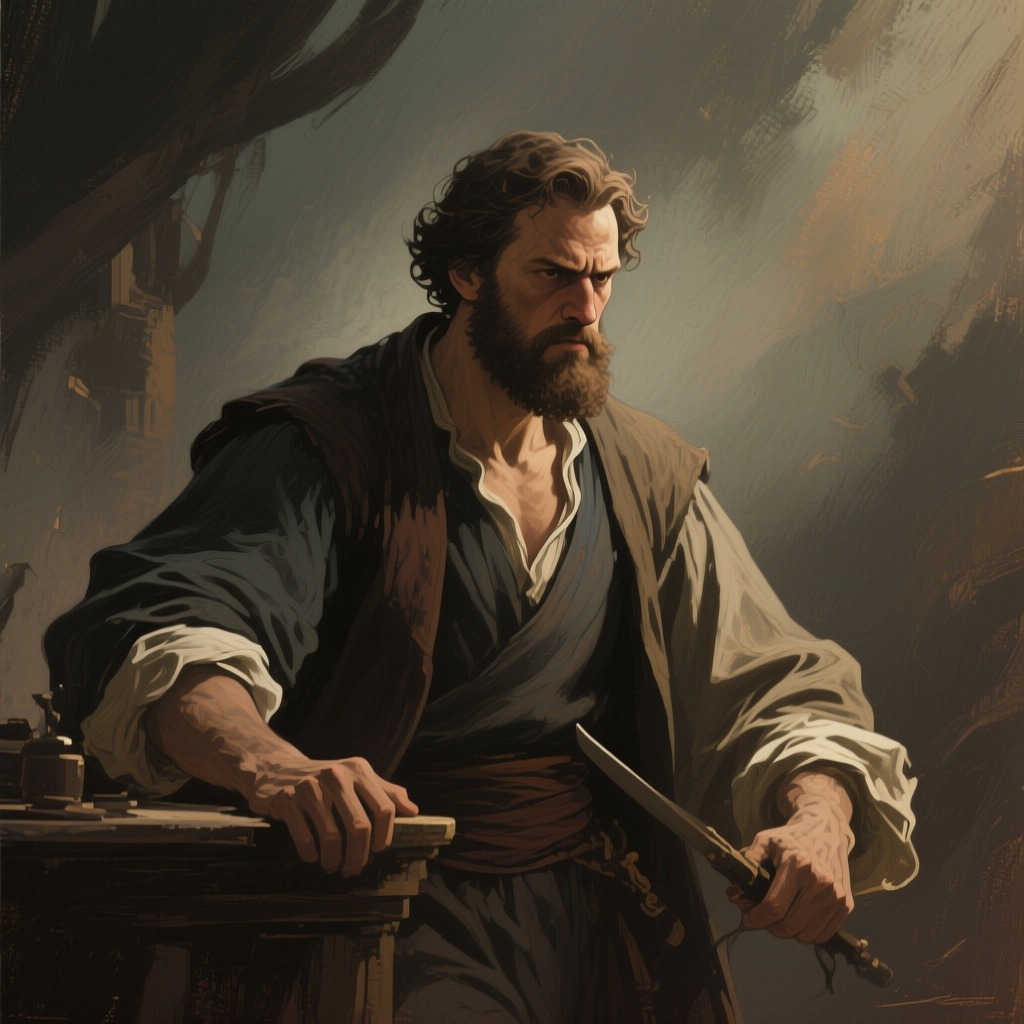
Major Major Major Major
Major Major Major Major is one of the most profoundly isolated figures in Joseph Heller's Catch-22, a man whose very name is a bureaucratic joke and whose life is a relentless progression from one form of loneliness to another. Born into mediocrity and thrust into a command he never sought, he becomes a tragicomic emblem of the absurdity and alienation at the heart of the military system, a figure whose attempts at connection are repeatedly crushed by the very authority that defines him.
Identity and Background
Major Major was born with three strikes against him: his mother, his father, and his uncanny resemblance to Henry Fonda. His father, a God-fearing farmer who made a fortune by not growing alfalfa, named him "Major Major Major" as a practical joke while his wife lay unconscious after a difficult labor. The name was a secret until Major Major enrolled in kindergarten, and its revelation killed his mother and socially crippled him. He grew into a tall, strange, dreamy boy with a tentative, groping smile that collapsed at every rebuff. He was polite to his elders, who disliked him for his flagrant nonconformity in obeying every rule they gave him. He did well in school, majoring in English history, a choice that drew suspicion from both Communists and homosexuals, and led the F.B.I. to open a file on him. The only thing the F.B.I. could find to do with him was to draft him as a private and, four days later, promote him to major via an I.B.M. machine with a sense of humor, a move that prompted Congressmen to chant, "Who promoted Major Major? Who promoted Major Major?"
Life and Plot Trajectory
Major Major's life in the Army is a series of humiliations. At cadet school, Lieutenant Scheisskopf, horrified by the barefoot, mud-caked major who reported for duty, sent him to the hospital until he could buy shoes. Overseas on Pianosa, he finally found a measure of happiness playing basketball with the enlisted men and officers, where score was never kept and he was accepted. This idyll was shattered when Colonel Cathcart, after Major Duluth was killed, roared up in his jeep and appointed Major Major squadron commander. The promotion immediately isolated him. His teammates stopped trying to stop him on the basketball court; they passed him the ball and stared at him with animosity. He stopped playing. He was forced to eat alone at a special table in the mess hall, and the other officers avoided eating at the same time. He became a recluse, forging Washington Irving's name to official documents, a practice he found less monotonous than signing his own. He wore dark glasses and a false mustache in a futile attempt to play basketball again, but was recognized and brutally beaten by the other players. After that, he ordered Sergeant Towser to tell anyone who came to see him to wait until he had left, and he entered and left his office only by jumping through the window.
Key Actions and Objectives
Major Major's primary objective is to be left alone, a goal he achieves with remarkable success. He forges signatures—first Washington Irving, then John Milton—on official documents, finding a perverse satisfaction in the fact that these documents never come back for further endorsement. He avoids all human contact, darting through a railroad ditch to reach his trailer and hiding in the forest. His only significant action as squadron commander is to refuse Yossarian's plea to be grounded, telling him, "I'm sorry. But there's nothing I can do." This is the sum total of his exercise of authority: a passive, helpless denial of help. He is a man who has been so thoroughly beaten down by life that his only remaining agency is the act of withdrawal.
Relationships and Conflict
Major Major's relationships are defined by his inability to form them. He is feared and resented by his subordinates, who see him as a symbol of undeserved authority. Captain Black, who coveted the squadron commander position, spreads rumors that Major Major is a Communist and even Henry Fonda. Sergeant Towser runs the squadron in his stead, and Major Major is secretly afraid of him. The only person who actively seeks him out is Yossarian, who tackles him in the ditch to demand help. Major Major's response—to flee, to lie, and to offer empty platitudes—is the only form of conflict he is capable of. His relationship with Major -- de Coverley, his executive officer, is one of mutual, awed incomprehension; he is too intimidated to even ask what his role is.
Change and Ending
Major Major undergoes no redemptive change. His trajectory is a steady, downward spiral into deeper isolation. He begins as a lonely boy, becomes a briefly happy basketball player, and ends as a ghost-like figure who forges signatures and hides from his own command. His final state is one of complete withdrawal. He has succeeded in becoming a recluse in the midst of over two hundred people, a feat he contemplates with a kind of grim satisfaction. He is last seen as a figure who has been "disappeared" in all but name, a non-entity who exists only as a signature on a document or a rumor in the woods.
Narrative Role and Evaluation
Major Major serves as a walking embodiment of Catch-22's central themes: the absurdity of bureaucracy, the crushing weight of arbitrary authority, and the profound loneliness of the individual within a dehumanizing system. His name is a joke, his promotion is a fluke, and his command is a sham. He is a flat character in the sense that he is built around a single, unchanging idea—the impossibility of belonging—but he is also a deeply tragic figure, a man whose desire for connection is so great that it is destroyed by the very thing that grants it. He is a mirror held up to the military's capacity to turn a man into a nonentity, a cautionary tale of what happens when a person is defined not by his actions, but by the absurd label he is given at birth.