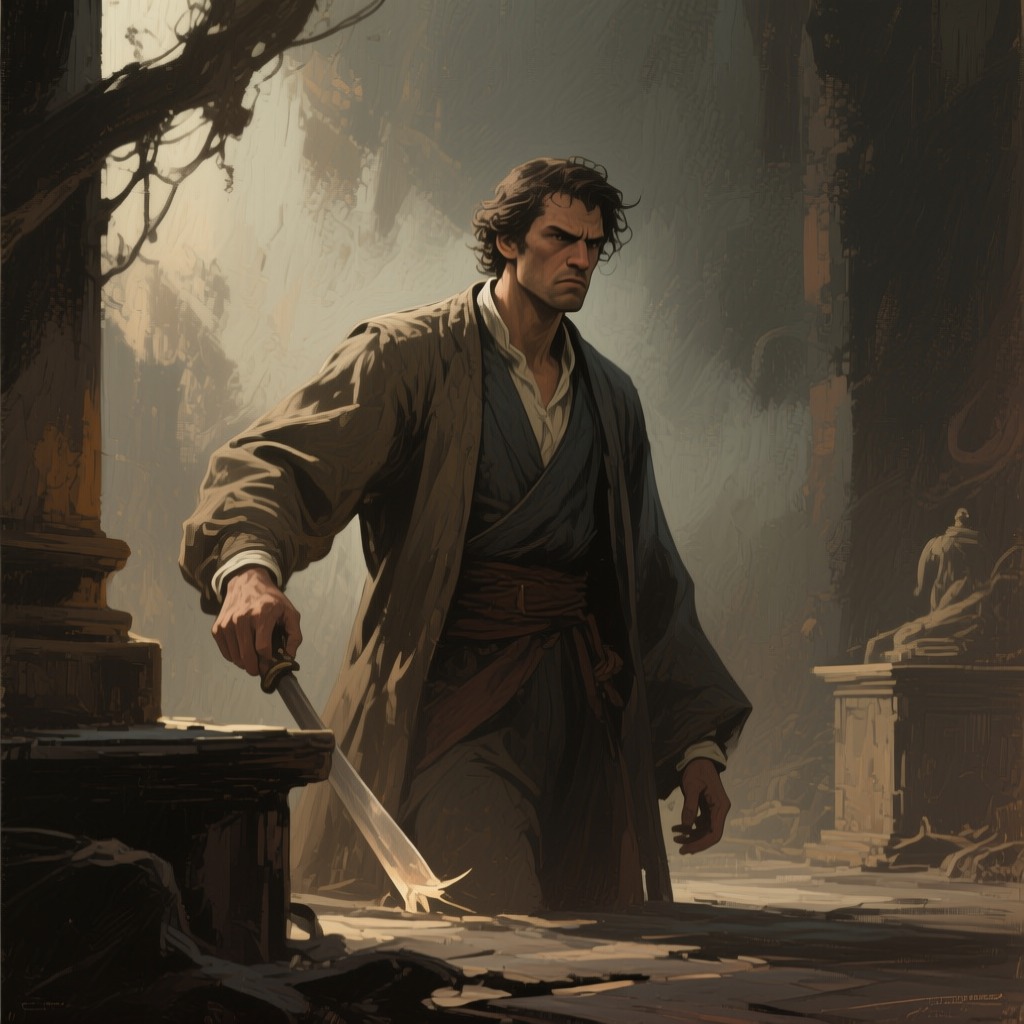
Colonel Scheisskopf
Colonel Scheisskopf is one of the most grotesquely comic figures in Joseph Heller's Catch-22, a man whose single-minded obsession with military parades propels him from a despised cadet commander to a lieutenant general in charge of the entire war effort. His trajectory illustrates the novel's central theme: that in a system driven by self-promotion and hollow form, the most absurd and incompetent individuals can rise to the highest positions of power.
Identity and Background
Scheisskopf is an R.O.T.C. graduate who welcomes the war because it lets him wear an officer's uniform daily and bark orders at young men destined for combat. He is ambitious and humorless, smiling only when a rival officer falls ill. His poor eyesight and chronic sinus trouble keep him safe from overseas deployment. His personal life is a source of frustration: his wife, a plump, pink, sluggish woman who reads good books and keeps urging Yossarian not to be so bourgeois without the r, is sexually insatiable and constantly announces she is pregnant. Scheisskopf dismisses her with petulant impatience, snapping, "I haven't the time. Don't you know there's a parade going on?" He is known derisively among his fellow officers as "Shithead."
Rise Through Parades
Scheisskopf's consuming passion is winning the Sunday afternoon parade competitions at the Santa Ana Army Air Force Base. He stays up half the night studying books on marching, manipulating boxes of chocolate soldiers until they melt, and practicing with plastic cowboys. He even considers nailing his men to two-by-four beams to keep them in line, a plan abandoned only because making ninety-degree turns would require nickel-alloy swivels he cannot obtain. After following Clevinger's advice to let the men elect their own cadet officers, his squadron wins the yellow pennant, then the red pennant, and finally makes history by winning the red pennant two weeks in a row. Emboldened, Scheisskopf unveils his epochal discovery: hands should never be swung more than three inches from the thigh. At the parade, he announces, "Look, Colonel. No hands," and distributes certified photostatic copies of the obscure regulation. He wins the parade permanently, ending the Sunday competitions altogether, and is promoted to first lieutenant on the spot. His fellow officers hail him as a military genius.
Encounter with Major Major
When Major Major reports to Scheisskopf in California, barefoot and mud-caked, Scheisskopf is horrified at the picture he would make marching in his squadron. He orders Major Major to the hospital, telling him to stay there until his uniform allowance catches up. The encounter highlights Scheisskopf's obsession with appearances and his discomfort with anyone who disrupts his vision of military order.
Transfer and Promotion
Despite his resistance, Scheisskopf is eventually sent overseas, reporting to General Peckem's office in a mood of grave discontent. Peckem welcomes him effusively, but Scheisskopf is sullen and unimpressed, demanding to know if he can still conduct parades. When told he cannot, he protests, "But they said I could." Peckem dismisses his complaints and assigns him to produce memoranda. Scheisskopf soon discovers a loophole: he can send out weekly announcements postponing parades, implying the authority to schedule them. This pleases Peckem, who sees it as a way to assert Special Services' power. Scheisskopf is promoted to lieutenant general, and in a stunning bureaucratic coup, all combat operations are transferred to Special Services, making him the new commanding officer of General Peckem and everyone else. His first order is to demand that everyone march.
Narrative Role and Evaluation
Scheisskopf is a flat character in E. M. Forster's sense, built around a single idea: the fanatical pursuit of parade perfection. He is incapable of surprise or growth, and his rise to power is a pure satire of military bureaucracy. His promotion to lieutenant general, achieved through a combination of luck, bureaucratic maneuvering, and the sheer absurdity of the system, represents the ultimate triumph of form over substance. He is the embodiment of the "military genius" who wins parades but has no understanding of war itself, and his final command to march is a fittingly empty gesture from a man who has achieved the highest rank without ever facing combat.