Colonel Korn
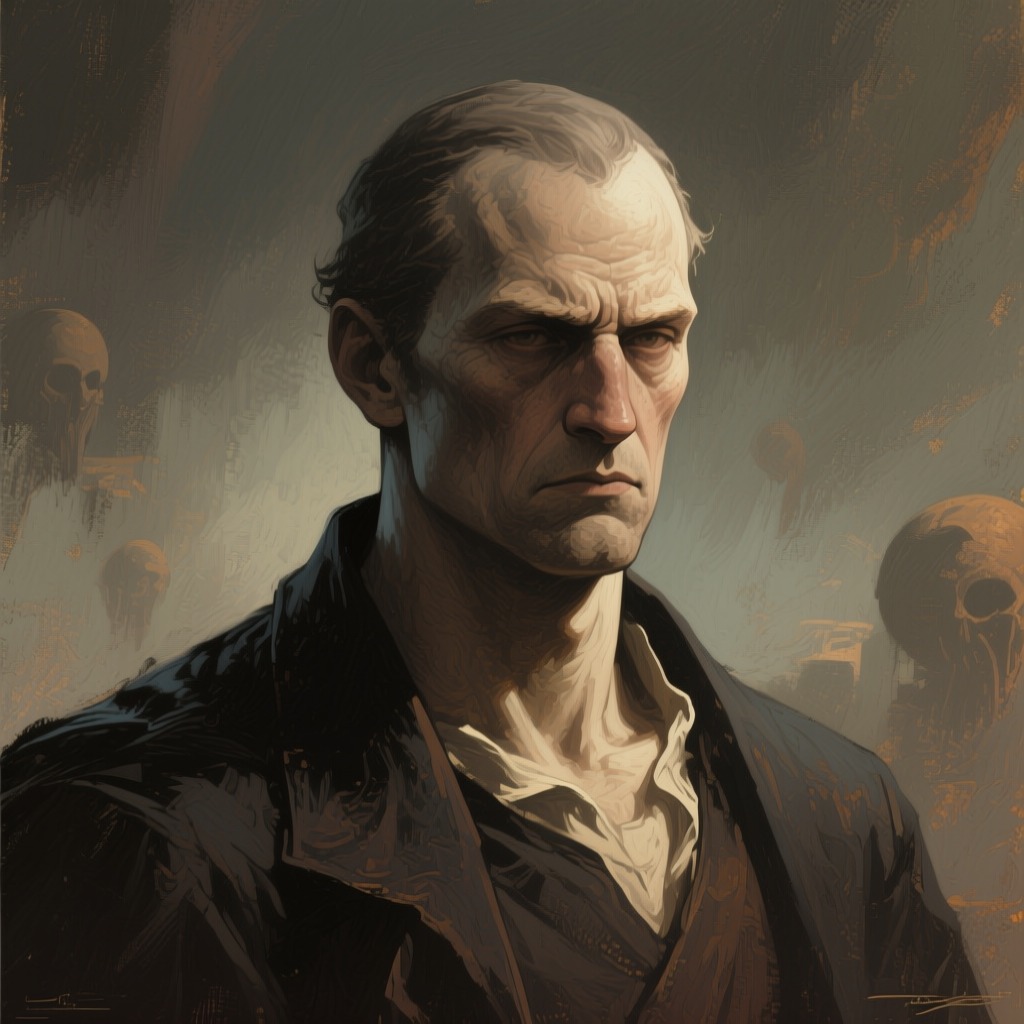
Colonel Korn is the dark, pragmatic intelligence behind Colonel Cathcart's command. A stocky, swarthy, balding man with rimless glasses and a shapeless paunch, he is the lawyer and strategist who devises the schemes that keep his superior afloat while quietly despising him. Where Cathcart blusters and panics, Korn operates with a cold, amused detachment, treating the war and the men under his authority as pieces in a game of personal advancement. He is the character who most explicitly articulates the novel's central paradoxes, turning Catch-22 from a bureaucratic absurdity into a weapon of psychological control.
Role and Relationship with Colonel Cathcart
Korn is the indispensable subordinate whom Cathcart both relies upon and resents. He is the one who suggests promoting Major Major to squadron commander to eliminate a superfluous major, who devises the scheme to give Yossarian a medal for the Ferrara mission to turn a black eye into a feather in the cap, and who handles the delicate task of managing the chaplain and other inconvenient personnel. Cathcart is jealous of Korn's intelligence and education—Korn attended a state university—and chafes at his dependence on a man he considers common. Yet he cannot function without him. When Cathcart panics during the Avignon briefing, it is Korn who steps in to synchronize watches and take control, a performance that makes Cathcart fear Korn is trying to replace him. The relationship is a masterclass in toxic codependency: Korn provides the ideas, Cathcart takes the credit, and both know the arrangement is fragile.
The Architect of Catch-22's Cruel Logic
Korn is the character who most clearly understands and wields the circular reasoning of Catch-22. When Yossarian asks Doc Daneeka about grounding a crazy pilot, it is Korn's rule—that only those who never ask questions are permitted to ask questions—that has already shut down Clevinger's educational sessions. He is the one who explains to Cathcart that the chaplain's prayer meetings must be abandoned because they might backfire, and who later orchestrates the interrogation of the chaplain in the cellar, using forged affidavits and psychological pressure to break him. His method is always indirect: he lets others do the dirty work while maintaining a veneer of urbane reasonableness. He tells Yossarian, "I'm an intelligent person with no moral character at all, so I'm in an ideal position to appreciate it," a confession that is both self-aware and utterly unrepentant.
The "Like Us" Deal and Its Moral Weight
Korn's most significant act is the deal he offers Yossarian after Yossarian refuses to fly more missions. The terms are simple: Yossarian must "like us"—become a pal, say nice things, accept a promotion and a medal, and let the group send him home as a hero. In exchange, he avoids a court-martial. Korn presents the deal with relish, calling it "odious" and "thoroughly despicable," but he knows Yossarian will accept because he has no choice. The deal is a perfect distillation of Korn's philosophy: co-opt dissent by rewarding it, turn rebellion into a public relations asset, and make the rebel complicit in the system he opposed. When Yossarian initially agrees, Korn's response is not gratitude but a dry "Welcome aboard," and he immediately instructs Yossarian to call him "Blackie." The intimacy is a performance, a tool of control.
Change and Ending
Korn's trajectory is one of uninterrupted ascent. He survives the command change from General Dreedle to General Peckem to General Scheisskopf, and he merges his interests with Milo's syndicate, becoming a vice-president. He is never punished, never exposed, never forced to confront the human cost of his policies. When Yossarian ultimately rejects the deal and flees, Korn is left with the machinery of the group intact, ready to apply the same tactics to the next dissenter. He is the novel's most successful character in purely worldly terms, and that success is the measure of the system's corruption. His final appearance is in the hospital, where he visits Yossarian to confirm the deal is still on, only to flee in disgust when Yossarian vomits. The gesture is a rare moment of vulnerability, but it changes nothing. Korn remains the smiling, cynical face of institutional power, adaptable and unaccountable.