Captain Flume
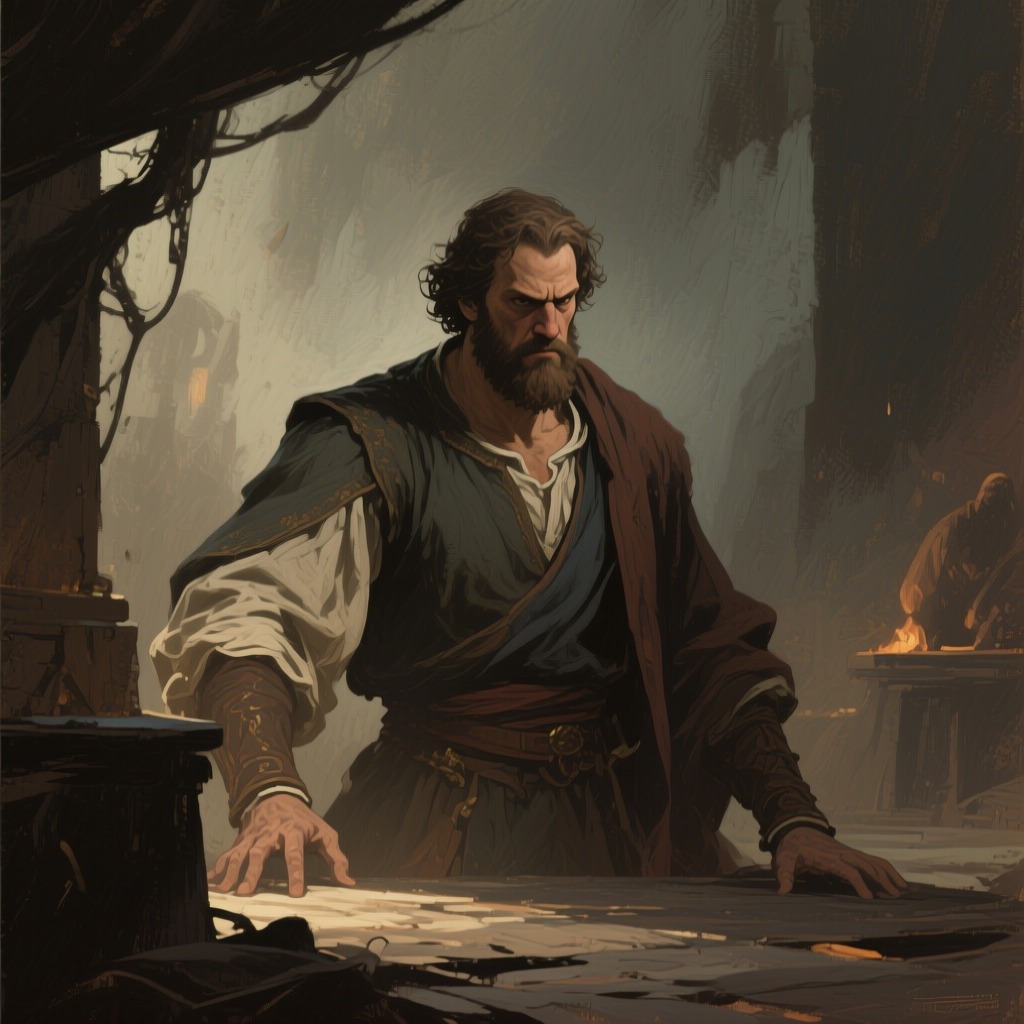
Captain Flume, the squadron's public-relations officer, is a man driven from human society by a single, terrifying threat. His existence becomes a study in paranoia and survival, a grotesque subplot that mirrors the larger absurdities of the war. Flume's story is one of complete psychological capitulation to a menace that may or may not be real, yet it dictates every aspect of his life, turning him into a ghost haunting the edges of the squadron's awareness.
Identity and Background
Captain Flume is the silent, haunted squadron public-relations officer. He spends most of each evening developing the pictures he takes during the day to be sent out with his publicity releases. He lives in a trailer he shares with Chief White Halfoat, a decision that proves catastrophic. Flume is a man of routine, working in his darkroom as much as possible before lying down on his cot with his fingers crossed and a rabbit's foot around his neck, trying with all his might to stay awake. This obsessive ritual stems from a single, unforgettable event: Chief White Halfoat tiptoed up to his cot one night as he was dozing off and hissed portentously that one night when Flume was sound asleep, he was going to slit his throat open for him from ear to ear. When Flume managed to croak out a "Why?", Chief White Halfoat's answer was simply, "Why not?"
Life in Exile
After the threat, Captain Flume is transformed from a buoyant extrovert into a brooding introvert. He is aided immeasurably in his sleeplessness by Hungry Joe's maniacal nightmares, which he listens to intently night after night. He grows to hate Hungry Joe and begins wishing that Chief White Halfoat would slit his throat instead. In reality, Flume sleeps like a log most nights and merely dreams he is awake, waking from these dreams in complete exhaustion and falling right back to sleep. He eventually abandons his trailer entirely and takes to living in the woods. He is drawn and ghostly, and he materializes without warning out of a patch of dewberry bushes to complain to Major Major that Chief White Halfoat has threatened to slit his throat. Major Major, in turn, threatens to slit Flume's throat if he ever frightens him again, causing Flume to gasp and dissolve right back into the bushes. He survives by sneaking into the mess hall through the back to eat in the kitchen, where Milo gives him sandwiches and milk. He has his laundry done by a washerwoman in a farmhouse down the road, sneaking into his trailer once or twice a day for a clean handkerchief or a change of underwear. When it rains, he simply gets wet.
Prophecy and Return
Captain Flume's existence is defined by a single, desperate prophecy. He tells the chaplain that he expects to be back in the squadron as soon as winter comes and Chief White Halfoat dies of pneumonia. He asks the chaplain to tell the others that he will be back grinding out those old publicity releases again as soon as Chief White Halfoat dies. The chaplain memorizes these prophetic words solemnly, entranced by their esoteric import. When Chief White Halfoat feels cold and begins making plans to move up into the hospital to die of pneumonia, he interprets Flume's decision to move back into his trailer as an omen of unmistakable meaning. "He had to move back," Yossarian argues, but Chief White Halfoat insists, "No, that wouldn't drive the yellowbelly back. He knows something. He knows it's time for me to die of pneumonia, that's what he knows. And that's how I know it's time." Flume's return to the trailer, therefore, is not a sign of courage but a confirmation of his own prophecy, a grim signal that the threat is finally passing. Even after his return, he recoils from Doc Daneeka, who seeks him out in the woods for help, proving that his reclusiveness has become a permanent part of his character.
Narrative Role and Significance
Captain Flume serves as a darkly comic embodiment of Catch-22's central theme: the irrational power of a threat, whether real or imagined, to dictate a person's entire life. His story is a perfect, self-contained parable of bureaucratic and personal absurdity. He is a man undone by a single, offhand remark, a joke that he takes with deadly seriousness. His transformation from a functioning officer to a feral creature of the woods is a testament to the corrosive power of fear. His eventual return, triggered not by the removal of the threat but by the fulfillment of his own prophecy, underscores the novel's circular, self-defeating logic. He is a character who has been "disappeared" by his own terror, a ghost who only returns when the conditions of his haunting are met.