Deathsong
GunsoulDeathsong is the Wayfinder of death transformed into a cosmic principle, and its decisive significance lies in the way it turns mortality from a background condition into an active ethical force. Its influence does not merely kill: it determines how the dead remain in the world, how ghosts are summoned or prevented, and who must assume responsibility for souls abandoned by war. Through Deathsong, Yuan Guang comes to understand that the dead generated by violence cannot simply disappear; their qi and unfinished burdens demand an answer from the living.
Identity and Cosmic Function
Deathsong is described as a Wayfinder who ascended to the Dao and became a principle associated with death. Yuan Guang’s understanding remains partly inferential rather than fully confirmed, but the presence he encounters after his own death feels like the agency of a force of nature: vast, shapeless, omnipresent, and impossible for an ordinary mind to measure. It communicates without ordinary sound, placing meaning directly within Yuan’s heart rather than speaking through physical words.
The name Deathsong therefore signifies more than a powerful individual. It marks a transition from personhood into metaphysical function. Deathsong’s influence reaches across the boundary between life and the Nowhere, the realm from which ghosts may return, and gives death a form of continuity. The dead are not treated as inert remains; they may become hungry ghosts, be summoned by supernatural influence, or require ritual care before they can move on.
Influence Over Ghosts and the Dead
Deathsong’s power is evident in the rules governing the Thunderlands. The veil surrounding that region blocks the influence of other Wayfinders, protecting Yuan from Moonburn, night horrors, and ghosts returning from the Nowhere. Later, the same veil prevents Deathsong’s influence from summoning Toshiro’s ghost after Yuan finds the oni’s beheaded corpse on the spirit-train. The protection does not make the remains harmless, however: Yuan fears that a centidead could take over the corpse, especially because Toshiro had once been a Second Coil. He therefore burns the body in the spirit-train’s oven.
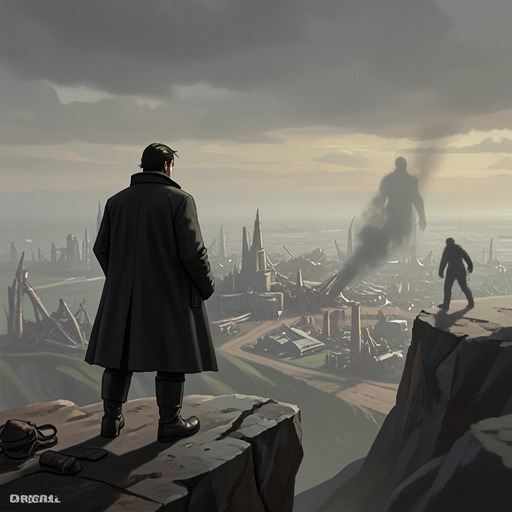
Deathsong’s domain is also visible in the aftermath of the destruction of Battletown. Hungry ghosts haunt the ruins of the former slave market, pale and emaciated figures striking their heads against Barriers erected to keep them away from refugee camps. Yuan understands them as bitter shadows yearning for the lives they lost and bound to the world by unfinished business. Their presence gives physical shape to the consequences of mass death: destruction does not end when the battle ends, because the dead continue to occupy the landscape and trouble the living.
Orient and Holster propose a collective response rather than attempting to bury every corpse individually. By altering the artificial leyline, they can make the land collapse and bury Battletown and the History Road in a single Last Rites ritual. The ritual would allow the hungry ghosts to rest and release the Human Pillars trapped in the leyline so that they could finally pass into the afterlife. Deathsong’s influence thus creates an obligation of care. The living must make arrangements for the dead, not merely defeat their enemies and move on.
Death, Violence, and Moral Responsibility
Deathsong’s significance becomes sharper after the Gun’s attack on Fleshmarket. The Gun announces its arrival with millions upon millions of qi-charged bullets, turning the settlement into a scene of overwhelming destruction. Yuan later recognizes that his own ammunition scheme helped arm the sects fighting over Fleshmarket, even though he had hoped their war would make them slaughter one another. He cannot deny the possibility that his actions helped lure the Gun to the city. This indirect responsibility becomes part of the moral terrain associated with Deathsong: violence produces consequences beyond the immediate intentions of the person who initiates it.
Yuan’s guilt is intensified by the fate of Revolver. Revolver has saved Yuan twice, first from Elder Polio and then from the Gun, yet the Gun’s curse forces him into a murderous existence. When Yuan encounters him after weeks of destruction, Revolver explains that he follows voices and laughter to their source, draws his weapon, and turns those sounds into screams. He once fought to free slaves from their masters, but now kills masters and slaves alike; Scraps and cultivators, the old and the young, the rich and the poor all become indistinguishable at the barrel’s end. Yuan responds with sympathy and apology, recognizing that Revolver is both perpetrator and victim of the cycle.
Deathsong consequently stands beside the Gun as a different answer to the same field of corpses. The Gun converts death into endless direction, targets, and bloodshed. Deathsong confronts what remains afterward: regret, unfinished business, and the need to guide the dead. Yuan’s refusal to abandon Revolver is shaped by this distinction. He cannot accept the destruction of one of the few people who offered him unconditional kindness, even while Revolver’s curse threatens countless others.
Encounter With Yuan Guang
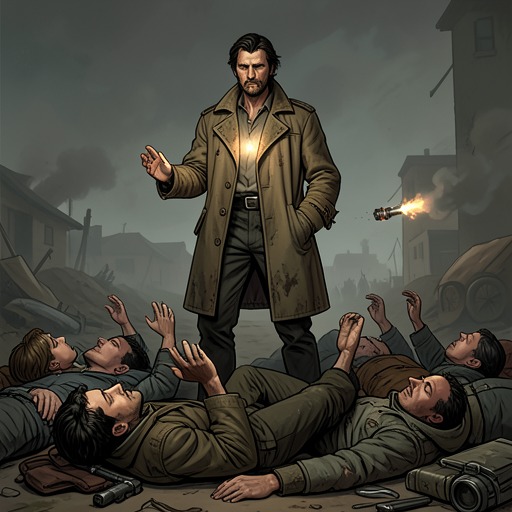
After Yuan’s bullet-core is gone and his heart should be incapable of beating, a minigun-like pulse begins within his chest. In the surrounding void, he senses an immense presence drawing closer. It has no visible outline, yet its attention presses into his soul with the scale and inevitability of gravity or time. The entity asks whether he will return them, referring to corpses falling around him, and repeats the question when Yuan does not initially understand.
Yuan asks whether the presence is Deathsong, identifying it as the Wayfinder of death who has become a cosmic principle capable of bringing regretful dead people back as ghosts. The entity does not answer that question directly. Instead, it asks whether Yuan will guide the lost souls and become their shepherd. The lack of explanation makes the exchange more consequential: Deathsong does not offer Yuan a theory of death so much as impose a choice concerning responsibility.
Yuan answers yes without hesitation. He realizes that the dead have gathered around his name because he has aligned his soul with a Path and carved its truth into his bones and spirit. With the Gun’s corruption removed, he can see the underlying structure more clearly: the qi of those sacrificed through violence must go somewhere. The Gun is a man-made deity born from carnage, but it is only one manifestation of war; if the qi does not flow to the Gun, it may flow to the person who wields it. Deathsong’s question therefore exposes the burden attached to Yuan’s chosen Path.
Thematic Significance and Legacy
Deathsong embodies the book’s movement from revenge toward stewardship. Yuan begins with debts to settle and enemies to pursue, but the dead repeatedly force him to reckon with consequences that cannot be solved by another killing. The hungry ghosts of Battletown, the trapped Human Pillars, Revolver’s curse, and the corpses surrounding Yuan in the void all turn death into a continuing relationship rather than a final punctuation mark.
The character also gives metaphysical form to survivor’s guilt and moral injury. Yuan survives battles in which stronger cultivators, including Arc, perish, and he recognizes how absurdly narrow the difference between survival and death can be. Deathsong’s presence prevents that recognition from remaining private anguish. By asking Yuan to return and shepherd the dead, it transforms guilt into an ongoing ethical vocation. Yuan does not claim innocence; he accepts the work of guiding souls as the responsibility of someone whose life has been shaped by choosing the gun and returning fire.
Deathsong’s final role is therefore deliberately less like a conventional antagonist than a cosmic demand. It does not openly command Yuan to kill, nor does it erase the violence already committed. Instead, it asks what the wielder of violence will do with the dead left behind. Yuan’s answer establishes Deathsong as the force that converts the book’s cycle of armed death into a possible cycle of remembrance, guidance, and release.