Spiral Dancer
GunsoulSpiral Dancer is the first modern cultivator to ascend through the Seven Coils of Infinity and join with the Dao, and her Thunderdance is the decisive spiritual event behind the world’s altered reality. She sought to awaken humanity from moral and spiritual decay, but the power she released produced a legacy divided between enlightenment, devastation, and the continuing struggle over what cultivation should mean.
Identity and Ascension
Spiral Dancer was a holy woman from an eastern land, a mystic of immense spiritual knowledge and power whom some regarded as the last bodhisattva. In the language of the present age, she was also a regressor: someone conscious of past lives. She was not the first person in human history to awaken her core through meditation, but she was the only one to achieve that feat in the modern age and the first person ever to ascend through all Seven Coils of Infinity and unite with the Dao.
Her ascension occurred fifty years before the opening events of the narrative. It placed her at the beginning of the modern sequence of Wayfinders, whose departures permanently altered the world. Later cultivators understand the highest goal of a Path as more than personal strength: the cultivator must merge with the cosmic axiom, escape the Reincarnation Cycle, and make the chosen Path part of the Way itself. Spiral Dancer therefore serves as the earliest completed example of that ambition. Her achievement made cultivation a force capable of defining reality rather than merely operating within it.
The Thunderdance and the Thunderlands
Spiral Dancer practiced a dance intended to enlighten dissolute and faithless people. Each step summoned lightning, while each movement was described as a wave that stripped away the illusions and falsehoods obscuring the Way. Her ascent appeared as a spiral staircase of shooting stars, carrying her upward until she became one with the sky. The spectacle was not merely a private transformation: it shocked the world awake and returned spirituality to an age that had lost it.
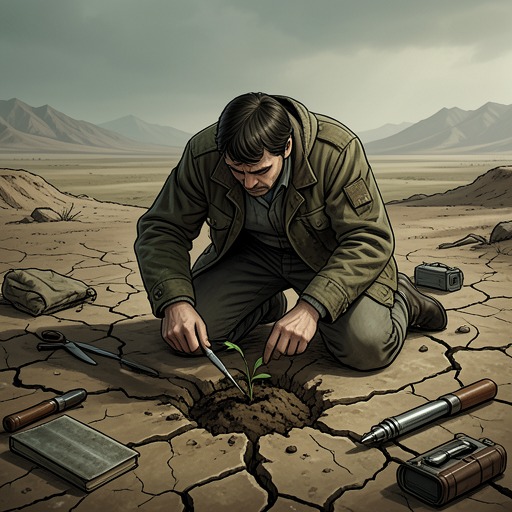
The Thunderlands are the enduring geographical expression of that act. When Spiral Dancer merged with the universe, the universe adopted her Path as a karmic law, and places shaped by her desire became regions where the boundary between matter and spirit had grown thin. Yuan experiences these regions as landscapes that breathe qi through their stones and winds. Their rust dunes, metal cadavers, altered skies, and unstable veils are traces of Spiral Dancer’s ascension rather than ordinary wilderness. The Thunderlands thus function as both environment and memorial, allowing later generations to enter the residue of her spiritual breakthrough.
Orient’s existence further clarifies this legacy. As a caretaker spirit born within the Thunderlands, Orient explains that Spiral Dancer rose by practicing the Thunderdance and joining the Dao because she wished to restore spirituality to a world that had lost it. Sutras were woven into Orient’s frame through that inherited spiritual force, giving the Wayfinder’s intention a continuing material form. Yuan consequently understands that the will of the Wayfinders can manifest as sutras whose power derives from their formulas, and that Spiral Dancer’s influence remains active in the techniques and beings shaped by her domain.
Salvation and Catastrophe
Spiral Dancer’s purpose was reformist rather than destructive. She hoped to jolt humanity out of self-inflicted spiritual decay and force people to look toward a brighter future. Her example inspired heroes and peace bringers, and her ascension opened the way to the Dao for subsequent generations. In this sense, she is the narrative’s great herald: the figure whose breakthrough makes the entire later cultivation order possible.
The result, however, contradicted the simplicity of her hope. The world’s greed and sorrow did not disappear when spirituality returned. Instead, the new power system was seized by people and institutions that treated cultivation as a route to power and glory rather than enlightenment. Self-aware spirits of industrialized greed emerged from the megacorps, while the Demigods of Ultraviolence and other terrors arose from the same corrupted age. Chaos reigned for five years before Lord Kou’s ascension purified the world, an act that also destroyed much of it. The contrast makes Spiral Dancer’s legacy morally unstable: she opened the heavens to save humanity, but the humanity receiving that opening transformed spiritual possibility into another instrument of domination.
The narrative repeatedly places her achievement beside the catastrophes that followed. Sky-Biter unmade the world forty-five years before the story’s beginning, only five years after Spiral Dancer’s ascension, while later Wayfinders likewise leave devastation behind when their ascensions shake reality. The sequence suggests that transcendence is never politically or materially neutral. To join with the Dao is to alter the rules of existence, and every alteration may become either liberation or disaster depending on the people and powers that inherit it.
Historical Traces and Reinterpretation
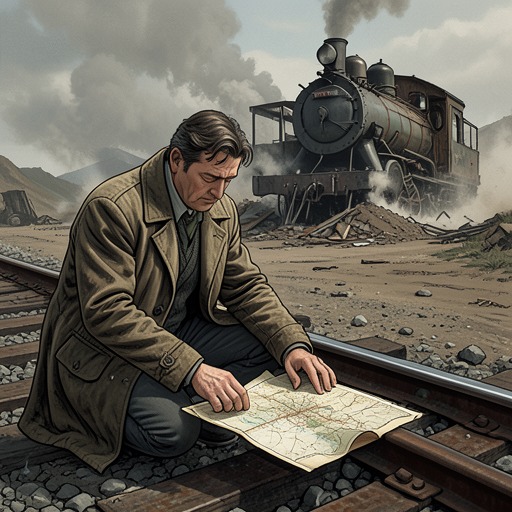
Spiral Dancer’s memory survives in physical landmarks as well as in spiritual geography. During the History Road competition, Arc identifies a replica of the Taj Mahal among six isolated landmarks along the highway and explains that Spiral Dancer practiced her Thunderdance before the original Lost Age palace. The replica feels weak to Yuan, and Arc dismisses it as an imitation: the true landmark stands at the center of the world’s largest patch of Thunderlands. This distinction separates tourist-like historical remembrance from the scale of the original sacred event. The visible monument is only a diminished sign of a much greater transformation.
Her story is also preserved through testimony. Mordiggian speaks of her with open awe, remembering a woman whose every movement released lightning and unraveled the illusions that blinded humanity. His account gives her the stature of a saint while refusing to ignore the failure of her project. The world did not become enlightened simply because she showed it the Way; instead, her revelation exposed the moral condition of those who received it. Even Yuan, learning this history amid the ruins of the Lost Age, is forced to connect the promise of cultivation with the recurring disasters caused by those who pursue it without virtue.
Narrative Significance
Spiral Dancer establishes the novel’s central tension between power and purpose. All Paths may lead to the Dao through different disciplines, but ascent alone does not guarantee benevolence. Her dance, like the later achievements of other Wayfinders, demonstrates that a perfected Path can become a law of reality; the aftermath demonstrates that spiritual perfection and historical salvation are not identical.
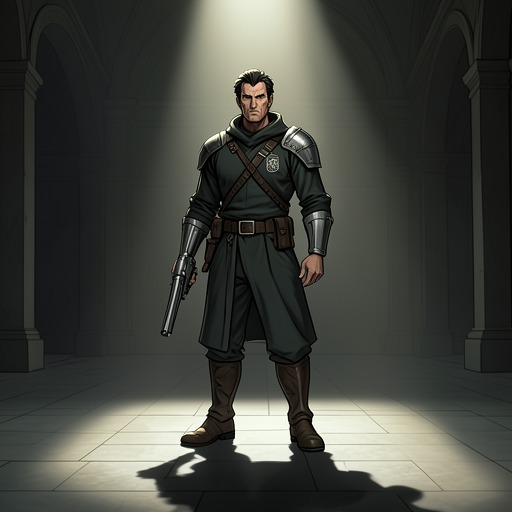
She also defines the horizon against which Yuan measures the Path of the Gun. Yuan sees the traces of her achievement in the Thunderlands, hears that each breath there carries her legacy, and wonders where his own Path will lead. Her example gives his cultivation a possible destination while simultaneously warning him that transcendence can magnify both a virtue and its opposite. Spiral Dancer is therefore not simply a distant founder or legendary mentor. She is the absent force organizing the novel’s cosmology: the first person to make the Way visible, the source of a world where spirit has returned, and the origin of a question the story never allows cultivation to evade—whether changing reality can truly change the beings who inhabit it.