Lord Kou
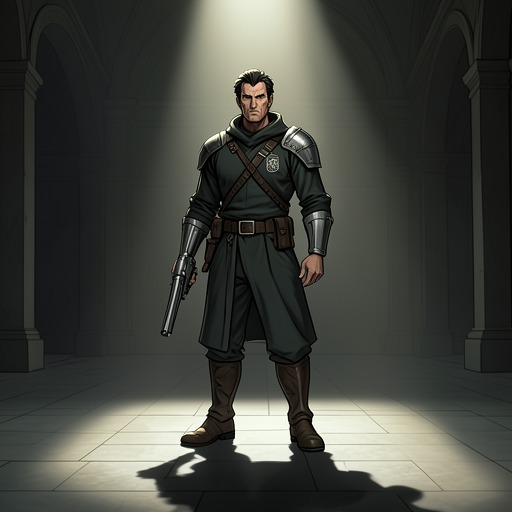
GunsoulLord Kou, also known as Sky-Biter, is the absent historical figure whose compassion and catastrophic ascension define the moral history of the Unmade World. He was an orphan who began with strange powers, devoted himself to other people’s suffering, and ultimately took the accumulated horrors of the Lost Age into himself. His achievement gave the surviving world a second chance, but the form that chance took—destruction followed by reconstruction—leaves his memory suspended between sainthood, historical necessity, and unforgivable devastation.
Identity and Historical Place
Lord Kou is identified as a Wayfinder, a figure associated with the remaking of the world rather than merely its survival. Mordiggian speaks of him with extraordinary reverence, rejecting the assumption that the Dragons’ reputation for destruction applies fairly to their Wayfinder. He calls Lord Kou the bravest and purest person he had ever encountered, a noble soul appearing only once in a century. The testimony carries unusual authority because Mordiggian claims to have personally witnessed both the Spiral Dancer’s remaking of the world and Lord Kou’s later act of taking its sins upon himself.
Lord Kou belongs to an earlier historical order than Yuan Guang’s wasteland. Mordiggian’s longevity allows him to remember the Lost Age directly, while almost no one else retains an intact memory of it after the successive ascensions. Lord Kou therefore functions not only as a character in the world’s past but as a living hinge between two realities: the world of nations, wars, and corporate spirits, and the unfinished landscape that followed his intervention.
Compassion Before Ascension
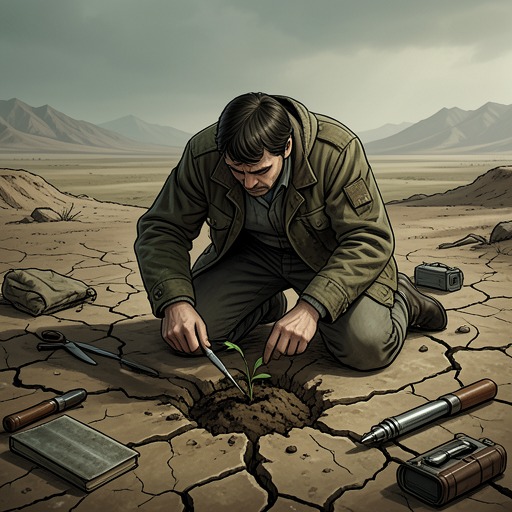
Lord Kou’s origins make his later power inseparable from vulnerability. He was an orphan in a war-torn land, a child with a great heart and abilities he did not understand. His distinctive power was the ability to eat the illnesses of his fellow human beings, gaining insight into the human condition by taking their afflictions into himself. Rather than using that gift to claim authority, he spent his early life tending to the poor and needy, absolving sinners, and accepting their pain as his own.
Mordiggian’s admiration is presented as devotion that began before Lord Kou became an ascended figure. He had already worshiped him when Lord Kou was still a child, because his conduct embodied a radical form of service: suffering was not an abstraction to be judged from a distance but a burden to be physically received. The tragedy of his story lies partly in the fact that this life of care was cut short. Mordiggian stresses that Lord Kou ascended when his life had barely begun, raising the question of how fairly any world can treat children forced to pay for the sins of their elders.
Lord Kou began cultivating at approximately Holster’s age, after the Thunderdance. The comparison is important because Holster is herself a young person shaped by forced endurance and extraordinary practical knowledge. Lord Kou’s early cultivation suggests an immense aptitude, but it also emphasizes the violence of premature destiny: the same youth that might have promised an ordinary life became the starting point of a burden no child should have been required to carry.
The Five-Year Crisis and the Remaking of the World
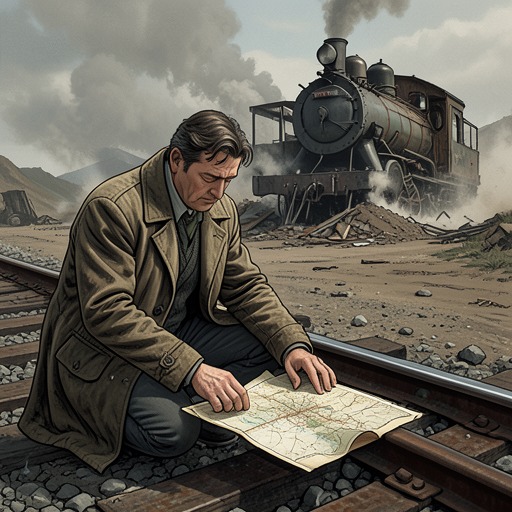
Before Lord Kou’s ascension, the world endured five years of chaos. Megacorporations had become self-aware spirits of industrialized greed, including Maure Incorporated, Dynamis, and Dismaker Labs. These entities demanded worship while stripping the earth of its resources, and cultivation had become, for many, a ticket to power and glory rather than a path toward enlightenment. Nations hovered on the brink of a war capable of destroying everyone.
The Spiral Dancer inspired heroes and peace bringers, but Mordiggian describes their hope as insufficient against the scale of greed and sorrow. Lord Kou’s response was not a limited reform. After five years of pursuing his Path, he took upon himself the wars, suffering, corpo-spirits, and other horrors of the Lost Age, then recreated the world anew. Yuan Guang objects that this sounds less like creation than destruction, and Mordiggian does not deny that the old world was destroyed; instead, he insists on a distinction between an unmade world and an unbuilt one.
That distinction expresses Lord Kou’s governing idea. The wasteland’s ruins are not only evidence of failure but raw material awaiting a better shape. Mordiggian sees possibility where Yuan Guang sees devastation: clay that can be molded more wisely than what existed before. Lord Kou thus gave humanity a second chance, but he paid for it by bearing the accumulated sins of an entire age, and he received scorn rather than gratitude from those living amid the consequences.
Legacy, Contradiction, and Narrative Significance
Lord Kou’s legacy is complicated by the survival of the very patterns he was meant to eliminate. Yuan Guang points to the Flesh Mansion Sect, whose cruelty resembles the predation of the old megacorporations. Mordiggian answers that even the Wayfinders cannot change human nature: free will remains part of the Dao, and the wheel of karma continues to turn. The argument prevents Lord Kou from becoming a simple redeemer. His ascension may have removed the old world’s worst structures, but it could not guarantee that human beings would use the rebuilt world well.
This tension also explains why Lord Kou matters to Yuan Guang’s own development. Yuan begins the story marked as a Scrap, one of the people born without the potential for a qi core; later, he reluctantly identifies himself as a First Coil cultivator. Holster’s condition presents another version of the same hierarchy, since her Human Pillar transformation leaves her unable to reach the Second Coil and makes her little better than a Scrap in Yuan’s assessment. The Metallist Sect’s rhetoric likewise treats Scraphood as a sickness imposed by birth and displays the Magnum Opus’ gear as a symbol of a competing social order. Against these systems of inherited worth, Lord Kou’s story offers a precedent for measuring a person by the suffering he accepts and the world he attempts to save, not by the talent assigned at birth.
Yet Yuan’s eventual declaration that he is the Gunman does not simply reproduce Lord Kou’s model. Yuan becomes a person who has mastered the Gun Path rather than an imitator of a savior who absorbs the world’s sins. The contrast is structurally significant: Lord Kou remakes reality by taking its accumulated horror into himself, while Yuan’s transformation is described as the Gun becoming part of him but no longer ruling him. Lord Kou’s history therefore serves as both inspiration and warning. It establishes the scale of sacrifice that can alter a world, while the ruined world left behind asks whether salvation achieved through total destruction can ever be separated from the violence it claims to overcome.