Solomon Featherstone
MiddlemarchSolomon Featherstone, Peter Featherstone’s wealthy brother, is defined by watchfulness: he expects inheritance to follow property and family advantage, suspects other people’s motives, and tries to turn that suspicion into influence. His presence links the contest around Peter’s will with a later effort to shape local opinion against the railway planned through Lowick parish.
Identity and Family Position
Solomon belongs to the better-off branch of Peter’s family. Along with his sister Jane, he believes that their wealth gives them a stronger claim than the poorer relatives, and that Peter may favor those whose resources make them most useful to him. Peter’s maxim that money is a good egg to be laid in a warm nest reinforces Solomon’s expectation that inheritance will follow advantage rather than need.
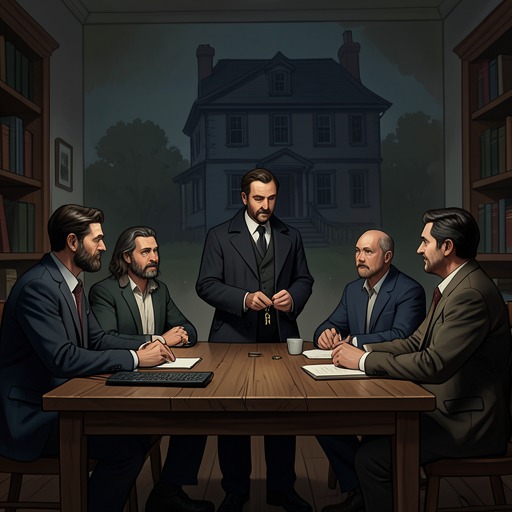
The poorer Featherstone relations make a different calculation: because Peter had done little for them during his life, they hope he may remember them in his will. Solomon and Jane, by contrast, have not been excluded from Peter’s house and treat this access as evidence that their claims are superior. Their competing expectations turn Peter’s illness into a contest of watchfulness, with relatives gathering at Stone Court to protect what each believes may be a family interest.
Watching Peter Featherstone
Solomon and Jane are regular presences in the large parlor, spending hours observing Mary Garth, whose conduct they regard as difficult to penetrate. They also give restrained, unconvincing signs of grief at being kept out of Peter’s bedroom. Their surveillance meets the old man’s growing hostility: as illness leaves him less able to amuse himself by insulting his relations, his dislike of them becomes more pronounced.
When Solomon and Jane enter the bedroom despite Peter’s instructions, Peter orders them back and sweeps his gold-headed stick between himself and the visitors. Solomon does not retreat from his purpose, but frames it as a matter of business: he says he should speak to Peter about the Three Crofts and the Manganese. He offers to sit up with Jane that night, leaving Peter time either to speak or to listen. Peter rejects the offer and insists on choosing his own time; Solomon’s attempt to make himself useful exposes the inheritance calculation beneath his professed concern.
Solomon’s manner combines a bland, official-sounding tone with a private conviction that he understands other people’s greed because he assumes everyone is as greedy and deceitful as he is. He believes even invisible powers might be appeased by calculated gestures from a man of property. That habitual suspicion makes his approach to Peter less an expression of family intimacy than a bid to secure influence while the will remains uncertain.
The Will and Its Aftermath
At the reading of Peter’s will, Solomon joins the relatives who feel excluded by its provisions. Caleb Garth remarks that there is little to wonder at, since a straightforward man might have made a will less predictable than the family expected; he adds that he wishes wills did not exist. Solomon’s response is not an argument about the fairness of inheritance but a bitter judgment on Peter’s character and fate. He says the will will do Peter no good where he has gone, and objects that the old man had a lawful family of brothers, sisters, nephews, and nieces.
Jane likewise complains that Peter might have left his property to relatives who were not accustomed to extravagance, and recalls the effort she made to visit him as a sister. Solomon declares that he has no wish to set foot on the premises again, adding that he has property of his own to leave by will. The declaration turns disappointment into a promise of control: Peter’s testament has denied Solomon the inheritance he expected, but Solomon imagines himself able to exercise the same power over his own estate.
Railway Opposition in Lowick
Solomon’s suspicion extends beyond the family. When a railway is projected through Lowick parish, he and Jane first picture the line cutting the Big Pasture into useless pieces. Jane fears it will cross her land and harm her property; Solomon doubts that compensation will make amends for damage to crops and land. He nevertheless concludes that resistance may increase the price the railway company will have to pay if it is determined to proceed.
Solomon puts this reasoning into practice by encouraging suspicion among the people of Frick, a hamlet of cottages, a water-mill, and stone-pits on the remote side of Lowick. The narrator presents Frick as already distrustful of unfamiliar schemes, which its inhabitants suspect may work against the poor. Solomon’s intervention therefore does not create their wariness from nothing; it gives that existing distrust a local spokesman with his own interests at stake.
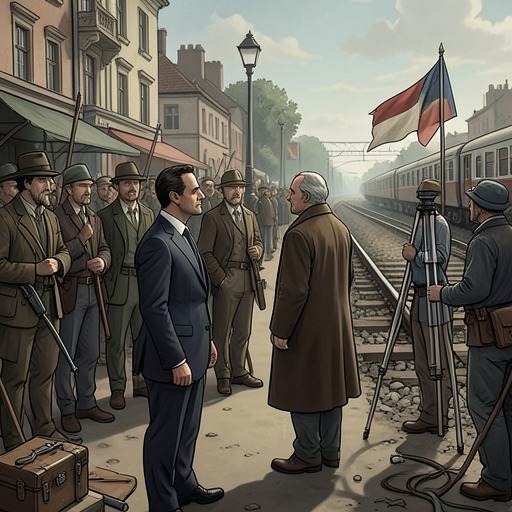
As overseer of the roads, Solomon rides slowly through the area, stopping to observe work and to talk cautiously with hedgers and ditchers. He listens to stories while privately doubting the people who tell them, and on one occasion supplies a rumor himself. Asking Hiram Ford whether he has seen men with measuring instruments, Solomon casts the railway surveyors as people whose real purpose is uncertain and whose plan will divide the parish. When Hiram worries that travel will be disrupted, Solomon agrees and argues that the railway will harm both the land and the poor in the long run. His influence depends less on evidence about the railway than on making its unfamiliar presence seem threatening.
Character and Narrative Function
In both the inheritance dispute and the railway opposition, Solomon treats uncertainty as an opportunity to protect his interests. Around Peter’s death, he watches the household and presses for access to the dying man; in Lowick, he watches the workmen and prompts local people to resist a projected change. His methods differ in scale, but the same habit governs them: he assumes hidden motives, then uses that assumption to justify caution and maneuvering.
Solomon is not shown revising these judgments when circumstances change. Instead, his cautious conversations and slow movements become characteristic signs of a man who believes time is on his side and that other people can be managed through suspicion. His role connects private family greed with the wider pressures of rural change, showing how distrust can serve both as a defensive feeling and as a means of influence.