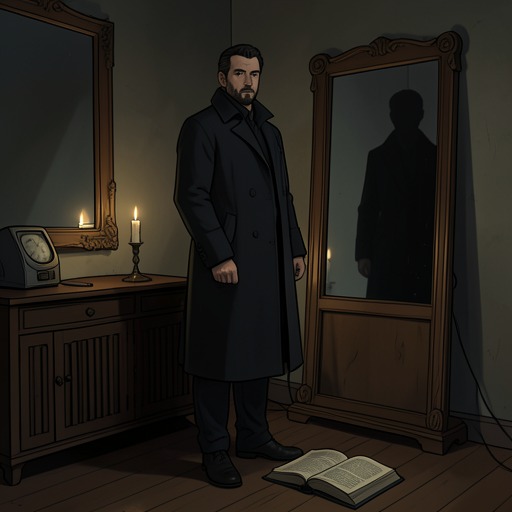
Mr. Dunkirk
MiddlemarchMr. Dunkirk is a wealthy businessman in Bulstrode’s early history, and his household marks the transition from Bulstrode’s religious ambitions to commercial advancement. By recognizing Bulstrode’s abilities and bringing him into a prosperous pawnbroking business, Dunkirk gives him access to wealth and position; after Dunkirk’s death, the fate of his family’s property becomes entangled with Bulstrode’s marriage and a hidden family secret.
Identity and Background
Dunkirk is described as the richest man in the congregation attended by the young Bulstrode. His wealth comes from flourishing trade in the city and the West End, and he owns a fine villa at Highbury. From Bulstrode’s perspective, an invitation into this household feels like a promotion: Dunkirk’s wealth and status open a new horizon to a young man who had been an orphan educated at a commercial charity-school.
Dunkirk is also an employer with a discerning view of commercial talent. When a confidential subordinate partner dies, he judges Bulstrode, his young friend, well suited to fill the vacancy and offers him the position of confidential accountant. The opportunity brings Bulstrode into a pawnbroking business notable for both its scale and profits.
Bulstrode’s Advancement in Dunkirk’s Business
The business’s prosperity carries a moral complication. Bulstrode discovers that one source of its substantial profits is the ready acceptance of goods without strict inquiry into their origins. He initially recoils from this practice and privately argues with himself, at times in prayer, about whether accepting an established business differs from founding a new one, and where religious responsibility should place the boundary between useful trade and wrongful profit.
Dunkirk does not know of Bulstrode’s private hesitation and has not considered the trade’s connection to the religious ideals that concern his employee. Bulstrode eventually remains in the position, persuading himself that commercial success can serve religious purposes. The association thus gives him both economic opportunity and a setting in which he can separate his public religious activity from the business practices that troubled him.
Household, Marriage, and Hidden Consequences
Dunkirk’s family circumstances change sharply. His only daughter runs away, defies her parents, and goes on the stage. Later, his only son dies, and Dunkirk himself dies after a short interval. His widow is left with the wealth generated by the business, though she does not know its precise nature, and she has come to place deep religious trust in Bulstrode.
The widow’s concern for her absent daughter shapes the question of marriage. Knowing that her daughter has married but not knowing where she is, she hopes to find her and perhaps provide for grandchildren through the family property. She requires a search to be made before agreeing to marry again. Bulstrode concurs; after advertisements and other inquiries fail to locate the daughter, the widow believes she cannot be found and consents to marry without reserving property for her.
The search has not, in fact, failed completely: the daughter has been found, but Bulstrode and one other man are the only people who know it. That man has been paid to keep silent and leave. Dunkirk’s death therefore leaves a legacy whose apparent disposition rests on concealed knowledge, making the household he once presided over the source of a secret with lasting consequences for Bulstrode.
Narrative Significance
Dunkirk appears chiefly through the remembered history of Bulstrode rather than as a participant in the later action. His importance lies in the chain his business and family set in motion: a charitable religious upbringing gives way to commercial ambition, and the wealth associated with the firm becomes bound to Bulstrode’s private moral compromises and the concealment of Dunkirk’s daughter. The contrast between Dunkirk’s confidence in Bulstrode and Bulstrode’s undisclosed knowledge reveals how a respectable household and a trusted religious reputation can coexist with decisions whose consequences are hidden from those most affected.