John Raffles
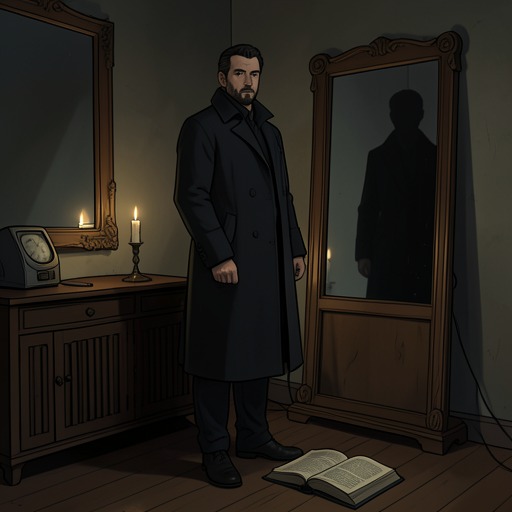
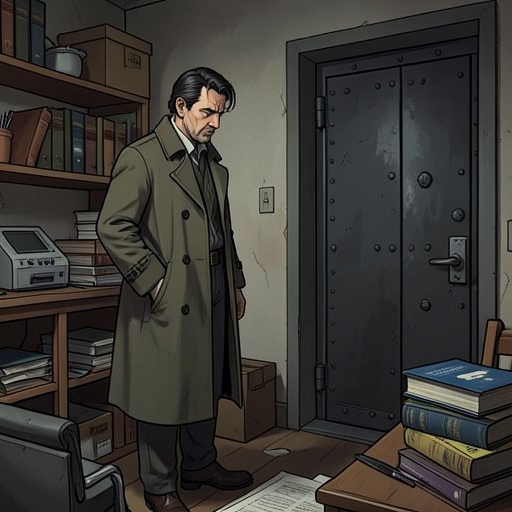
MiddlemarchJohn Raffles is a rootless, calculating opportunist whose reappearance forces Nicholas Bulstrode to confront the past he had tried to contain. Raffles’s demands, remembered knowledge, and eventual death at Stone Court connect Bulstrode’s concealed history to the public scandal that engulfs both Bulstrode and Tertius Lydgate.
Identity and Character
Raffles is introduced as a man whose self-presentation relies on jokes, bluster, and borrowed respectability. He sometimes adds W.A.G. after his signature, explaining that he was taught by Leonard Lamb of Finsbury, who wrote B.A. after his name, and that Raffles himself invented the joke of calling the principal Ba-Lamb. The joke is a small performance of cleverness: his claims to distinction are improvised from scraps of association rather than grounded in any steady position.
The narrator describes his appearance and mental manner as carrying the stale atmosphere of commercial-hotel travelers’ rooms. Raffles is not rooted in a household or place. After his wife dies, he says he has no particular attachment to any spot and would settle in the neighborhood as readily as elsewhere. His unsettled life gives him both mobility and menace: he can return without warning, and he is difficult to manage through ordinary appeals to loyalty or decorum.
A Return Made Possible by the Past
Raffles approaches his stepson, Joshua Rigg, with a story of reform and a request for capital. He says he is fifty-five, has finished his wild oats, and wants to establish himself in the tobacco trade, presenting the business as a way to become dependable and make his late wife happy. His appeal is carefully framed as a final request to put things in the right channel. The language of settlement and family duty contrasts with his earlier opportunism; the evidence establishes the appeal, not that it reflects a lasting change in him.
On a journey, Raffles uses a letter signed by Bulstrode as paper to wedge his flask. He does not recognize or attend to its significance at the time. Later, he tells Bulstrode that he picked the letter up and calls the encounter providential. The discarded paper supplies a practical route to the man whose past Raffles knows, while Raffles’s casual use of it underscores how an object of consequence can pass through his hands without being understood until it becomes useful.
Raffles and Bulstrode
When Raffles encounters Bulstrode on the road, he recognizes him and immediately presents the meeting as an opportunity. He says he came to obtain Bulstrode’s address, draws the crumpled letter from his pocket, and explains that he has no wish to see his stepson. His manner combines forced intimacy with the threat of disclosure: he calls Bulstrode an old friend, recalls the circumstances of Bulstrode’s marriage to the widow, and jokes about the name Nicholas and the family likeness to an older man called Nick.
Raffles also taunts Bulstrode with the history behind his fortune. He recalls having found the widow’s daughter and grandchild, suggests that he might once have told the old woman, and contrasts Bulstrode’s earlier business with his later position as a wealthy landowner and religious man. The details establish that Raffles knows of Bulstrode’s connection to the widow’s family and can use that knowledge to unsettle him. Bulstrode, whose complexion turns deathly pale, suddenly faces the past not as an inward matter of sin and penitence but as a living person who can speak and make demands.
Bulstrode tries to make their separation sound like a matter of incompatible habits and offers Raffles an annuity, paid quarterly, if he will remain away from the neighborhood. He threatens to withdraw all support if Raffles stays. Raffles resists the clean break: he says he has no reason to leave the area and invokes the loss of his wife as grounds for expecting hospitality. He also claims that he once searched for Sarah again, learned her husband’s name, and could help Bulstrode find his stepdaughter. Yet he admits that he lost his pocketbook and cannot currently recall the name. The offered information is therefore also a means of keeping himself attached to Bulstrode’s attention.
Later, while alone, Raffles suddenly remembers the name Ladislaw and writes it in his pocketbook. He does not tell Bulstrode, reasoning that the secret may be useful even if he has no immediate plan to use it. This withheld name links Raffles’s knowledge to Will Ladislaw’s family history and shows that Raffles’s memory can become a resource he stores for possible advantage. His secrecy is not simply forgetfulness: he deliberately retains information from the man most anxious to control its circulation.
Will Ladislaw and the Return of Family History
Raffles forces himself into Will’s attention and asks whether Will’s mother was named Sarah Dunkirk. He says he has often wondered what became of her, that she ran away from her friends as a young woman, and that he knew why she left. The question and claim disclose Raffles’s connection to Sarah’s history and his knowledge of the circumstances around her departure, though the supplied passages do not establish the full explanation he hints at.
Raffles’s intervention makes private ancestry a matter of present consequence. His memory of the name Ladislaw, kept back from Bulstrode, becomes part of the same chain of concealed relationships that binds Bulstrode to Will’s family. Raffles does not offer an impartial account: he approaches Will with a suggestive claim and a manner that makes knowledge itself a form of leverage. His role is to reopen the past, not to resolve it.
Death, Rumor, and Narrative Role
Raffles returns to The Shrubs on Christmas Eve. Bulstrode receives him and tries to prevent him from communicating with the rest of the household, but cannot keep the visit from alarming his wife or implicating himself. Raffles is now harder to manage; habitual drinking and mental restlessness make him quick to forget what has been said. He insists on staying, and Bulstrode decides that keeping him in his own room is less dangerous than letting him go into town.
The following morning Bulstrode orders a carriage and says he will take Raffles as far as Ilsley, where he can continue by railway or coach. He promises to send money from time to time if Raffles applies by letter, but warns him not to return to Middlemarch or use his tongue against Bulstrode. Raffles dies at Stone Court. Bulstrode later identifies him by name to Lydgate, hoping that the doctor will learn nothing more about him. The death does not put an end to Raffles’s influence: it turns the circumstances of his last illness into the subject of public suspicion.
Town gossip reconstructs the episode through circumstantial details: Raffles had been brought to an isolated house, received care there, and died while attended by Lydgate. One speaker argues that the presence of medical and nursing help, alongside Bulstrode’s wealth and the doctor’s poverty, invites suspicion; another notes that Raffles had been a vigorous, sociable man and that people know more about how he came to die than they should. The rumors spread across households and classes, reaching Lowick Parsonage, Tipton Grange, and the Vincy family before Lydgate fully understands why people look at him strangely.
Lydgate later explains that the housekeeper said she gave Raffles all the opium in the phial he had left, along with brandy, but that such treatment would not by itself have contradicted ordinary prescriptions. In his account, the most durable suspicions arise instead from the known facts that Bulstrode had strong motives to want Raffles dead and gave Lydgate money; people infer that the payment was a bribe to assist wrongdoing or conceal it. Lydgate says he does not know why his instructions were not followed. The distinction between what the treatment proves and what the town believes cannot restore his reputation: Raffles’s death leaves an ambiguity that public inclination hardens into accusation.
Raffles’s narrative importance lies in this afterlife of his secrets. He arrives with knowledge of Bulstrode’s earlier dealings, connects that history to Sarah Dunkirk and Will Ladislaw, and dies before the circumstances around his final care can be settled in a way that silences rumor. Bulstrode remains burdened by the possibility that his own conduct could be named as murder, a judgment he fears even within his marriage. Raffles thus functions less as a witness who supplies a complete account than as the catalyst who makes concealment unstable: what Bulstrode had treated as a private matter returns through a person, a letter, a remembered name, and finally a death the town interprets for itself.