John Hawley
MiddlemarchJohn Hawley is a local political and professional opponent of reform whose practical warnings help define the pressures surrounding Brooke’s election campaign and Lydgate’s medical practice. He speaks for a Middlemarch in which political tactics, professional standing, and public reputation can quickly become entangled.
Identity and Local Position
Hawley appears as a participant in Middlemarch’s political and professional conversations. Sir James Chettam reports that Hawley has judged Brooke’s electoral prospects and cautioned that, if the town sends a Whig to Parliament, Bagster—an experienced candidate opposed to the ministers—is the likelier choice. The warning reflects Hawley’s knowledge of local and national political alignments, as well as his willingness to state an unflattering assessment plainly.
Hawley is also associated with the Tory side of the town’s politics. Brooke accuses the Tories, including Hawley and his circle, of using hospitality and drink to influence voters. The charge comes from Brooke, a partisan speaker, rather than from an impartial account of Hawley’s conduct; what is clear is that Brooke regards Hawley as a force in the opposition and an emblem of the electoral methods he condemns.
Warnings About Brooke’s Campaign
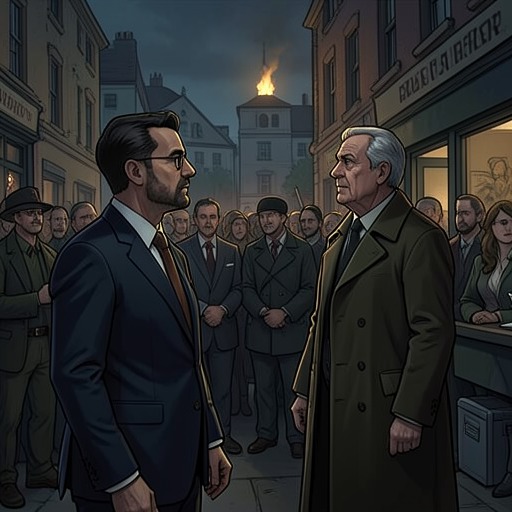
Hawley’s forecast of Brooke’s defeat is relayed through Sir James. He believes that the political opening Brooke expects—turning out Oliver because he is a Peelite—will not secure the nomination for Brooke: Bagster, not Brooke, is likely to receive the Whig support. He also predicts that Brooke could face a hostile reception at the hustings. His assessment lends a concrete political edge to the concern that Brooke has entered a contest he does not understand well enough.
Hawley’s role in the campaign’s talk is not limited to predicting the outcome. Sir James later reports Hawley’s view that Bulstrode, as Brooke’s prominent supporter, will damage the campaign. That warning is echoed in the conversation around Brooke’s prospects, where the danger is not only defeat but public hostility directed at the candidate and his allies. Hawley’s judgments therefore make the campaign appear vulnerable both through its political calculations and through the associations Brooke has chosen to cultivate.
Professional Conflict and Reform
Hawley also voices opposition to Lydgate’s changes in medical practice. At a dinner, he dismisses the dispute over prescribing without dispensing medicines as another version of old humbug, directing his remark to the reforming principle that Lydgate has adopted. The exchange places Hawley among those who treat the innovation not as a necessary change in professional practice but as a suspect challenge to established custom.
His comment belongs to a broader climate of resistance around Lydgate. Other practitioners object to the new doctor’s methods and to what they see as criticism of their established procedures. Hawley’s interjection is brief, but its bluntness helps show how professional disagreement is converted into a contest over legitimacy: reform can be dismissed as pretension before its practical merits are considered.
Narrative Role
Hawley is characterized chiefly through other people’s reports and through his pointed remarks in public discussion. He acts as a counterweight to Brooke’s optimism, naming political obstacles that Brooke prefers to minimize, and as a voice for resistance to Lydgate’s professional innovations. The novel gives him no extended personal history in this evidence; his significance lies instead in the social function of his judgments, which show how local opinion can shape a candidate’s prospects and a reformer’s reputation.