Women's Autonomy and Marriage
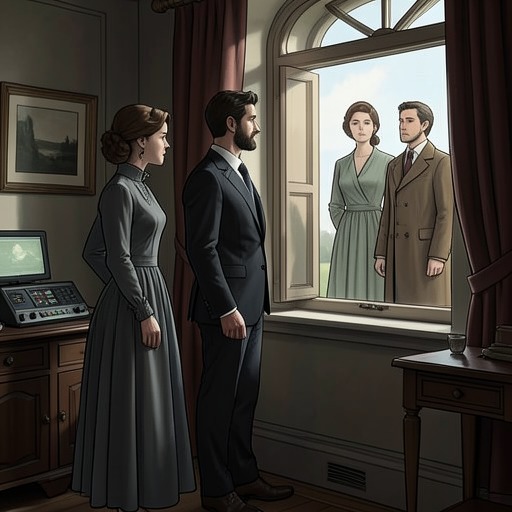
MiddlemarchWomen's Autonomy and Marriage in Middlemarch is a conflict between women’s capacity for judgment and the personal and social obligations imposed on them as wives. The novel makes that conflict concrete in Dorothea Brooke’s struggle to decide what she owes Edward Casaubon, then extends it through the expectations surrounding a widow’s future and the imagined domestic roles of Rosamond Vincy and Tertius Lydgate. Marriage can promise purpose and affection, but its unequal distribution of authority and labor determines how much room a woman has to choose either.
Marriage as an Unequal Arrangement
The narrative initially presents Casaubon’s marriage to Dorothea through his expectations rather than through a shared account of what the match might offer both spouses. He wants a young, religious, virtuous wife of suitable rank, but also imagines that a wife’s abilities should be modest, appreciative, and unambitious. He expects her to recognize his intellectual power and sees her as a potential helpmate who could spare him the expense and vulnerability of a hired secretary. His conception of Providence has supplied him with the wife he needs; the possibility that Dorothea might have needs of her own scarcely enters his calculation.
This arrangement places intellectual service and domestic affection on the same side of the ledger. Casaubon looks for a wife who will support his scholarship, while Dorothea has accepted him in the hope of joining a worthy life’s work. The narrator’s contrast is not simply between a bad husband and a disappointed wife: Casaubon too is lonely and hungry for companionship. But his self-consciousness limits his sympathy, and his marriage plan takes the form of choosing a woman for the benefits he expects her to provide rather than weighing what he can provide for her.
Dorothea’s Judgment and the Demand for Obedience
The imbalance becomes explicit when Casaubon asks Dorothea for a pledge concerning his work. She does not reject him outright. Instead, she says she cannot promise before she knows what the promise will bind her to, and that affection could move her to act without an advance pledge. Casaubon frames the difference as a demand that she obey his judgment rather than use her own. Dorothea’s hesitation is therefore a claim to moral agency: she wants to care for him without surrendering the right to understand and assess the obligation.
Her deliberation is complicated by compassion. Dorothea imagines that Casaubon may live for fifteen years or more, during which she would spend her life helping him and obeying him. Yet she distinguishes a continuing relationship, in which he could make requests and she could still remonstrate or refuse, from an indefinite promise to serve a dead husband’s wishes. She fears that refusing would deepen the distress of a man already struggling with loneliness, failing ambition, and self-distrust. The difficulty is not that she lacks a sense of what freedom would mean; it is that her sympathy makes refusal feel like an injury to someone who depends on her.
The narrator describes the obligation she faces as an ideal rather than a legal or public compulsion. Dorothea recognizes that neither law nor public opinion requires her to bind herself in this way. What holds her is Casaubon’s nature, her own compassion, and her conception of marriage as a fellowship she ought to sustain. The yew-tree walk gives that inward conflict a physical setting: she hesitates before going to meet him, then finds him seated in the summer-house and tells him she is ready. Her act expresses care, but it does not settle whether the terms of that care are freely chosen.
Widowhood, Choice, and Social Pressure
After Casaubon’s death, other people treat Dorothea’s independence as a problem to be managed. She wants to go to Lowick, live in her own home, and decide for herself what should be done there. Her resolve to return is a change from the earlier pattern in which her will was largely converted into submission; she is determined to act without explaining all her reasons. Nevertheless, relatives and acquaintances disapprove. Sir James Chettam proposes moving the family to Cheltenham, while Lady Chettam considers finding Dorothea a companion, on the assumption that a young widow cannot reasonably live alone.
Mrs. Cadwallader makes the social logic still more explicit: she considers a husband the best means of keeping Dorothea in order and speculates about arranging a suitable match. Mr. Cadwallader answers that Dorothea should choose for herself. Mrs. Cadwallader counters that a woman’s choice is limited when she has no variety of possible partners. Their exchange exposes a difference between formal permission and practical autonomy. Dorothea may be told that she can choose, yet her options and residence are treated as matters for other people to organize. The pressure is social rather than a direct command, but it works by presenting supervision and remarriage as common sense.
Dorothea’s account of her own earlier assumptions sharpens the point. She recalls having judged women for failing to shape their lives and do better things, while she herself had been fond of doing as she liked. She now understands that trouble can arrive unexpectedly and tie people’s hands, making them silent when they long to speak. The change is not a rejection of women’s agency; it is a more sympathetic recognition that apparent passivity can be produced by circumstances and obligations, not simply by a lack of will.
Courtship, Domestic Labor, and Marriage Ideals
The contrast with Rosamond Vincy and Lydgate shows that restrictive expectations can also be embraced as an attractive vision of marriage. Lydgate imagines that his future wife will revere his intellectual work, avoid interfering with it, maintain order in the home and accounts, and bring beauty and romance into domestic life. His ideal makes the wife’s labor essential to his vocation while defining her independence as an undesirable excess. He imagines domestic support as something that will further his work, not compete with it.
Rosamond and Lydgate each approach marriage with a strong picture of what it should provide. Rosamond thinks that good housekeeping means ordering the best of everything; Lydgate believes that whatever is done should be done properly. As a result, their household expenses exceed their means. Lydgate has bought furniture and incurred large initial costs, while the household’s expenses, including horses and entertaining, grow beyond the income his practice actually brings in. The financial strain illustrates how domestic standards, professional ambition, and consumption reinforce one another. Lydgate knows how to adjust the diets of poor patients to their limited means, but does not apply the same practical scrutiny to his own household. His marriage ideal and his spending habits meet in a home that he cannot afford.
Rosamond also asserts herself within the family through mild persistence. When her mother worries about the disappointed Fred and the lost possibility of an inheritance, Rosamond insists that this has nothing to do with her marriage. She proposes employing Mary Garth to sew her cambric frilling, valuing Mary’s exquisite needlework as a household resource. The scene gives Rosamond a measure of control over her father’s decisions, but the sphere in which that influence appears is domestic consumption and the organization of women’s labor. Her agency is real, yet closely bound to the household role that the marriage ideal assigns her.
The Wider Web of Obligation
The novel places marriage alongside other arrangements in which promises, property, and authority shape people’s options. At Stone Court, Peter Featherstone reminds Fred that he can alter his will after learning that Fred has spoken confidently about using an expected inheritance to pay debts. Later, Fred confesses to Caleb Garth that he cannot meet a £160 bill and has raised only £50; the notes on Caleb’s desk turn a private hope into an immediate obligation shared with the Garths. These are not marital conflicts, but they clarify the economic world in which marriage and family decisions unfold: expectations about money can create dependence before any inheritance or security is actually in hand.
The reading of Featherstone’s wills likewise makes the instability of inheritance public. Mr. Standish identifies an earlier will, a subsequent instrument, and a codicil, each made on a different date. Mary Garth alone knows that she had virtually determined the production of the second will, although no one else present knows what passed on Featherstone’s final night. The scene links personal influence to the formal documents that distribute wealth, while showing how much consequential knowledge may remain private. In Dorothea’s case, the demand to consider Will Ladislaw’s family claims brings another question of inheritance into her marriage: she argues that she should not benefit from a decision against doing more, and Casaubon responds that she is not qualified to judge the matter and must not interfere between him and Will.
These situations reveal why marriage cannot be separated from ownership, inheritance, and the work of maintaining a household. Dorothea’s wish to judge her own obligations, Rosamond’s expectations of domestic provision, and the financial pressures faced by Fred and the Garths belong to a single social pattern in which resources and decisions are unequally distributed. The novel’s critique does not reduce women’s lives to economic calculation; rather, it shows how money and material dependence give force to ideals of obedience, care, and proper domestic conduct.
Significance
Women's Autonomy and Marriage develops through the gap between choice in principle and freedom in practice. Dorothea is capable of clear judgment, but her compassion makes it hard for her to oppose Casaubon; after his death, other people treat her independent residence and future as matters requiring supervision. Rosamond’s marriage begins with expectations that cast her as the cultivated, obedient support for Lydgate’s intellectual life, while household spending reveals the material consequences of those expectations. Across these contrasts, the novel shows that marriage is at once an intimate relationship and a social institution: its ideals can inspire devotion, but they can also make women’s labor and submission appear natural, and narrow their authority precisely where they are expected to care most.