Randolph Ash’s ebony casket
PossessionRandolph Ash’s ebony casket is both a physical repository for private memory and the means by which that memory survives its intended concealment. Ellen Ash placed the box in her husband’s grave at Hodershall, choosing burial over destruction or public exposure; decades later, Mortimer Cropper’s determination to retrieve it turns the grave into the focus of a dispute over who may claim the past and what scholars are entitled to know.
Purpose and Burial
After Randolph Ash’s death, Ellen confronted the problem of preserving his privacy without destroying everything associated with their life together. Ash had repeatedly objected to intrusive biography and had urged her to burn what belonged to their shared memories. She did burn some papers, but distinguished those from objects and letters she could not bring herself to destroy. The couple’s letters, in particular, were too dear to burn and too precious to expose. She decided to lay them to rest with Ash, entrusting them to the earth until her own death rather than leave them vulnerable to future readers.
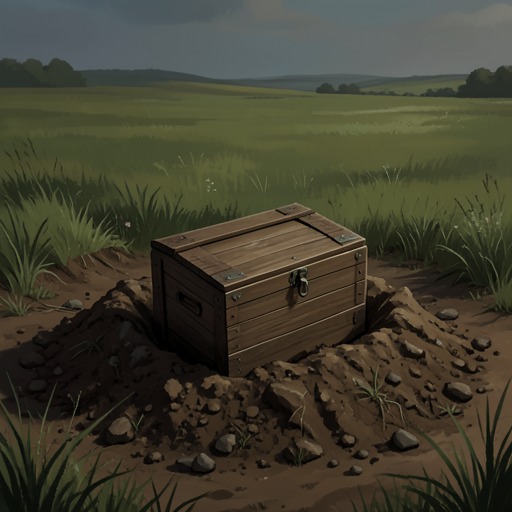
The decision became a public act at Ash’s funeral. Although a committee considered burial in Westminster Abbey, Ellen asked that he be buried in the quiet country churchyard of St Thomas’s Church at Hodershall, where she hoped to lie beside him. After the coffin was lowered, she placed on it a box containing their letters and other mementoes. The grave was filled, covering the ebony casket along with the flowers. Its location and contents thus joined a private act of mourning to a deliberate refusal of the biographical scavenging Ash had deplored.
Secrecy and the Claim to the Grave
The burial did not end the casket’s history. Mortimer Cropper had long argued that Ash’s grave should be opened to discover what was inside the box. Yet permission to disturb a churchyard burial required a Faculty from the Bishop, and Cropper had been unable to obtain one. Lord Ash would not countenance the excavation either. Cropper nevertheless came to believe that Hildebrand Ash had a moral right to the box and that his own years of service to Ash gave him a further claim.
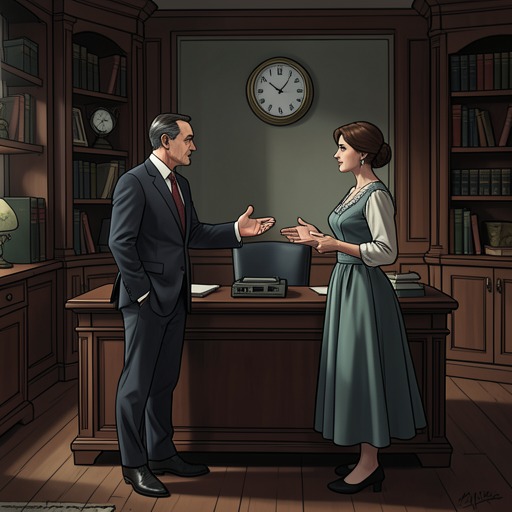
Beatrice Nest overheard Cropper discussing a plan to dig up the Ashes with Hildebrand. She reported that he meant to take the contents first and devise a plausible explanation afterward, comparing the proposed theft to the taking of a painting. The threat exposes the conflict embodied by the casket: family connection, scholarly labor, legal permission, and the wishes of the dead do not point toward the same custodian. The object is not merely a cache of documents but the contested boundary between private remembrance and public scholarship.
Opening and Contents
When the casket is finally opened, Cropper works at its join with oil and a knife, loosening rust until the lid springs free. Inside is Ash’s cloudy but intact glass specimen container. Its contents preserve several distinct traces: an oiled-silk bag holding a hair bracelet with a silver clasp formed by two joining hands; a blue envelope containing a long, finely plaited pale hair; another oiled-silk package containing a thick bundle of letters tied with ribbon; and a once-white, sealed envelope addressed to Randolph Henry Ash under cover.
Cropper identifies the bundled papers as love letters, while Maud Bailey recognizes the handwriting on the sealed letter without yet being certain. The casket therefore yields both a major discovery and a new uncertainty: the concealed correspondence becomes tangible, but the unopened letter raises questions of address, receipt, and ownership. The preservation that kept the papers beyond ordinary scholarly reach also left them physically intact for a later generation to interpret.
Archival Meaning
The casket stands at the meeting point of preservation and concealment. Ellen’s decision protected intimate documents from the public gaze, but burial could not guarantee permanent secrecy: the grave made the archive inaccessible, not nonexistent. Its eventual opening reverses that choice, transferring the letters from a private memorial setting into a contested field of research and interpretation.
Its contents also make the casket more than a container. The clasped-hands bracelet, plaited hair, ribbon-bound letters, and sealed envelope preserve different forms of attachment and evidence together, while the specimen case encloses them as carefully as the grave enclosed the case itself. The sequence of nested coverings gives material form to the novel’s recurring problem of archival knowledge: what survives may be deliberately hidden, and what is recovered does not automatically settle who has the right to possess or interpret it.