Ellen Ash’s journal
PossessionEllen Ash’s journal is an incomplete record of her life with Randolph Henry Ash, and its significance lies as much in its gaps as in its detail. The surviving pages follow household routines, her husband’s absences, and her efforts to interpret difficult events, while the novel’s later account of her decisions after his death reveals the journal as part of a larger, carefully managed but imperfect archive. Its everyday observations do not yield a complete portrait; instead, they show how private writing preserves experience while leaving others beyond recovery.
Form and Surviving Record
The journal appears among a limited body of papers associated with Christabel LaMotte: manuscripts, undated lyrics, a commonplace book, friends’ letters, and a three-year diary by Blanche Glover. Maud Bailey explains that the papers had been sent to May Bailey, a niece, at LaMotte’s request, in the hope that she might care about poetry. May instead married a cousin, moved to Norfolk, and raised ten children; Maud, her descendant, later persuaded her father to lodge the papers in the Archive. No one had taken adequate care of the material, and more papers were not known to have surfaced.
The journal’s pages do not supply a continuous, transparent account of their author. Maud finds that Ellen can write clearly and record interesting events, yet the entries do not combine into a whole picture of her character. That incompleteness is part of the document’s force: practical observations, judgments, and reflections survive, but they leave motives and outcomes open to inference. The record gives later readers evidence without promising that evidence can settle every question.
The journal also stands amid a wider culture of anxiety about private papers. A later discussion suggests that Ellen understood that biographers might rummage through a great poet’s belongings, as they had done with other writers, and that she burned many letters rather than leave them exposed. Whether Ellen or the servants Patience and Faith burned particular letters remains uncertain; the suggestion that some were buried with her is likewise presented as a possibility, not a confirmed inventory. The journal therefore belongs to an archive shaped by preservation, selection, and loss.
Household Life and Bertha
In an entry dated June 4, 1859, Ellen describes Randolph’s absence through the work it leaves behind. She plans improvements to his comfort, considers how best to clean the curtains, and worries over Bertha, whose tasks are unfinished and whose manner seems changed. Ellen wonders whether the servant is unhappy or ill and admits that asking directly will require courage. The entry connects domestic management with affection: she misses the evening reading she and Randolph share, and, without his voice, abandons their study of Petrarch in favor of Lyell’s Principles of Geology, hoping to share his intellectual interests even as geological time unsettles her.
A June 10 entry records Ellen and Patience discussing Bertha’s condition. Patience urges action, while Ellen rejects the violence with which their mother had once punished servants and insists that neither she nor Patience should beat one. Ellen decides Bertha must leave before Randolph returns, but the decision sits uneasily beside her Christian obligation to care for the vulnerable. When Ellen speaks with Bertha on June 12, Bertha will not identify the man responsible for her pregnancy and says he cannot be required to support her. She asks repeatedly what she can do and pleads with Ellen not to contact her mother. Ellen recognizes that Bertha has nowhere secure to go, yet also worries about finding a replacement servant and about the household’s dependence on domestic labor.
The journal does not resolve Bertha’s fate. Much later, when Maud asks what became of her, Beatrice Nest answers that there is no further account and that Bertha and the child may have been lost; even the child’s birth is uncertain. Ellen’s record thus preserves the immediate problem—pregnancy, dismissal, and a plea for help—without supplying the later information that would turn concern into a settled biography. The missing outcome is not incidental: it marks the limits of what the household record can tell about a servant whose life depended on decisions made by others.
Gifts, Marriage, and the Limits of the Record
In June 1859, Randolph sends Ellen a Yorkshire jet brooch from Whitby, carved as a wreath of Yorkshire roses with thorned branches and leaves. Ellen describes the gift as both beautiful and true to nature, noting its darkness, reflective brilliance, and the material explanation Randolph supplies: jet is a form of lignite. She copies his accompanying poem into the journal and frames the present as evidence that separation has not weakened their trust and affection. The episode shows the journal’s capacity to preserve the exchange itself—the object, its description, and the meaning Ellen gives it—rather than merely noting that a gift arrived.
The brooch later acquires an archival afterlife: Professor Cropper finds the very object in the Stant Collection, on sea-green moiré silk. That recovery gives a physical counterpart to Ellen’s account, while also showing how an intimate gift can pass from private possession into scholarly custody. The object survives more distinctly than the unresolved story of Bertha, making the archive uneven: some material traces can be identified, while the people and circumstances recorded beside them remain uncertain.
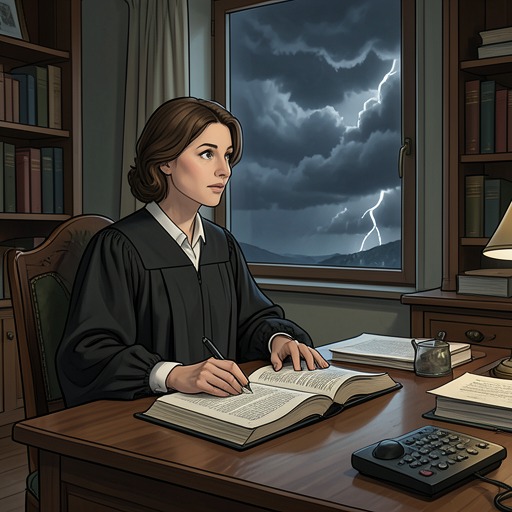
Ellen’s surviving journal also cannot simply be treated as a complete account of her marriage. In 1889, after Randolph’s death, she sits at his desk among his possessions and writes to him as though addressing a still-present listener. An unfinished letter, microscope, slides, marked book, and uncut pages surround her. The scene links writing to companionship and mourning, but also exposes its limits: Ellen begins to write and cannot continue. Her journal gives access to her private voice while repeatedly registering what she cannot say or know.
Destruction, Burial, and Afterlife
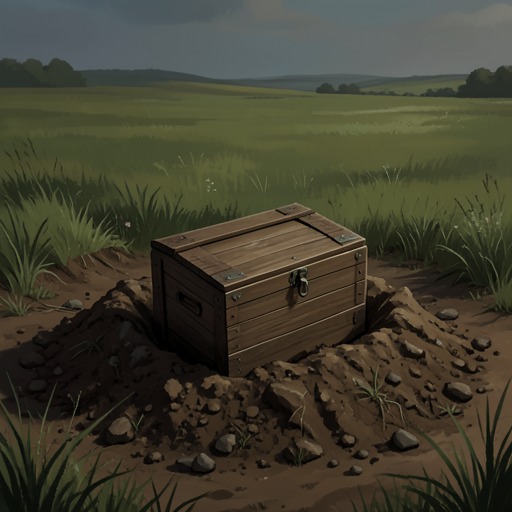
In her account of Randolph’s final illness and death, Ellen recalls his instruction to burn what others should not see. She says she promised, then describes making a fire and destroying some papers, with more still to burn. Her reasons include his dislike of intrusive biography and her own belief that publishing private letters could betray the intimacy of their writers. But she distinguishes between papers she can destroy and those that do not belong to her. Their letters, she says, cannot be left to be buried with her; instead she lays them with Randolph, for the earth to keep until her own death.
The later narrative confirms the material consequence of this choice without making the hidden contents wholly available. A box buried with Randolph remained intact when Ellen’s coffin was placed beside his four years later. In 1896, when the box is opened, it contains a specimen container holding a hair bracelet, a finely plaited lock of pale hair, a bundle of letters tied with ribbon, and a sealed letter addressed to Randolph. The contents demonstrate that Ellen’s preservation was selective rather than absolute: papers were burned, while other objects and letters were hidden for posterity—or beyond it.
The novel’s retrospective account stresses that Ellen’s execution of Randolph’s supposed wishes was patchy and haphazard, and that the full contents of the hidden box were not recorded when the grave was disturbed. The journal is therefore both testimony and an instrument of concealment: it records Ellen’s resistance to biographical intrusion, yet helps later readers reconstruct the very acts by which evidence was destroyed or buried. Its particular household details give the past texture, while its omissions prevent any claim to complete recovery.