Randolph Ash and Christabel LaMotte’s letters
PossessionRandolph Ash and Christabel LaMotte’s letters are both a record of a private relationship and a contested archive whose survival depends on choices made by intimates, relatives, librarians, and scholars. The correspondence unfolds through writing that tries to create a dialogue across physical separation, while its later history exposes the difference between preserving a document and respecting the privacy it was meant to keep. What survives does not form a complete account: destruction, concealment, and uncertain custody shape the story as decisively as the words on the page.
A correspondence becoming a dialogue
The letters begin as an exchange between writers whose thoughts increasingly occupy each other’s attention. LaMotte describes the difficulty of writing to Ash as a living correspondent when she is accustomed to lending her voice to dead writers. Her self-consciousness about the form is more than a stylistic flourish: the letters must make a dialogue where the habits of her writing have prepared her for monologue. Ash’s presence changes the conditions of her work, and she worries that the exchange risks overwhelming the time and attention she owes to her own writing, including her epic about Melusina.
LaMotte nevertheless insists that Ash continue writing. She admits that she may answer incompletely, delay her work, or give only a truncated reply, but does not want that unevenness to end the exchange. Her letters therefore preserve intimacy as a process rather than a settled declaration: response, postponement, and the promise of another answer keep the relationship open. Later, she names the emotional consequence directly, telling Ash that for the previous two or three months her thoughts have spent more time in his company than in anyone else’s. She calls herself his friend and describes herself as present in thought even when, like May, she can only be a threshold-presence.
The correspondence also makes the writers’ different circumstances visible. LaMotte sets out how family and society might judge letters between a woman living in shared solitude and a man, even if that man is a celebrated poet. When she attempts to stop the exchange, she says they have rushed down a slope and that their conversation carries dangers. Her account is not a simple repudiation of Ash: she reproaches neither him nor herself, and identifies her own love for her father and determination to write an epic as the disclosures that might be misconstrued. The letters’ intimacy is thus shadowed by the social risk attached to their being read by anyone else.
Interception, rupture, and renewed contact
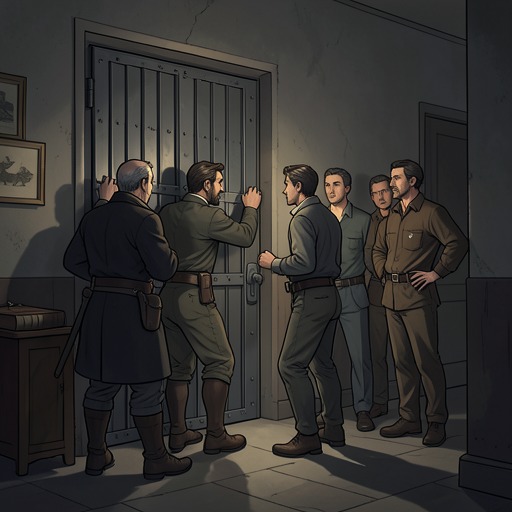
That danger becomes material when LaMotte learns that Ash’s letters have not reached her. She reports that there has been a struggle over the post and that the letters, along with his poem about Swammerdam, have been taken and torn to shreds. She is grateful for the intention to guard her honour, yet furious that someone else has interfered in a correspondence that was not theirs to control. The destruction produces grief in her household and leaves her uncertain whether any further message from Ash can reach her intact.
LaMotte does not let the theft dictate the end of the relationship. She writes that she has fought for her autonomy against family and society and asks Ash to meet her in Richmond Park. Her invitation is precise: she will enter by the Richmond Hill gate with Dog Tray, wearing solid boots and carrying an umbrella, despite the flooding Thames and the inclement weather. The concrete arrangements turn a threatened correspondence back toward face-to-face encounter. The stolen letters have interrupted their written exchange, but the attempt to resume contact is itself made through another letter, which records both the danger and LaMotte’s decision to act.
The preserved record also includes a sheet that Maud finds without heading or signature. Its writer accuses the recipient of keeping evidence that was not theirs and urges them to reconsider a mistaken judgment, insisting that the earlier words were true and urgent. Maud cannot tell whether the evidence concerns a clandestine correspondence or a journey to the Yorkshire Coast, or whether Blanche had passed on a stolen manuscript. She recognizes that copying the papers without alerting Beatrice could also draw in Mortimer Cropper and James Blackadder. The document’s uncertainty is not resolved by the surviving evidence; instead, it makes the act of preserving and copying records part of the ethical problem the correspondence creates.
Survival, custody, and family transmission
The archive is fragmentary even before the letters’ fate is considered. Christabel’s papers passed through her sister Sophia to May Bailey, a niece whom Christabel had hoped might come to care about poetry. The papers included manuscripts of the Tales, undated lyrics, a commonplace book, friends’ letters, and revisions of Melusina, rewritten at least eight times. Only one of Blanche Glover’s diaries, covering three years, was among the known materials; Maud’s account stresses that the papers had not been carefully preserved and that no other material had come to light. The relative scarcity of letters makes each surviving document consequential, while preventing the collection from standing in for a complete correspondence.
The family’s account of the transfer emphasizes both inheritance and the uncertain interest of inheritors. After Christabel died in 1890, Sophia sent papers to her daughter May with a covering letter explaining that Christabel had wanted May to receive her poems and papers, in keeping with her belief in handing things on through the female line. May kept them, but there is no evidence that she took an interest in them. In the present, the family has deposited manuscripts and scattered lyrics at the Women’s Studies Resource Centre at Lincoln, while having few letters; Blanche Glover’s journal was acquired secretly at auction because its importance had not been recognized. These transfers protect the material while also showing how much its survival has depended on contingent judgments about value, kinship, and access.
Other letters survive in less formal chains of custody. Mrs Wapshott calls the messages to a child Grummer’s tree letters. Her husband inherited them from his mother, who had said they were letters from a famous poet; he passed them to his daughter Katy in the hope that she might be the literary one. Mrs Wapshott regards the letters as Katy’s in a kind of trust and refuses to give them to Mortimer Cropper without consulting her. Cropper offers preservation in the controlled conditions of the Stant Collection, with access limited to accredited scholars, and says that even a small group of letters would add detail to his effort to recover the whole man. The exchange sets scholarly preservation and monetary acquisition against a family’s sense that inherited papers carry obligations beyond their market price.
The tree letters show how a private correspondence can be intimate without being an account of the lovers’ affair. In one message, the elderly Ash thanks Sophia for her drawings of ducks and drakes, says that he has no children or grandchildren of his own, and reciprocates with a drawing and explanation of the ash tree’s place in Norse belief. He chooses to address her as Sophia rather than Sophy, linking her name to wisdom, while distinguishing the child’s present time for play and delight. Elsewhere, Ash sends Ellen a piece of jet and writes about its transformation from ancient organic matter into polished adornment. He connects the crafted object to his own literary ambition: to make work that, like the fossilized shapes, might endure. Such surviving letters enlarge the record of his habits of attention, but they are not interchangeable with the concealed correspondence between Ash and LaMotte.
The letters as private memory and public evidence
Ellen Ash’s account of Randolph’s final illness gives the correspondence its most consequential act of preservation. Sitting at his desk after his death, among possessions whose ownership seems uncertain, she writes because she feels a presence among his things. She remembers his instruction to burn what should not be seen and his objection to biographers who ransacked private papers. She burns some materials, intending to protect what was alive for the couple from being turned into idle curios or falsehoods. Her decision makes destruction a form of fidelity rather than simple loss.
Yet Ellen cannot burn everything. She distinguishes things that are not hers to destroy from the letters she and Randolph had exchanged during their years of separation. Unable to leave the letters for herself to bury later, she lays them to rest with him, trusting the earth to keep them until her own death. The burial protects the papers from ordinary access, but also creates the possibility of their later discovery. In this history, concealment preserves the documents while postponing the question of who has the right to read them.
The correspondence eventually emerges as an object of scholarly and institutional competition. Maud’s family holds that it may possess copyright in Christabel’s side of the exchange, while Maud doubts that there was a will. Blackadder offers Roland a full-time research fellowship on Ash, supported by a philanthropic trust whose lawyer is himself obsessed with Ash. Such professional interest gives the papers new prospects for study, but the offer also places Roland’s livelihood within the machinery surrounding the poet’s legacy. The letters are never merely private relics or neutral sources: their interpretation and accessibility affect careers, family claims, and the reputations of the dead.
When the sealed container from Randolph Ash’s grave is opened, the surviving cache makes the correspondence’s physical history visible. Inside Ash’s cloudy but intact specimen container are an oiled-silk bag holding a hair bracelet with a silver clasp of two joined hands, a blue envelope containing a finely plaited pale hair, another oiled-silk package with a thick bundle of ribbon-tied letters, and a sealed envelope addressed to Randolph Henry Ash, under cover. Cropper identifies the bundle as the love letters and passes the unopened letter to Maud. The final question is not only what the papers say, but who owns a message that may never have reached its addressee: its sender, or the dead recipient whose grave contains it. The letters’ decisive significance lies in that unresolved boundary between intimacy and evidence, preservation and possession, the life of a private exchange and the afterlife imposed on it by readers.