Gondor
Gondor is the southern of the two great kingdoms of the Dúnedain founded in Middle-earth after the Downfall of Númenor, and in the Third Age it stands as the principal realm of Men arrayed against the growing power of Mordor. Its history is one of gradual diminishment: a once-mighty empire that has lost its kings, its northern sister Arnor, and much of its former territory, yet which still holds the line against the East. In the narrative of the War of the Ring, Gondor is the great stage upon which the fate of the West is decided, the land whose capital, Minas Tirith, becomes the object of Sauron's most massive assault, and whose ancient claims to kingship are finally fulfilled in the crowning of Aragorn. The kingdom's very name carries the weight of a long defeat, but also of an unbroken continuity reaching back to the heroes of the Second Age.
Identity and Historical Standing
Gondor's identity is rooted in its Númenórean heritage, a lineage that sets it apart from the other lands of Men. The kingdom was founded by the exiles of Númenor, Elendil and his sons, who established the Realms in Exile after the catastrophic Downfall of their island home. This ancestry is reflected in the high culture, the stonework, and the martial traditions that persist even in the kingdom's decline. The very structure of the narrative acknowledges Gondor's centrality: the book's contents and index place it among the primary subjects of the tale, and the appendices that follow the main story are devoted in large part to the annals of its kings and rulers. The kingdom is thus framed not merely as a setting but as a historical entity whose chronicle is worth recording for posterity, a status it shares with the other great powers of the age.
The kingdom's long history is one of contraction and loss. By the time of the War of the Ring, Gondor has been reduced from its former extent, its borders pushed back by the enemies of the West. The memory of its greater past, however, remains potent, informing the pride of its people and the claims of its enemies. The narrative repeatedly emphasizes this sense of a diminished greatness, a realm that is a shadow of what it once was, yet which still possesses the strength and the will to resist the Shadow. This tension between past glory and present peril is central to Gondor's role in the story.
The Realm and Its People
The people of Gondor are the Dúnedain, the descendants of the Númenóreans, though by the late Third Age their blood has been mingled with that of lesser Men. This mixing is a source of both strength and anxiety, as the pure line of the Kings has failed and the rule has passed to the Stewards. The kingdom's martial character is evident throughout, from the Guards of the Citadel who defend Minas Tirith to the Knights of Dol Amroth who represent the highest chivalric ideals of the realm. The geography of Gondor is vast and varied, encompassing the fertile fields of Lebennin and Lossarnach, the coastal regions of Belfalas and Dol Amroth, and the upland provinces of Lamedon and Anórien, each contributing its own contingent to the defense of the realm.
The relationship between Gondor and its neighbors is complex. To the north lies Rohan, the land of the Rohirrim, bound to Gondor by the Oath of Eorl and by centuries of alliance against common foes. This bond is tested during the War of the Ring, as Gondor's need becomes desperate and the Rohirrim must decide whether to honor their ancient pledge. To the east and south lie the lands of the enemy's allies, Harad and Rhûn, whose peoples are drawn into Sauron's service against the West. The narrative's depiction of these eastern and southern peoples reflects a worldview in which Gondor stands as the bastion of civilization against the barbarism of the East, a perspective that the story both employs and complicates.
The War of the Ring and the Fall of the Stewards
Gondor's role in the War of the Ring is defined by the siege of its capital, Minas Tirith, and the great battle that follows on the Pelennor Fields. The city, built on seven levels against the side of a mountain, is the last great fortress of the West, and its fall would open the way for the conquest of all Middle-earth. The defense of the city is led by Denethor, the last of the ruling Stewards, whose despair and madness in the face of overwhelming odds become a central tragedy of the war. Denethor's refusal to yield, even in the face of certain defeat, is both heroic and self-destructive, and his death on a pyre, mirroring the ancient kings of his line, marks the end of the Stewards' rule.
The arrival of Aragorn, the heir of Isildur and the rightful King of Gondor, transforms the kingdom's fortunes. His claim to the throne is not merely a matter of lineage but of legitimacy, proven through his healing hands and his leadership in the war. The crowning of Aragorn as King Elessar represents the restoration of the ancient monarchy and the beginning of a new age for Gondor. The kingdom, which had been ruled by stewards for centuries, is reunited with the northern realm of Arnor, creating the Reunited Kingdom under a single sovereign. This restoration is the fulfillment of the long hope of the Dúnedain and the ultimate vindication of Gondor's endurance.
Narrative Significance and Legacy
Gondor functions in the narrative as the political and military heart of the struggle against Sauron, the place where the fate of the West is decided. Its decline and restoration mirror the larger arc of the story, from the fading of the Elder Days to the dawn of the Fourth Age and the Dominion of Men. The kingdom's history, as recorded in the appendices, provides the deep background against which the events of the main narrative unfold, grounding the story of the Ring in a larger chronicle of rise and fall, loss and recovery. Gondor is thus not merely a location but a symbol of the enduring resistance of the Free Peoples against the Shadow, and of the possibility of renewal even after the longest defeat.
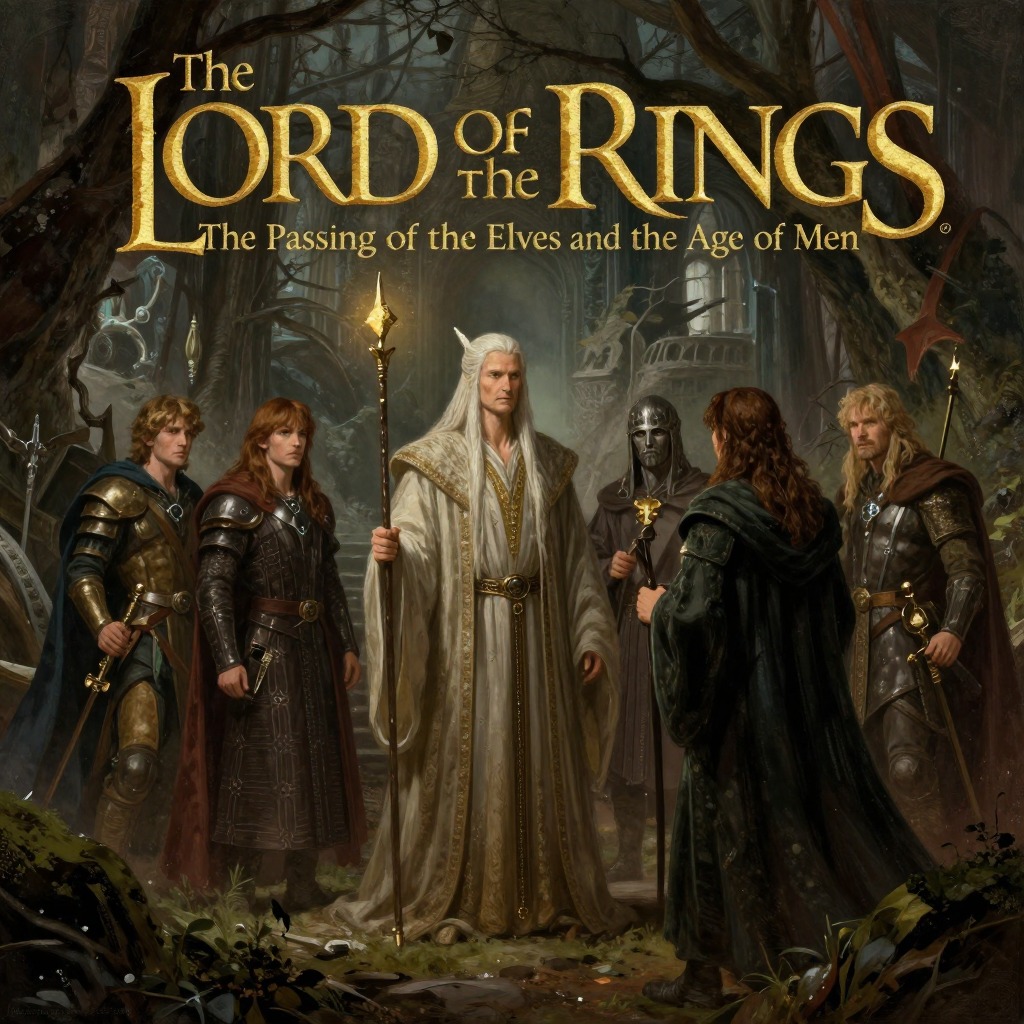
The kingdom's legacy extends beyond the events of the War of the Ring. In the Fourth Age, under King Elessar, Gondor is restored to a glory it had not known since the days of Elendil, and its influence spreads once more over the lands of the West. The narrative's final vision is one of hope, as the age of the Elves passes and the age of Men begins, with Gondor as its foremost realm. The kingdom's story is thus one of both ending and beginning, a testament to the resilience of a people who, despite centuries of decline, never wholly lost the faith that their line would one day be restored.