Samwise Gamgee
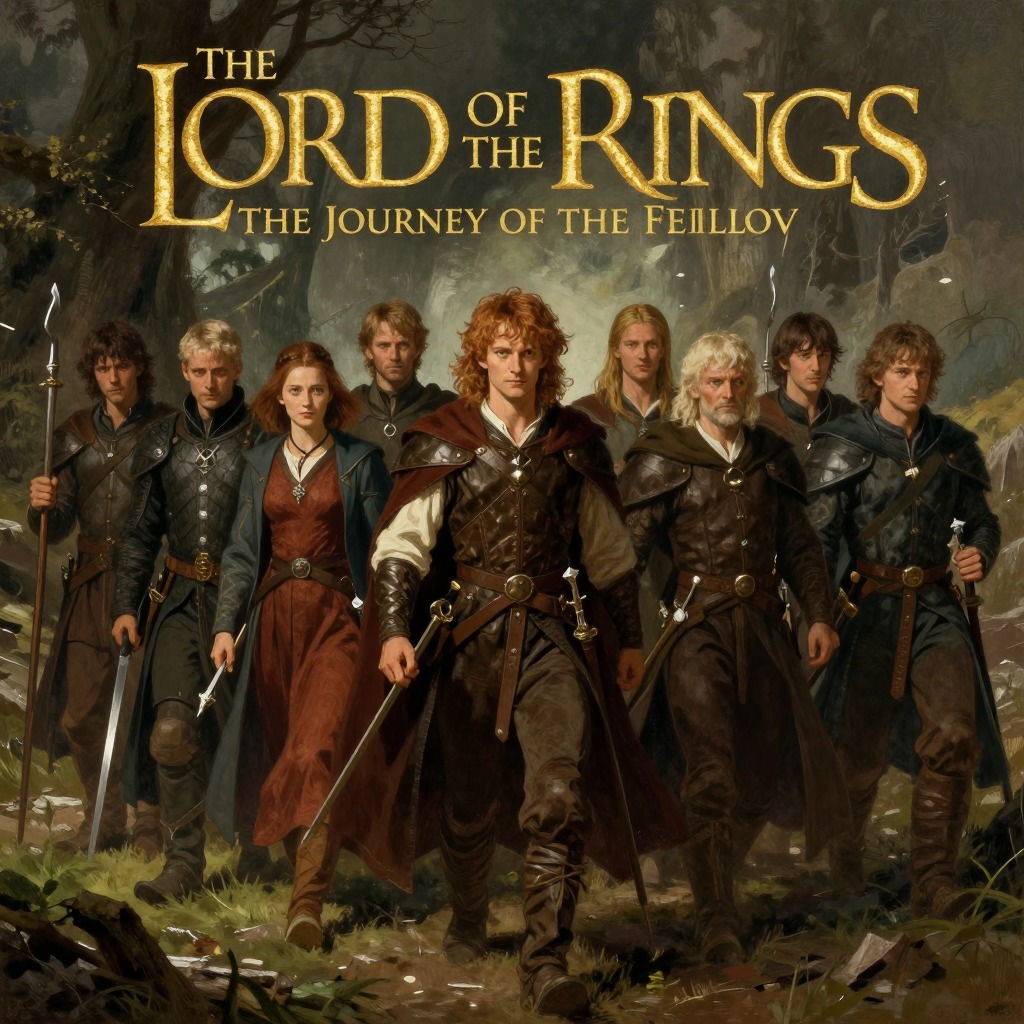
Samwise Gamgee, known to all as Sam, begins The Lord of the Rings as the youngest son of Hamfast Gamgee, the Gaffer, and the gardener of Bag End. His life is rooted in the soil of the Shire, tending the gardens of Bilbo and Frodo Baggins with a quiet dedication that masks a deep well of courage and loyalty. Over the course of the War of the Ring, Sam emerges from this humble origin to become the most steadfast member of the Fellowship of the Ring, the unwavering companion of Frodo Baggins, and, in the judgment of many readers, the true hero of the quest to destroy the One Ring. His journey from the hedgerows of Hobbiton to the fires of Mount Doom is a testament to the power of ordinary goodness in the face of overwhelming evil, and his fidelity to Frodo becomes the emotional and moral core of the entire narrative.
Identity and Background
Sam's identity is inseparable from his role as a gardener and his place within the social fabric of Hobbiton. He lives on the Hill itself, in Number 3 Bagshot Row, just below Bag End, a position that places him in the service of the Bagginses while keeping him rooted in the working life of the Shire. His father, old Ham Gamgee, known as the Gaffer, had tended the garden at Bag End for forty years, and had helped old Holman in the same job before that. By the time of the story, the Gaffer, growing old and stiff in the joints, has largely handed the work to his youngest son, Sam. Both father and son are on very friendly terms with Bilbo and Frodo, a relationship built on years of shared labor and mutual respect.
The Gaffer is a figure of local authority in his own right, holding forth at The Ivy Bush, a small inn on the Bywater road, where he speaks with some authority on the history and character of the Bagginses. He is recognized as the leading authority on the growing of vegetables, particularly in the matter of 'roots,' especially potatoes, by all in the neighborhood, including himself. Bilbo, for his part, is very polite to the Gaffer, calling him 'Master Hamfast' and consulting him constantly upon the growing of vegetables. This relationship, marked by Bilbo's courtesy and the Gaffer's pride in his craft, establishes the social world in which Sam has grown up, a world of gardens, inns, and neighborly gossip that he will later fight to preserve.
Life and Plot Trajectory
Sam's entry into the great adventure is as unceremonious as it is decisive. When Gandalf visits Frodo at Bag End to discuss the Ring, Sam is discovered eavesdropping outside the window, hauled up by one ear when the wizard darts to the sill and thrusts a long arm out and downwards. Caught in the act, Sam protests that he was merely trimming the grass-border under the window, picking up his shears and exhibiting them as evidence. Gandalf's response, 'Well, well, bless my beard! Sam Gamgee is it? Now what may you be doing?' is tinged with amusement, but the moment marks a turning point. Sam's curiosity and his devotion to Frodo have drawn him into a world far beyond the gardens of Bag End, and Gandalf's earlier advice to Frodo, that he need not go alone if he knows anyone he can trust, finds its answer in the eavesdropping gardener.
Sam's role as Frodo's companion is cemented during their time in Rivendell, where his attentiveness to his master's needs is on full display. When Bilbo and Frodo are talking late into the night, Sam knocks on the door, begging pardon, and asks if they would be wanting anything. Bilbo, with gentle humor, guesses that Sam means it is time his master went to bed, and Sam confirms that there is a Council early the next day and that Frodo only got up that day for the first time. This exchange reveals the depth of Sam's care for Frodo, a care that is both practical and affectionate, and it establishes the pattern of their relationship for the trials to come. Sam's presence at the Council of Elrond, though he is not a formal member of the Fellowship, is a natural extension of his role as Frodo's protector and companion.
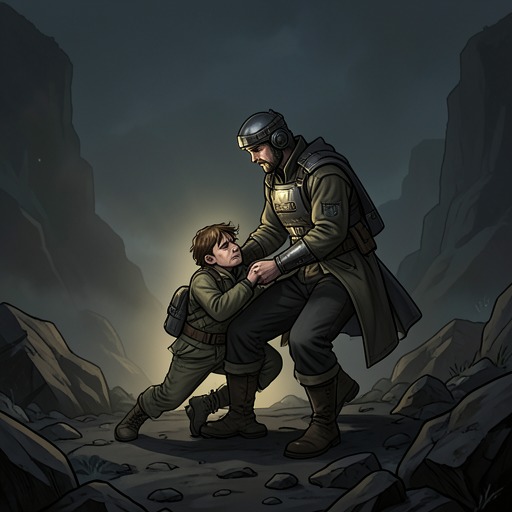
The journey that follows tests Sam in ways he could never have imagined. After the Fellowship breaks, Sam and Frodo find themselves alone in the Emyn Muil, a barren and twisted knot of hills that seems to conspire against them. Sam's voice is the first to articulate their predicament: 'Well, master, we're in a fix and no mistake.' He stands despondently with hunched shoulders beside Frodo, peering out with puckered eyes into the gloom. The third evening since they fled from the Company finds them lost among the barren slopes and stones, sometimes retracing their steps because they can find no way forward, sometimes discovering that they have wandered in a circle back to where they had been hours before. Yet on the whole they have worked steadily eastward, keeping as near as they can find a way to the outer edge of this strange twisted knot of hills, only to find its outward faces sheer, high and impassable, frowning over the plain below. Beyond its tumbled skirts lie livid festering marshes where nothing moves and not even a bird is to be seen.
Sam's reaction to their predicament is a mixture of despair and grim determination. He looks out at the dark line on the horizon, like distant mountains of motionless smoke, and recognizes it as the one place in all the lands they have ever heard of that they do not want to see any closer, and the one place they are trying to get to. 'What a fix!' he says. 'That's the one place in all the lands we've ever heard of that we don't want to see any closer; and that's the one place we're trying to get to! And that's just where we can't get, nohow. We've come the wrong way altogether, seemingly. We can't get down; and if we did get down, we'd find all that green land a nasty bog, I'll warrant. Phew! Can you smell it?' His words capture the absurdity and the terror of their quest, yet he does not waver. He sniffs at the wind, taking in the foulness of the land ahead, and presses on.
Key Actions and Objectives
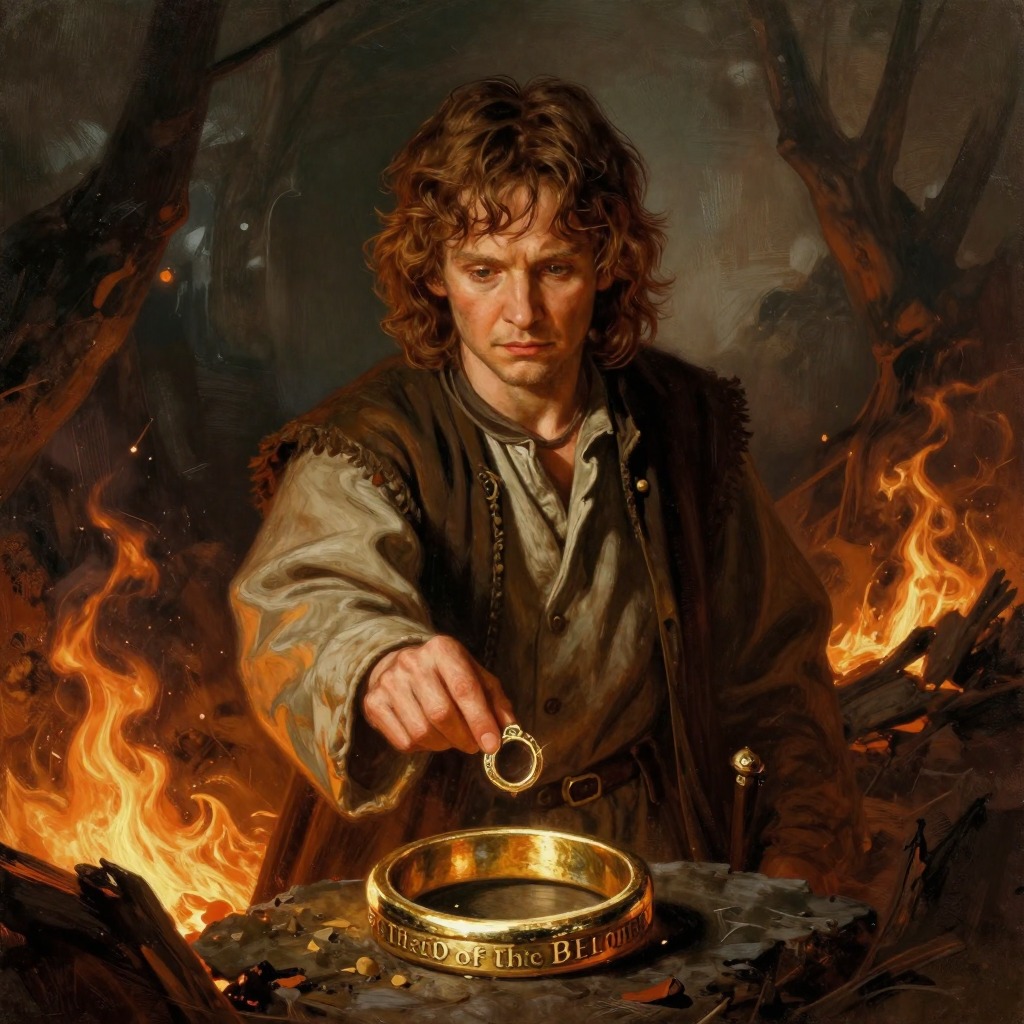
Sam's primary objective is simple and unwavering: to stay by Frodo's side and to see the quest through to its end. This objective is tested most severely in the desolate wastes of Mordor, where the weight of the Ring and the malice of the land threaten to break them both. In one of the most harrowing moments of their journey, Sam witnesses Gollum's internal struggle between his Sméagol self and his Gollum self, a debate that reveals the terrible call of the Ring. Sam had lain still, fascinated by this debate, but watching every move that Gollum made from under his half-closed eyelids. To his simple mind, ordinary hunger, the desire to eat hobbits, had seemed the chief danger in Gollum. He realizes now that it is not so: Gollum is feeling the terrible call of the Ring. The Dark Lord is He, of course; but Sam wonders who She is, one of the nasty friends the little wretch had made in his wanderings, he supposes. Then he forgets the point, for things have plainly gone far enough, and are getting dangerous. A great heaviness is in all his limbs, but he rouses himself with an effort and sits up, careful not to reveal that he has overheard the debate.
This moment is crucial because it shows Sam's growing understanding of the forces at play. He is not merely a simple gardener; he is a keen observer who learns to read the dangers around him. His decision to hide his awareness of Gollum's treachery is a strategic choice, born of a practical wisdom that will serve him well in the trials ahead. Sam's objective is not just to survive, but to protect Frodo from the Ring's corrupting influence and from the enemies that surround them, and this requires a vigilance that goes beyond physical strength.
Relationships and Conflict
Sam's relationship with Frodo is the central bond of the narrative, a bond that deepens and transforms over the course of their journey. From the beginning, Sam is devoted to Frodo as his master, but this devotion grows into something far more profound: a friendship forged in shared suffering and mutual trust. Sam's care for Frodo is evident in small gestures, like knocking on the door in Rivendell to remind him to rest before the Council, and in great acts of sacrifice, like carrying Frodo when he can no longer walk. Their relationship is marked by a deep mutual respect, with Frodo relying on Sam's practical wisdom and Sam drawing strength from Frodo's endurance.
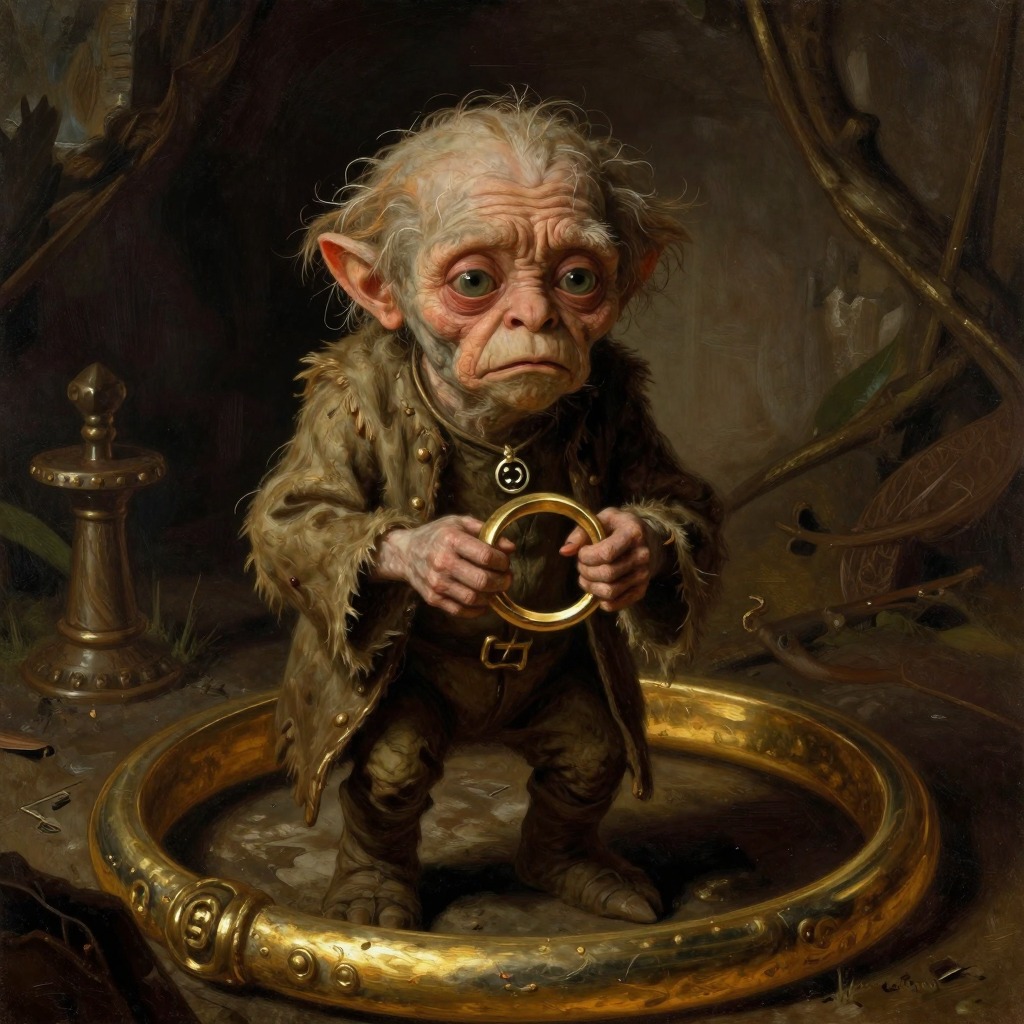
Sam's relationship with Gollum is one of deep suspicion and conflict. He sees through Gollum's servile demeanor and recognizes the danger he poses, even when Frodo is inclined to trust him. Sam's distrust is vindicated when he witnesses Gollum's internal debate, in which the Gollum side of his personality claws towards Frodo's neck with long fingers flexed and twitching. Sam's simple mind had thought that ordinary hunger was the chief danger, but he realizes that the terrible call of the Ring is far more powerful. This conflict is not just a matter of physical danger; it is a moral struggle over the fate of the quest, with Sam representing a clear-eyed skepticism that contrasts with Frodo's more compassionate, and perhaps more naive, approach.
Change and Ending
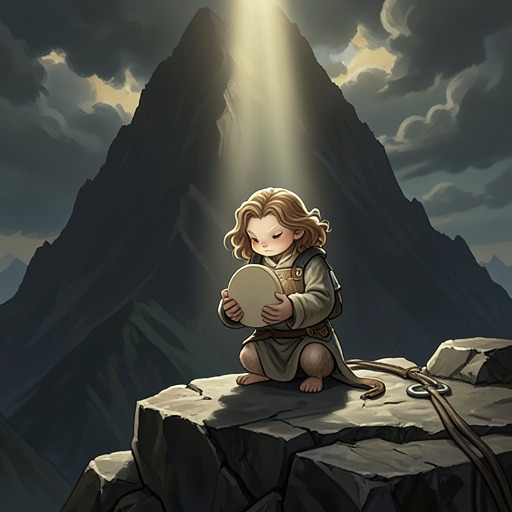
Sam's journey transforms him from a humble gardener into a figure of heroic stature, yet he remains fundamentally himself. His growth is not a change of character but a revelation of the strength that was always within him. The evidence of his transformation is most powerful in the moments when he is forced to confront the possibility of continuing alone. When he believes Frodo is dead, Sam is left to make a terrible decision. 'What? Me, alone, go to the Crack of Doom and all?' he quails, but the resolve grows. 'What? Me take the Ring from him? The Council gave it to him.' But the answer comes at once: 'And the Council gave him companions, so that the errand should not fail. And you are the last of all the Company. The errand must not fail.' Sam's groan, 'I wish I wasn't the last... I wish old Gandalf was here, or somebody. Why am I left all alone to make up my mind? I'm sure to go wrong. And it's not for me to go taking the Ring, putting myself forward,' reveals his deep humility and his fear of inadequacy. Yet he answers his own doubt: 'Ah well, I must make up my own mind. I will make it up. But I'll be sure to go wrong: that'd be Sam Gamgee all over.' This moment of self-deprecating resolve is the essence of Sam's heroism: he does not believe he is worthy of the task, but he undertakes it anyway, because it must be done.
Narrative Role and Evaluation
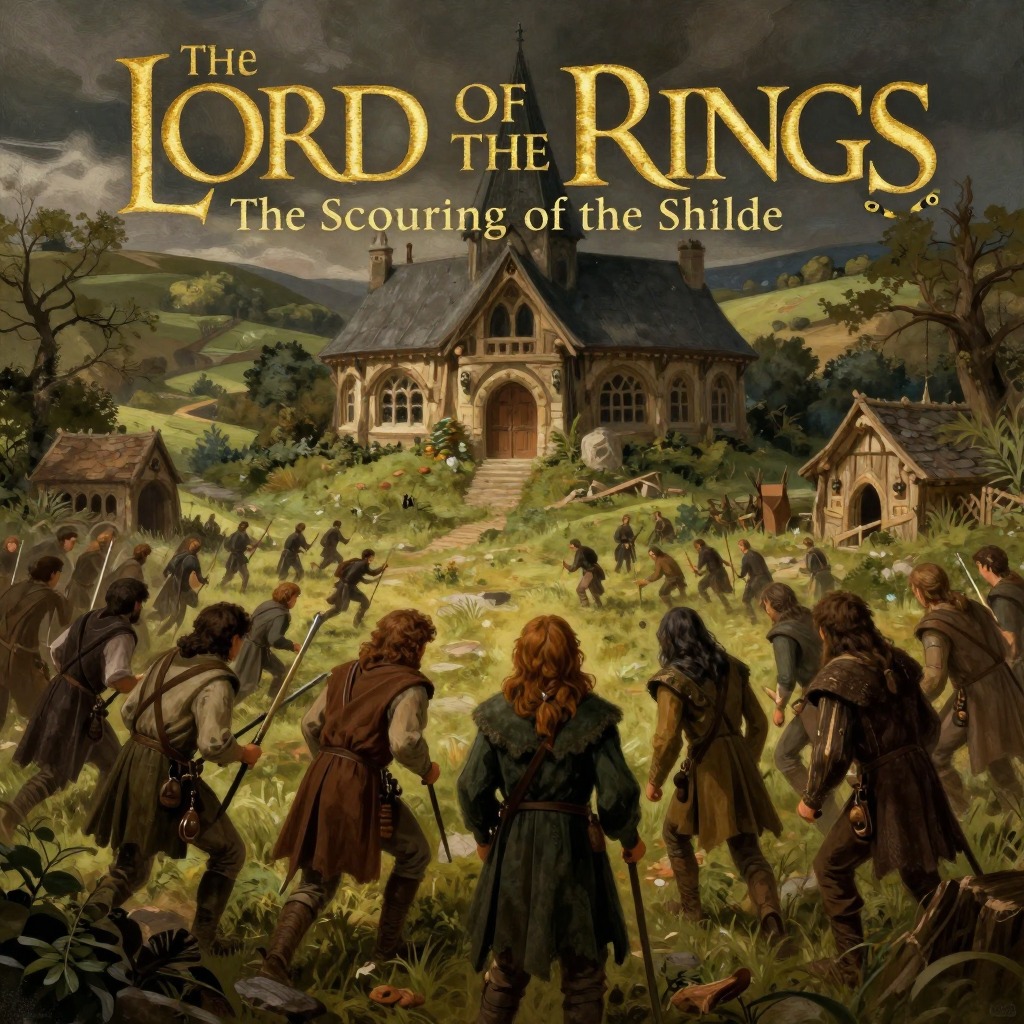
Sam's narrative role is that of the loyal companion whose perspective grounds the epic in the ordinary. His voice, with its Shire colloquialisms and practical concerns, provides a counterpoint to the high drama of the quest, reminding the reader of what is at stake: the preservation of a simple, good life. Sam's journey is a classic hero's journey in its own right, from the ordinary world of the Shire, through the threshold of adventure, to the ordeal of Mordor, and finally to the return with the elixir of peace. Yet his heroism is defined not by grand gestures but by steadfastness, by the refusal to give up even when all seems lost. In the end, Sam's story is a testament to the idea that courage is found in unlikely places, and that the most ordinary of individuals can rise to meet the most extraordinary of challenges. His return to the Shire, where he uses the gifts of his journey to heal and restore, completes his arc, proving that the true reward of the quest is not glory but the preservation of home.