Afghanistan
ShantaramAfghanistan functions in the novel as more than a distant country at war: it is the source of commodities and weapons moving through Bombay, Abdel Khader Khan’s lost homeland, and the destination of a clandestine mission that carries the narrator into the conflict. The country’s political divisions and difficult terrain shape both the criminal networks discussed in the city and the group’s passage toward Kandahar. Through that contrast, Afghanistan connects the hidden commerce of Bombay to the immediate demands of wartime survival.
Afghanistan in Bombay’s criminal economy
In Bombay, Afghanistan first enters the narrative through Didier’s account of the passport business and the city’s underworld. He identifies Rafiq as Afghan and explains that brown-sugar heroin comes from Afghanistan through Pakistan into India. Rafiq’s control of part of that trade, Didier says, helped make the closure of opium dens advantageous to him: former opium smokers shifted to heroin, bringing a more profitable business under his influence. The route therefore links a war-stricken country to changes in drug consumption and criminal power far away in Bombay.
Didier describes the flow of goods as part of a broader struggle over money and influence. Drugs and hashish are not the only imports from Afghanistan; guns, heavy weapons, and explosives also move through the network. In his account, control of the drug trade can provide leverage over arms, while the movement of weapons matters to political forces seeking influence in Maharashtra. He connects those interests to the Sena Party, to a contact at Bombay Customs, and to Nigerian customers whose business between Bombay and Lagos is one consequence of the arrangement. Afghanistan is thus placed at one end of a network spanning countries, customs officials, politicians, and rival criminal groups.
That account also establishes the country as a source of contested wealth rather than a remote backdrop. Didier presents Khader as a powerful figure whose principles limit the profitable activities he will pursue, even though other criminals possess more money and weapons. Afghanistan’s goods enter a city where control of business is itself a form of political power; the same circulation that enriches criminal organizations also draws the country’s war into Bombay’s local rivalries.
The mission and the route into the country
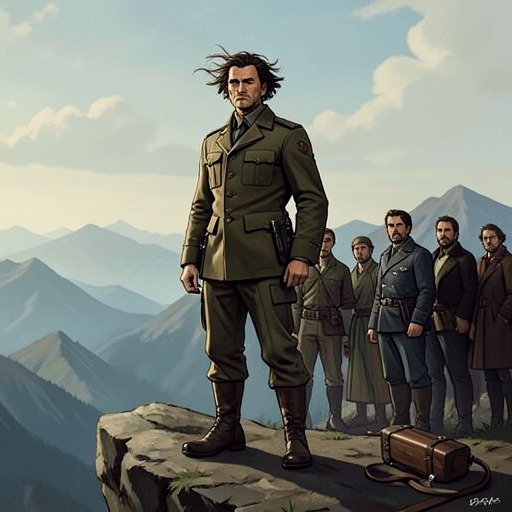
Afghanistan becomes a direct destination when Abdel Khader Khan invites Lin to join a supply mission. Khader explains that Kandahar cannot be reached by road because routes are mined and bombed, so the group must travel by horse. He says he is going to his homeland, which he has not seen for more than fifty years, and asks Lin to come as a foreigner who can pass for an American. The disguise is intended to help them move among rival clans, whose temporary common cause is opposition to Russian forces in Afghanistan.
The cargo makes the journey a logistical undertaking as well as a political one. Khader lists guns, explosives, passports, money, gold, machine parts, and medicines as the supplies they will take. Their intended recipients are Afghan mujaheddin besieging Kandahar, who have been fighting the Russians there for two years and need provisions. The mission therefore joins the practical business of smuggling to a stated effort to sustain fighters in the war.
The approach is much longer than the ordinary road journey. From Chaman, the main route toward Kandahar crosses a tributary of the Dhari River and continues through Spin Baldak, Dabrai, and Melkaarez. The distance is under two hundred kilometres and would take only hours by car, but Khader’s party avoids the highway and travels on horseback across more than a hundred mountain passes. Their journey takes over a month. At the border range, the route is not a single impassable wall but a succession of ravines, ledges, and narrow trails. The group crosses in darkness under a strict blackout, moving with horses, pack animals, and goats while avoiding detection from the air.
A divided war and a precarious refuge
Before the crossing, the group spends a month waiting in Quetta. The delay follows the wavering commitment of Asmatullah Achakzai Muslim, a mujaheddin commander and leader of the Achakzai people in the Kandahar region. His militia had become a disciplined force in the independence struggle, but when he withdraws his men and begins secret peace talks with the Russians and the Afghan government in Kabul, resistance in the region collapses. Units outside his command remain in position but become isolated, with supply routes exposed to attack. The uncertainty over whether Asmatullah will continue the jihad or change sides holds Khader’s party in place.
After entering Afghanistan, the group spends two months with guerrilla fighters in caves on the Shar-i-Safa range. The refuge is near enough to the war to be shaped by it, but its concealed position keeps it from direct fire. Kandahar is under Russian occupation and subject to recurring sieges; fighting takes a steady toll around the city, while convoys on the Kabul highway face blockades and attacks. The Arghandab Dam forms another nearby conflict zone, guarded by Afghan regular army units loyal to the Kabul government and repeatedly threatened by attacks. The camp lies between these centers of conflict, in a mountain position with little strategic value to the opposing forces.
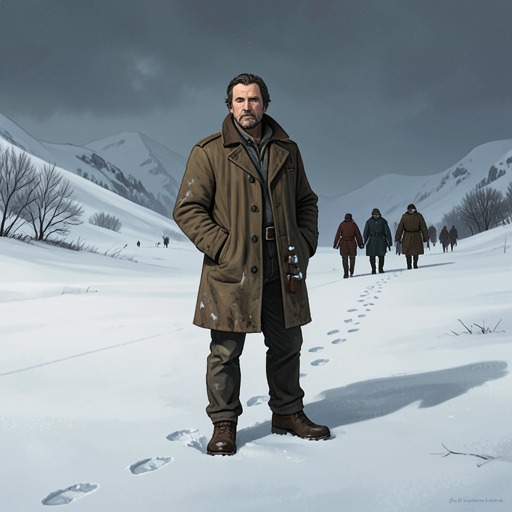
The refuge’s relative safety does not mean security. In severe winter weather, the group lives in cold caves, and after moving to another mountain hideout its members survive for four weeks on the meat of a single goat. Nearby villages are occupied, patrols surround the range, and the Russian forces in Afghanistan and Afghan regulars search for them after the group’s actions provoke a determined response. A military jeep broadcasts that they are considered bandits and criminals and that a special task force has been formed to capture them, with a reward offered for their capture. The scouts avoid confronting the vehicle, suspecting it may be a trap. The group remains hidden, hungry, and afraid, with survival narrowing to the immediate work of evading capture and enduring the cold.
Narrative significance and later connections
The Afghanistan episodes give physical form to the networks first described in Bombay. There, the country is present through goods and money moving across borders; on the mission, the same cross-border movement becomes a dangerous passage through mined roads, armed territories, and exposed mountain trails. The difference in scale is striking: a journey of less than two hundred kilometres by the main road becomes a month-long crossing on foot and horseback, followed by prolonged waiting and confinement in mountain caves.
Afghanistan also deepens the personal stakes of Khader’s mission. It is the homeland he has been separated from for decades, yet returning does not mean coming back to safety or familiarity: the group enters a landscape organized by siege, divided loyalties, and the need to keep moving or remain concealed. Later, Lin’s work on the Salman council includes an arms agreement with Afghan exiles in Bombay, securing weapons from semi-autonomous tribal regions on the Pakistan-Afghanistan border. That later arrangement echoes the earlier supply mission and shows that Afghanistan’s wartime connections continue to shape criminal alliances in the city. Still later, Abdullah describes a proposed journey to help Tamil Muslims caught between the Tamil Tigers and the Sri Lankan army; that separate rescue plan again involves passports, money, and Khader’s design, recalling the cross-border work first associated with Afghanistan without making it the mission’s destination.