Quetta
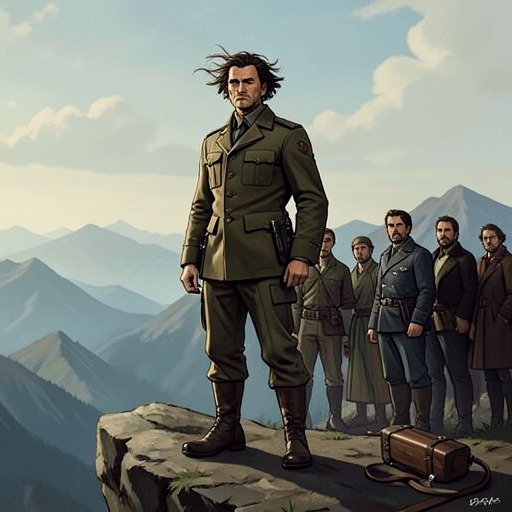
ShantaramQuetta is both a historic frontier city and a temporary base for the group preparing to enter Afghanistan with Khader Khan. Its position near the Afghan border makes it a practical gateway to the war, while the month spent there turns waiting into a test of patience, preparation, and uncertainty.
Setting and Strategic Position
The name Quetta derives from the Pashto word kwatta, meaning fort. The city lies near the Chaman Pass route into Afghanistan and the Bolan Pass route toward India, a position that has long given it military and economic importance. Its surrounding mountains form a natural amphitheatre, and the city’s links to routes across the region make it more than a stop on the group’s journey: it is a threshold between Pakistan and the conflict beyond the border.
Quetta’s history bears the marks of that strategic location. British forces occupied its old fort in 1840, but sickness and Afghan resistance forced them to withdraw. They returned in 1876 and established Quetta as a leading British possession on the North West Frontier of India. The Imperial Staff College for military officers was later established there, and a prosperous market centre grew alongside the military presence.
That history was interrupted by catastrophe. An earthquake on the last day of May 1935 destroyed most of the city and killed twenty thousand people. Quetta was rebuilt, and its wide boulevards and pleasant weather later made it a popular holiday resort in northern Pakistan. The contrast between those qualities and its continuing strategic role gives the city a double character: a place of recreation and urban renewal, yet also a gateway shaped by military history.
A Base for the Afghanistan Mission
The journey to Quetta begins as a covert operation. Khader Khan arranges a complicated route from Bombay to Quetta through four major changes of transport. The travellers are instructed to behave as separate individuals and not acknowledge one another, so that if anyone is captured or killed, the trail back to Bombay will be difficult to follow. Quetta is therefore not simply a destination; it is the point from which the group must prepare to cross into Afghanistan while preserving the secrecy of its origins.
The group spends a month in Quetta, waiting in a safe-house compound at a horse ranch on the outskirts of the city. Its departure is delayed by Asmatullah Achakzai Muslim, a regional militia commander whose decision could reshape the war around Kandahar. His Achakzai people, historically a clan of sheep and goat herders, had become known as fierce fighters. During the war against the Russians, Asmatullah organized them into a disciplined, well-armed militia that spearheaded the resistance in the region.
By late 1985, however, Asmatullah had withdrawn his men from active service and begun secret peace talks with the Russians and their Afghan-aligned government in Kabul. The resistance in the Kandahar region consequently collapsed. Khader’s forces remained in the mountains north of the city, but they were isolated, and their supply routes were vulnerable to attack. Until Asmatullah chose whether to resume the jihad or support the Russians, the group in Quetta could not safely proceed. The city’s month of waiting is thus tied directly to the uncertainty of a wider military and political struggle.
Life During the Wait
Because leaving the compound is considered too dangerous, the narrator’s days in Quetta are confined but not idle. He practises Farsi, Urdu, and Pashto, and picks up words from Tajik and Uzbek dialects. He also rides horses every day. His efforts remain awkward: he cannot entirely master the gestures used to direct the animals, and sometimes dismounts only after being thrown onto his back. These small failures make the preparation physical as well as linguistic, grounding the impending passage into Afghanistan in the practical demands of travel.
Ayub Khan, the only member of the group born in Quetta, brings books from the central library to the horse-ranch safe house. Its obscure and varied English-language holdings preserve an inheritance from the British Raj. The library offers the narrator a way to occupy the enforced seclusion, while its collection connects the present-day staging ground to the city’s colonial past.
The waiting ends with a precise change in purpose. Before dawn, Khader Khan tells the narrator that they will leave for Afghanistan at five the following morning and shows him how to clean, service, and handle a Stechkin automatic pistol. The lesson makes the danger of the border crossing concrete: Khader has warned that foreigners helping the mujaheddin have a price on their heads. Quetta’s role as a place of preparation is complete when the group exchanges enforced stillness for the armed journey ahead.