Black Gate
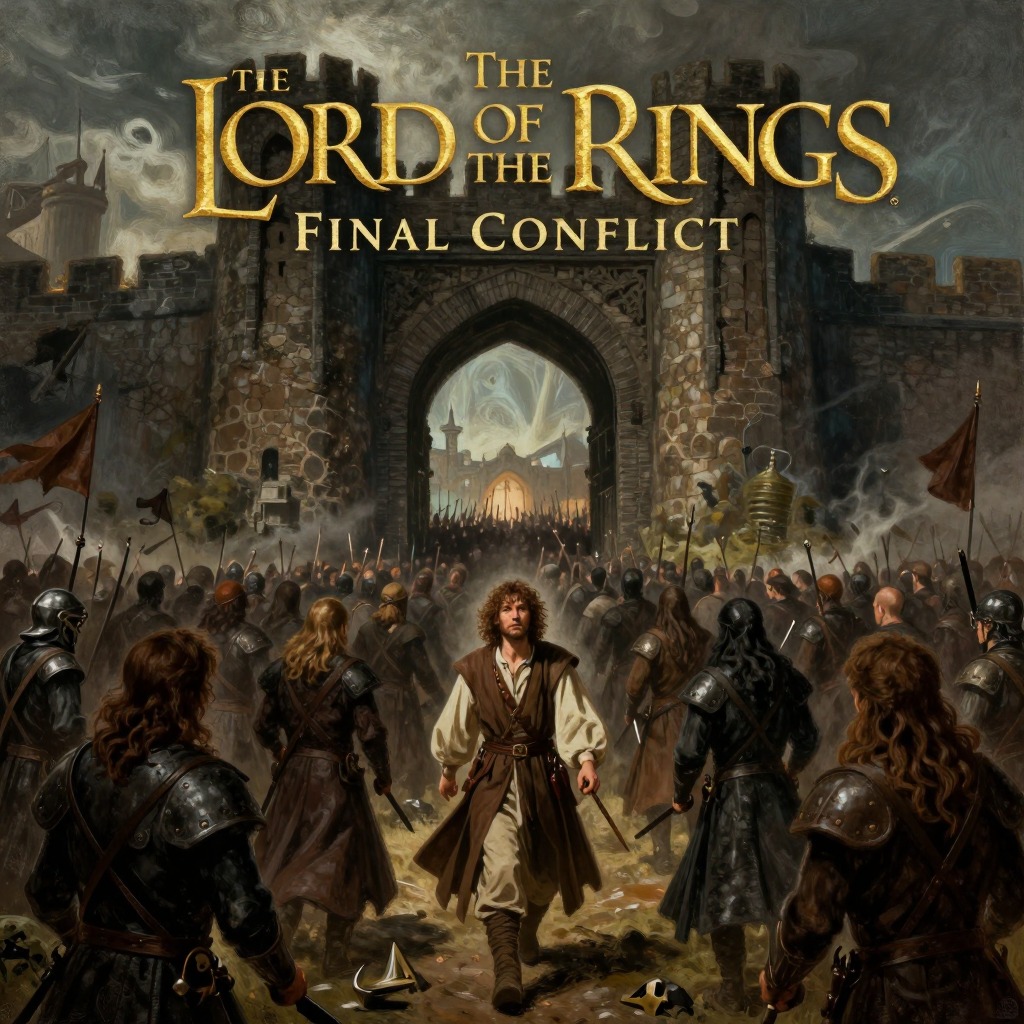
The Black Gate, known in the Elvish tongue as the Morannon, is the great fortress-gate that guards the western entrance to Mordor, the dark land of Sauron. It is the only practical land passage into that realm from the west, a fact that makes it the focal point of both the Enemy's defenses and the desperate strategies of his foes. As the ultimate threshold of the Quest of the Ring, the Black Gate is the site of the final, deliberate confrontation between the armies of the West and the forces of Mordor, a diversionary battle fought so that the Ring-bearer might slip into the land by another, more secret path. More than a mere military installation, the Gate is a concentrated emblem of the Shadow's power, a looming and oppressive presence that shapes the fears, hopes, and decisions of every character who beholds it, from the hobbits who stare at it from afar to the Captains of the West who march against it in a calculated gamble for the fate of Middle-earth.
The Gate as the Threshold of Mordor
The Black Gate is the principal and most formidable entrance to Mordor, a land otherwise ringed by the impassable mountain walls of the Ephel Dúath and the Ered Lithui. Its very existence dictates the geography of the war, for any army seeking to invade Mordor directly must either force the Gate or find another way. This strategic reality is what makes the Gate the natural destination for the armies of the West in the final stage of the War of the Ring. The Gate is not merely a door but a fortress in its own right, a massive construction of stone and iron designed to be all but impregnable. Its function is to seal the land of Mordor against all comers, a physical manifestation of Sauron's desire for absolute control and isolation. The very name, Morannon, carries a weight of darkness and finality, suggesting a barrier that is both a military defense and a symbolic boundary between the free lands of the West and the tyranny of the East.
The Gate's significance is established early in the narrative as the ultimate, unattainable goal of the hobbits' journey. When Frodo Baggins and Samwise Gamgee find themselves lost and despairing in the barren hills of the Emyn Muil, they look south and east toward the distant line of mountains that marks the edge of Mordor. Sam, peering into the gloom, identifies the dark line on the horizon as the one place in all the lands they have heard of that they do not want to see any closer, and yet it is the very place they are trying to reach. This moment crystallizes the paradox of the Quest: the hobbits must travel to the heart of the enemy's power, a place of such dread that even the thought of it is a torment. The Gate, though not yet visible to them, is the ultimate destination that draws them forward even as it repels them, a distant and terrible goal that seems to mock their efforts.
The Shadow's Presence and the Fear It Inspires
The Black Gate is more than a physical structure; it is the focal point of the Shadow's oppressive presence, a source of fear that radiates outward across the lands of the West. This dread is palpable in the conversations of those who live in its vicinity. When Peregrin Took, newly arrived in Gondor, speaks with Beregond, a soldier of the Citadel, the shadow of Mordor hangs over their entire exchange. Beregond explains that the people of Gondor have dwelt ever in sight of that shadow, sometimes fainter and more distant, sometimes nearer and darker, and that as it grows and darkens, so too do their fear and disquiet grow. The Gate is the visible manifestation of this shadow, the point where the vague threat of Mordor becomes a concrete, looming reality. For Pippin, the proximity of the Gate and the land it guards reawakens an old fear, a terror so profound that he cannot even speak of the Black Riders who serve the Dark Lord, so near is the source of their power.
The Gate's influence is not merely psychological; it is also a strategic reality that shapes the course of the war. Beregond recounts how the Fell Riders, the Nazgûl, had won back the crossings of the Anduin less than a year before, slaying many of Gondor's best men, and how it was Boromir who drove the enemy back from the western shore. The Gate is the ultimate source of these attacks, the point from which the forces of Mordor issue forth to threaten the free peoples. The fear it inspires is therefore not an abstract dread but a well-founded terror born of direct experience. The Gate is the engine of the war, the place from which the Shadow's power flows, and its presence is a constant reminder of the existential threat that Sauron poses to all of Middle-earth.
The Desperate Strategy of the West
The Black Gate becomes the stage for the final, desperate gamble of the War of the Ring. Knowing that Frodo and Sam are making their way toward Mount Doom, the Captains of the West, led by Gandalf and Aragorn, decide to march on the Gate with all their remaining strength. This is not an attempt to conquer Mordor but a deliberate diversion, a feint designed to draw Sauron's eye and his armies away from the Ring-bearer's secret path. The plan is to make the Dark Lord believe that the West is making its final, foolish assault on his stronghold, forcing him to commit his forces to the defense of the Gate. The strategy is a calculated risk, a gamble that the pride and arrogance of Sauron will lead him to respond to the threat in exactly the way the Captains hope. The march to the Black Gate is therefore an act of supreme courage and self-sacrifice, a decision by the leaders of the West to offer themselves as bait in the hope of saving the Quest.
The Battle at the Black Gate is the culmination of this strategy, a desperate and seemingly hopeless engagement in which the outnumbered armies of the West face the full might of Mordor. The battle is fought not for victory but for time, for the few precious hours that might allow Frodo to reach the Cracks of Doom. The Captains of the West are prepared to die in this endeavor, knowing that their sacrifice may be in vain if the Ring is not destroyed. The Gate, which has stood as an impassable barrier throughout the war, becomes the site of the final confrontation between the forces of good and evil, a place where the fate of Middle-earth hangs in the balance. The very hopelessness of the battle underscores the magnitude of the gamble, as the armies of the West march into the jaws of death with the sole purpose of giving their friends a chance to succeed.
The Gate's Role in the Quest's Climax
The Black Gate is the pivot upon which the entire climax of the Quest turns. It is the place where the attention of Sauron is focused, the point where he believes the greatest threat to his power lies. By marching on the Gate, the Captains of the West succeed in deceiving the Dark Lord, drawing his eye away from the true danger that approaches his realm from within. The Gate thus serves as a kind of decoy, a lure that captures the Enemy's attention and allows the Ring-bearer to pass. The battle that rages at the Gate is the direct cause of Sauron's downfall, for it is his decision to commit his forces to this battle that leaves his land vulnerable to the destruction of the Ring. The Gate, which was built to be the ultimate defense of Mordor, becomes the instrument of its undoing, as the very strength that Sauron pours into its defense is what blinds him to the true threat.
The fate of the Black Gate is sealed by the destruction of the One Ring. When the Ring is cast into the fires of Mount Doom, the power that sustains Sauron and his works is broken, and the foundations of his realm crumble. The Gate, like the rest of Mordor's defenses, is rendered meaningless by the fall of its master. The armies of the West, who had marched to the Gate in a desperate gamble, are saved from annihilation by the very destruction they had sought to enable. The Gate, which had stood as an unbreachable barrier, is left as a ruin, a monument to the folly of its creator. In the end, the Black Gate is not a symbol of Sauron's invincibility but of his ultimate vulnerability, a testament to the truth that even the greatest power can be undone by the smallest and most unexpected of acts. The Gate's story is thus one of irony and reversal, a fortress built to be impregnable that becomes the site of the Enemy's greatest miscalculation.