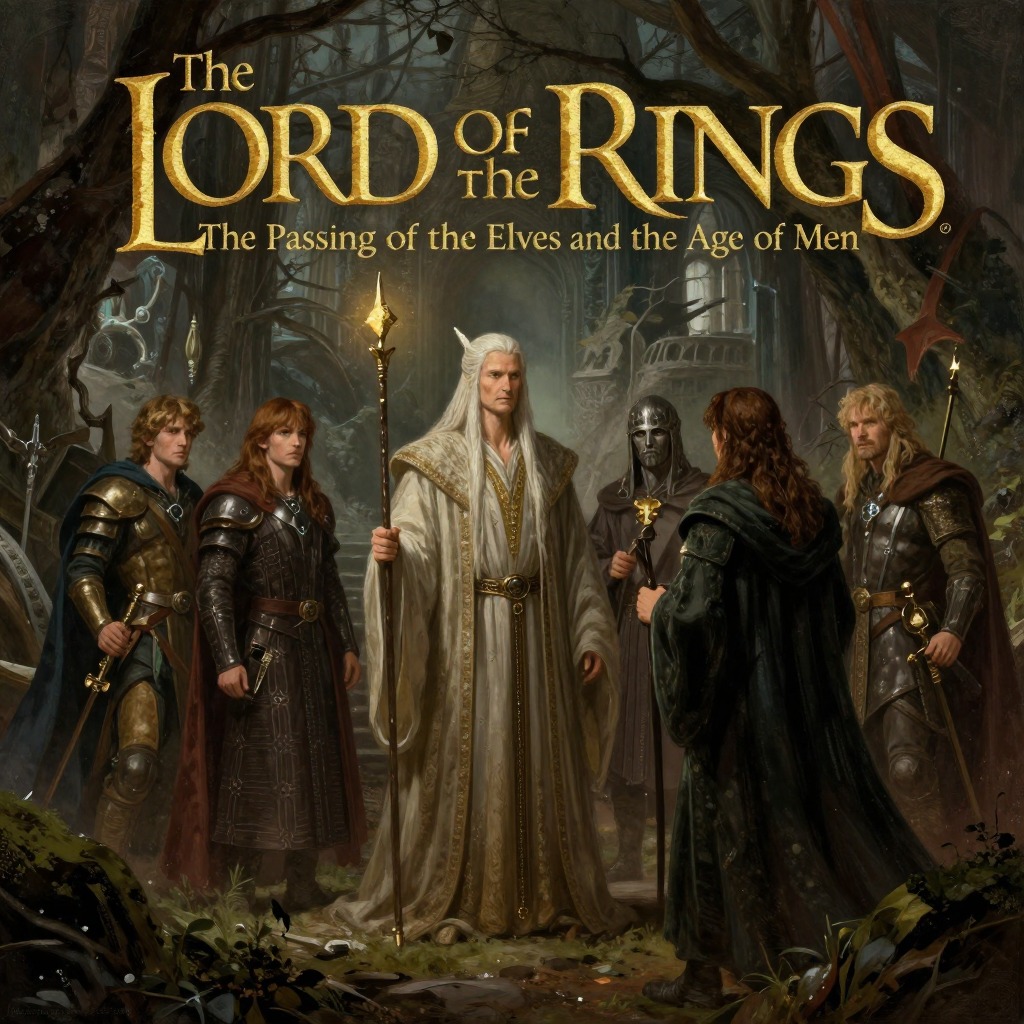
Legolas Greenleaf
Legolas Greenleaf is an Elf of the Woodland Realm, the son of Thranduil, king of the Elves of Mirkwood. He is chosen as one of the nine companions of the Fellowship of the Ring, representing the Elven peoples in the quest to destroy the One Ring. His name, meaning "Greenleaf," reflects his deep connection to the living world, and his role in the company is that of a keen-eyed scout and master archer, whose perception of the natural world far exceeds that of his mortal companions. Throughout the long journey from Rivendell to the gates of Mordor, Legolas's Elvish senses and ancient knowledge repeatedly illuminate the path forward, marking him as an indispensable member of the company.
Identity and Background
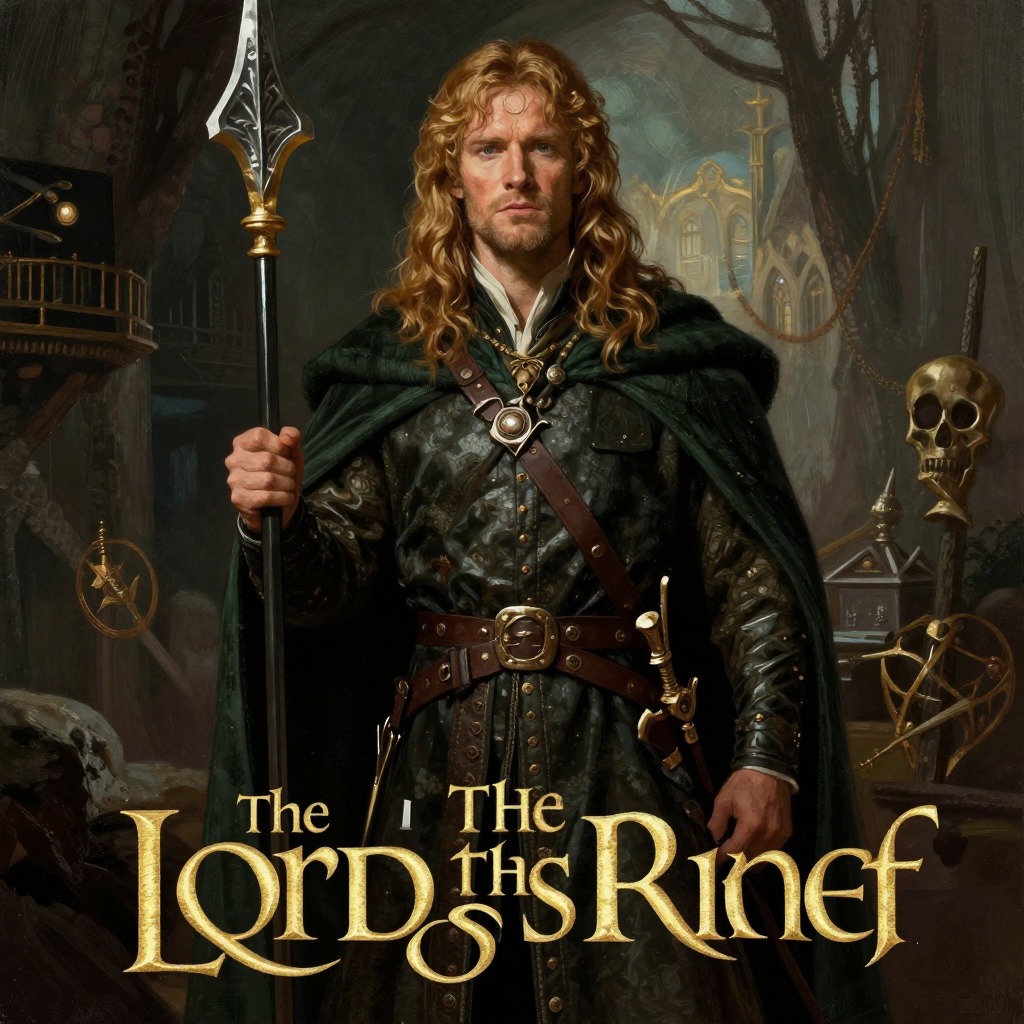
Legolas Greenleaf is introduced as an Elf of the Woodland Realm, the son of Thranduil, the Elven king of Mirkwood. His lineage places him among the Silvan Elves, a people who had long dwelt in the great forest east of the Misty Mountains. As an Elf, he is immortal and possesses senses and perceptions far keener than those of Men or Hobbits. His name, "Greenleaf," evokes his affinity with the natural world, an identity that shapes his role within the Fellowship as a scout and observer. He is also a warrior of great skill, armed with a bow of the Galadhrim, a weapon of the Elves of Lothlórien, which he wields with deadly accuracy.
Role in the Fellowship
Legolas is chosen as one of the nine members of the Fellowship of the Ring at the Council of Elrond, representing the Elves in the quest to destroy the One Ring. His primary role within the company is that of a scout and lookout, using his Elvish sight to survey the land and detect dangers that others cannot see. During the journey down the Anduin, his vigilance proves crucial. As the company approaches the Emyn Muil, Aragorn notices flocks of birds circling high in the air and asks Legolas to identify a distant dark spot against the fading light. Legolas confirms it is an eagle, a hunting eagle, far from its mountain home, and his observation leads Aragorn to delay their departure until full darkness, a precaution born of the Elf's sharp perception. His ability to read the signs of the wild, from the flight of birds to the movement of distant creatures, makes him an invaluable guide through the perilous lands of Middle-earth.
Knowledge of the Ancient World
Legolas's knowledge extends beyond mere observation; he carries with him the deep lore of the Elves, a living memory of ages past. When Gandalf reveals that Merry and Pippin are with Treebeard and the Ents, Aragorn expresses astonishment, having thought the Ents were only a legend of Rohan. Legolas, however, corrects him, noting that every Elf in Wilderland has sung songs of the old Onodrim and their long sorrow, though even among the Elves they are only a memory. He expresses a profound longing to meet one of these ancient beings, saying that if he were to meet one still walking in the world, he would feel young again. This exchange reveals Legolas's connection to the Elder Days, a time of great power and beauty that is fading from the world. His knowledge of the Ents, the shepherds of the trees, underscores his role as a bridge between the present struggle and the ancient history of Middle-earth, a history that is passing away with the departure of the Elves.
The Friendship with Gimli
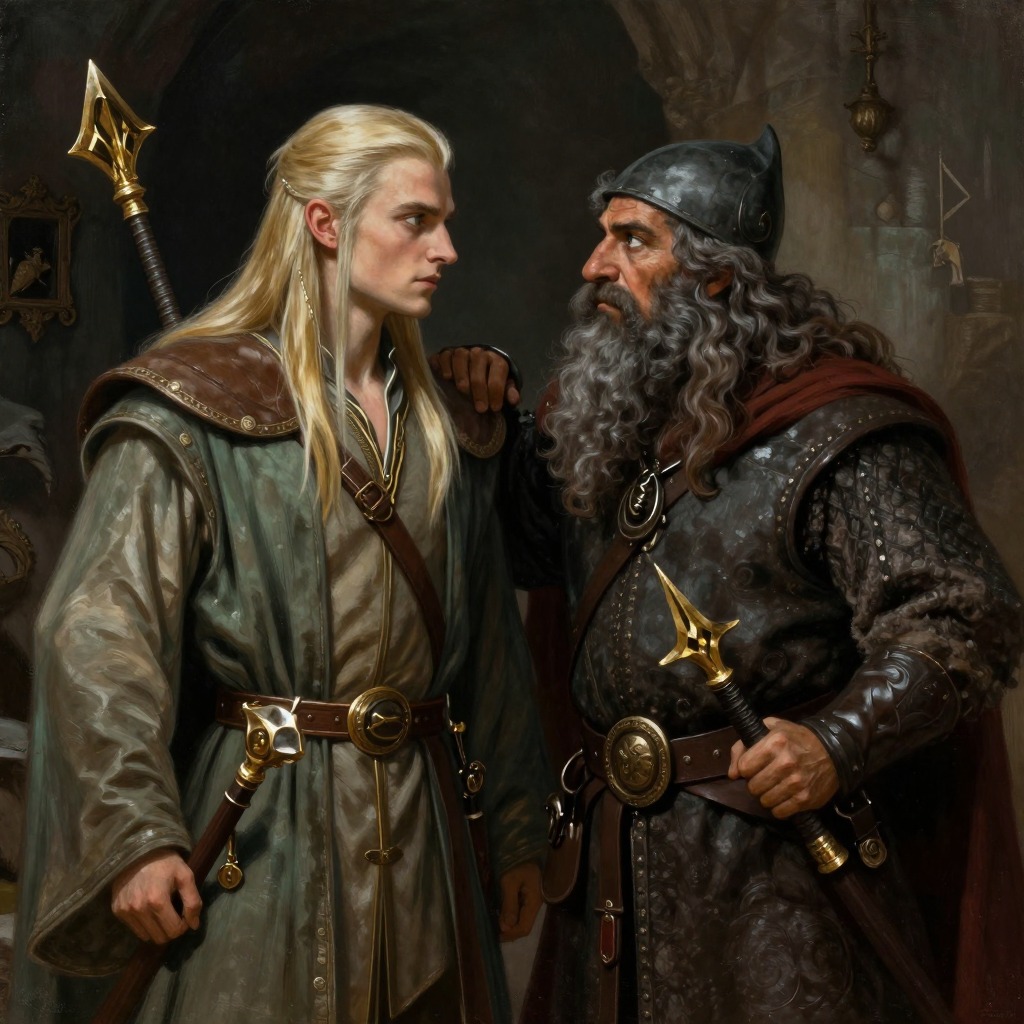
One of the most significant aspects of Legolas's character is his friendship with Gimli the Dwarf, a relationship that transcends the ancient enmity between Elves and Dwarves. Throughout the quest, the two companions, initially wary of each other, develop a deep and abiding respect. Their bond is tested and strengthened through shared trials, from the darkness of Moria to the battles of the War of the Ring. This friendship becomes a symbol of hope, demonstrating that even the oldest hatreds can be overcome in the face of a common enemy. Legolas's willingness to befriend Gimli, and Gimli's reciprocal respect for the Elf, marks a turning point in the relations between their two peoples, a reconciliation that echoes into the Fourth Age.
Narrative Significance
Legolas's narrative significance lies in his role as a representative of the Elves, a people whose time in Middle-earth is drawing to a close. His presence in the Fellowship serves as a reminder of the beauty and wisdom of the Elven race, and of the great loss that their departure will bring. His sharp eyes and ancient knowledge repeatedly guide the company, and his friendship with Gimli offers a powerful counterpoint to the forces of division and suspicion that threaten to tear the free peoples apart. In the end, Legolas's journey is not only a physical quest but also a symbolic one, representing the fading of the Elves and the dawn of the Age of Men. His story, interwoven with the fates of his companions, contributes to the epic scope of the War of the Ring, a conflict in which even the oldest and wisest of beings must choose a side.