Moria
Moria, the Dwarrowdelf, is the colossal subterranean kingdom of the Dwarves, hewn from the living rock of the Misty Mountains. Known in the ancient tongue of its builders as Khazad-dûm, it represents both the pinnacle of Dwarven achievement and the site of their most terrible downfall. In the narrative of the War of the Ring, Moria is not merely a place on a map but a threshold of fear and a crucible of loss, a name that chills the hearts of all who hear it and a road that leads the Fellowship of the Ring into its darkest hour. Its very mention is enough to cast a dread upon the Company, a legend of vague fear even to the hobbits, who know it only through tales of terror. The decision to enter its depths marks a point of no return, transforming the quest from a journey across the world's surface into a descent into a haunted past, with consequences that echo through the rest of the war.
A Name of Ill Omen and a Desperate Choice
The Fellowship's path to Moria is born of failure. After the hostile mountain Caradhras defeats their attempt to cross the Redhorn Gate, the Company is left weary and dispirited, forced to turn back from the mountain's knees. It is in this moment of exhaustion that Gandalf reveals the alternative he has considered from the very beginning: a road that leads to the Mines of Moria. The proposal is met with immediate and visceral unease. Aragorn, who had been against the idea until the pass had at least been tried, speaks darkly of the road, questioning how they can hope it will lead through Moria. Boromir, the son of Gondor, voices the sentiment of all when he calls it a name of ill omen, and he argues for a safer, more southerly route through the Gap of Rohan, a land friendly to his people. The very name of Moria, once a great Dwarven realm, has become synonymous with peril and the unknown, a place where even the bravest fear to tread. The decision to enter is not made with confidence but with grim necessity, a choice between a known defeat and an unknown, potentially far greater, horror.
The Dread of the Deep and the Shadow of History
The fear that Moria inspires is rooted in its long and tragic history. It was once the greatest of all Dwarven mansions, a realm of immense wealth and craftsmanship, its halls filled with mithril and its name, Khazad-dûm, spoken with reverence. But that glory is long since gone. The mines were delved too deep, and in their depths, the Dwarves awoke a nameless terror—a Balrog, a demon of the ancient world, a shadow of flame and destruction. This catastrophe drove the Dwarves out, and the once-proud Dwarrowdelf became a place of darkness, inhabited only by Orcs and the lingering echoes of its former splendor. The Fellowship's journey through this fallen kingdom is a passage through a monumental graveyard, a space where the architectural grandeur of the past serves only to emphasize the present desolation and the ever-present threat of the things that now dwell in the dark. The very stones seem to hold the memory of the disaster, and the air is thick with the weight of a history that has become a legend of fear.
A Journey in the Dark and the Fall of Gandalf
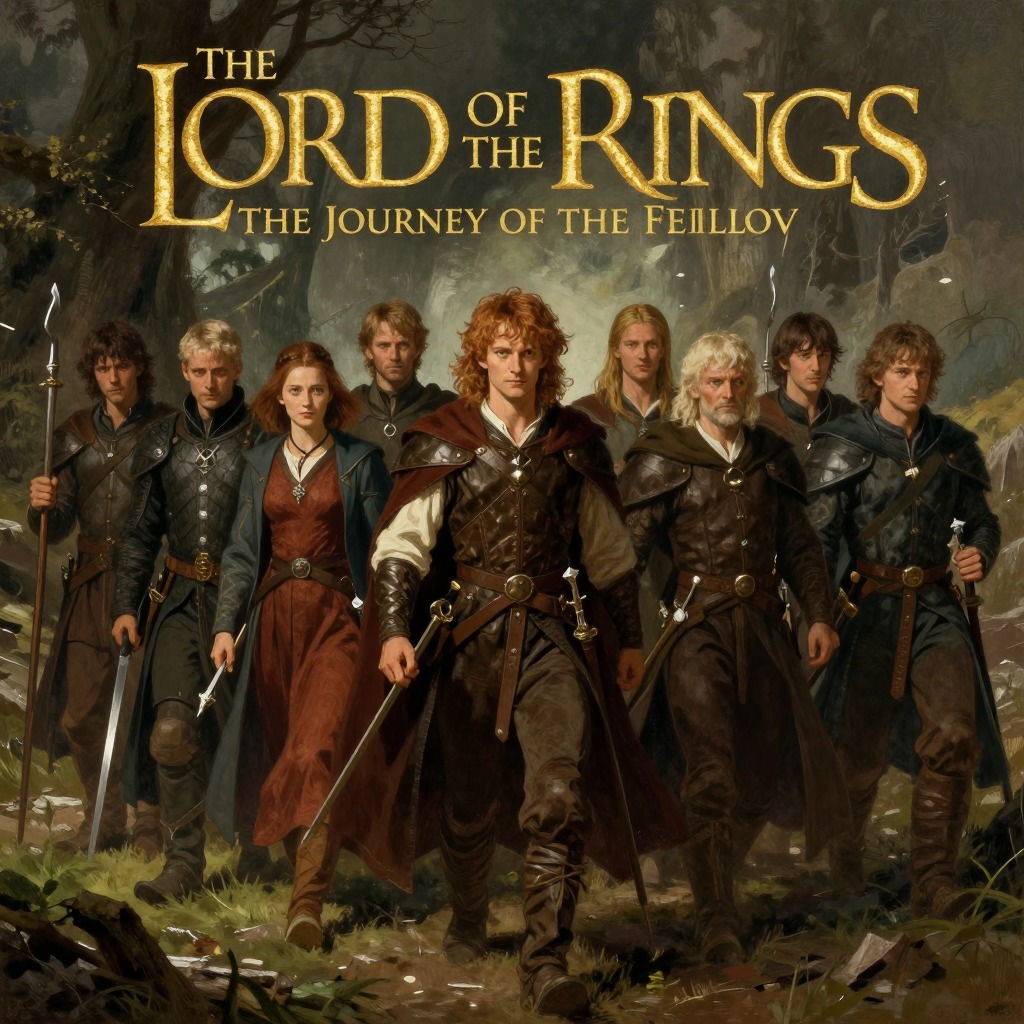
The Fellowship's passage through Moria is a harrowing ordeal, a journey in the dark that tests their resolve and ultimately shatters their unity. The decision to enter is made at a council called by Gandalf, who spares them a mouthful of the miruvor of Rivendell to revive their spirits. The journey itself is a descent into a world of oppressive blackness, where the Company is forced to navigate by memory and the faint light of Gandalf's staff. The oppressive silence is broken only by the sounds of their own footsteps and the distant, menacing echoes of things moving in the shadows. The climax of this dread comes on the Bridge of Khazad-dûm, where the ancient terror of Moria is finally revealed. Gandalf, standing alone against the Balrog, a creature of fire and shadow, confronts it to allow the others to escape. His defiance is absolute, his words a final, powerful command, but the battle is not without cost. As he breaks the bridge and sends the Balrog falling into the abyss, the creature's whip lashes out, catching Gandalf by the knee and dragging him over the edge. His last cry, a desperate warning to the fleeing Company, echoes through the caverns as he plummets into the darkness, leaving the Fellowship shattered and leaderless, their quest seemingly doomed before it has truly begun.
The Legacy of Loss and the Echoes of the Fallen
The loss of Gandalf in Moria is a wound that never fully heals for the Fellowship. His fall is not just the death of a leader but the loss of their guide, their protector, and their greatest source of wisdom and hope. The Company emerges from the Mines into the light of Lothlórien, but they are a changed group, diminished and grieving. The memory of Moria and the fall of Gandalf hangs over them, a constant reminder of the cost of their journey. The name of the place becomes synonymous with their own personal tragedy, a scar on the quest that shapes their subsequent decisions and actions. Even after Gandalf's return as the White Rider, the shadow of his death in the depths of Moria remains a powerful and defining moment, a testament to the dangers they faced and the sacrifices they were forced to make. The echoes of that fall resonate throughout the rest of the War of the Ring, a constant reminder of the price of hope in a world under siege.