Georges Clemenceau
1919Georges Clemenceau appears in the novel’s account of the peace negotiations as one of the three leaders at the center of the Council of Four. His role is conveyed through the shifting membership of the conference and the pressure exerted on Woodrow Wilson, rather than through a private scene or an extended portrait.
From Four Delegates to Three
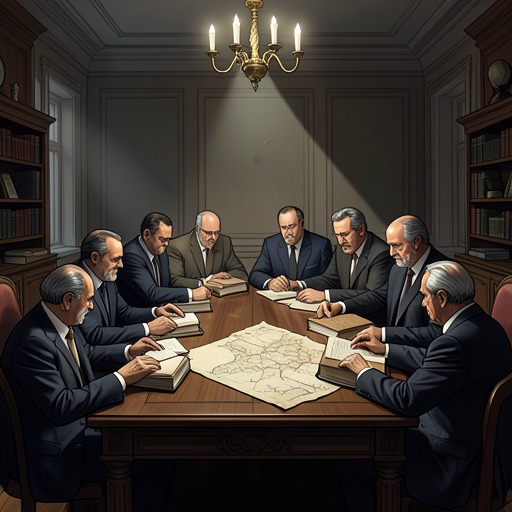
The narrative first records the formation of the Council of Four, then marks a change in its composition: after Orlando went home, the account reduces the group to Clemenceau, David Lloyd George, and Woodrow Wilson. Clemenceau is thus positioned among the remaining principal negotiators as the conference narrows to a smaller circle.
The Council and Wilson
On April 19, Clemenceau and David Lloyd George are described as getting Wilson into what the narration calls their “little cosy threecardgame,” the Council of Four. The phrasing gives the scene a pointed, strategic cast: Wilson is not simply shown participating in a formal body but being drawn into a close negotiating arrangement by the other two men. The account identifies Clemenceau’s role in that pressure, without specifying the substance of their discussions or the terms he personally advanced.
The Treaty’s Completion
By June 28, the Treaty of Versailles was ready. The narrative connects this outcome to Wilson’s return home to explain the settlement and his compromises, placing Clemenceau within the leadership group that shaped the conference’s final phase. It does not assign Clemenceau sole responsibility for the treaty; his significance here lies in his place beside David Lloyd George at the center of negotiations that left Wilson to account for the result.