Hiram Halsey Cooper
1919Hiram Halsey Cooper is a Jersey City lawyer and politician who becomes an important mentor to Richard Ellsworth Savage. A connoisseur of High Church practice and literary first editions, he offers the young poet companionship, employment, and money for college. Years later, when Savage returns from the war, Cooper is a major in the Ordnance Department and again intervenes in his career. His recurring role joins literary patronage to political access: he can speak at length about poetry and the past, but he also knows how to identify useful contacts and make institutions act.
Background and Interests
Cooper enters Savage’s life during the Christmas vacation, when Savage is staying with the Thurlows in East Orange. At tea in the rector’s household, Cooper is introduced as a Jersey City lawyer and politician interested in High Church matters and first editions of Huysmans. He invites Savage to visit him, and at his office treats him to sherry while showing him books by Beardsley, Huysmans, and Austin Dobson. His conversation turns to lost youth, an abiding concern that shapes his bond with the much younger man: Cooper recognizes Savage’s literary ambitions and offers him a job in his office after school.
Their connection is also familial, though not through Cooper’s own birth family. His deceased wife was an Ellsworth and a cousin of Savage’s mother. Cooper identifies this link when he meets Savage, and later recalls that Savage’s mother was the daughter of Major General Ellsworth, whose service had also connected the families. The relationship gives Cooper a personal point of attachment to Savage, but the evidence presents his support as both familial and chosen: he takes an active interest in the young man’s writing and future.
Patronage and Political Judgment
During the Baltimore convention, Cooper rents a house and entertains extensively. Savage works in the outer office, welcoming visitors and recording their names. Although the political proceedings are initially beyond him, he learns by observing Cooper which visitors the older man genuinely wants to see and which are merely being kept waiting or placated. The office becomes an informal lesson in political discrimination: access is managed through attention, courtesy, and the ability to distinguish influence from appearance.
When Cooper and Savage are alone, the convention gives way to another kind of conversation. Cooper pours Amontillado, sits in a large leather chair, and talks about literature, the nineties, and his wish to be young again. He proposes to advance Savage the money to attend Harvard. Later, after Savage works for him at twenty-five dollars a week preparing a prospectus for a proposed art museum in Jersey City, Cooper gives him one thousand dollars for college. The gift is formally made a note due in five years at four percent interest, a device Cooper explains as a way to preserve appearances and make Savage feel responsible. The arrangement is both assistance and instruction: Cooper makes education possible without presenting the money as an unqualified handout.
Counsel During the Debate over War
As the prospect of American entry into the war grows, Cooper urges Savage not to endanger his future by joining the army. After the Armed Ship Bill passes, he proposes finding him a job in Washington and points to the approaching possibility of conscription. Savage replies that helping the war would violate his conscience. Their conversation over duty to the state, party leadership, and expediency reaches no resolution; Cooper asks Savage to promise that he will consult him before taking a rash step.
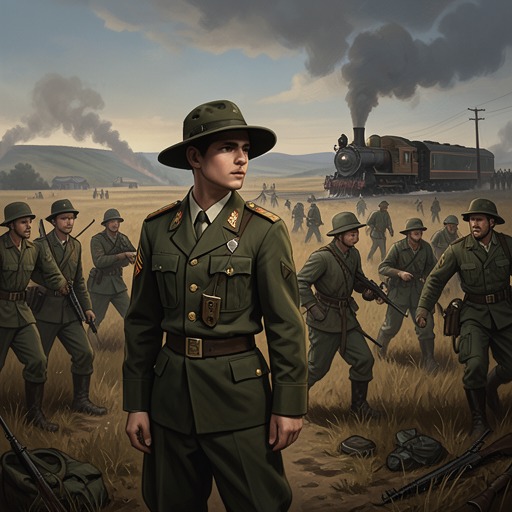
That counsel reflects Cooper’s concern for Savage’s prospects, but it does not determine the young man’s course. Savage signs up with the volunteer ambulance service without telling anyone, and eventually goes to France. Cooper’s advice thus marks a tension in their relationship: he wants to protect a talented young man from a decision that may cost him his career, while Savage acts according to a conscience Cooper cannot persuade him to set aside. When Cooper later wears a major’s uniform, the contrast is striking, but the account does not explain what changed his own position. He describes his service as a way of putting his shoulder to the wheel.
The Return and a Military Commission
When Savage and Ned reach the waters off Long Island, they are tired, short of money, and anxious about what awaits them at home. Cooper comes aboard the immigration tug in khaki and puttees. He is visibly relieved to see Savage, tells him to put on his old Norton-Harjes uniform before landing, and says he will take him to Washington that night. On the train, he explains that he works in the Ordnance purchasing department and has already discussed Savage’s experience on two fronts and his knowledge of languages with General Sykes, whose service had been associated with Savage’s grandfather. Cooper believes they can obtain a commission for him.
Cooper’s intervention quickly becomes concrete. He brings Savage to the general, presents him as wanting work with more responsibility than the ambulance service offered, and secures a referral to Colonel Andrews to assess his qualifications. Savage fills out the required papers, receives a commission as a second lieutenant in the Ordnance Department, and is ordered to Camp Merritt. The episode completes a pattern begun in the office and at the convention: Cooper converts personal confidence into practical opportunity, this time through military connections rather than private money.
His welcome is not purely institutional. Cooper tells Savage that he had missed their conversations about literature and the ancients, and that Savage’s absence had made him realize how lonely he was. That disclosure casts the mentorship as reciprocal in feeling, even though the material benefits flow chiefly toward Savage. Cooper’s history in the novel is therefore defined by an unusual combination of cultivated nostalgia and effective intervention: the man who laments lost youth remains capable of opening doors for someone still making his way into adulthood.