Randolph Bourne
1919Randolph Bourne emerges as both a critic of wartime power and a person of striking, sensuous vitality. Born with little choice over his circumstances, he made an education and a life of thought through work; when the United States entered the war, he followed the implications of democratic rhetoric until they led him into conflict with the institutions and friends on whom he depended. His death six weeks after the armistice left unfinished the radical future he was still trying to imagine.
Identity and Early Circumstances
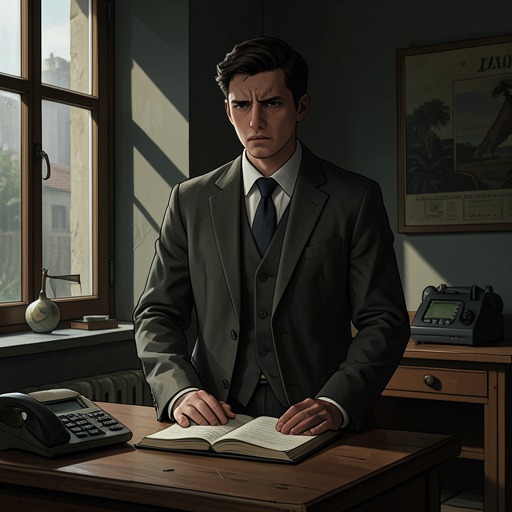
Bourne was born in 1886 in Bloomfield, New Jersey, the grandson of a Congregational minister. The narrative introduces him as someone who came into the world without the pleasure of choosing either his dwelling or his career. That description makes constraint part of his starting point, but not the whole of his character: he is presented as a man who fashioned intellectual and artistic possibilities out of a life shaped by limited means and a body marked as different. He was a hunchback, and the account does not treat that fact as a substitute for his many other qualities.
He attended grammar school and high school in Bloomfield. At seventeen, he began working as secretary to a businessman in Morristown. Later, he worked his way through Columbia by taking jobs in a pianola-record factory in Newark, as a proofreader and piano tuner, and as an accompanist in a vocal studio at Carnegie Hall. These occupations were not incidental to his education: earning money and studying proceeded together, with the practical labor of making a living enabling the intellectual work for which he became known.
At Columbia, Bourne studied with John Dewey. A travelling fellowship then took him to England, Paris, Rome, Berlin, and Copenhagen. The text gives this itinerary as a compressed outline of his widening experience rather than a detailed account of what he saw in each place. It also identifies the formation that preceded his political break: a gifted student working through ideas associated with Dewey and carrying the promise of reformed democracy into the years of war.
Intellectual Temperament and Private Pleasures
Bourne is described as half musician and half educational theorist, but neither label exhausts the portrait. Poor health, poverty, his bodily difference, and strained relations with his family had not, the narrative insists, spoiled the world for him. He loved Die Meistersinger, played Bach with long hands that stretched easily across the keys, enjoyed pretty girls and good food, and valued evenings of conversation. This catalogue of pleasures gives his political dissent a human setting: the critic of the state was not represented as someone who had withdrawn from life, but as someone unusually alive to its ordinary satisfactions.
The same contrast sharpens in the account of his last illness. While Bourne was dying of pneumonia, a friend brought him eggnog. In fever and delirium, he kept noticing the yellow color and calling it beautiful. The scene does not turn his death into a simple emblem of political defeat. Instead, it preserves an attention to particular beauty even as his life ebbs—a final instance of the happiness the narrative associates with him, set against physical decline and the unfinished work that remained.
The Argument Against the War
Bourne’s defining political judgment is expressed in the sentence that war is the health of the state. The formulation reverses the language of national emergency: war does not merely threaten democratic life from outside, but strengthens state power. The book places that judgment beside his effort to follow the promises of progressive reform through their wartime consequences. The spring of 1917 becomes the point at which the idealized future he had discerned in Dewey’s teaching could no longer be kept separate from the policies being carried out in its name.
At The New Republic, where he had been earning his bread, Bourne became unpopular as he worked through those political equations. The text renders the reversal in a series of substitutions: New Freedom gave way to conscription, democracy to winning the war, and reform to safeguarding Morgan loans. The list compresses a widening disillusionment into a change of vocabulary. Public ideals remained available as slogans, but in the wartime program Bourne saw them joined to coercion, financial interests, and demands for loyalty. His criticism was not an abstract rejection of reform; it arose from comparing reform’s announced aims with the state’s conduct.
He resigned from The New Republic. The Seven Arts alone had the courage to publish his articles against the war, and its backers subsequently took their money elsewhere. The shrinking space for his writing thus had a material consequence as well as an intellectual one: dissent cost him the publication that would carry it, while the journal willing to print him lost financial support. Friends, too, disliked being seen with him, and his father wrote to beg him not to disgrace the family name. The future of reformed democracy that had once seemed radiant collapsed, in the narrative’s image, like a pricked soap bubble.
Surveillance, Isolation, and Death
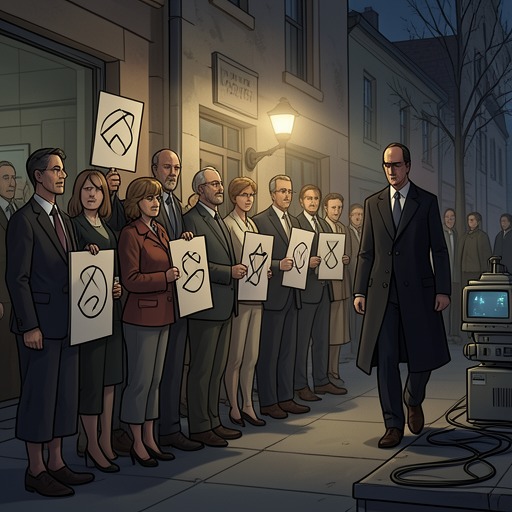
As liberals hurried to Washington, some of Bourne’s friends urged him to join the wartime political establishment. Instead, the account shows him becoming a target of public caricature and surveillance by espionage and counter-espionage services. During a walk at Wood’s Hole with two female friends, he was arrested. Separately, a trunk full of his manuscripts and letters was stolen from him in Connecticut. The narrative places these incidents beside the demand to exert force to the utmost, exposing how the language of national mobilization coexisted with pressure on a dissenting writer and the loss of his private papers.
Bourne did not live to see the peace settlement at Versailles or the political normalcy that followed. Six weeks after the armistice, he died while planning an essay on the foundations of future radicalism in America. That final project gives his ending its direction: the war had not converted him to the system he criticized, and the cessation of fighting did not make his questions obsolete. He was still trying to establish what radical politics might be built upon after the crisis.
The book’s portrait therefore joins political analysis to a life of work, music, appetite, conversation, and friendship. Bourne’s career shows the personal and professional costs of dissent, but his last planned essay also refuses to make those costs the whole story. The future remains a question he could not answer in the time left to him; his insistence on asking it is what survives the unfinished ending.