Wesley Everest
1919Wesley Everest is a decorated former soldier who returns from overseas to logging and joins a labor struggle over the conditions of work in the Pacific Northwest. His story culminates in the Centralia violence on Armistice Day: when a mob attacks the Industrial Workers of the World hall, he draws pursuers away from another organizer, then is taken from jail and lynched. The coroner’s false account of his death turns the final episode into an exposure of how public authority can recast political murder as suicide.
Background and Return to Logging
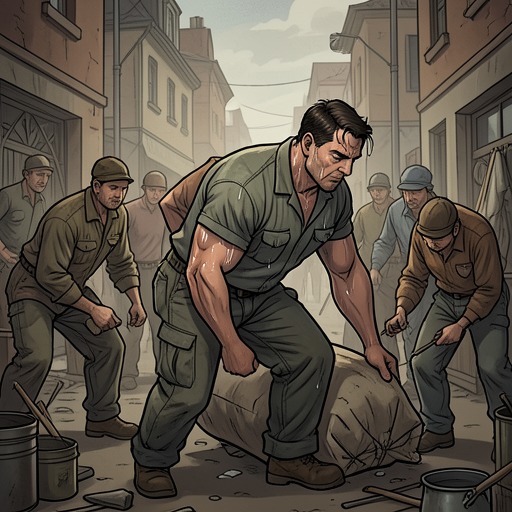
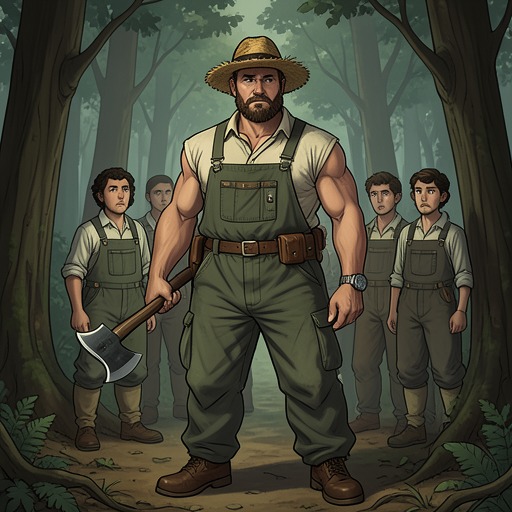
Everest comes from a family described as belonging to the old Kentucky and Tennessee stock of woodsmen and squirrel hunters who moved west into the forests of the Pacific slope. After serving overseas, he receives his discharge and returns to his former work as a logger. In the army, he had been a sharpshooter and had won a medal for his marksmanship. The story thus introduces him as both a working man and a trained gunman, a combination that becomes consequential when labor conflict turns violent.
His return places him in an industry portrayed as highly concentrated and profitable. The timber owners and leading sawmill and shingle interests are called patriots in the account, even as wartime lumber prices rise from sixteen dollars to one hundred and sixteen dollars per thousand feet; some spruce sells to the government for as much as twelve hundred dollars per thousand. Against this backdrop, Everest’s return to logging is not presented as a simple resumption of his former life. He enters a workplace whose profits and political influence stand in sharp contrast to the hardships described by lumber workers.
Labor Organizing and the Timber Camps
Loggers, shingle weavers, and sawmill workers are depicted as a subordinated labor force within the timber industry. Organizers from the Industrial Workers of the World promote industrial democracy and argue that forests should belong to the people. Their program addresses specific parts of workers’ lives: payment in real money rather than company scrip, a place to dry wet clothes, an eight-hour day, clean bunkhouses, and wholesome food. These demands give the labor conflict material stakes rather than leaving it at the level of competing political labels.
The narrative connects that organizing to Everest’s own choice after his military service. Having returned from a war presented as a campaign to make Europe safe for democracy, he joins the lumberjacks’ local to help pursue better conditions for workers at home. The contrast is pointed: the democratic language attached to the war meets a domestic industry in which workers are described as helots, while their organizers are branded radicals. The account’s Paul Bunyan imagery enlarges Everest’s individual story into a collective one, casting the logger as part of a struggle over who controls the forests and who benefits from their products.
The Centralia Confrontation
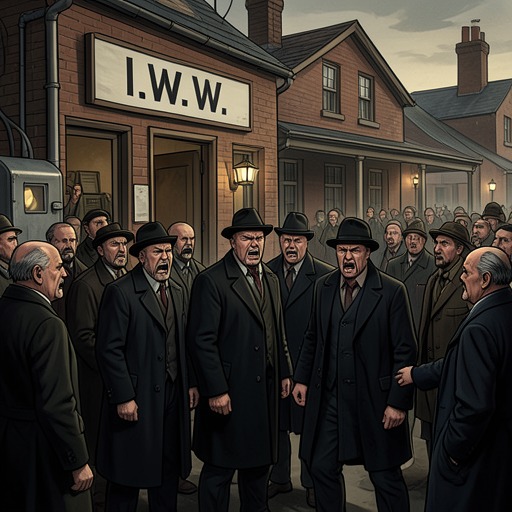
Before the raid, loggers consult a lawyer and decide they have a right to defend their hall and themselves if it is attacked. At a union-hall meeting on the Sunday before the confrontation, they discuss the possibility of a lynching. Everest, who is not much of a talker, moves through the aisle in an olive-drab coat over his overalls, handing out literature and pamphlets. When fellow loggers say they will not tolerate another raid, he stops, rolls a cigarette, and smiles quietly. The scene places him among people anticipating danger without making him a speechmaker or presenting him as a political leader.
On Armistice Day, an ex-soldiers’ parade passes the hall once without stopping, briefly easing the concern of the loggers inside. On its return, however, the parade halts in front of the hall. A signal and shouted calls precede a rush toward the building; gunfire follows, and Warren O. Grimm and another former soldier are hit. The parade breaks apart, but armed men regroup and charge the hall. They find some unarmed men hiding in an old icebox and a uniformed boy with his arms over his head. The attack has become a direct assault on the labor meeting place and the people sheltering there.
Escape, Capture, and Death
Everest fires the ammunition in his rifle, drops it, and runs toward the woods. As he pushes through the crowd behind the hall, he uses a pistol to hold people back, gets over a fence, and takes an alley and back street. The mob follows him, abandoning the ropes it had brought to lynch Britt Smith, the Industrial Workers of the World secretary. By drawing the pursuers away, Everest prevents Smith from being lynched at the hall. His flight is therefore also an intervention on behalf of someone else, even as it leaves him exposed to the mob.
He makes for the Chehalis River and wades into it. When he turns to face the crowd, he is wet and has lost his hat; the narrative again notes his quiet smile. The mob overtakes him and takes him to jail, where he is thrown onto a cell floor while other loggers are interrogated. That night, the town lights are turned off and a mob breaks into the jail. Everest is removed in a car and taken to the Chehalis River bridge. There, a member of the Centralia business community mutilates him, and the mob hangs him. The account records that he begged for the violence to end, but the narrative does not make his final words a substitute for the political circumstances of his killing.
Official Account and Narrative Significance
The coroner at the inquest treats Everest’s death as a joke and reports a fabricated sequence in which Everest supposedly escaped, went to the bridge, and killed himself. This version reverses the account’s actual sequence: a mob takes him from jail and kills him. The inquest therefore does more than fail to establish responsibility; it supplies an official story that erases the mob’s actions and recasts a lynching as suicide.
Everest’s brief, decisive role binds the labor campaign’s stated demands to the violence used against its organizers. His military marksmanship, return to logging, and membership in the local all matter to the events, but the story does not make him a triumphant hero. He saves Smith from immediate capture by drawing the mob after himself, yet is killed in custody and then misrepresented by the inquest. The contrast between wartime claims about democracy and the suppression of workers at home gives his fate its force: the promised protection of democratic rights is absent precisely where laborers try to organize and defend their hall.