Paul Bunyan
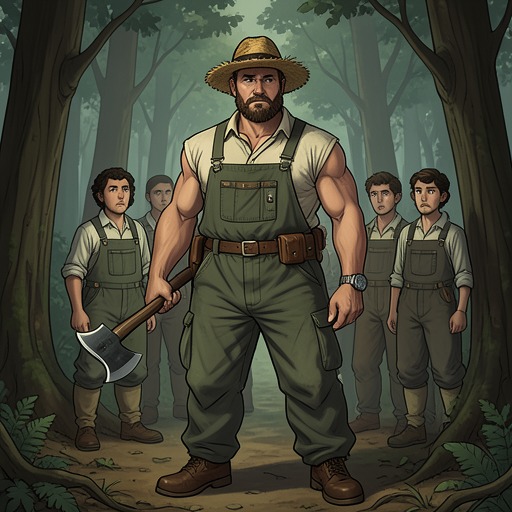
1919Paul Bunyan is the book’s emblematic lumberman, recast as a figure for the workers of the Pacific slope timber industry. Rather than following him as an individual with a private biography, the narrative places the idea of industrial democracy in his head and makes his repeated, unafraid presence a measure of the loggers’ collective resolve. His significance lies in that transformation: the familiar figure of the woods becomes a voice for workers confronting the owners of the forests and mills.
Allegorical Identity
The narrative explicitly links Paul Bunyan to Wesley Everest, calling Everest a logger like him. The comparison brings a named, historical worker into the orbit of a larger folk image, but the book’s emphasis is less on personal resemblance than on shared place and labor. Paul Bunyan becomes the imagined representative of the people who cut, milled, and handled the timber that enriched the region’s industrial owners.
That allegory is deliberately political. The lumberjacks, loggers, shingleweavers, and sawmill workers are described as the helots of a timber empire: indispensable to its production, yet denied a fair share of its wealth and a decent standard of life. The Industrial Workers of the World supplies the alternative vision placed before Paul Bunyan. Its organizers argue that the forests ought to belong to the people, and that the men who work in them should receive real money rather than company scrip, an eight-hour day, clean bunkhouses, wholesome food, and a place to dry clothes soaked by work in freezing weather. The list makes industrial democracy concrete: it concerns the ownership of resources, but also wages, shelter, food, and the daily conditions of labor.
The Worker’s Cause
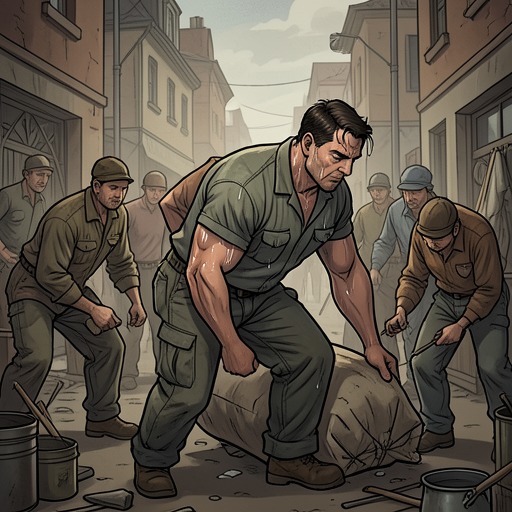
The narrative frames Paul Bunyan’s political awakening against the scale and uses of the timber wealth around him. Wood becomes scaffolding, ships, shacks, suburban construction, and pulp for newspapers, advertising, catalogues, paperwork, and handbills. The long inventory gives the forest’s output an expansive reach while contrasting that abundance with the workers’ demands for basic security and dignity. Paul Bunyan’s cause is not separate from the industry’s material world; it grows from the disparity between the many purposes timber serves and the poor conditions of those who produce it.
His return from making Europe safe for the democracy of the Big Four sharpens the contrast. Back from the war, he joins the lumberjack local to help make the Pacific slope safe for working people. The phrase turns patriotic language toward a local struggle: democracy abroad has not, by itself, made the logging camps democratic. In this framing, union membership is Paul Bunyan’s practical answer to the distance between wartime claims and workers’ lives. The narrative’s refrain, that nothing in the world can frighten him, gives the allegorical figure a quality of persistence rather than a detailed personal psychology.
Repression and Resistance
The conflict around Paul Bunyan is presented as organized and material, not merely rhetorical. Timber owners and mill interests, described as patriots who had won the war, respond to union organizing by forming the Employers Association and the Legion of Loyal Loggers. The narrative associates these groups with raids on union halls, beatings and lynchings of organizers, and the burning of literature. It also notes the wartime rise in lumber prices, from sixteen dollars per thousand feet to 116 dollars, with some government purchases of spruce priced as high as 1,200 dollars per thousand feet. The contrast sets the owners’ gains against their effort to suppress the workers seeking better terms.
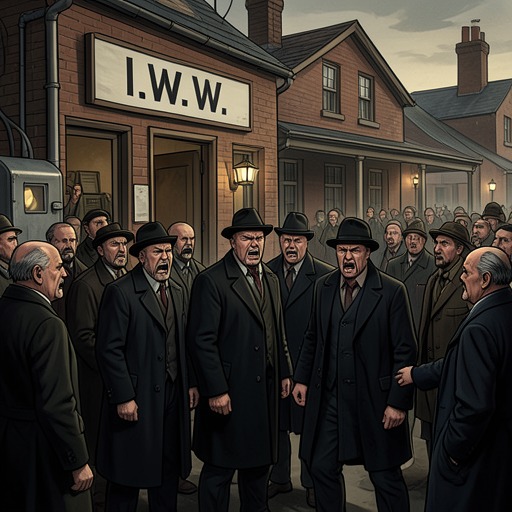
The account recalls the attack on the Industrial Workers of the World hall in Centralia on Memorial Day 1918. Members of the American Legion, accompanied by people from the Chamber of Commerce, wreck the hall, assault those inside, jail some, and drive others beyond the county line. Union papers and pamphlets are burned, and the hall’s fittings are auctioned for the Red Cross. Against that history, the loggers’ hiring of a new hall and the union’s continued growth mark persistence rather than a settled victory. Paul Bunyan’s repeated return signals that repression has not erased the workers’ cause.
Armistice Day and Narrative Role
Before Armistice Day in 1919, rumors circulate that the union hall will be raided. The business community’s Citizens Protective League chooses Warren O. Grimm, an officer who had served with American forces in Siberia, to lead its campaign against the union. The narrative reports that the group first beats a blind newsdealer and leaves him across the county line. The loggers, in turn, consult counsel and decide they have a right to defend their hall and themselves if attacked. This is the immediate context for the coming confrontation: a remembered raid, fresh intimidation, and a union preparing not to be driven out again.
Paul Bunyan is not presented as the agent of a single documented action in that confrontation. Instead, his refrain accompanies the account as a counterpoint to the organized forces arrayed against the loggers. The book places the allegorical figure beside the specific history of halls, organizers, employers, and violence, using that shift between emblem and event to make the labor conflict legible as more than a local dispute. Paul Bunyan stands for the workers’ demand that the forests and the conditions of work belong to those who sustain the industry, and for their refusal to let intimidation decide who may organize.