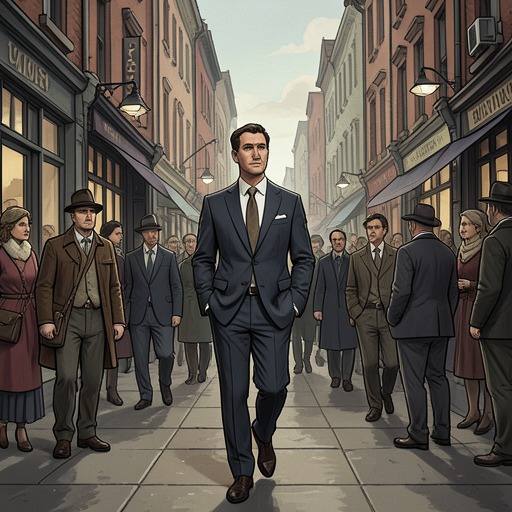
Henry Savage
1919Henry Savage, the brother of Richard Ellsworth Savage, moves from infantry service in France to a first-lieutenant’s commission at Tours. His brief appearances connect military advancement with the divide between soldiers at the front and those serving in the rear, while his exchange with Richard reveals both brotherly intimacy and the strains of rank and privilege.
Military Service and Advancement
Henry enlisted as a private in the infantry and was serving somewhere in France while Richard was still in the United States. Their mother resented that the grandson of General Ellsworth had entered the army as a private, but she expected him to rise through the ranks. Henry’s subsequent transfer suggests that advancement did come, though the surviving account gives no details of his time at the front or the circumstances of his initial move to an officers’ school.
When Richard, by then a captain working under Colonel Edgecombe in the Post Despatch Service, arranged Henry’s transfer to Tours, it was too late for Henry to receive more than a first-lieutenant’s rank. The brothers’ positions had shifted: Richard had influence within the service and could help change Henry’s posting, but the transfer did not erase the distinction between their ranks.
The Brothers at Tours
When Henry reported to Captain Richard in his office, he looked brown, thin, and sore. That evening the brothers shared a bottle of white wine in Richard’s room. Henry’s first response to the new arrangement mixed affection with anger: he said he could not decide whether to be proud of his younger brother or hit him. Richard answered that he had honestly forgotten their grandfather was a general and suggested that their mother had been behind the appointment.
Henry’s reaction registers the distance between his experience in the infantry and Richard’s position in the rear service. He alluded to what men at the front said about the S.O.S., making clear that his advancement had not resolved the resentment attached to staff work. The scene leaves that tension in place even as the brothers sit together privately; Henry’s complaint is part of a familiar intimacy, but it also carries the judgment of soldiers who had served closer to combat.
A Later Appeal for Help
In a later conversation, Henry told Richard that Olga, a woman who had previously thrown a teapot at him, claimed she was going to have his child. Henry called the situation ridiculous, doubted that he was the father, and said he did not want to marry her or support the child. He was also afraid that she might write to General Pershing, invoking the severe consequences he associated with accusations against enlisted men.
Henry’s appeal places Richard in the role of confidant, but the account records the problem rather than its resolution. It does not establish whether Olga’s claim was true or what Henry ultimately did. Alongside the earlier conflict over rank, the episode shows him turning to his brother when military status and personal responsibility seemed to converge.