Celaeno
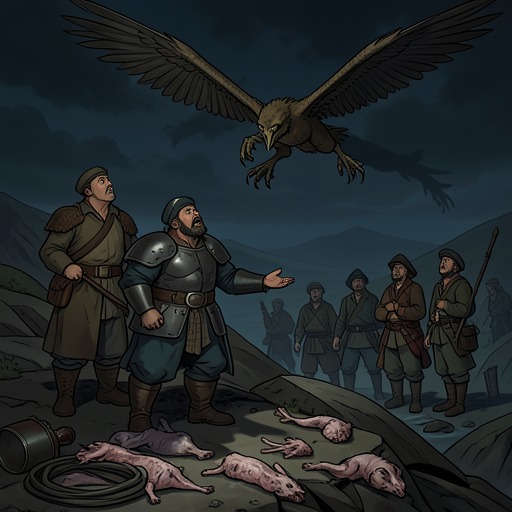
AeneidCelaeno is the Harpy who survives the Trojans’ attempt to drive the creatures from their feast and becomes the authoritative voice of the encounter. Perched on a craggy cliff, she presents herself not merely as an attacking monster but as the messenger of Fate, transforming the Harpies’ wounded retreat into a divinely charged prophecy. Her importance lies in the warning she gives: the Trojans may reach Italy and find a safe harbor, but they will endure fierce famine before they can build the promised walls.
Identity and Introduction
Celaeno appears during the Harpies’ assault on the Trojans. After the flock is rebuffed and abandons its mangled prey, one figure remains behind: Celaeno, seated high on a rugged cliff. Her elevated position gives her a commanding, almost oracular presence. The scene moves from physical conflict to speech, and her speech establishes her as the Harpies’ representative and as an instrument of a larger divine order.
Her self-presentation is inseparable from Fate. She is explicitly identified as the messenger of Fate, while her later warning is remembered by Aeneas as a grim prediction from the gods. This combination makes Celaeno more than an individual Harpy: she is the mouth through which an apparently local act of violence acquires consequences for the entire Trojan migration.
The Confrontation with the Trojans
Celaeno rebukes the Trojans for killing the Harpies’ oxen and for driving the creatures from their native realm. Her accusation frames the Trojans’ conduct as an impious war against Heaven rather than as simple self-defense or a struggle over food. The central issue is therefore not only what the Trojans have done, but whether mortals have overstepped the limits imposed by divine powers.
The rebuke follows the Harpies’ defeat, which gives the episode an immediate reversal. The Trojans appear to have won the physical contest: the attackers withdraw, their prey mangled, and their wings spread toward the sky. Yet Celaeno’s remaining on the cliff prevents the victory from being final. The Harpies lose the meal, but Celaeno retains the power to define its meaning and to impose a future cost.
Prophecy of Famine
Celaeno grants the Trojans a limited promise. The Italian shores are available to them, and a safe passage to a harbor has been assigned. The prophecy therefore does not deny their destiny or cancel their journey. Instead, it places suffering before fulfillment: before the promised walls are built, her curses will be carried out, and fierce famine will become their lot for the offense.
The structure of the warning is crucial. Italy remains the destination, and the building of walls remains possible, but arrival will not mean immediate security. Celaeno inserts deprivation between the Trojans’ present wandering and their future settlement. Her prophecy makes hunger a threshold ordeal, linking the success of the migration to a punishment that must first be endured.
Narrative Function and Significance
For Aeneas, Celaeno’s message is the one ominous sign amid the powers and omens that direct his course toward Italy. The journey is generally confirmed by divine guidance, yet this confirmation is shadowed by a single hostile prediction. Celaeno thus gives the voyage a double character: it is destined, but destiny does not make it easy; the route is promised, but the promise includes suffering.
Her role resembles that of a threshold guardian and herald. She does not prevent the Trojans from continuing toward Italy, nor does she provide practical instructions about how to avoid the danger. Instead, she announces the ordeal that will test the travelers before settlement. The physical cliff from which she speaks becomes a symbolic boundary between the episode of the Harpies and the hardships still concealed ahead.
Celaeno’s prophecy also preserves the moral logic of the encounter. The famine is presented as the consequence of the Trojans’ misdeed, so future hunger is not random misfortune but the fulfillment of a curse. At the same time, because Celaeno speaks as Fate’s messenger, the punishment is incorporated into the larger design guiding Aeneas toward Italy. Her brief appearance therefore binds violence, divine judgment, suffering, and eventual foundation into one compact warning.