Polydorus
AeneidPolydorus is the murdered Trojan whose hidden corpse is discovered when Aeneas uproots a plant on a hillock in Thrace. His emergence from the bleeding earth turns private death into a public revelation: the landscape itself preserves the crime of war, and his warning redirects the Trojan exiles toward flight.
Identity and Background
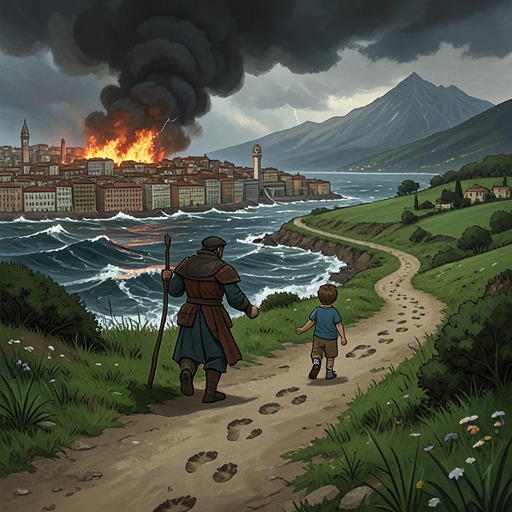
Polydorus is identified as the son whom old Priam sent to Thrace when Troy was closely besieged by Greek arms. The decision was made in fear of the war’s outcome, placing Polydorus within the larger catastrophe of the Trojan royal house and showing how the war drove even Priam’s child beyond the city’s walls in search of safety. His identity is therefore inseparable from Trojan exile: he is not encountered as a living prince in a court, but as a displaced victim whose fate has been concealed in foreign soil.
Discovery in the Grove
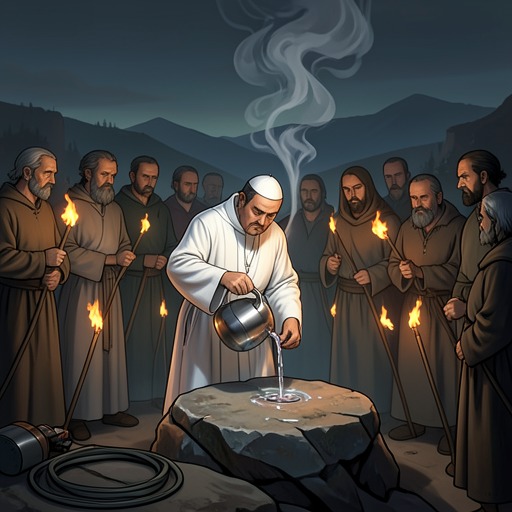
Aeneas encounters Polydorus while gathering foliage to shade an altar. On a nearby hillock, myrtles and cornels grow thickly; when Aeneas pulls up a plant, the earth answers with blood. The discovery begins as a practical act connected with ritual, but the attempt to prepare sacred shade becomes an inadvertent violation of a grave. Each severed plant exposes more of the buried body’s presence, joining natural growth to the remains of a murdered Trojan.
The scene intensifies through sound and bodily terror. A groan, like that of a troubled ghost, renews Aeneas’s fright, while the speaker’s words reveal that the apparent vegetation contains blood from Trojan veins. Polydorus asks why his buried body is being torn and begs Aeneas to spare the corpse and avoid polluting his pious hands with blood. The appeal makes the discovery a moral encounter: Aeneas is not merely shown a hidden death but warned that ritual purity and reverence for the dead have been placed at risk.
Murder and Warning
Polydorus identifies himself directly and explains that the lances embedded in his body are still stained with his blood. His testimony establishes that his death was violent and that the weapons of war have remained physically present beneath the soil. The image of a grove fed by Trojan blood gives the murder an enduring material form: what appears to be living nature is also a monument to political betrayal and slaughter.
His final instruction is urgent and practical. He tells Aeneas to flee the shore and treat his fate as a warning that Thrace is inhospitable. Polydorus thus acts after death as a messenger for the living Trojans. His revelation converts a place that might have served as a temporary refuge into a forbidden destination, and his buried condition becomes the cause of the fleet’s departure rather than the end of a merely local tragedy.
Narrative Role and Significance
Polydorus’s brief appearance links the Trojan past to Aeneas’s continuing mission. Priam’s wartime decision, the murder in Thrace, the blood that rises through the plants, and the warning to depart form a compact chain in which the old destruction of Troy still governs the movements of the exiles. The dead do not remain silent or safely confined to memory; Polydorus speaks through the earth and interrupts the Trojans’ attempt to establish ritual order in a new land.
The episode also opposes apparent fertility to concealed death. The hillock is marked by sharp myrtles and cornels, yet its vegetation draws its uncanny force from a corpse and from blood that once ran in Trojan veins. Polydorus therefore embodies the persistence of violence beneath attractive or inhabitable surfaces. His discovery is at once a recognition scene and a departure command: Aeneas learns who the buried victim is, understands what the shore conceals, and receives from the dead the knowledge necessary to continue the Trojan quest elsewhere.