Nisus
AeneidNisus is a Trojan warrior and the closest companion of Euryalus. His significance lies not only in martial courage but in the way his courage is transformed by friendship: once the two are separated, Nisus abandons the possibility of escape and turns back into the enemy ranks, making his own death the final answer to the death of his friend. His story joins athletic distinction, battlefield skill, desperate pursuit, and mutual sacrifice into one of the most concentrated heroic tragedies in the poem.
Identity and Introduction
Nisus first appears among the runners at the funeral games, where the competitors stand without a fixed order and the Trojans are mingled with the Sicilian company. He is named before Euryalus, establishing him as the elder or more prominent figure within the pair, while Euryalus is marked as a boy of blooming years, distinguished by youthful grace and beauty. The setting matters: Nisus is introduced not in the confusion of battle but within a communal contest associated with honor, remembrance, and the ceremonial life of the Trojan people. His athletic presence therefore places physical excellence beside the emotional bond that will later define him.
The poem later presents Euryalus beside Nisus as his friend and emphasizes that Euryalus has no fairer face or sweeter bearing in the Trojan host. Their companionship is thus framed through both martial proximity and exceptional beauty. Nisus is not merely a comrade who happens to fight near Euryalus; he is the figure whose identity is continually read through that friendship. The contrast between Nisus’s seasoned decisiveness and Euryalus’s youth gives the pair a complementary structure: experience stands beside promise, while loyalty binds them more firmly than either age or individual reputation.
Martial Character and Night Raid
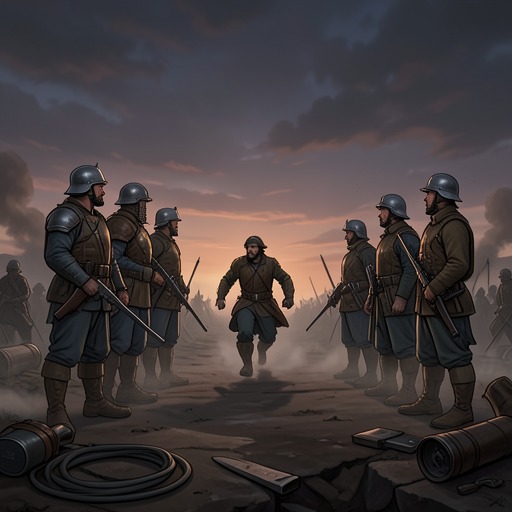
Nisus’s military identity belongs to the wider Trojan crisis. In the darkness surrounding the threatened walls, he is counted among those who run toward clashing arms and the call of battle rather than remain safely apart. The poem associates him with other Trojan fighters, including Ripheus and Iph’itas, and places his action within a collective defense of the walls. Yet the later night raid isolates his particular kind of heroism. His courage is not passive endurance; it is an active willingness to enter danger when danger offers no honorable alternative.
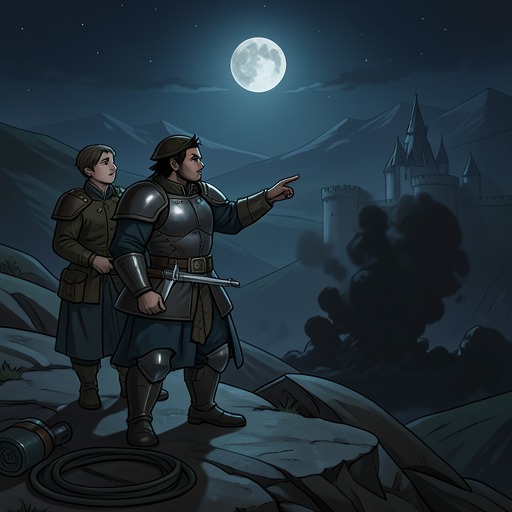
During the raid, Nisus and Euryalus move through the hostile camp, and the venture becomes increasingly perilous as they are discovered and pursued. Nisus ultimately finds himself separated from his companion. When he turns back and realizes that Euryalus is missing, the narrative gives his response the force of a personal catastrophe. He stands his ground, looks around, and cries out in anguish over where he has left his friend. The moment converts a military operation into an emotional search. The battlefield is no longer measured by tactical success or escape; it is organized around the absence of one beloved person.
Friendship and Sacrifice
Nisus’s defining objective after the separation is to recover or avenge Euryalus. Despair, rage, and a vow of vengeance drive him headlong into the hostile crowd. His movement is deliberately direct: he seeks Volscens and bends his effort toward that single enemy. The narrowed purpose reveals both the strength and the danger of his devotion. Nisus no longer acts as a detached soldier calculating survival. He acts as a friend who cannot accept flight while Euryalus remains exposed or dead.
The final encounter with Volscens makes Nisus’s sacrifice reciprocal. He attacks while Volscens kills Euryalus, and the violence produces no clean victory. Nisus succeeds in striking down the enemy, but the success arrives at the instant of his own destruction. The poem’s compressed formulation, “Dying, he slew,” makes the exchange inseparable: Nisus’s revenge is achieved, but only as a death-bound act. He then seeks his slain lover with swimming eyes and falls quietly upon Euryalus’s bleeding bosom. The ending turns physical contact into the last expression of the relationship. Separation, pursuit, vengeance, and reunion occur within the same fatal sequence.
Change and Ending
Nisus begins as an admired competitor and a capable warrior, but the night raid exposes the emotional structure beneath those public roles. At the funeral games, identity is displayed before an audience through ordered competition; in the raid, identity is tested in darkness, confusion, and pursuit. The movement from public athletic honor to private loyalty reveals that Nisus’s greatest distinction is not simply that he can run or fight, but that he refuses to preserve himself at the cost of abandoning Euryalus.
His ending is therefore both triumphant and tragic. He kills Volscens, fulfilling the vengeance he has vowed, yet he cannot restore Euryalus or return to the Trojan camp as a survivor. His death beside his friend gives the pair a final unity that military success cannot provide. The image of Nisus falling on Euryalus’s bleeding body also reverses the ordinary logic of heroic aftermath: victory does not separate the living from the dead, and vengeance does not close the wound. The survivor chooses to enter the wound himself.
Narrative Role and Significance
Nisus and Euryalus belong to the poem’s larger pattern of Trojan courage, in which individual action is measured against the survival of a people destined to continue. Nisus’s earlier presence among Trojan defenders connects him to collective duty, while his death reveals the personal cost hidden within that duty. The night raid is strategically valuable only in the broadest sense; its deepest force comes from showing how war converts friendship into both a source of courage and a cause of irreversible grief.
Nisus also stands within a heroic world shaped by inherited memory. The poem places his deeds alongside references to earlier heroic lineages, sacred places, and the long historical movement from Trojan suffering toward Roman destiny. Yet his story resists being absorbed entirely into that future. The larger cause may continue, but Nisus’s individual fulfillment is located in the moment when he returns for Euryalus. His loyalty is at once a heroic virtue and a tragic refusal of survival, making him one of the clearest figures through whom the poem tests the relationship between martial fame, communal obligation, and the claims of intimate friendship.