Camilla
AeneidCamilla is the Volscian warrior maiden who transforms the conventions of heroic action through her speed, martial skill, and uncompromising dedication to battle. She is introduced not as a domestic woman pressed into war, but as a leader who commands troops, rides before an army, and seeks distinction through combat. Her career reaches its tragic height when she is killed in the struggle against the Trojans; her death removes a central force from the Volscian side and helps prepare the final collapse of resistance.
Identity and Martial Character
Camilla comes from the Volscians and is explicitly presented as a warrior woman. Her identity is defined by a deliberate contrast with the ordinary female arts associated with the loom: she is untrained in spinning and unskilled in weaving, but those absences are replaced by exceptional command of arms. The poem makes martial action her native discipline. She is not merely attached to an army through lineage or circumstance; she leads warlike troops and possesses the authority of a military commander.
Her battlefield reputation is reinforced by the company in which she appears. The poem recalls Ripheus as renowned for valor and Iph’itas as distinguished by age, then places Camilla within the larger heroic memory of those who fight when Troy’s walls are under threat. Elsewhere, the poem reaches backward through the heroic ancestry of Teucer, Assaracus, and Ilus, and through the ancient peoples associated with sacred Italian places. Camilla belongs to this epic continuum, but she also stands apart within it: her gender does not soften her image or confine her to a supporting role. Her fame is produced by the same public tests of courage that define male warriors.
Command and Entry into Battle
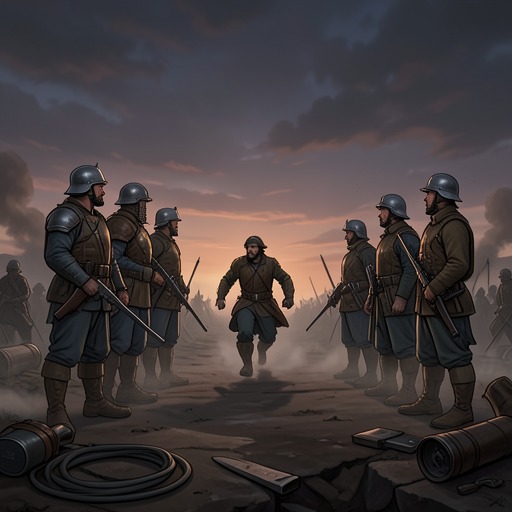
Camilla’s appearance before the city gives her a ceremonial as well as military force. When she comes outside the gate, the Volscians wait with their virgin leader for her final commands. The scene presents her as the visible center of the army’s expectation. Her bearing is graceful, but that grace is not opposed to authority; it is the manner in which authority is displayed. She gives orders before entering the decisive danger, and the troops’ readiness depends upon her presence.
The image of Camilla on horseback intensifies this union of elegance and violence. Her horse neighs and snorts, holding its head high as foaming water parts before its broad chest. The animal’s energy carries the leader toward the field, while her own control gives the movement direction. The scene does not treat her as a passive emblem of beauty carried into war. She appears as a mounted commander whose body, horse, and army form a single advancing force.
Ferocity and Battlefield Power
Once combat begins, Camilla is described as nearly irresistible. She rides through the war undaunted by danger and actively pleased by bloodshed. The language gives her a fierce appetite for combat rather than a merely defensive courage: she does not simply endure violence imposed upon her but seeks the contest as the field in which her identity is fulfilled. The battle becomes the setting where her exceptional nature is most completely visible.
Her power also produces a distinctive visual contrast. One side of her body is bare for the exertion of her breast, exposing the physical effort of the warrior while her movement remains swift and controlled. The surrounding sands are dyed with streaming blood, and both sides seek death with honor. Camilla is therefore not isolated from the epic code of mutual valor; she embodies it with unusual intensity. Her presence makes the battle a contest in which courage is shared, but her speed and confidence make her stand out even amid generalized slaughter.
The poem’s earlier images of heroic memory and sacred landscape enlarge the meaning of her combat. Daedalus’s flight from the Cretan shore, preserved in the golden-roofed temple, represents the power of art and fame to carry extraordinary deeds across time. The old heroic race of Teucer and the ancient inhabitants who dedicated the forest to Silvanus similarly establish a world where places preserve histories of danger, worship, and courage. Camilla enters that world as a living figure of renown, yet her fame is also exposed to the fragility that governs all mortal heroism.
Divine Warning and Tragic Reversal
Camilla’s death is foreshadowed by a divine recognition of her fate. Diana calls the light-footed Opis, her beloved and trusted attendant, and begins with a sigh to announce that Camilla is going to meet death amid her fatal enemies. The wording makes the coming loss certain before the battle itself has completed its course. Divine knowledge does not prevent the event; it marks the limits of protection and turns Camilla’s final action into a tragedy already seen from above.
The battle’s attention gathers around her at the decisive instant. When the javelin whistles through the sky, both armies turn their eyes toward Camilla, directed by the sound. The gesture is significant because it makes her the common focus of opposing forces. Her death is not a private disappearance hidden inside the confusion of war. It is a public reversal witnessed by the entire battlefield, and the heroic spectacle that established her superiority becomes the mechanism through which her vulnerability is exposed.
Death and Narrative Significance
Camilla is finally struck and sinks upon the plain. As she dies, her open hand releases the rein; her breath becomes shorter and shorter, and her control of the horse gives way to bodily collapse. The sequence reverses the earlier image of the mounted commander: the raised head, foaming waters, and confident command are replaced by the dropped rein and failing breath. Her death is therefore staged not only as a military defeat but as the dismantling of the physical signs by which she ruled the field.
In her final words, Camilla entrusts the Volscians with the task of repelling the Trojans and relieving the town, then asks for a farewell kiss as she gives her last breath. The request joins public duty to intimate parting. Even at the edge of death, her attention remains divided between the army’s cause and the human need for farewell. Her final act does not erase her martial identity; it reveals the emotional cost concealed within it.
Camilla’s death has consequences beyond her individual story. She is the virgin leader whose presence gathers the Volscians, and her fall removes a commander capable of sustaining their resistance. The episode thus converts personal heroism into a decisive change in the war’s balance. It also gives the poem one of its clearest tragic reversals: the warrior who seems most at home amid danger is not defeated by a gradual loss of courage, but by the sudden exposure of mortality within the very scene that celebrates her power.
Heroic Legacy and Thematic Role
Camilla’s characterization rests on an inversion of conventional gendered expectations. The poem denies her the domestic accomplishments of spinning and weaving only to make her mastery of war unmistakable. She is not defined by an escape from femininity into a neutral heroic identity; rather, the title of virgin leader remains part of her identity even as she commands troops and pursues bloodshed. The result is a figure whose social category and martial function remain in tension without reducing either one.
Her trajectory also resembles a heroic quest that ends in sacrifice rather than return. She emerges as a leader, crosses into the full danger of battle, wins distinction through fearless action, and becomes the focus of the opposing armies before dying. There is no successful homecoming or stable reward. The structure is instead tragic: public glory culminates in loss, and the survival of the larger cause depends upon the memory of a leader who cannot survive its final struggle.
Camilla’s force lies in the way the poem makes her both exceptional and expendable. She is granted the imagery of speed, command, fame, and fearless violence, yet the divine foreknowledge of her death insists that such excellence cannot alter the larger course of war. Her ending leaves behind not a completed victory but a charged absence. The Volscians must continue without the leader who embodied their resistance, while the poem preserves her as one of the war’s most vivid examples of courage transformed by fate into tragedy.