Turnus
AeneidTurnus is the leading warrior of the Rutulians and the central human antagonist of Aeneas in the Italian war. He combines royal ambition with conspicuous battlefield courage, but his greatness is repeatedly placed under pressure by a conflict he cannot finally win: the marriage he desires and the political future he claims are opposed by the arrival of the Trojans and by the larger operations of fate. His career moves from confident suitor and champion to isolated combatant, and finally to a defeated man whose last appeal briefly exposes the moral cost of victory.
Identity and Ambition
Turnus belongs to the Rutulian side of the Italian conflict and is presented as a prince whose position makes him the natural rival of the Trojan leader. The political background of his opposition is inseparable from marriage. Latinus has one surviving daughter, Lavinia, after fate has taken his sons, and neighboring princes compete for her hand. Turnus is therefore not merely a soldier seeking distinction: he is one of the princes whose desire for the royal marriage joins personal love to dynastic ambition. His pursuit of Lavinia gives the war a domestic and succession-based stake, while his military role converts that private claim into a public struggle.
The combination is crucial to Turnus's characterization. He fights as though the field of battle can settle what marriage, prophecy, and political order have left uncertain. His claim is strengthened by rank and reputation, yet the poem places him in an increasingly unstable position: the more fiercely he defends his expected future, the more completely that future is absorbed into a conflict determined by forces beyond his control. His ambition is thus both honorable in its social setting and destructive in its consequences.
Martial Character and the Pressure of Fate
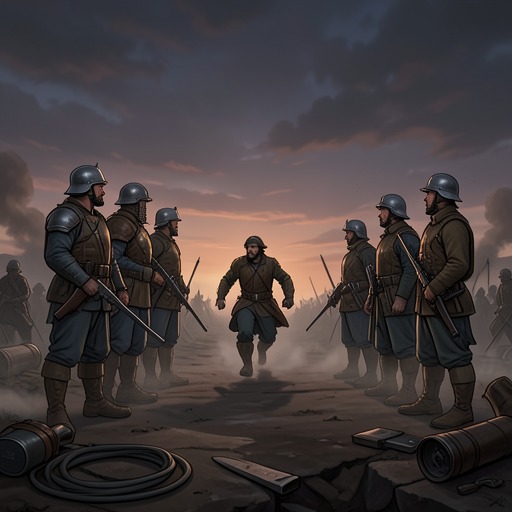
Turnus is defined by physical courage and by a readiness to expose himself where others hesitate. When he leaps from his chariot and addresses himself to single combat on foot, the action displays a warrior who seeks direct personal risk rather than safety behind formations or vehicles. The surrounding Arcadians are pale with horror, making his movement stand out as an assertion of individual valor in the midst of collective fear. He does not wait for combat to come to him; he turns toward it and embodies the heroic ideal of confronting an enemy face to face.
Yet the same heroic energy becomes a trap. A dreamlike apparition in the likeness of Juno addresses Turnus and questions the value of continuing to endure endless toil in the fighting fields and to conquer towns in vain. The vision frames his struggle as labor whose apparent victories cannot secure its promised reward: he may win towns, yet still fail to win the prize of a Trojan head. The episode reveals the contradiction at the center of Turnus's action. His courage is real, but it is being spent in a contest whose outcome is governed by a destiny that refuses to ratify his expectations.
The dream also gives Turnus a moment of warning without granting him a stable escape from the war. The divine intervention encourages resistance rather than reconciliation, and Turnus remains bound to the martial identity through which he understands honor, love, and political legitimacy. His tragedy lies partly in this inability to separate personal worth from victory. To cease fighting would appear to surrender not only Lavinia but also the public meaning of his name.
War, Negotiation, and the Limits of Honor
As the conflict turns against the Latins and their allies, Turnus becomes the object of public resentment. The armies have been broken, courage has been subdued, and he himself is marked by collective blame. This reversal changes his position from celebrated champion to exposed cause of the war's misery. The language of public spite suggests that the conflict has ceased to protect him: the community that depended on his prowess now treats him as responsible for its suffering.
The poem contrasts Turnus's embattled pride with the procedures of truce and settlement. Suppliants sent from Laurentum approach with olive branches, asking for a suspension of hostilities and appealing to the victor's clemency. Aeneas grants the request, acknowledging that their petition is too just to refuse. In his reply, he condemns the severe fate that has drawn the Latian princes into causeless quarrels and armed them against an unoffending man. Turnus is not the speaker in this scene, but the appeal clarifies the political and ethical world against which his conduct is measured: warfare is not the only form of honor, and mercy, lawful petition, and recognition of injustice also possess authority.
The possibility of peace becomes still more concrete when Aeneas sends to the Latin king to end the rage of arms and ratify an agreement. The following settlement is made publicly, with solemn vows sworn on both sides and all the dues required by sacred rites performed. Such ceremony turns peace into a binding communal act rather than a private gesture. Against this ritual order, Turnus's solitary insistence on combat appears increasingly archaic and hazardous. The war has generated obligations that cannot be dissolved simply by the continuing pride of one champion.
Final Defeat and Recognition
The final movement of Turnus's story places him before Aeneas in the most concentrated form of the poem's conflict. The issue is no longer an entire campaign but the life, honor, and future represented by two armed men. Turnus's earlier willingness to leap from his chariot into single combat finds its ultimate counterpart in the duel that will determine whether he retains either Lavinia or the authority to shape the Italian settlement.
At the decisive moment, Turnus is a yielded man. Aeneas seems ready to strike but restrains his hand, creating a brief interval in which the values of mercy, honor, and vengeance are held in suspension. Turnus's condition changes the meaning of the encounter: victory has already been achieved, but killing a defeated opponent may appear mean and ignoble. The scene therefore subjects Aeneas to the same ethical pressure that had governed the truce and the sworn peace. The face of the defeated enemy interrupts the easy conversion of triumph into justice.
That hesitation ends when Aeneas sees the fatal spoils Turnus had torn from the dying Pallas and worn in triumph. The belt functions as a visible record of an earlier act of violence and as the object that converts memory into immediate judgment. Turnus's appeal to grace is answered by the recognition that he had taken and displayed the emblem associated with Pallas's death. Aeneas is roused anew to wrath, and flames are described as flashing from his eyes as he denounces Turnus as a traitor. The final reversal is therefore not a simple contest between equal champions. Turnus's courage remains undeniable, but the trophy he wears makes his past violence present at the instant when mercy might have prevailed.
Turnus's death concludes the poem's central human rivalry. His defeat removes the principal obstacle to Aeneas's marriage with Lavinia and to the political settlement that will unite the Trojan and Latin futures. The ending does not erase Turnus's stature; instead, it makes his stature tragic. He is brave enough to face the duel, politically important enough to carry the hopes of the Rutulians, and morally compromised enough that his final opponent can read his body and its spoils as evidence demanding retribution.
Narrative Role and Significance
Turnus embodies the force of furor against the order associated with fate, treaty, and future foundation. His actions arise from recognizable claims—love, honor, rank, and defense of his people—but those claims become destructive when they refuse the political and sacred forms through which conflict might be contained. The poem does not present him as a coward or a merely selfish villain. His heroic virtues are precisely what make his resistance compelling, while his inability to relinquish the contest makes those virtues fatal.
His trajectory also gives the poem a structural contrast between movement and enclosure. Turnus repeatedly advances: he seeks the marriage, enters the fighting fields, leaps from his chariot, and stands ready for single combat. Aeneas, by contrast, advances toward a future larger than individual victory. Turnus's motion is therefore fierce but narrowing; each act of resistance reduces the available alternatives until only surrender or death remains.
The final recognition of the belt of Pallas gathers these contradictions into one image. Turnus's triumphal appropriation of another warrior's spoils has preserved the memory of his victory, but it also preserves the grounds of his condemnation. When Aeneas sees the object, the prospective founder's hesitation yields to the warrior's wrath. Turnus consequently occupies an uneasy place in the poem: he is the enemy whose defeat enables the new order, but also the fallen hero whose courage and suffering reveal what that order costs. His ending turns personal rivalry into historical transition, while leaving the reader with the unresolved tension between the necessity of founding and the violence required to make foundation possible.