In the ancient myth before Daedalus and Icarus flee Crete
Theseus Slays the Minotaur
At [Minos](entity:character-recall-character-minos-7464269ef8ba)’s command, [Daedalus](entity:character-recall-character-daedalus-a0b3d3b8917d) builds a labyrinth to contain the monster born to the king’s wife. [Theseus](entity:character-recall-character-theseus-d07fe0f16827) enters the maze and kills it, escaping with help from [Ariadne](entity:character-recall-character-ariadne-6ab2c7200c40), Minos’s daughter.
The escape turns the royal household against Daedalus, whose advice helped Theseus, and begins the chain of betrayals and reprisals behind Ariadne’s later story.
After Theseus escapes the labyrinth
Ariadne Is Abandoned
[Ariadne](entity:character-recall-character-ariadne-6ab2c7200c40) elopes with [Theseus](entity:character-recall-character-theseus-d07fe0f16827) after helping him defeat the Minotaur. On the journey away from Crete, he abandons her, leaving her to face a future she had not expected.
The tale of abandonment echoes through the book’s many stories of love and loss. Ariadne’s later union with Bacchus becomes one of its counter-images: a broken heart can, at least in myth, be mended.
After Ariadne’s flight from Crete
Daedalus Is Imprisoned
Furious at his wife’s affair with an animal and his daughter’s escape, [Minos](entity:character-recall-character-minos-7464269ef8ba) confines [Daedalus](entity:character-recall-character-daedalus-a0b3d3b8917d) and the inventor’s son, [Icarus](entity:character-recall-character-icarus-3696ef35d8a1), in a high tower. For Daedalus, separation from the world is a punishment that demands an answer.
Watching birds from their prison, he studies how they move through the air. His ingenuity will offer a way out, but the escape will also expose the limits of his ability to protect his son.
During Daedalus and Icarus’s imprisonment
The Wings Are Built
[Daedalus](entity:character-recall-character-daedalus-a0b3d3b8917d) traps birds and gathers feathers of different sizes, then uses wax from bees nesting in the tower to bind them into two sets of wings. [Icarus](entity:character-recall-character-icarus-3696ef35d8a1) helps with the work, moving from distress at the dead birds to excitement at the possibility of flight.
The wings embody both engineering and wonder. Daedalus makes them beautiful as well as functional, but the freedom they promise will depend on restraint and on Icarus heeding his father’s warning.
After Daedalus completes the wings
The Flight from Crete
Before they leap from the tower, [Daedalus](entity:character-recall-character-daedalus-a0b3d3b8917d) tells [Icarus](entity:character-recall-character-icarus-3696ef35d8a1) to fly steadily, remain close, and avoid both the sea and the sun. Daedalus jumps first and catches the air; Icarus follows, exhilarated by the sensation of flight.
They cross the Aegean together, escaping [Minos](entity:character-recall-character-minos-7464269ef8ba)’s reach. The father’s instructions are not a guarantee of safety but a fragile bargain with forces neither of them can fully command.
During the flight north from Crete
Icarus Falls
As the pair approach [Ikaria](entity:location-recall-location-ikaria-32f5828273c7), [Icarus](entity:character-recall-character-icarus-3696ef35d8a1) grows confident and performs for the people watching from shore. He climbs too high; the sun melts the wax holding his wings together, and he spirals into the sea.
[Daedalus](entity:character-recall-character-daedalus-a0b3d3b8917d) survives but cannot save his son. The spectacular escape becomes a catastrophe, and the story’s central image of freedom is permanently joined to grief and the cost of youthful abandon.
After Icarus’s burial on Ikaria
Ariadne Keeps Her Promise
[Ariadne](entity:character-recall-character-ariadne-6ab2c7200c40), the island storyteller’s name for the woman who receives [Daedalus](entity:character-recall-character-daedalus-a0b3d3b8917d), washes and lays out [Icarus](entity:character-recall-character-icarus-3696ef35d8a1)’s body, then helps the islanders bury him with food, drink, and a small boat carved by his father. She stays beside Daedalus as he mourns.
When Daedalus must continue his flight from [Minos](entity:character-recall-character-minos-7464269ef8ba), she promises to tend Icarus’s grave. Her lifelong vigil gives her existence purpose, and the story makes her a living bridge between myth and the present.
January 1824
Byron Arrives in Messolonghi
[Lord Byron](entity:character-recall-character-f4b67248f9b4) arrives by boat in [Messolonghi](entity:location-recall-location-messolonghi-7bc929777315), where residents have awaited his promised support for [Greece](entity:location-recall-location-greece-6f5775f30806)’s struggle against Ottoman rule. [Despina Dimotsis](entity:character-recall-character-633a193eb392) watches from the crowd with her mother and younger sister, captivated by the poet’s appearance and attention.
Byron’s arrival is treated as a national spectacle, though his health is already fragile. For Despina, the brief exchange of looks becomes a private infatuation that will outlast the public celebration.
Early 1824
Despina Waits for Byron
After seeing Byron, Despina becomes so consumed by her crush that she struggles to eat or sleep. Byron, meanwhile, is ill and feverish; his doctors try to treat him, while a servant suspects that an admiring look has brought the evil eye upon him.
The servant tests her belief with oil in water, but the doctors dismiss her warning. The episode binds Despina’s innocent longing to the growing anxiety around Byron’s decline.
April 1824
Byron Dies in Messolonghi
After weeks of headaches, fever, and debilitating bloodletting, [Lord Byron](entity:character-recall-character-f4b67248f9b4) dies in [Messolonghi](entity:location-recall-location-messolonghi-7bc929777315). Despina sees him again in his coffin, and the city mourns the man many had hoped would help free [Greece](entity:location-recall-location-greece-6f5775f30806).
The cause of his death remains disputed in the story, while Byron’s servant continues to believe the evil eye played a part. Despina is never blamed, unaware that anyone might connect her gaze with his fate.
Mid-1930s
Antigoni Accepts a Marriage Proposal
In [Piraeus](entity:location-recall-location-d6b69e8be63a), [Antigoni](entity:character-recall-character-antigoni-891d67412763) is nearly thirty when her father accepts the proposal of [Christos Vandis](entity:character-recall-character-christos-vandis-272e128fc547), a wealthy ship owner seeking a dependable wife. Her younger sister, [Ismini](entity:character-recall-character-ismini-8a52ac0c6cbb), cannot marry first under the family’s custom, and Antigoni agrees partly to clear the way for her.
Antigoni has friends, a modest teaching income, and a growing life as a painter. Marriage promises security but requires her to leave the city and the independence she has built.
A few weeks after the wedding
Antigoni Leaves Piraeus
After a brief stay in [Athens](entity:location-recall-location-athens-829baca0905a), [Antigoni](entity:character-recall-character-antigoni-891d67412763) sails with Christos to [Andros](entity:location-recall-location-e762e2b13d0f). Her nausea and homesickness make the passage feel like an exile, and the unfamiliar island contrasts sharply with the lively port city she has left.
Christos introduces her to local society and instructs her about whom to avoid. When he leaves for North America only weeks after the wedding, Antigoni is left in a grand house among strangers, with her husband expected to be gone for a year.
Autumn and winter after her wedding
Antigoni Paints the Island
With Christos away, [Antigoni](entity:character-recall-character-antigoni-891d67412763) explores [Andros](entity:location-recall-location-e762e2b13d0f) on foot, painting its hills, churches, streams, and ruins. Her work gives shape to days that had otherwise been marked by isolation and the empty routines of the household.
When the weather turns, she searches for new subjects among the island’s people. Painting becomes more than a pastime: it is the means by which she makes connections outside the shipping families her husband has selected for her.
During Antigoni’s first winter on Andros
The Wet Witch Sits for Antigoni
A woman bursts from a blue door in the rocks, terrified by a dream. [Antigoni](entity:character-recall-character-antigoni-891d67412763) recognizes her as the island’s feared “wet witch,” but instead of keeping her distance, she returns and asks to sketch her.
The woman allows Antigoni inside her damp cave home. The resulting portrait captures a figure at once beautiful and unsettling, and marks Antigoni’s growing willingness to see beyond the island’s warnings and social boundaries.
During the same winter on Andros
Antigoni Paints Father Minas
[Antigoni](entity:character-recall-character-antigoni-891d67412763) attends the church where [Father Minas](entity:character-recall-character-father-minas-a365f54c41dc) preaches, despite the warnings that the priest is subversive and unsafe. She is drawn to his expressive hands and passionate presence and secretly sketches him during his sermons.
His portrait becomes another act of looking on her own terms. Antigoni is building a body of work that reflects the people who have made her feel less alone, not the ancestors whose portraits dominate her husband’s house.
Later that winter
The Schoolmaster Sits With Eirini
The schoolmaster, [Theodoros Sotiriou](entity:character-recall-character-theodoros-sotiriou-c57828bb6a74), offers [Antigoni](entity:character-recall-character-antigoni-891d67412763) books, and she is welcomed into his home by [Eirini](entity:character-recall-character-eirini-41128e508c09). After talking with them, Antigoni asks to paint the couple, whose affection and good humor are evident despite the age difference and the old scandal attached to their relationship.
She refuses to turn the story into a judgment. The portrait becomes one of her favorite works, a record of a life and love that local gossip has never quite accepted.
Late April of her first year on Andros
Antigoni Paints a Fisherman
At the harbor, [Antigoni](entity:character-recall-character-antigoni-891d67412763) sketches a fishing boat and meets its owner, who lives aboard it. He agrees to sit for her while continuing to prepare bait, and she produces several drawings in the fading light.
His working life and direct manner are far removed from the formal world of the Vandis mansion. Antigoni’s portraits increasingly preserve the people and experiences that her husband’s rules have kept outside the house.
More than a year after Christos sailed away
Christos Burns Antigoni’s Paintings
When Christos returns, he finds [Antigoni](entity:character-recall-character-antigoni-891d67412763)’s portraits displayed in the dining room. He is enraged by the subjects, calls them disreputable, and demands the family portraits be restored. The household staff watch as his authority fills the room.
The next morning, Christos burns Antigoni’s paintings and portfolio, including her portrait of [Ismini](entity:character-recall-character-ismini-8a52ac0c6cbb). His attempt to erase her creative life makes the choice before her unmistakable: obedience would mean surrendering the self she has recovered.
The morning after Christos burns her work
Antigoni Leaves Her Marriage
[Antigoni](entity:character-recall-character-antigoni-891d67412763) runs from the mansion and seeks help from the schoolmaster, who gives her money for the bus and ferry. She leaves [Andros](entity:location-recall-location-e762e2b13d0f) for [Piraeus](entity:location-recall-location-d6b69e8be63a), accepting the consequences rather than returning to the marriage Christos expects her to resume.
She later becomes a celebrated painter, while Christos continues to spend long stretches at sea. Her escape turns the paintings that once relieved her loneliness into the beginning of an independent life.
During the German occupation of Greece
Franz Protects Evangelia’s Father
[Evangelia](entity:character-recall-character-evangelia-e4e6d6eaf508) helps her father at his café, Je Reviens, while German soldiers occupy the city. When a soldier touches her and her father confronts the group, one man draws his gun; [Franz Dieter](entity:character-recall-character-franz-dieter-a97dd49d85d1) intervenes and forces the offenders to leave.
Franz is a German officer who keeps apart from the rowdy soldiers and reads in the café. His act of protection gives Evangelia a reason to see him as an individual rather than as the uniform of an occupying force.
In 1944 as German forces leave Greece
Evangelia and Franz Say Goodbye
[Evangelia](entity:character-recall-character-evangelia-e4e6d6eaf508) and Franz begin speaking in French, discovering a private closeness inside the café’s public tension. He tells her that he did not choose to become a soldier and, as the German withdrawal approaches, brings her the books he has been reading.
They embrace and make love in a storeroom before he leaves without promising to return. Their farewell is brief, but it becomes the secret around which Evangelia’s family history is built.
Several months after Franz leaves
Efi Is Born
In postwar [Greece](entity:location-recall-location-greece-6f5775f30806), [Evangelia](entity:character-recall-character-evangelia-e4e6d6eaf508)’s family struggles through scarcity and upheaval. Her pregnancy becomes visible only late, and her parents accept it while the family invents a story about a fiancé lost at the front.
Efi is born into a household that adores her, but she is never told who her father was. Her resemblance to Evangelia helps the secret endure across generations.
Summer 1954
Panagiotis Sees the Film Crew
Ten-year-old [Panagiotis](entity:character-recall-character-panagiotis-602ce8cebb7d) and his friends stop their street game when a film crew arrives with a laterna. During a break, the boys turn its handle and dance to the music; the director recognizes the children’s delight and films them.
Panagiotis is captivated by the instrument and its mechanism. When the film later brings his own face to the screen, the experience helps him imagine a life devoted to making music in the streets.
Around 1961 when Panagiotis is seventeen
Panagiotis Takes to the Road
After years of saving, [Panagiotis](entity:character-recall-character-panagiotis-602ce8cebb7d)’s parents buy him a laterna. He dresses in a tailored suit and sets out to play, carrying the film’s ideal of a life in which an artist can make people smile with very little.
He eventually settles in [Thessaloniki](entity:location-recall-location-d2279a0cd422), where his music gathers dancers and draws customers to nearby street sellers. Panagiotis sees himself as an artist, and the coins in his tambourine seem to confirm that the city still wants what he offers.
Around 2010 after decades of street playing
Panagiotis’s Hoard Is Seized
[Panagiotis](entity:character-recall-character-panagiotis-602ce8cebb7d) returns home to find an arrest warrant. Police discover that his rooms are filled with decades of unreported earnings, the coins piled so high they take a team of officers weeks to count.
A long court case consumes the fortune in taxes, fines, and legal costs. The judge leaves him with his laterna, which Panagiotis insists is all an artist needs; after his death, the instrument passes to his friend [Tassos](entity:character-recall-character-tassos-e41534256531).
After the 1955 Istanbul pogrom
Apostolos Builds a Hotel Empire
[Apostolos Papazoglou](entity:character-recall-character-312ae4ac5a10) flees [Constantinople](entity:location-recall-location-constantinople-a234f40d5eca) with his wife, Melina, and their two young sons during violence against the remaining Greek population. In [Patras](entity:location-recall-location-patras-59b348517f46), he works long hours, saves money, and later invests in simple hotels as tourism expands.
His business grows into a luxury-hotel empire. The success gives his sons a life of privilege, but Apostolos worries about how to pass the company on without simply dividing it between them.
On Apostolos’s seventy-fifth birthday
The Brothers Face a Test
Rather than choose an heir, Apostolos gives Manos and Stephanos separate plots in [Patras](entity:location-recall-location-patras-59b348517f46) and makes the future of the entire hotel group depend on which brother produces the stronger results after two years. A coin toss assigns Manos the port site and Stephanos the beach.
Each brother assumes the other is a rival for everything, not merely half the business. Their father’s test turns sibling resentment into a high-stakes competition with consequences neither can control.
May 29, 1979
The Hotels Open on Tuesday
Manos converts an unfinished office block into [Hotel Pyrgos](entity:location-recall-location-hotel-pyrgos-13ea79aa22e1), with a castle-like exterior and lucrative, sometimes illicit attractions. Stephanos builds the cheap beach hotel [Hotel Thalassa](entity:location-recall-location-hotel-thalassa-e29cf39d0d24). They arrange rival opening parties for the same date, despite local unease that it is Tuesday and the anniversary of [Constantinople](entity:location-recall-location-constantinople-a234f40d5eca)’s fall.
The coincidence gives the town’s old superstition a new focus. For a time, both hotels appear profitable, and Apostolos is pleased enough not to examine what is happening behind the figures.
Several months after Hotel Pyrgos opens
Manos Faces Extortion
[Giorgos Kourtis](entity:character-recall-character-cd7a0a503631)’s influence brings Manos a succession of threats: utilities are cut off unless he pays, and police repeatedly raid the hotel and demand bribes. Manos borrows heavily to keep the business running and conceal the losses from his father.
Meanwhile, the low-cost [Hotel Thalassa](entity:location-recall-location-hotel-thalassa-e29cf39d0d24) thrives in summer. The brothers’ competition has become an unequal struggle, and Manos’s mounting debts leave him physically and emotionally depleted.
A warm night in June during the brothers’ two-year test
Hotel Thalassa Collapses
An earthquake shakes [Patras](entity:location-recall-location-patras-59b348517f46) while the poorly built [Hotel Thalassa](entity:location-recall-location-hotel-thalassa-e29cf39d0d24) is full of sleeping guests. Its inadequate structure collapses within minutes, killing thirty people and injuring many more. Stephanos runs to the wreckage, then flees as the scale of the disaster becomes clear.
The investigation finds that construction standards were ignored. [Hotel Pyrgos](entity:location-recall-location-hotel-pyrgos-13ea79aa22e1) suffers only a cracked window, but the contrast cannot shield either brother from the consequences of the choices made to maximize profit.
January 2010 during the Theophania ceremony
Giorgos Sees Mihalis Again
At the annual ceremony, an older man with a dolphin tattoo on his neck makes Giorgos suspect that Mihalis has returned. [Leonidas](entity:character-recall-character-a5d5c046a198) then tells him that Mihalis’s father has died and that the funeral is that afternoon, explaining why the son might have come back.
Giorgos breaks down in tears of relief. Mihalis’s survival gives him a chance to be cleared in the eyes of anyone willing to reconsider, and the ceremony becomes a kind of second baptism after decades of living under an unspoken charge.
Several decades after the Basilica of Saint Andrew opens
Maria Leontidis Falls Behind
[Maria Leontidis](entity:character-recall-character-67cbcb08e33a), who once cleaned a small Byzantine church, accepts a job maintaining the vast Basilica of Saint Andrew. The immense floors, candlesticks, and rows of chairs overwhelm her, and the physical strain eventually leaves her unable to get out of bed.
Her granddaughter [Pelagia](entity:character-recall-character-7a48da9bfa26) offers to cover the work before other women can take the position. The temporary change sets in motion an unexpected transformation in the church’s congregation.
During Maria’s recovery
Pelagia Draws the Men
[Pelagia](entity:character-recall-character-7a48da9bfa26) cleans in the basilica wearing close-fitting black clothes, unaware that the men who come to pray are watching her. [Spiros Kouris](entity:character-recall-character-50dff3aac5e4) and Socrates Papalambros linger, and word of the young cleaner draws men away from the nearby cafes.
They leave requests for spiritual help, many asking not to be led into temptation. The priest mistakes the crowded church and full collection boxes for renewed devotion, unable to see the attraction that has gathered his congregation.
After Pelagia’s temporary cleaning stint
Maria Returns to the Basilica
Once Maria has rested, she returns to work with better equipment bought from the basilica’s increased candle income. The men who had come to watch [Pelagia](entity:character-recall-character-7a48da9bfa26) drift back to their cafes, and the ordinary patterns of church and home resume.
Spiros returns to his wife looking more like the man she remembers. The episode leaves the church cleaner and wealthier, but its brief congregation has revealed how easily longing can masquerade as devotion.
About twenty-five years before Anthony hears the story
Savina Flees Her Wedding
[Akis Adamakos](entity:character-recall-character-327720576075) waits in his wedding suit at the Church of St Spyridon in [Nafplio](entity:location-recall-location-nafplio-f2b8da7ec34c), but [Savina](entity:character-recall-character-0d69ef09dac7) never arrives. His best man, [Nikos](entity:character-recall-character-13f34a15c626), learns that she has gone to [Athens](entity:location-recall-location-athens-829baca0905a), apparently with another man, and the groom returns to face the assembled guests.
Akis rejects an immediate attack on her family. He decides that keeping them in fear will be a deeper revenge, especially for Savina, who will never know when a threat might come.
Twenty-five years after Savina’s wedding-day flight
Akis Takes His Revenge
Akis keeps a gun for years and returns to the church square each Saturday, reliving the day his bride deserted him. One evening he sees a boy in a silvery wedding suit, a vision of his younger self, and follows it into the church.
The clock strikes five as he leaves. That evening he drives to [Savina](entity:character-recall-character-0d69ef09dac7)’s village and kills her father and brother. Savina does not return for the funerals, and Akis is arrested; the threat he once promised has become an act of violence.
Several decades after her father’s death
Athanasia Returns to Arcadia
[Athanasia Malavas](entity:character-recall-character-b379f84ba8c9), raised in [Athens](entity:location-recall-location-athens-829baca0905a), knows almost nothing about her father, Grigoris, or the village he came from. After her mother dies, Athanasia finds no photographs or documents to explain the marriage and decides to visit the mountain village herself.
The journey is an attempt to recover a family history that her mother had kept largely unspoken. The beauty of [Arcadia](entity:location-recall-location-arcadia-da516d4ec16e) initially seems to promise the answers and sense of belonging she lacks.
The evening of Athanasia’s visit to the village
Athanasia Finds No Welcome
Athanasia reaches the village, finds its church locked, and asks a cafe owner named [Giannis](entity:character-recall-character-giannis-a204d1522578) Malavas how to locate her father’s grave. The cemetery is carefully maintained, yet she cannot identify him among the many men bearing the same name; the graves offer no photographs she can recognize.
When she returns to the square, her car has vanished. The men in the cafe show little interest in helping, and the local policeman is off duty. As darkness rises, Athanasia runs from the village, realizing that this imagined paradise offers a woman neither safety nor welcome.
Mid-September 2015
Anthony Is Stood Up
[Anthony](entity:character-recall-character-anthony-db049cb41fed) waits at [Kalamata Airport](entity:location-recall-location-kalamata-airport-ab6b50121500) for the woman he expects to meet, having planned a two-week journey with her and bought a diamond ring to propose. After a night on a bench, a message arrives: she cannot make it. His calls go unanswered.
The rejection leaves him stunned and unable to return to [London](entity:location-recall-location-london-420923d4a60a). He drives to the coast and stays in a pension at [Methoni](entity:location-recall-location-methoni-5dfa3e052e3f), where the kindness of its owners reaches him even while he feels almost nothing.
Late September 2015
Anthony Begins Traveling Alone
After nearly a fortnight in [Methoni](entity:location-recall-location-methoni-5dfa3e052e3f), [Anthony](entity:character-recall-character-anthony-db049cb41fed) decides not to return to [London](entity:location-recall-location-london-420923d4a60a). He has research for his book on Cycladic sculpture and enough money to travel for a while, so he sets out alone through the [Peloponnese](entity:location-recall-location-peloponnese-d8c2c8d1463e).
He sends his former lover a postcard from the village, not expecting a reply. The one-way message is an attempt to break the silence between them, and the start of the long journey through [Greece](entity:location-recall-location-greece-6f5775f30806) that will eventually help him rebuild a life.
October 2015 in Nafplio
Anthony Encounters Akis’s Story
In [Nafplio](entity:location-recall-location-nafplio-f2b8da7ec34c), [Anthony](entity:character-recall-character-anthony-db049cb41fed) meets a couple who explain why residents are wary of solitary men in the square. They tell him about [Akis Adamakos](entity:character-recall-character-327720576075), who sat alone for twenty-five years after [Savina](entity:character-recall-character-0d69ef09dac7) fled their wedding.
The story’s ending, in which Akis kills two members of Savina’s family, sharpens Anthony’s own awareness of anger and loss. He recognizes that his heartbreak has not made him capable of revenge, and that grief can consume a life without restoring what was lost.
October 2015 during Anthony’s travels through Arcadia
Eva Tells Arcadia’s Dark Story
In a graffiti-covered bar in [Tripoli](entity:location-recall-location-tripoli-d9db11c7a3a2), [Anthony](entity:character-recall-character-anthony-db049cb41fed) meets [Eva](entity:character-recall-character-a2d991b6e810), a university dropout who believes her generation has been denied a future. Her artwork combines figures and writing into a story of Athanasia, who visits her father’s isolated mountain village and discovers that its men have left no space for women.
Eva’s account turns the traditional vision of [Arcadia](entity:location-recall-location-arcadia-da516d4ec16e) as an earthly paradise inside out. Anthony recognizes in her anger a wider disillusionment among young Greeks, even as he worries that fury may consume her.
Autumn in Kalamata
Antoni Plays for Magda
A kiosk owner tells [Anthony](entity:character-recall-character-anthony-db049cb41fed) about Antoni, a violinist whose playing once stopped the people of [Kalamata](entity:location-recall-location-kalamata-5668db8f837e) in their tracks. On the day he arrives, children discover the name Antonius Stradivarius inside his violin and mistake it for the musician’s own name.
That evening, [Magda](entity:character-recall-character-7000433e7675) hears Antoni play Bach and begins to weep. His music gives her an experience of being moved and seen, while the crowd gathers around a performance unlike anything the town has known.
The morning after Antoni’s concert
Magda Keeps the G String
After sharing a drink and conversation with [Magda](entity:character-recall-character-7000433e7675), Antoni teaches her to draw a note from his violin. He leaves before morning, and the money people offered for the performance remains behind.
Magda tells her cousin that the violinist is gone and wears the G string around her wrist. Their brief encounter leaves her with a melody and a durable reminder of happiness that does not depend on lasting forever.
Late October 2015
Anthony Is Welcomed in Patras
After traveling north from [Kalamata](entity:location-recall-location-kalamata-5668db8f837e) and stopping at Olympia, [Anthony](entity:character-recall-character-anthony-db049cb41fed) reaches [Patras](entity:location-recall-location-patras-59b348517f46). The city’s churches remain open amid widespread hardship, and a cheerful shopkeeper urges him to visit the Basilica of Saint Andrew.
Her enthusiasm leads him to the story of [Maria Leontidis](entity:character-recall-character-67cbcb08e33a), [Pelagia](entity:character-recall-character-7a48da9bfa26), and the men drawn to the young cleaner. The tale entertains him, but its comedy also makes him reflect on how easily physical beauty can become an object of worship.
Winter 2015 in Messolonghi
Anthony Hears the Byron Story
[Anthony](entity:character-recall-character-anthony-db049cb41fed) stays in a shabby hotel in [Messolonghi](entity:location-recall-location-messolonghi-7bc929777315), reads about [Lord Byron](entity:character-recall-character-f4b67248f9b4), and hears local stories about the poet’s arrival and death. The history makes the city’s grief and the old painting of Messolonghi’s destruction feel immediate.
Byron’s unrequited love and despair touch Anthony closely enough that he admits he has sometimes not wanted to live. The recognition frightens him, but it also forces him to ask whether rejection must decide the rest of his life.
December 2015 in Messolonghi
Anthony Spends Christmas Alone
[Anthony](entity:character-recall-character-anthony-db049cb41fed) spends [Christmas](entity:time-recall-time-0cffe7da2c4d) in his near-empty hotel, speaking by phone with his brother while children sing in the background. The isolation almost sends him home, but [Greece](entity:location-recall-location-greece-6f5775f30806)’s short holiday season helps him continue writing and traveling.
He leaves [Messolonghi](entity:location-recall-location-messolonghi-7bc929777315) at the end of December. His grief has not disappeared, yet the road and the stories he gathers have begun to give his days a structure beyond waiting for his former lover.
January 6, 2016 in Preveza
Anthony Sees the Theophania
In [Preveza](entity:location-recall-location-preveza-191cad002b04), [Anthony](entity:character-recall-character-anthony-db049cb41fed) wakes to church bells and finds the town gathered for Theophania. He shares a cafe table with [Leonidas](entity:character-recall-character-a5d5c046a198) and Dora, who explain the ceremony in which a priest throws a cross into the sea for young men to retrieve.
Leonidas points out his old friend Giorgos, whose life has been shaped by an accusation from a cross-diving ceremony decades earlier. The ritual’s public spectacle opens the way to a private story of shame and release.
The days after January 6, 2016
Anthony Feels His Resolve Return
After hearing how Mihalis’s reappearance freed Giorgos from years of suspicion, [Anthony](entity:character-recall-character-anthony-db049cb41fed) begins to imagine a life beyond his own rejection. [Leonidas](entity:character-recall-character-a5d5c046a198) and Dora invite him to meals, and their hospitality helps him regain weight and a sense of ordinary companionship.
He continues eastward, gets lost on a mountain road, and finds unexpected exhilaration in the solitude. For the first time, he can consider that a mistake or disaster might lead somewhere better.
Winter 2016 near Dodoni
Costas Finds the Statue
Near [Dodoni](entity:location-recall-location-dodoni-31f2847c6775), [Anthony](entity:character-recall-character-anthony-db049cb41fed) reads a funeral notice for [Costas Arvanitis](entity:character-recall-character-costas-arvanitis-1c3033cd6f5f) and hears from an innkeeper how the farmer died suddenly. The story begins with Costas working his smallholding, where his spade strikes a strangely musical note against buried marble.
He uncovers the body of a sculpture and becomes absorbed in the work of freeing it from the soil. His discovery gives a man whose life has narrowed into routine an unexpected object of desire and wonder.
Several weeks after the discovery
Costas Dies Beside Aphrodite
Costas slowly exposes the sculpture and becomes convinced that the figure is Aphrodite. The beauty of the statue awakens tenderness and erotic feeling that have been absent from his marriage to [Stella](entity:character-recall-character-stella-1c92ed1acee3) for decades.
As he tries to turn the heavy sculpture to see its face, Costas suffers a fatal attack and dies beside it. The final moments give him a rare sense of fulfillment, even as his discovery threatens to disrupt the lives of everyone around him.
The day Costas dies
Orestes Buries the Statue
[Orestes](entity:character-recall-character-orestes-6eee7193d01f) finds Costas dead beside the sculpture and removes a marble finger from his pocket. Knowing that an archaeological discovery could bring officials, restrictions, and disruption to the village, he covers the statue again with earth.
He returns the fragment to Costas’s suit before the funeral, honoring what he believes his friend would have wanted. The sculpture remains hidden, and the story leaves open the possibility that another discovery may someday begin the cycle again.
When Dimitris is a schoolboy
Dimitris Chooses the Monastic Life
After visiting a monastery on [Mount Athos](entity:location-recall-location-e50b1d8dfd3a), [Dimitris](entity:character-recall-character-dimitris-961e6f145eeb) tells his family that he has been called to religious life. His father’s drinking and violence at home make the family’s religious practice complicated, while his brother [Giannis](entity:character-recall-character-giannis-a204d1522578) mocks the seriousness of his commitment.
Dimitris studies for the priesthood and is eventually sent to [Meteora](entity:location-recall-location-8698e765f3ff). The decision separates him from his family and begins a life of prayer in a place where isolation can be both refuge and burden.
During the German occupation, recalled after the parade
Evangelia Remembers Franz
The parade brings [Evangelia](entity:character-recall-character-evangelia-e4e6d6eaf508) back to her youth, when German soldiers occupied the city and her father’s café became a soldiers’ haunt. [Franz Dieter](entity:character-recall-character-franz-dieter-a97dd49d85d1), an officer who had protected her father, becomes her companion in quiet conversations conducted in French.
When German forces prepare to leave, Franz gives her his books. They share a final, urgent encounter in the café before he disappears from her life, leaving Evangelia to carry the memory without knowing whether he survived the war.
After Panagiotis’s death, recounted in 2016
Panagiotis’s Laterna Passes to Tassos
In [Thessaloniki](entity:location-recall-location-d2279a0cd422), [Anthony](entity:character-recall-character-anthony-db049cb41fed) meets [Tassos](entity:character-recall-character-tassos-e41534256531), who now plays the laterna once owned by [Panagiotis](entity:character-recall-character-panagiotis-602ce8cebb7d). Tassos recalls how the instrument became the center of Panagiotis’s life, from the boy’s appearance in a film to his decades performing in city squares.
The tale ends with the tax case that took Panagiotis’s hoard and left him only the instrument. Tassos and Anthony argue about whether street sellers owe anything to a corrupt state, exposing the distance between personal survival and shared responsibility.
A Good Friday in late April
Sylvie and Jean-Luc Enter the Easter Village
French newlyweds [Sylvie](entity:character-recall-character-sylvie-20cad0cd2875) and [Jean-Luc](entity:character-recall-character-jean-luc-266c33532fbd) run out of petrol and walk to an isolated village, unaware that [Greek Orthodox Easter](entity:time-recall-time-231835ad0c41) is being observed. The shops are shut, the police station is empty, and a cafe owner lets them eat only until the Easter procession returns.
The couple misunderstand the local calendar and the villagers’ reserve. A shopkeeper offers them a room in the police station, but the welcome carries a threat they do not yet understand.
Good Friday night into Holy Saturday
Sylvie Escapes the Cell
The next day, [Sylvie](entity:character-recall-character-sylvie-20cad0cd2875) and [Jean-Luc](entity:character-recall-character-jean-luc-266c33532fbd) discover that they have been locked behind bars in the police station. Sylvie crawls through an air vent to reach the street, but breaks her wrist and loses her wedding ring while trying to find help.
She reaches the waterfront as the village gathers for the burning of Judas. The celebration’s flames and explosions are terrifying in her injured, exhausted state, and she returns to find Jean-Luc and the room gone without a trace.
After Holy Saturday
Sylvie’s Account Is Doubted
A farmer gives [Sylvie](entity:character-recall-character-sylvie-20cad0cd2875) a lift to a hospital, where she tells doctors that the village has taken her husband. The staff know of the old rumors that the community reenacts a hanging on Easter Saturday, but there is no body, witness, or evidence to support her account.
Instead, Sylvie becomes a suspect, and the missing wedding ring is taken as evidence of a marital fight. Her story ends in uncertainty: the village’s silence protects its secret, while [Jean-Luc](entity:character-recall-character-jean-luc-266c33532fbd)’s fate remains unknown.
Spring 2016 in Delphi
Athina Leaves Banking
[Athina](entity:character-recall-character-athina-af018e2c6bd1) returns from [Düsseldorf](entity:location-recall-location-ce2206d25322) to [Greece](entity:location-recall-location-greece-6f5775f30806) and visits [Delphi](entity:location-recall-location-6d61da3855d6), exhausted by corporate banking and the life she has built far from home. At the Temple of Athena Pronoia, a night guard points out a startling sunset and tells her that the place where she feels happy is where she should be.
The moment gives Athina the clarity she had hoped to find at the oracle. She decides to leave [Germany](entity:location-recall-location-a3c24dd56e42) and return to Greece, accepting that her choice may provoke conflict with her family.
Spring 2016 after Athina’s decision in Delphi
Anthony Meets Athina
[Anthony](entity:character-recall-character-anthony-db049cb41fed) meets [Athina](entity:character-recall-character-athina-af018e2c6bd1) at breakfast near [Delphi](entity:location-recall-location-6d61da3855d6). She tells him that visiting the ancient sanctuary helped her understand herself and choose a future in [Greece](entity:location-recall-location-greece-6f5775f30806) rather than a well-paid but empty life in [Germany](entity:location-recall-location-a3c24dd56e42).
Anthony confides the reason for his travels and finds that Athina listens without judging or advising him. Their meeting confirms that he is beginning to speak about his heartbreak without being ruled by it.
Later in spring 2016 on Andros
Antigoni’s Story Reaches Anthony
On [Andros](entity:location-recall-location-e762e2b13d0f), [Anthony](entity:character-recall-character-anthony-db049cb41fed) meets Angeliki at the art museum and hears the story of [Antigoni](entity:character-recall-character-antigoni-891d67412763), a lonely shipowner’s wife who paints the island’s outsiders while her husband is away. Antigoni’s portraits become a private record of the life she is making for herself.
When Christos returns and destroys her work, she leaves him and becomes a painter. The story’s ending gives Anthony another example of a person refusing to let convention decide the shape of a life.
Summer 2016 on Ikaria
Ariadne Tells the Story of Icarus
On [Ikaria](entity:location-recall-location-ikaria-32f5828273c7), [Anthony](entity:character-recall-character-anthony-db049cb41fed) joins one of [Ariadne](entity:character-recall-character-ariadne-6ab2c7200c40)’s guided walks and hears her account of two birdlike figures approaching the island. They are [Daedalus](entity:character-recall-character-daedalus-a0b3d3b8917d) and [Icarus](entity:character-recall-character-icarus-3696ef35d8a1), escaping from [Minos](entity:character-recall-character-minos-7464269ef8ba) by flying; the boy falls into the sea after showing off before the watching islanders.
Ariadne says she cared for Icarus’s body and promised his grieving father to tend the grave. She has kept that promise across an impossibly long life, making the island’s ancient myth part of her personal memory.
July 2016 on Ikaria
Anthony Finds His Will to Live
After hearing [Ariadne](entity:character-recall-character-ariadne-6ab2c7200c40)’s story, [Anthony](entity:character-recall-character-anthony-db049cb41fed) returns to her and is told that time heals grief. He has found pleasure in the island’s dances, hot springs, meals, and conversations, and no longer thinks that life has value only when shared with his former lover.
He decides to stop traveling and settles in [Athens](entity:location-recall-location-athens-829baca0905a), where he can see the sea, mountains, and Acropolis from his terrace. In July 2016, he understands that he is no longer waiting for her and no longer needs to send postcards.
Across six months before September 2016
Ellie Collects the Postcards
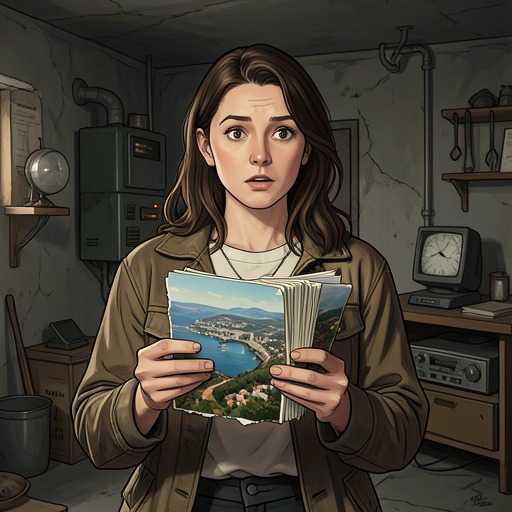
In [Kensal Rise](entity:location-recall-location-kensal-rise-e137be0a1e32), [Ellie Thomas](entity:character-recall-character-ellie-thomas-d0855dbf1dfc) receives colorful postcards addressed to S. Ibbotson, each signed only with A and lacking a return address. She assumes the addressee is a former tenant and pins the cards to a corkboard, letting their images of [Greece](entity:location-recall-location-greece-6f5775f30806) brighten her basement flat.
The unknown sender’s messages describe hospitality, places, and a wish for the absent recipient to be there. Ellie begins to imagine herself as S and finds herself longing to visit a country she has never seen.
Late summer 2016
Ellie Books a Greek Holiday
When the postcards stop arriving, Ellie feels their absence as a loss. A month passes without a card, and she wonders whether the pictures have exaggerated [Greece](entity:location-recall-location-greece-6f5775f30806)’s light and beauty.
She finds a cheap flight to [Athens](entity:location-recall-location-athens-829baca0905a) and books a week near [Nafplio](entity:location-recall-location-nafplio-f2b8da7ec34c), making the decision almost spontaneously. The job she has taken as a route into publishing no longer feels like a life she needs to protect.
The morning Ellie leaves for Greece
The Notebook Arrives
As Ellie hurries to catch her flight, a large package addressed to S. Ibbotson appears in her pigeonhole. She recognizes the writer’s hand, slips the package into her bag, and has no time to open it before leaving.
On the plane, she discovers a blue leather notebook filled with the same writing as the postcards. The notebook’s arrival turns her holiday into an encounter with the private story behind the messages.
September 2016
Ellie Arrives in Nafplio
Ellie lands in [Athens](entity:location-recall-location-athens-829baca0905a), travels by coach to [Nafplio](entity:location-recall-location-nafplio-f2b8da7ec34c), and discovers the warmth and bustle she had imagined from the cards. A Greek woman beside her shares food and conversation despite their language barrier; later, a cafe serves Ellie coffee and biscuits in the square.
The familiar postcard view makes the place feel both new and already known. Ellie realizes that the country’s hospitality is not merely an image, and she begins exploring Nafplio before opening the notebook in earnest.
During her week in Tolon
Ellie Reads Anthony’s Notebook
Ellie reads a few stories each night on her hotel balcony, taking in [Anthony](entity:character-recall-character-anthony-db049cb41fed)’s account of his journey through [Greece](entity:location-recall-location-greece-6f5775f30806) and the breakup that began it. His stories deepen her understanding of the places she has visited and of the sorrow he carries.
She remains largely alone by choice, but her own quiet moments begin to resemble the freedom Anthony describes. His notebook becomes both a private companion and the reason she considers finding its author.
The last night of Ellie’s holiday
Ellie Finds Anthony’s Address
As Ellie closes the notebook, the damaged envelope tears and reveals an [Athens](entity:location-recall-location-athens-829baca0905a) address written on its back. She recognizes that the stories were intended for someone else but feels compelled to return the book and meet the man who wrote them.
She leaves [Tolon](entity:location-recall-location-tolon-8da32289f486) the next morning, has one last coffee in [Nafplio](entity:location-recall-location-nafplio-f2b8da7ec34c), and travels to Athens. Her decision turns an accidental reading into a direct encounter with [Anthony](entity:character-recall-character-anthony-db049cb41fed).
September 2016 in Athens
Ellie Returns the Notebook
Ellie reaches [Anthony](entity:character-recall-character-anthony-db049cb41fed)’s apartment with the battered blue notebook. He is startled to see it and invites her inside; she explains that his postcards and package had been delivered to her flat because [Sarah Ibbotson](entity:character-recall-character-sarah-ibbotson-46b204cbc132) had never lived there.
Anthony is saddened but not surprised to learn that the address was another of Sarah’s lies. He tells Ellie that he had believed Sarah was the love of his life, and the returned notebook gives him a chance to speak about the relationship directly.
The evening of their meeting
Anthony Tells Ellie About Sarah
[Anthony](entity:character-recall-character-anthony-db049cb41fed) explains how he met Sarah at a cinema bar, how they bonded over [Greece](entity:location-recall-location-greece-6f5775f30806) and art, and how they planned a trip to see the [Parthenon](entity:location-recall-location-parthenon-95a43556f4f7) sculptures and the [Acropolis Museum](entity:organization-recall-organization-acropolis-museum-66ae832aade3). He had mistaken her charm and enthusiasm for a shared commitment.
He had never been invited to her home and now recognizes that she concealed much of her life. The story of their relationship clarifies how the failed meeting in [Kalamata](entity:location-recall-location-kalamata-5668db8f837e) shattered plans he had taken as promises.
Later that evening in Athens
Ellie Meets Athina and Anna
As sunset falls over [Athens](entity:location-recall-location-athens-829baca0905a), [Athina](entity:character-recall-character-athina-af018e2c6bd1) arrives at [Anthony](entity:character-recall-character-anthony-db049cb41fed)’s terrace, and Ellie realizes she is the woman whose story she read in the notebook. Anna joins them, and Ellie learns that Athina and Anna are partners.
The group’s easy welcome surprises Ellie, who had expected the encounter to end with the notebook’s return. Anthony offers her paid work typing his manuscript and a place to stay, opening a practical possibility where she had expected only a brief conversation.
That night in September 2016
Ellie Chooses to Stay
Before accepting [Anthony](entity:character-recall-character-anthony-db049cb41fed)’s offer, Ellie calls her landlady to give notice on her [London](entity:location-recall-location-london-420923d4a60a) flat. The landlady mentions that someone called Abbotson had asked whether any mail had arrived, and Ellie realizes Sarah has been looking for the postcards and notebook.
At Anthony’s suggestion, Ellie tells the landlady there was no post and completes the call. She returns to the table and announces that she will stay in [Athens](entity:location-recall-location-athens-829baca0905a), choosing a life with possibilities over the return to a job and city that no longer feel like home.